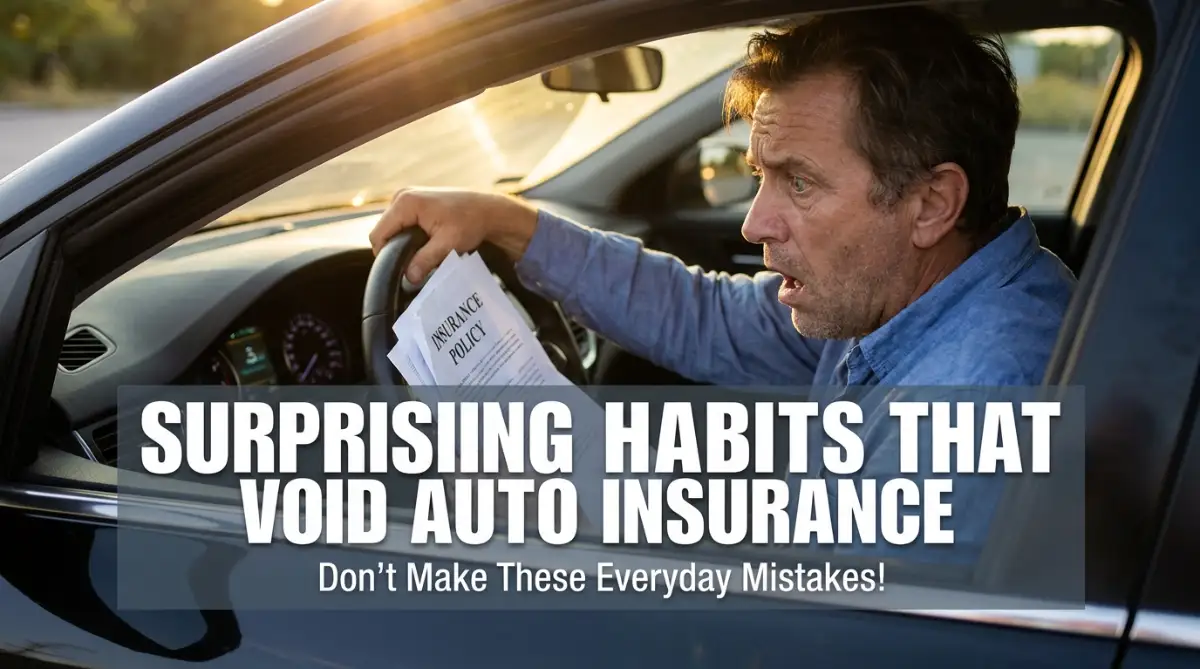
The Hidden Trap That Almost Cost Me Everything
Think your car insurance has your back no matter what? I thought the exact same thing until I started delivering a few pizzas on the weekends to pay off my student loans. When a guy texting on his phone rear-ended me, my insurance company refused to pay a single dime. Why? Because I broke a hidden rule I didn't even know existed. Before you start your engine tomorrow morning, you need to know about these sneaky, everyday habits that give insurance companies the legal right to throw your policy right in the trash.
When a distracted driver bumped into my rear bumper, I confidently called my agent to file a claim. To my absolute horror, the agent calmly explained that my personal policy did not cover commercial activities. Just like that, my safety net vanished into thin air. I was left holding a massive repair bill that completely wiped out my savings account.
This unexpected reality is something thousands of innocent drivers face every single day. We blindly trust that our monthly payments guarantee our financial security on the road. We go about our busy lives, never realizing that simple, everyday actions are quietly breaking the terms of our agreements.
The mental toll of a denied claim is incredibly heavy. You suddenly find yourself drowning in out-of-pocket expenses for something you thought was fully covered. It creates a deep sense of betrayal and anxiety that keeps you awake at night. People start to wonder what other secrets are hiding in the fine print of their legal documents.
Your 60-Second Policy Survival Guide:
- Side Hustles Kill Coverage: If you turn on a rideshare or delivery app without a specific business add-on, your personal insurance immediately turns off.
- The Roommate Rule: If a friend or roommate drives your car regularly, they must be named on the policy. Otherwise, their accidents will not be covered.
- ZIP Code Fraud is Real: Using your parents' suburban address to get cheaper rates while you actually live in the city is soft fraud. Adjusters check your utility bills during big claims!
- Custom Parts are Targets: Adding heavy tint, expensive rims, or a custom stereo without telling your agent voids your protection if the car is stolen.
Innocent Routines That Silently Cancel Your Protection
Protecting your financial future starts with understanding how insurance companies view your daily habits. Your policy is essentially a customized contract based entirely on the specific details you provided on day one. Whenever those details change, the original contract is instantly compromised.
Think of your coverage like a perfectly tailored suit. If your body shape changes significantly, that suit is going to rip at the seams when you need it most. We need to identify the exact moments when your "suit" no longer fits your lifestyle. Let's look closely at the highly common behaviors that trigger an immediate red flag.
Turning Your Daily Commute Into A Side Hustle
The gig economy has completely transformed how ordinary people earn extra income. It is incredibly easy to download an app and start delivering food or driving passengers within a matter of minutes. However, your standard personal auto policy explicitly excludes any form of business use.
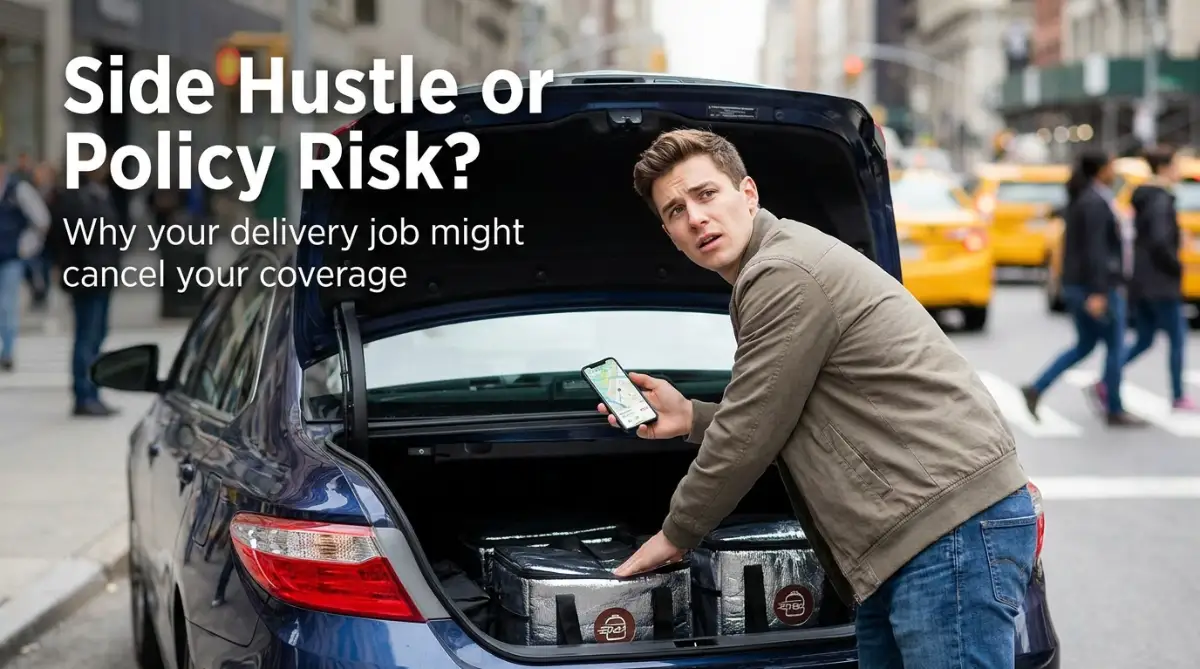
The moment you turn on a delivery app, your personal coverage officially goes to sleep. Insurance companies classify this as commercial activity because you are spending more time on the road taking higher risks. If you get into an accident while logged into an app, your provider has full legal rights to deny your claim.
Watch this quick breakdown to understand exactly how delivery apps handle coverage gaps and how you can protect yourself before hitting the road.
Many drivers mistakenly believe that the delivery company's policy will completely protect them. Unfortunately, those corporate policies often have massive gaps that leave you entirely exposed. You must proactively ask your agent for a specific rideshare endorsement to bridge this dangerous gap.
Upgrading Your Ride Without Telling Your Agent
Car enthusiasts love to personalize their vehicles with aftermarket parts and custom upgrades. Adding a louder exhaust, a premium sound system, or custom suspension feels like an innocent hobby. Yet, these exact modifications can immediately put your entire coverage at serious risk.
When your provider calculated your premium, they priced out the standard factory version of your vehicle. Custom parts increase the overall value of your car and often make it a much bigger target for thieves. If you do not formally declare these upgrades, the company can simply void your policy for misrepresenting the vehicle.
I learned this the hard way when I added a set of expensive custom wheels to my old sedan. I completely forgot to call my agent to update my file, thinking it was just a cosmetic change. When my car was vandalized in a parking lot, the repair costs came entirely out of my own pocket.
Quick Checklist: Mods You MUST Report Today
- Custom Rims or Tires: (They make your car a huge target for theft).
- Tinted Windows: (If they are illegally dark, the insurer can blame you for poor visibility).
- Stereo Systems: (High-value electronics are never covered under a basic factory policy).
- Lift Kits or Lowering Springs: (These change the physics of how your car crashes).
You must call your agent every single time you bolt something new onto your vehicle. Getting a custom parts and equipment endorsement is usually very affordable. It guarantees that your hard-earned upgrades are fully protected in the event of a total loss.
The "White Lie" About Your Home Address
Moving to a new apartment or buying a new house is always an exciting milestone. In the chaos of packing boxes, updating your insurance address often falls to the very bottom of the priority list. Some drivers even intentionally leave their old address on file because it offers a much cheaper monthly rate.
This practice is technically known as rate evasion, and providers consider it a form of soft fraud. Your premium is heavily based on the specific crime rates, traffic density, and weather patterns of your exact zip code. If you lie about where the car sleeps at night, you are breaking the core foundation of your contract.
Declared Address vs. Hidden Address Risks

When an adjuster investigates a heavy loss, they will quickly verify your actual living situation. They will check utility bills and public records to confirm where the vehicle is normally parked. If they discover you lied about your zip code to save a few dollars, your claim will be instantly thrown out.
Handing Your Keys To An Unlisted Friend
We all want to be a helpful friend when someone needs a quick favor. Lending your car to a roommate so they can run to the grocery store feels like a harmless gesture. Most people assume that insurance follows the car, meaning anyone behind the wheel is automatically safe.
While permissive use does cover occasional borrowing, it comes with very strict limitations. If someone lives in your household and drives your car regularly, they must be officially listed on your policy. Insurance companies need to properly evaluate the driving record of every single person who has regular access to the keys.
Myth vs. Reality:
Myth: My insurance will fully cover my roommate since they only drive my car once a week.
Reality: If a roommate is not officially listed on your policy, the provider can easily deny their accident claim due to undisclosed risk.
If your unlisted roommate causes a major pileup, your provider might refuse to pay the damages. You could be sued directly by the injured parties, putting your personal assets on the line. Always add regular drivers to your paperwork to prevent this massive financial nightmare.
Drastically Underestimating Your Annual Mileage
When you first apply for a quote, the agent will ask how many miles you expect to drive each year. It is very tempting to provide a low number to secure a significantly cheaper premium. Many drivers think the insurance company has no real way to verify their actual daily driving habits.
The truth is that insurance companies have numerous ways to track your exact vehicle mileage. Every time you get an oil change, an inspection, or a minor repair, the mechanic records your current odometer reading. This data is fed into massive national databases that your provider can access at any time.
If you claimed you only drive five thousand miles a year but actually commute fifty miles a day, you are in trouble. Material misrepresentation gives the company legal grounds to cancel your coverage right before paying a settlement. Always be completely honest about your daily commute to keep your safety net intact.
Myth vs. Reality: The Odometer Lie
- The Myth: If I just guess my yearly miles, the insurance company will never actually check.
- The Reality: Every time you get an oil change, new tires, or a state inspection, the mechanic logs your exact mileage into a massive national database (like Carfax). Your insurance company pulls this data instantly. If you lie, they will catch you.
Ignoring Minor Scrapes And Fender Benders
Minor accidents happen to the best of us, especially in crowded grocery store parking lots. When you bump into a pole and only cause a small dent, you might decide to fix it yourself. You figure there is no need to involve the insurance company and risk a potential rate hike.
However, almost every contract states that you must report all accidents, regardless of the severity. If you fix a dent at a local body shop without telling your provider, you are breaking the agreement. Down the road, that minor, unreported damage could be used against you during a much larger claim investigation.
An adjuster might notice the previous, undocumented repair work while inspecting a new, unrelated accident. They could argue that the car was already structurally compromised, leading them to heavily reduce your payout. Protect yourself by formally reporting every single incident, even if you choose not to file an actual claim for the money.
Using Your Personal Vehicle For Business Errands
We already discussed the dangers of delivery apps, but business use goes far beyond just dropping off takeout. If you are a real estate agent driving clients to showings, you are using the car for business. If you are a contractor hauling heavy tools to different job sites daily, you fall into the same category.
Personal policies are strictly designed for commuting to a single workplace and running personal errands. Business use involves driving to multiple, unpredictable locations, which drastically increases the chances of a crash. When you use a personal vehicle for commercial tasks, you are operating entirely outside your coverage limits.
If you get into a wreck while running an errand for your small business, the adjuster will ask deep questions. They will want to know exactly where you were going and the specific purpose of your trip. If they uncover a business motive, they will immediately deny the claim and leave you responsible for all damages.
Relying On Autopay Without Checking the Statements
Modern technology makes it incredibly easy to set up automatic payments and completely forget about them. You assume your premium is being paid on time every month, keeping your policy perfectly active. But bank errors, expired credit cards, and missed emails happen far more often than we like to admit.
If your automatic payment fails, the insurance company will send a notice of cancellation to your physical address. If you recently moved and did not update your details, you will never see that warning letter. You could be driving around for weeks with absolutely no coverage without even realizing it.
I strongly recommend logging into your account at least once a month to verify your payment status. Check your junk email folder for any urgent messages regarding your billing cycle. Staying actively involved in your account management is the easiest way to prevent a catastrophic lapse in protection.
Failing To Disclose New Household Teen Drivers
Having a teenager get their driver's license is a very proud, yet terrifying, moment for any parent. It is also an incredibly expensive moment when it comes to updating your monthly insurance premiums. To save money, some parents intentionally "forget" to add their newly licensed teenager to the family policy.
This is one of the most dangerous financial gambles a family can possibly take. Teenagers are statistically the highest-risk drivers on the road, and providers demand to know when they start driving. If your unlisted teenager causes an accident, the company will almost certainly deny the claim entirely.
The financial fallout from a teen driving accident can easily bankrupt a normal family. Medical bills, property damage, and legal fees will become your direct personal responsibility. Bite the bullet, pay the higher premium, and ensure your children are fully legally protected when they take the wheel.
Insider Strategies to Keep Your Protection Active
Securing your auto coverage is not a set-it-and-forget-it type of task. Your life changes constantly, and your financial protection plan needs to evolve right alongside those changes. Protecting your hard-earned money means learning how the industry actually works behind closed doors.
One of the smartest moves you can make today is setting up a personal "policy audit" every six months. Think of this audit exactly like updating the operating system on your smartphone. If you ignore the update notifications, your phone eventually crashes and leaves you stranded. The exact same thing happens to your safety net when you forget to report major life changes to your agent.
During this audit, sit down and honestly evaluate your daily driving routine. Have you started working from home recently, drastically dropping your weekly mileage? You need to tell your provider immediately. Driving significantly fewer miles lowers your risk profile, and agents can often adjust your rate to reflect this new reality.
Another incredibly powerful strategy is known as endorsement stacking. Standard agreements only cover the absolute basics, leaving massive blind spots in your daily life. You can add specific endorsements, or "riders," to cover custom electronics, roadside assistance, or rental car reimbursement. Adding these small upgrades usually costs just a few extra dollars a month but saves you thousands during an emergency.
You should also pay close attention to how modern data tracking impacts your file. Many companies now offer telematics programs that track your driving habits through a smartphone app. These programs monitor your hard braking, late-night driving, and average speed to calculate a personalized discount. Before signing up, you should deeply research how consumer privacy laws protect your driving data through official regulatory boards.
If you consider yourself a safe driver, a telematics program can easily slash your premium. But if you have a habit of speeding or slamming on the brakes, the company will use that data to increase your rates. Always weigh the pros and cons based on your actual, honest behavior behind the wheel.
It is also highly recommended to keep a direct line of communication open with your local agent. Do not rely entirely on automated chat bots or generic customer service hotlines. Having a dedicated human being manage your file means they can catch minor errors before they trigger a massive cancellation. They act as your personal financial bodyguard against unexpected loopholes.
To build long-term financial security, you must treat your insurance as an active investment. Educating yourself through trusted platforms and exploring wealth protection strategies keeps you one step ahead of the curve. The more you learn about the system, the harder it becomes for an adjuster to unfairly deny your rightful payout.

Innocent Blunders That Can Ruin Your Financial Future
When an unexpected accident happens, the resulting stress can easily cloud your judgment. People often make split-second decisions that accidentally give their provider legal grounds to walk away. Understanding these common pitfalls is your strongest defense against a total financial disaster.
One of the most dangerous traps drivers fall into is a practice known as "fronting." This happens when a parent lists themselves as the primary driver of a vehicle that is actually driven by their high-risk teenager. Parents do this thinking it is a harmless little trick to save money on their crazy monthly premiums.
In the eyes of the law, fronting is a textbook example of soft insurance fraud. If that teenager causes a massive pileup on the highway, the claims adjuster will launch a deep investigation. They will interview neighbors and check school parking logs to find out who really drives the car every day. When they uncover the truth, they will deny the claim entirely and potentially press legal charges.
You can learn more about how adjusters spot these specific red flags by reviewing reports from the National Insurance Crime Bureau, which tracks misrepresentation cases. A single lie on your initial application creates a permanent crack in your entire safety net. It is simply never worth risking your family's financial stability just to save fifty bucks a month.
Another massive mistake is allowing your coverage to lapse during a long vacation or an unexpected job loss. You might think, "I am not driving my car this month, so I will just skip the payment." The second your policy expires, you become a massive liability in the eyes of every major provider in the country.
When you finally try to buy a new policy, companies will look at that lapse and immediately double your rates. They view drivers with coverage gaps as highly irresponsible and much more likely to file future claims. Always contact your provider to ask about a "storage plan" instead of just letting your billing cycle expire.
We also see countless people ruin their protection by treating their personal car like a moving van for their small business. If you load your trunk with heavy commercial tools every single morning, your personal agreement does not cover you. Personal agreements specifically exclude any damages that happen while you are actively working or transporting commercial goods.
If you get rear-ended on the way to a job site with a trunk full of expensive equipment, you are completely out of luck. The provider will only pay for the car damages if you are lucky, but they will never cover your destroyed business tools. Always secure a separate commercial plan if your vehicle is essential to your daily income.
Finally, never ignore physical letters or urgent emails sent by your provider. We live in a world overflowing with spam, so it is easy to delete a message without reading it. But if the company requests a simple mileage update and you ignore it, they can automatically cancel your contract for non-compliance.
Make it a solid habit to open every single piece of mail that has your insurance logo on it. Setting up a dedicated email folder for your financial documents is a great way to stay organized. For more tips on managing your digital assets and staying organized, reading expert advice on our homepage can point you in the right direction.
Real Questions Drivers Ask About Coverage Traps
Can my insurance company check my food delivery app history?
Yes, they absolutely can and will check your app history if they suspect you were working during a crash. Adjusters frequently request data logs from rideshare and delivery companies to verify your exact status. If they find out you were logged in without proper commercial protection, your claim is instantly dead.
Will I lose my coverage if a friend crashes my car?
This depends heavily on your specific permissive use rules and how often that friend drives your vehicle. If they borrow it once for a quick errand, your policy will usually cover the damages as the primary payer. However, if they live with you or borrow the car every week, they must be officially listed on your paperwork.
Does paying my premium a few days late cancel my policy?
Most reputable companies offer a short grace period, usually between ten and thirty days, before officially dropping you. However, you must carefully read your specific contract to know exactly how many days you have. Never rely on a grace period as a long-term strategy, because a single mistake will leave you completely unprotected.
Do I actually have to report a tiny scratch to my provider?
Legally speaking, your contract requires you to report all damages, no matter how incredibly small they seem. If you try to fix a dent quietly and the car is later involved in a major crash, the unreported repair can cause massive headaches. Adjusters look for hidden structural damage, and undocumented repairs give them a reason to lower your final payout.
Can an insurance company drop me for calling a tow truck too often?
Yes, using your roadside assistance feature excessively can negatively impact your overall standing. Providers track every single time you call for a jumpstart, a tow, or a tire change. If you treat their emergency service like a daily convenience, they will likely remove the feature or simply refuse to renew your contract.
Take Charge of Your Auto Safety Net Today
Navigating the hidden rules of auto protection does not have to be a scary or overwhelming experience. The industry heavily relies on consumers staying completely in the dark about their actual rights and responsibilities. By taking the time to educate yourself, you instantly take back all the power in the relationship.
You are no longer just a passive driver hoping for the best; you are an informed consumer. You now know exactly why delivery apps, custom car parts, and simple address changes require immediate attention. It all boils down to complete honesty and active communication with your local agent.
To make sure you never fall victim to these hidden traps, I want you to take action today. Do not wait for a fender bender to force you into reading the fine print of your contract. Grab your phone, pull up your digital ID card, and spend ten minutes reviewing your exact coverage limits.
Check to see if your current address is accurate and verify that all your daily drivers are legally listed. If you spot a single mistake, call your agent immediately and have them fix it on the spot. These tiny, proactive steps are the absolute best way to build a completely unbreakable financial safety net.
If you want to continue building your knowledge on financial protection, staying updated with financial security tips is a great daily habit. The more you know, the safer your family will be when the unexpected finally happens.
I remember the exact feeling of panic when my first claim was investigated because of a silly paperwork mistake. I felt completely powerless, and I promised myself I would never let an insurance company catch me off guard again. Take control of your policy today, ask your agent the tough questions, and drive with absolute confidence!
Disclaimer: The information provided in this article is for general educational and informational purposes only and does not constitute professional legal or financial advice. Insurance laws and policy regulations vary heavily by location and specific provider. Always consult directly with a licensed insurance agent or legal professional regarding your individual policy terms and coverage limits.