The Moment the Numbers Stopped Making Sense
Let's be totally honest for a second. When you sit down to sign a massive loan document, the banker starts throwing around words like "variable benchmark" and "fixed principal," and your brain just shuts off. You nod, smile, and hope you aren't making a huge mistake that will ruin your monthly budget for the next ten years. Today, I am going to cut through all that confusing bank talk and show you exactly how to pick the right interest rate without needing a finance degree.
The 30-Second Rate Guide:
- Fixed Rates = Sleep Insurance: Your monthly bill never changes, making your family budget super easy to manage.
- Variable Rates = A Financial Gamble: You get a cheaper starting price, but the bank can increase your monthly payment if the economy shifts.
- Watch the "Teaser" Traps: Do not fall for a super low variable rate without asking the lender how high it is legally allowed to jump.
- Check the Prepayment Rules: Always make sure your contract lets you pay off the loan early without getting hit with a massive penalty fee.
Getting to Know Your Loan’s Interest Structure
When you borrow money, you are essentially paying for the privilege of using it. The interest rate is the price tag of that privilege, and it almost always comes in one of two main flavors. Understanding the difference is the first step toward taking control of your financial health. One path offers the comfort of knowing exactly what to expect, while the other offers the potential for savings if the market moves in your favor.
The Predictability of Fixed Rates
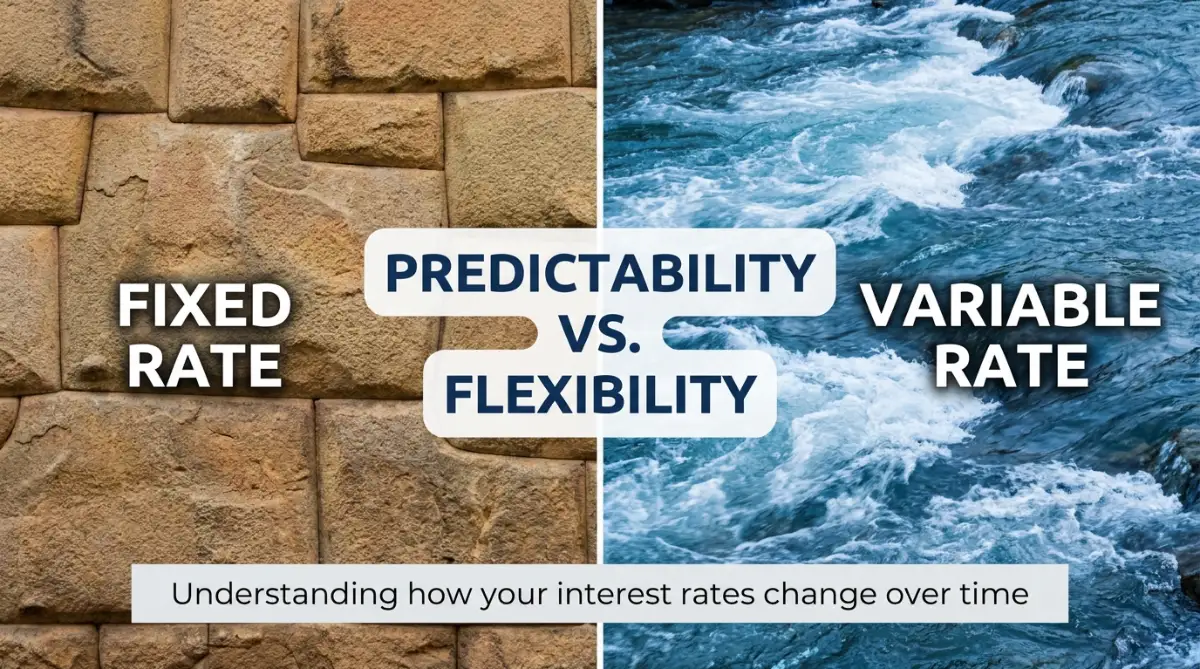
A fixed interest rate stays the same for the entire duration of your loan or a set period of time. This means your principal and interest payment remains exactly the same month after month. It is the ultimate tool for someone who hates surprises and wants to plan their budget down to the last cent. You are essentially paying a premium for the certainty that comes with a stable number.
- Pros: You never have to worry about market spikes affecting your payment.
- Cons: You might miss out on potential savings if the overall market rates fall.

The Flexibility of Variable Rates
A variable interest rate is tied to a benchmark, which means it can change whenever the market shifts. Sometimes your payment goes down, which feels like a mini-win for your wallet, but it can also go up without much warning. It is a more adventurous choice that requires you to have a bit of a "buffer" in your budget. You are trading certainty for the chance that your interest cost might decrease over time.
Insider Bank Secret You Should Know:
Did you know that variable rates are usually tied to something called the "Prime Rate"? When you watch the evening news and hear that the Central Bank is raising rates to fight inflation, that is your direct warning sign. If you have a variable loan, your monthly bill is about to get more expensive within the next 30 days.
- Pros: You get the benefit of lower rates if the economic environment improves.
- Cons: You have to be prepared for the reality that your monthly payment could increase unexpectedly.
Quick Math: Fixed vs. Variable on a $10,000 Loan
- Fixed at 6%: You pay exactly $193 every single month for 5 years. Zero stress.
- Variable starting at 4%: You pay $184 right now. But if the market jumps next year and your rate hits 8%, your payment suddenly shoots up to $202.
- The Bottom Line: A variable rate only saves you money if you have extra cash in your bank account to handle a sudden price hike.
Choosing the Right Path for Your Financial Future
You might be wondering which one is actually better for you, but that depends entirely on your personal style and your current budget. If you are the type of person who sleeps better when you know your exact bills for the next year, the choice is clear. If you are someone who keeps a healthy emergency fund and doesn't mind a little fluctuation for a potentially lower average cost, you might lean toward the other side.
Analyzing Your Tolerance for Risk
Before you sign on the dotted line, you need to be honest about your financial habits. Ask yourself if a sudden increase of a certain percentage would cause you to struggle to pay your other bills. If the answer is yes, then you should strongly consider sticking to the stability of a fixed arrangement. It is much better to pay a little more for peace of mind than to save a small amount at the cost of your nightly sleep.
The Power of Proactive Budgeting
Pro Tip: I learned the hard way that even with a fixed rate, you should still keep an eye on your overall financial picture. Once, I had a fixed loan but ignored my credit card debt, and that nearly cost me my financial freedom when an emergency hit. I realized that your loan type is only one piece of the puzzle; your total debt management matters just as much as the rate you get.
If you are still trying to decide how different loan structures impact your long-term wealth, take a moment to look at this simple visual guide.
To help you visualize how these rate changes look in real-time, watch this clear breakdown of how market shifts affect your monthly loan payments.
Why Market Trends Matter More Than You Think
Even if you choose a fixed rate, the world outside your window still affects the rates offered by banks. Banks don't just pick numbers out of thin air; they look at central bank policies and the general health of the economy. When you see news headlines about interest rates, it is helpful to pay attention because those stories are predicting your future borrowing costs. Knowing what is happening in the big picture can help you time your borrowing decisions more effectively.
Finding Your Comfort Zone
You are the one who has to live with your loan, so don't let anyone pressure you into a structure that feels wrong. If a lender tells you that you "must" take a variable rate because it looks cheaper right now, take a breath and check your own math. Does that rate fit your budget if it jumps by one or two percentage points? If you can confidently say yes, then it might be a valid option for your specific goals.
The Secret Language of Loan Terms
Many borrowers get stuck because they focus only on the interest rate and ignore the other details. Terms like loan duration, compounding frequency, and prepayment penalties are just as important as the rate itself. A low rate might look attractive, but if the loan has hidden fees or strict rules about how you pay it off early, it might not be the bargain you think it is. Always ask your lender for a complete breakdown of costs beyond just the monthly interest.
- Duration: How many years are you going to be paying this off?
- Compounding: How often is interest added to your total balance?
- Prepayment: Can you pay it off early without being punished by a fee?
Understanding these components turns you from a passive borrower into an active financial manager. You aren't just signing a document; you are building a strategy that will impact your net worth for years to come. Take the time to read the paperwork—every single page—because knowledge is the best defense against making a costly mistake.
Mastering Your Financial Strategy
Now that you have a better grasp of the difference between these two worlds, you are ready to make a move. Start by listing your current debts, looking at your income, and deciding what kind of financial life you want to lead. If you want to build wealth, your goal should be to pay the least amount of interest possible over the life of your loan. That might mean choosing a shorter loan term even if the monthly payment is a bit higher.

A Simple Plan for Your Next Loan
- Check Your Credit: A better score usually leads to better rates regardless of the loan type.
- Run the Numbers: Don't just trust the bank's calculator; create your own spreadsheet with different scenarios.
- Ask Questions: If you don't understand a term, ask them to explain it in plain English until it makes sense.
- Stay Prepared: No matter what rate you pick, always have a small savings cushion for the unexpected.
You have the power to direct your financial future. It might feel like a lot of work right now, but every hour you spend understanding these concepts saves you countless hours of stress later. You are doing the hard work today so that you can enjoy more freedom tomorrow. Keep going, stay curious, and always prioritize your own peace of mind over a quick deal.
Taking Your Financial Control to the Next Level
Once you understand the basic mechanics of interest, you can start using that knowledge to work for you. Many people simply accept the first offer a bank gives them, but that is a huge missed opportunity. You should always compare your loan options across multiple lenders before signing anything. This practice alone can save you thousands over the life of your agreement.
Pro-Level Secrets for Loan Management
One of the smartest things I ever did was start treating my debt like a business account. I learned that even with a fixed rate, you can often save money by making extra payments toward the principal balance. This acts like a secret weapon because it reduces the amount of interest that gets added to your total debt each month. You can check out government guidance on managing credit to see how these small, extra payments create a snowball effect on your savings.
Another expert secret is to watch the overall economic health of the market. Even if you are locked into a fixed rate, if market rates drop significantly, it might be worth investigating if a refinance is possible. You have to weigh the costs of a new loan against the savings, but keeping your eyes open can lead to major rewards. Always run the numbers for yourself rather than just listening to what the salesperson suggests.
To keep your results strong in the long run, try creating a "money date" once a month. This is where you sit down for twenty minutes with a cup of coffee and review all your active loan balances. Seeing the progress you make each month keeps you motivated and helps you spot errors or missed payments before they turn into major problems. This habit builds a level of discipline that keeps your credit score shining bright.

Watching Out for Hidden Pitfalls
One of the biggest mistakes I see people make is choosing a variable rate just because it has a lower "starting" rate. These teaser rates are designed to get you in the door, but they often jump up much higher than a standard fixed rate after a short time. If you do not have a budget that can handle a sudden spike in payment, you are setting yourself up for a very stressful situation. Relying on the initial low price without looking at the long-term potential can be a costly trap.
Another common trap is the "auto-renew" feature on some credit lines or short-term loans. People often forget that their interest rate might reset to a much higher level once an initial promotion expires. You should mark your calendar for these key dates so you are never caught off guard by a surprise increase. It is also dangerous to focus only on the monthly payment amount while ignoring the total cost of the loan. A loan might seem affordable month-to-month, but if it lasts for decades, you end up paying back far more than you ever borrowed.
Ignoring the fine print about how interest is calculated can also be a major mistake. Some loans use a method where interest is added daily, while others do it monthly. While it sounds like a small detail, the daily method can result in you paying slightly more interest over time. Taking the time to understand these small details keeps you in the driver’s seat. Avoiding these common traps is simple if you stay curious and keep your budget organized.
Your Roadmap for Tomorrow
You have all the information you need to make a smart decision about your financial path. Remember that your goal is to choose the option that fits your life, not just the one that looks good on a screen. Every choice you make from this point forward is a step toward a more secure future where you are in full control. I suggest you start by setting a clear goal for how much debt you want to clear by the end of this year.
Action Plan for Your Financial Future
- Review your current loans: Check if you have fixed or variable rates.
- Audit your budget: Can you afford a rate jump if you have a variable loan?
- Set a goal: Decide on one debt you want to pay down faster this month.
- Stay consistent: Keep your monthly "money date" to stay on track.
I know that looking at debt and interest rates can feel like a heavy task, but I promise that the relief you feel after you take control is worth every bit of effort. My own journey changed when I stopped feeling like a victim of the banks and started treating my finances as a project I was in charge of. You have the power to do the exact same thing starting right now.
Common Questions About Loan Interest
Why do banks change interest rates so often?
Banks adjust rates based on central bank decisions and the general health of the economy. They do this to balance their own costs and manage the risks of lending money to different people.
Can I change my variable rate to a fixed one later?
Yes, many lenders allow you to refinance your variable loan into a fixed-rate loan. You should check the terms of your current agreement for any fees or requirements to make this switch.
What is an APR and why does it matter?
APR stands for Annual Percentage Rate, and it gives you a clearer picture of the total cost of a loan, including interest and fees. It is the best number to use when you are comparing two different loan offers.
Does my credit score affect my interest rate?
Absolutely, your credit score is one of the main factors banks use to determine your rate. A higher score tells the bank you are a low-risk borrower, which often helps you qualify for a lower interest rate.
Disclaimer: This content is provided for informational purposes and should not be considered professional financial or legal advice. Always seek the guidance of a qualified financial advisor regarding your specific situation before entering into any loan agreements.