The Silent Weight of Borrowed Money: My Personal Wake-Up Call
Have you ever looked at your credit card bill and thought, "Wait, I bought what?" I used to feel that exact same panic every single month. We swipe, we tap, and we convince ourselves we deserve a treat, but the truth is, the math stops making sense fast. Let me show you exactly why our brains trick us into borrowing money we do not have, and how I finally broke that exhausting cycle.
I felt completely trapped by my own spending habits. It was a terrifying realization that I was no longer in control of my own finances, but rather, my impulses were controlling me. I was officially stuck in the endless loop of over-borrowing.
This is a reality for so many of us today. We swipe a piece of plastic or tap our phones without feeling any immediate pain of losing money. But the aftermath is incredibly painful. Debt sneaks up on you quietly, and before you know it, it starts destroying your mental peace. You wake up worrying about minimum payments, and you go to sleep stressing about interest rates.
Quick Takeaways: How to Beat the Borrowing Trap
- Your brain treats digital credit like "free money" because you never feel the physical pain of handing over hard cash.
- Delaying any non-essential purchase by exactly 72 hours naturally kills the emotional urge to spend.
- Credit limits are not your actual money—they just show the maximum amount of debt the bank hopes you will take on.
- You can outsmart your own bad habits by deleting saved card details and setting up loud, strict spending alerts on your phone.
The Mind Game: Why We Keep Swiping and Ignoring the Math
We often think that managing money is simply about math. We assume that if we just calculate our income and expenses, everything will be perfect. But personal finance is almost entirely about human behavior and psychology. Our brains are actually wired to fall into the trap of over-borrowing.
The Illusion of "Frictionless" Spending
Have you ever noticed how easy it is to buy things online? You just click one button, and the item is on its way to your door. This is called frictionless spending.
When we used to pay with physical cash, we actually felt a psychological pain of parting with our hard-earned money. Counting out the bills made the purchase feel very real. Now, digital wallets and credit cards remove that emotional pain completely.
Because you do not see the money leaving your hands, your brain treats it like free money. This specific disconnect is the main reason why we easily blow past our credit limits without a second thought.

The Dopamine Rush of the Purchase
Every time you buy something new, your brain releases a massive hit of dopamine. Dopamine is the chemical that makes you feel happy and rewarded.
When you feel stressed, bored, or sad, your brain naturally looks for a quick dopamine fix. Buying a new pair of shoes or the latest gadget on credit gives you that instant rush of joy.
However, this happiness is incredibly short-lived. The moment the package arrives, the thrill fades away, leaving you with nothing but a higher credit card balance. Your brain then craves another hit, keeping you trapped in a vicious cycle of emotional spending and borrowing.
Here is a quick look at how this emotional spending cycle actually works in real life. I call it the "Friday Night Trap":
See the pattern? You are trading months of future peace for just a few minutes of temporary relief.
Present Bias: Choosing Today Over Tomorrow
Human beings have a massive flaw in how we process time. We naturally prioritize our present desires over our future well-being. This concept is scientifically known as present bias.
When you see a beautiful watch or an expensive vacation, the reward is immediate. The pain of paying for it, however, is pushed weeks or months into the future. Your brain easily convinces you that "Future You" will somehow have more money and better discipline to handle the bill.
We essentially steal financial security from our future selves just to satisfy a temporary craving today. Recognizing this mental trick is the very first step toward changing your borrowing habits.

Myth vs. Reality in Over-Borrowing
To truly understand our spending habits, we must break down the lies we often tell ourselves. Here is a quick look at how our minds trick us.
Understanding these realities helps you build a mental defense against clever marketing tactics. Once you see the truth behind the shiny offers, you naturally start making smarter choices.
Pro Tips and Expert Insights for Breaking the Habit
Sometimes, the best lessons come from our biggest mistakes. I want to share a small shift in my mindset that completely changed my financial life.
My Personal Realization: I used to treat my credit limit as my available bank balance. If I had a limit of five thousand dollars, I felt like I had five thousand dollars to spend. I had to strictly train my brain to understand that a credit limit is not my money; it is exactly how much debt the bank is allowing me to fall into. Changing that one thought instantly stopped my impulse spending.
Before diving into the exact management techniques, you need to understand how the experts view this problem.
Here is an incredible breakdown of how you can logically map out your debt and stop emotional spending. Check out this eye-opening explanation below to see exactly how small psychological shifts create massive financial wins.
Rewiring Your Brain: Actionable Techniques to Manage Credit Limits
Now that we understand exactly why our brains push us to over-borrow, we can start fixing the problem. You do not need to cut up all your credit cards or live a miserable life to get out of debt.
You just need to set up smart psychological barriers. These techniques are designed to protect you from your own impulsive thoughts.
Create Intentional Friction
Since the main problem is frictionless spending, the solution is to add friction back into your life. You need to make it slightly annoying to spend money on your credit cards.
Start by completely deleting your saved credit card information from your favorite online stores and shopping apps. Do not let your browser auto-fill your card numbers.
If you have to physically get up, find your wallet, and type out the sixteen-digit number every single time you want to buy something, you give your brain time to think. That small delay is often just enough time to realize you do not actually need the item.
The 72-Hour Cooldown Rule
Impulse buying is strictly an emotional reaction. To fight emotion, you must use time.
Implement a strict 72-hour rule for any non-essential purchase over a certain dollar amount. If you see an expensive jacket or a new gaming console you want, you are not allowed to buy it right away.
Put it on a list and wait exactly 72 hours. During those three days, the intense dopamine craving will naturally fade away. If you still logically want the item after the time has passed, and you can truly afford it, then you can make the purchase. Most of the time, you will find that the intense desire is completely gone.
Use the "Cost per Use" Mindset
We often justify over-borrowing by convincing ourselves that the expensive item is a great investment. To counter this, you need to start calculating the true "cost per use."
If you borrow money to buy an expensive espresso machine, how many times will you realistically use it? If you only use it once a month, that cost per use is incredibly high.
On the other hand, a good mattress that you sleep on every single night has a very low cost per use. By forcing your brain to calculate this metric, you shift from emotional thinking to purely logical thinking. This helps you avoid borrowing money for useless things that just sit in your closet.
Lower Your Own Limits Artificially
Your bank might give you a massive credit limit because they want you to spend more. However, you do not have to accept their rules.
You can call your bank and ask them to lower your credit limit to a number that matches your actual monthly income. If you do not want to officially lower the limit, you can set up strict spending alerts on your banking app.
Tell the app to send you a loud text message the moment your balance hits twenty percent of your total limit. Seeing that warning pop up on your phone acts as a psychological stop sign, preventing you from going too far.
I actually borrowed a brilliant trick from a local bank manager I met last year. He told me about the "20/10 Rule" for consumer debt. He explained that you should never let your total credit card debt exceed 20% of your yearly income, and your monthly payments should never eat up more than 10% of your take-home pay. Once I started tracking my spending against this exact rule, it became impossible to over-borrow without immediately noticing the danger.
Shift from a Deprivation Mindset to an Empowerment Mindset
When people try to manage their credit, they often feel sad. They feel like they are punishing themselves by not spending money.
This feeling of deprivation is exactly why most people give up on their budgets. You must completely change how you view your financial limits.
Do not tell yourself, "I cannot afford this right now." Instead, confidently say, "I am choosing to keep my money for something more important." This completely changes the power dynamic in your brain. You are no longer a victim of a strict budget; you are a powerful decision-maker protecting your future wealth.
Automate Your Good Decisions
Our willpower is like a battery. Throughout the day, as we make decisions, that battery slowly drains. By the end of the day, your willpower is incredibly low, which is why late-night online shopping is so common.
To beat this, you must automate your good financial choices early in the month. Set up automatic payments to clear your credit card balances the exact day your paycheck arrives.
When the money automatically moves to where it needs to be, you do not have to rely on your daily willpower. You successfully remove the human error from your personal finances.
Visualize the True Cost of Interest
Interest is an invisible thief. Because we cannot see it, our brains ignore it.
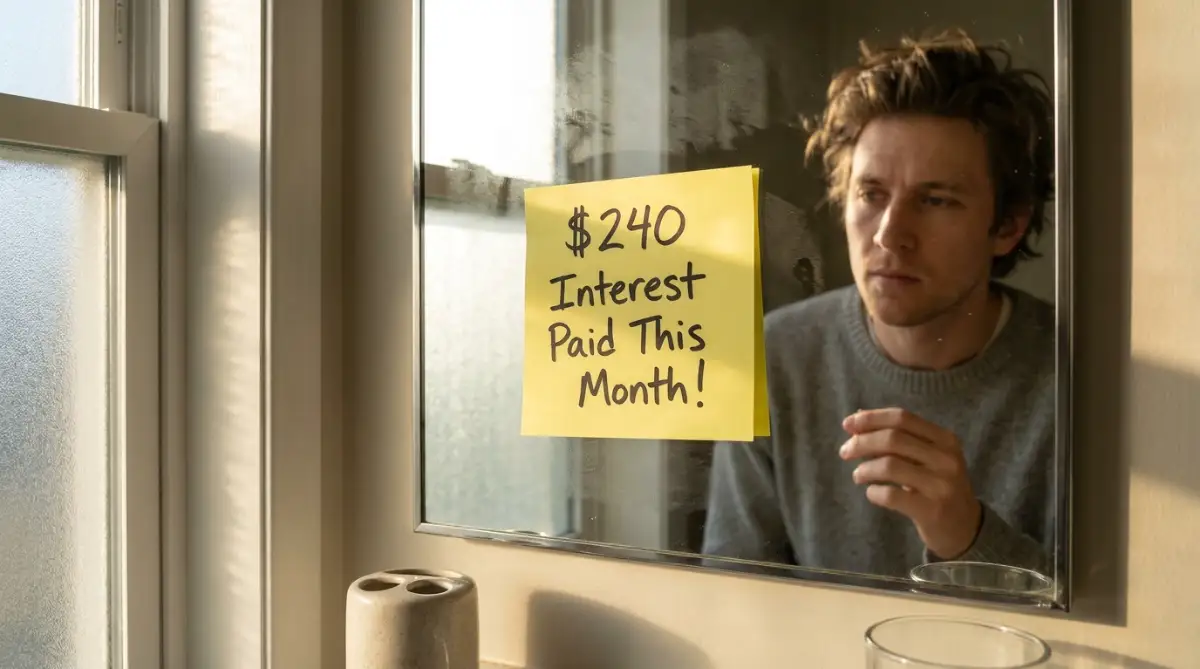
To manage your credit limits properly, you need to make the interest visible. Take a bright sticky note and write down exactly how much money you pay in interest every single month. Put that note right on your computer monitor or your bathroom mirror.
When you see that you are losing a large amount of cash every month just for the privilege of being in debt, it triggers a healthy sense of anger. You can use that frustration as powerful motivation to pay down your balances and stop borrowing unnecessarily.
Managing your credit limits is not just about avoiding bad debt. It is about taking back complete control of your mind and your future. By understanding these deep psychological triggers, you stop fighting against yourself. You finally learn how to make your brain work for your financial success, rather than against it.
Mastering the Long Game: Next-Level Credit Management Secrets
Changing your spending behavior for a few days is relatively easy. The real challenge is maintaining those good habits over the long haul without feeling completely exhausted. To build lasting wealth, you have to move beyond basic budgeting and start hacking your own psychology.
Most financial advice focuses heavily on restricting your life and punishing your mistakes. I have found that taking a positive, deeply psychological approach actually creates permanent change. Let us explore some incredibly powerful strategies that help you manage large credit limits without losing your peace of mind.
Practice Values-Based Spending
We constantly fail at traditional budgeting because it feels like a strict diet. When you tell yourself you can never buy coffee or new clothes again, your brain naturally rebels. You end up binge-shopping just to feel a sense of freedom.
Instead of cutting everything out, try a concept called values-based spending. This simply means you aggressively cut costs on things you do not care about, so you can spend guilt-free on things you deeply value.
For example, if spending time with your family is your top priority, keeping a budget for weekend trips makes perfect sense. However, if you are blindly buying expensive clothes just to impress coworkers, you are wasting your financial energy. When your spending perfectly matches your core values, the desire to over-borrow naturally disappears.
The Power of Micro-Payments
Seeing a massive credit card bill at the end of the month triggers severe anxiety. Our natural response to this anxiety is to ignore the bill entirely, which just leads to more interest charges. You can completely bypass this fear by making micro-payments throughout the month.
Instead of waiting for the due date, try paying a small portion of your balance every single Friday. If you spend fifty dollars on groceries, immediately transfer fifty dollars to your credit card from your checking account. This brilliant habit connects the pain of paying to the joy of buying in real-time.
By the end of the month, your balance is essentially zero, and you completely avoid the stress of a giant bill. Making frequent payments also keeps your credit utilization incredibly low. This is one of the best ways to avoid the hidden habits ruining your credit score and how to fix them fast.
Understand the "All-You-Can-Eat" Buffet Trap
Having a massive credit limit is exactly like walking into an endless buffet on an empty stomach. Your brain sees all that available food and convinces you that you need to eat everything in sight. The bank gives you a high limit hoping you lack the discipline to control your appetite.
You have to actively remind yourself that just because the limit is high, it does not mean you are wealthy. A ten thousand dollar limit is simply a ten thousand dollar trap waiting to be triggered. If you struggle with this visual temptation, ask your bank to lower the limit to something you can actually manage.
It is always better to have a low limit and sleep peacefully than a high limit that keeps you awake at night. According to research from the American Psychological Association on the emotional toll of financial stress, carrying unmanageable debt is a leading cause of severe anxiety and relationship problems. Do not let a piece of plastic dictate your mental health.
The Cash Flow Delay Technique
Whenever we get a raise at work, we usually celebrate by instantly upgrading our lifestyle. We buy a newer car, eat at nicer restaurants, and borrow more money because we feel richer. This dangerous habit is called lifestyle creep, and it keeps high-income earners completely broke.
The secret to beating lifestyle creep is the cash flow delay technique. When you start making more money, completely ignore the extra income for the first six months. Continue living on your old budget and send every extra dollar toward paying off your existing credit card balances.
This simple delay gives your brain time to adjust to your new financial reality without immediately turning to debt. You get the ultimate reward of financial freedom rather than the temporary thrill of a new car payment. Once the debt is gone, you can finally enjoy your hard-earned money without the heavy burden of high-interest rates.
The Hidden Traps: Where Smart People Lose Their Money
Even with the best intentions, our brains can trick us into making terrible financial decisions. We often try to outsmart the banking system, only to dig ourselves into a much deeper hole. You must learn to spot these psychological traps before they completely drain your bank accounts.
Let us walk through the most dangerous mistakes people make when trying to manage their borrowing habits.
The Balance Transfer Merry-Go-Round
One of the biggest traps in personal finance is the zero-percent balance transfer offer. Banks send you beautiful letters promising a fresh start if you just move your debt to their new card. It sounds like a fantastic idea, so you transfer your balance and feel an instant wave of relief.
However, moving your debt around does absolutely nothing to fix the spending habits that caused the problem. Most people transfer the balance and then slowly start spending on the original credit card all over again. Within a few months, they have maxed out both cards and doubled their overall debt.
You cannot borrow your way out of a borrowing problem. If you truly want to simplify your payments, you need a solid plan. Before moving your money around, I highly recommend understanding the reality of debt consolidation to ensure you are actually solving the root issue.
Relying on Credit as an Emergency Fund
Far too many families believe that an empty credit card is the exact same thing as an emergency fund. They do not save any actual cash because they assume the card will save them if the car breaks down. This is an incredibly dangerous mindset that sets you up for financial disaster.
When a real emergency hits, you are already stressed and vulnerable. Putting a massive medical bill or car repair on a credit card just adds high-interest debt to an already terrible situation. It turns a temporary crisis into a permanent financial burden that lasts for years.
You need actual cash sitting in a bank account for emergencies. You should also understand how your specific loan terms work, especially understanding fixed versus variable interest rates, so you are never caught off guard. Real wealth is built entirely on cash stability, not borrowed promises.
Falling for Quick Fixes and Predatory Offers
When you are drowning in over-borrowed funds, desperation slowly takes over your mind. You start looking for any quick escape hatch, which makes you a perfect target for shady lenders. You might see online ads promising to magically erase your debt or offer instant cash advances.
These companies prey on your emotional exhaustion. They offer loans with completely ridiculous fees that trap you in a cycle of poverty. Before you sign any paperwork out of pure panic, you must be capable of identifying predatory loan warning signs.
The Federal Trade Commission guidelines on avoiding debt relief scams clearly state that no company can guarantee to make your debt disappear overnight. The only real way out is through careful planning, better habits, and extreme patience.
Mixing Business Dreams with Personal Debt
Many passionate entrepreneurs make the heartbreaking mistake of funding their business ideas with personal credit cards. They believe so deeply in their vision that they max out their limits, assuming the business will pay it all back. This completely blurs the line between personal security and business risk.
If the business hits a rough patch, the stress instantly bleeds into your personal home life. The bank does not care if your business failed; they will still demand their money from your personal accounts. This is why protecting your personal assets from business debt is an absolute necessity for any entrepreneur.
Always keep your personal credit limits completely separate from your business expenses. If things get incredibly tight, look for safer alternatives rather than swiping your family's safety net. Sometimes, safely tapping into your home's equity can be a much smarter and lower-interest option than using personal credit cards.
Your Blueprint for Lasting Financial Peace
Overcoming the habit of over-borrowing is a massive personal victory. It is not just about having more money in your bank account; it is about reclaiming your mental energy and daily joy. When you finally break free from the heavy chains of debt, your entire outlook on life becomes brighter.
You stop waking up with a heavy chest, worrying about what unexpected bill is going to arrive today. Instead, you wake up with total confidence, knowing that your financial life is fully under your control. The decisions you make today will directly fund the peaceful, happy life you deserve tomorrow.
Here is exactly what you should do starting tomorrow morning to take your power back:
1. Forgive Yourself: Holding onto deep guilt about past spending only causes more emotional stress. Acknowledge the mistakes you made, learn the hard lessons, and confidently move forward without looking back.
2. Audit Your Environment: Go through your phone and delete every single shopping app that triggers your impulse buying. Unsubscribe from marketing emails that constantly tempt you with flashy sales. You must protect your daily environment from financial distractions.
3. Set Clear Boundaries: Log into your banking app and set up strict text message alerts for every single transaction. This keeps you highly aware of where every dollar is going.
4. Talk About It: Money thrives in absolute silence. Find a trusted friend, partner, or mentor and openly discuss your financial goals. Having an accountability partner makes the journey infinitely easier and much less lonely.
If you are ever confused about how much credit you should actually be using, you can always check the Consumer Financial Protection Bureau on maintaining healthy credit usage for trusted, unbiased advice. Your goal is progress, not absolute perfection.
Common Questions About Managing Credit Limits
Does asking my bank to lower my credit limit hurt my overall credit score?
Lowering your credit limit can temporarily affect your score because it changes your overall credit utilization ratio. However, if having a high limit causes you to overspend and miss payments, lowering it is incredibly beneficial. Protecting yourself from massive debt is always much more important than a temporary dip in your score.
Why do I feel so guilty immediately after buying something expensive?
That heavy guilt is your logical brain catching up with your emotional brain. When you buy something on impulse, you are completely driven by the temporary high of dopamine. Once the purchase is complete, reality sets in, and you realize you have jeopardized your financial security.
How much of my available credit limit should I actually use each month?
Financial experts highly recommend keeping your total balance below thirty percent of your available limit. For example, if you have a one thousand dollar limit, try to never carry a balance above three hundred dollars. Staying well below this number proves to lenders that you are highly responsible with borrowed money.
Can I physically freeze my credit cards to stop my impulse spending?
Yes, putting your credit cards in a container of water and placing them in the freezer is a famous psychological trick. If you urgently want to buy something, you have to wait for the block of ice to melt entirely. This forces a massive time delay, giving your brain hours to cool down and rethink the emotional purchase.
Should I close my oldest credit card after I finally pay it off?
You generally want to keep your oldest credit accounts open, even if you never use them. The length of your credit history plays a huge role in proving your long-term financial stability. Just cut up the physical piece of plastic so you cannot swipe it, but leave the actual account open and active.
I know exactly how overwhelming it feels to stare at a mountain of borrowed money, but I promise you have the power to change this. Start with just one small habit today, and slowly watch your financial confidence return. You truly deserve a life filled with peace, not payments!
Disclaimer: The information provided in this article is strictly for educational and informational purposes and does not constitute professional financial or legal advice. Every financial situation is uniquely different. Always consult with a certified financial advisor or professional planner before making any major decisions regarding debt management, credit limits, or loan agreements.