The Day My Financial Confidence Shattered
Ever applied for a loan, totally expecting an easy "yes," only to get slapped with a painful denial? Yeah, I have been there too, and it is honestly the worst feeling in the world. I thought I was great with money because I always paid my major bills on time, but it turns out I was making sneaky little mistakes that were quietly trashing my financial reputation. Let me show you exactly what these hidden traps are, so you never have to face that embarrassing rejection email yourself.
I genuinely felt embarrassed. I had been planning a major home renovation for months, and I already told my family the funds were secured. Now, I had to face them and admit that a bank did not trust me enough to lend me the money. The worst part was the confusion. I kept asking myself, "What did I do wrong?"
It took me weeks of digging through my financial history to finally understand what happened. I was a victim of invisible mistakes. These were small, seemingly harmless financial decisions I made without realizing the heavy damage they were doing to my reputation as a borrower. I realized that keeping a good financial standing requires much more than just paying your monthly bills.
Every day, thousands of hardworking people experience this exact same heartbreak. You plan your future, you work hard, and suddenly a computer algorithm decides you are too risky. The mental toll this takes is heavy. It creates unnecessary anxiety, ruins long-awaited plans, and leaves you feeling completely powerless over your own financial life.
But you do not have to stay in the dark anymore. Through my own frustrating journey, I uncovered the exact traps that banks look for, and I am going to show you how to easily sidestep them before you ever fill out a loan application.
Your 60-Second Action Plan to Stop the Bleeding:
- Never close your oldest accounts: Keep them open and active to protect your long history of good behavior.
- Pay before the statement closes: Do not wait for the final due date; pay your balances early to keep your reported numbers artificially low.
- Watch out for tiny forgotten bills: A $30 unpaid gym fee sent to collections will ruin your profile just as fast as a missed car payment.
- Say no to co-signing: Putting your name on a friend's loan means you take on 100% of the risk if they mess up.
Unmasking the Hidden Threats to Your Financial Reputation
When you apply for funding, lenders do not see your personality, your work ethic, or your good intentions. They only see a three-digit number that tells a story about your past behaviors. If that number is secretly bleeding, your chances of getting favorable terms drop to zero.
Most people think that only major life events, like bankruptcy or a foreclosed home, can destroy their borrowing power. The truth is much scarier. Your numbers can slowly drain away due to everyday habits that seem completely normal.
Let us break down these hidden traps and explore exactly how you can clean up your financial profile right now.
The Illusion of Unused Balances (The 30% Rule)
One of the most common ways people unknowingly hurt themselves is through something called the credit utilization ratio. This simply means how much money you currently owe compared to the total limit available to you.
Imagine you have a single credit card with a limit of ten thousand dollars. If you spend three thousand dollars on it, you are using 30 percent of your available limit. Lenders love this. They see you as a responsible person who does not rely too heavily on borrowed money.
However, things go wrong when you treat your available limit as extra income in your bank account. Let us look at a real-life scenario. Suppose my friend David has a card with a two thousand dollar limit. He uses it to buy a new laptop for eighteen hundred dollars. He plans to pay it off completely at the end of the month.
David thinks he is doing everything right because he will not carry a balance. But when the card issuer reports his balance to the bureaus mid-month, his utilization shows up at 90 percent. Immediately, his score takes a massive hit. To the computer algorithm, David looks desperate for cash, even if he has the money to pay it off in full tomorrow.
You must aim to keep your balances low at all times throughout the month. If you regularly use a lot of your available limit, consider making multiple payments throughout the month before your statement closes. This keeps your reported balance nice and low.
The Secret "15/3" Payment Hack:
Here is a personal trick I use to keep my reported balances near zero. I pay half of my monthly credit card bill 15 days before the statement closing date, and I pay the remaining half 3 days before it closes. By the time the bank reports my numbers to the bureaus, it looks like I barely use my available limits at all. This instantly makes me look like a superstar borrower!
Bold Introductory Text: Understanding your utilization ratio can be tricky, but mastering it is the fastest way to boost your approval odds. Check out this simple breakdown to see exactly how your balances impact your overall profile!
The Danger of Decluttering Old Accounts
We all love the feeling of cleaning up our lives. Sometimes, this urge to declutter spills over into our finances. You might look at an old store card or a college credit card you have not touched in years and think, "I should just close this to keep things organized."
Do not do it. Closing an old account is one of the biggest and most permanent mistakes you can make right before asking a bank for money. Your borrowing history length makes up a massive chunk of your overall profile.
When you shut down your oldest account, you are effectively wiping away years of good behavior. Lenders want to see a long, stable track record. A longer history proves you know how to manage money over different phases of your life.
Furthermore, closing an account instantly reduces your total available limit across all your cards. As we just discussed with the utilization ratio, having less total available room makes your current debts look much larger. You get hit from two different directions just by trying to be organized.
I actually learned this the hard way during my early twenties. I had an old card with a tiny limit that I thought was useless.
I closed my oldest account just to clean up my wallet, thinking it was a smart adult move. My score dropped by almost forty points the next month, and it took me a long time to build that history back up. Always keep your oldest accounts open and active, even if you just use them to buy a small coffee once every few months.
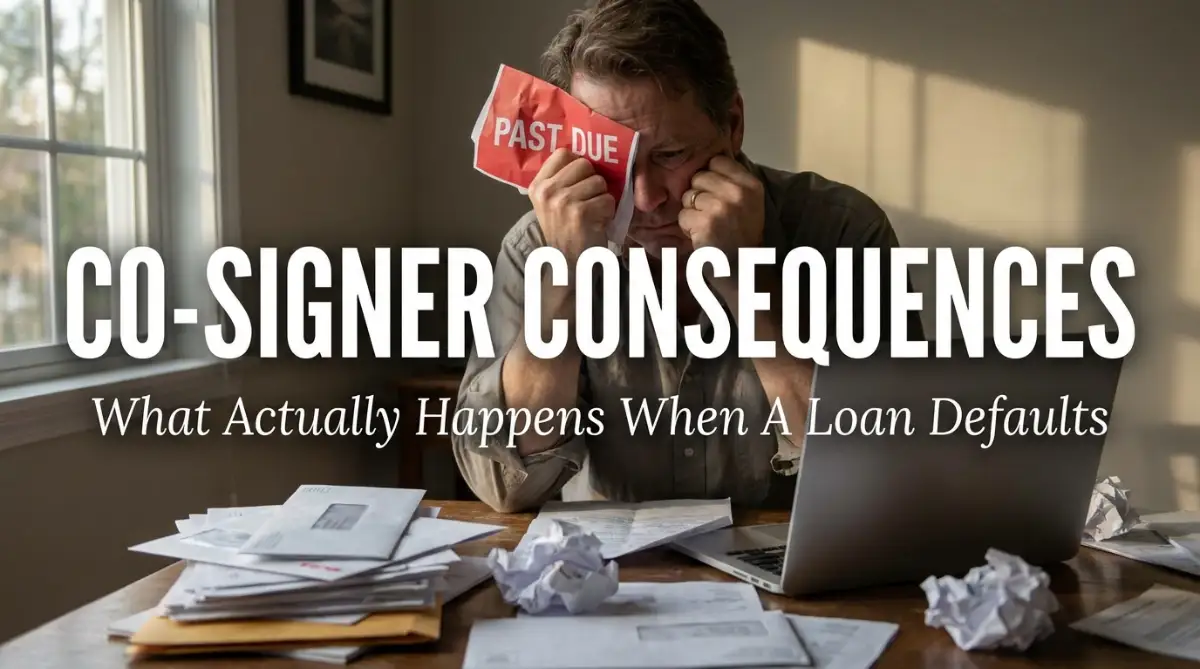
The Good Intentions Trap (Co-signing)
We all want to help our friends and family when they are in a tough spot. If your sibling or best friend asks you to co-sign an auto loan or a lease because they have poor history, your natural instinct is to say yes.
You need to understand that co-signing is not just a character reference. When you put your name on someone else's debt, that debt becomes 100 percent yours in the eyes of the bureaus.
If your sibling misses a payment by a few days, it will show up on your report as your missed payment. Your pristine history can be ruined overnight by someone else's irresponsibility or bad luck.
Even if they pay perfectly on time, the total amount of their loan is added to your overall debt load. When you go to apply for your own personal loan, the bank will look at your income and say, "You already have too much debt," even though you never drove that car or lived in that apartment.
Shopping Around the Wrong Way
When you need funding, it is incredibly smart to compare offers from different lenders. You want the best interest rates and the lowest fees. However, the way you shop around can quietly destroy your chances of getting approved.
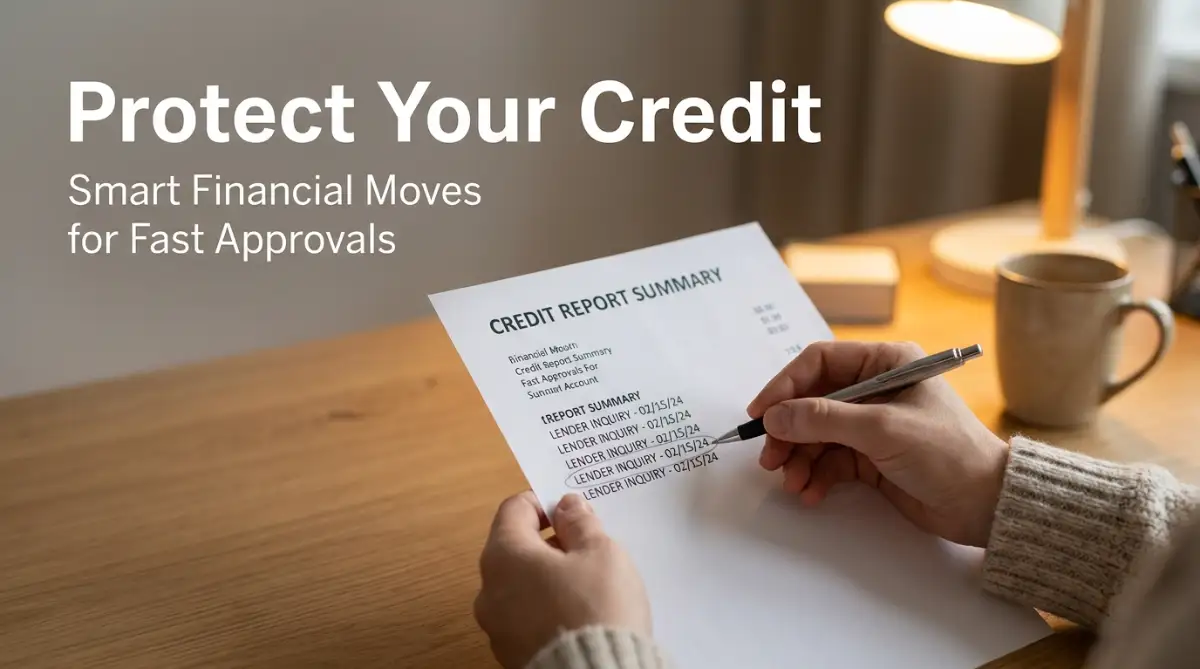
Every time you formally apply for new credit, the lender performs a hard inquiry on your profile. A hard inquiry stays on your record and knocks a few points off your total.
If you apply for five different loans at five different banks over a few months, you look like a highly desperate borrower. Lenders panic when they see too many recent applications. They assume you are in a financial crisis and are trying to grab as much cash as possible.
You need to understand the difference between soft checks and hard checks.
Always ask lenders if they can do a soft pull for a pre-approval quote. Only allow a hard pull when you are absolutely certain you want to proceed with that specific bank.
The Silent Assassins: Small Unpaid Bills
We usually worry about missing a big mortgage or car payment. We know those will cause massive damage. But what about a forgotten gym membership, a tiny medical bill, or a final utility bill from an old apartment?
These small, easily forgotten debts are silent assassins. If you move and forget to pay a thirty-dollar final water bill, the utility company will eventually sell that debt to a collection agency.
Once an account goes to collections, it will appear on your report. A collection account, no matter how small the dollar amount is, is a massive red flag for any bank. It screams that you are careless with your obligations.
I know someone who was denied a massive home improvement loan all because of a seventy-dollar dispute with an internet provider from three years prior. He had no idea the mark was even on his record until the bank rejected him.
You must be incredibly diligent about wrapping up old accounts when you move or cancel services. Always get confirmation in writing that your balance is zero.
Ignoring Your Own Financial Mirror
Perhaps the most common silent killer is simple ignorance. Most people never actually look at their own reports until a bank forces them to. They assume that if they pay their bills, everything behind the scenes is perfectly fine.
The system is run by humans and computers, which means errors happen constantly. According to multiple consumer studies, a massive percentage of everyday people have outright mistakes on their files.
You might find an account that belongs to someone with a similar name. You might see a late payment mark for a bill you definitely paid on time. You could even be a victim of identity theft without knowing it until you apply for funding.
Checking your own numbers does not hurt your standing. It is a soft inquiry. You have the right to pull your information regularly to ensure everything is accurate. If you find a mistake, you must dispute it immediately.
The dispute process can take over thirty days to resolve. If you wait to check your report until the week before you need a loan, you will not have enough time to clean up the errors.
The Mix of Your Obligations
Lenders like to see that you can handle different types of financial responsibilities at the same time. This is known as your credit mix.
If you only have one credit card and nothing else, your mix is very thin. Lenders might hesitate to give you a large cash installment loan because you have never proven you can handle fixed monthly payments over a set period.
While you should never take on debt just to build your mix, you should be aware of how your portfolio looks to an outsider. Having a healthy combination of revolving accounts (like cards) and installment accounts (like a small auto loan) shows maturity.
When you prepare for a new application, look at your current standing. Make sure your payments are automated so you never miss a due date. Keep your balances incredibly low. Protect your oldest accounts with your life.
By adjusting these everyday habits, you make yourself an ideal candidate for the best rates available. Your financial future is entirely in your hands, and cleaning up these hidden mistakes is the very first step toward getting the funding you need to achieve your goals.
Pro-Level Strategies to Bulletproof Your Financial Reputation
Now that you know how easily those hidden traps can ruin your application, it is time to flip the script. You can actually take complete control over your borrowing profile by making a few smart, proactive moves.
Instead of just hoping for a good outcome, you need to think exactly like a lender. Banks look for stability and responsibility, and you can easily prove both by mastering the exact timing of your payments. Most everyday people just wait for their monthly bill to arrive and then pay the total before the due date.
While paying on time is obviously important for building strong financial habits, it does not always paint the best picture for lenders. You see, your card issuer reports your balance to the bureaus on a specific day each month, called the statement closing date. This closing date usually happens weeks before your actual payment due date.
Think of this statement closing date like a sudden photograph taken of your bank account. If your balance is high on that exact day, the photograph makes you look like a heavy spender. Even if you pay the entire balance to zero the very next morning, the system has already recorded that high number.
To beat this system, you simply need to find out your statement closing date. You can easily find this information by looking at your latest monthly statement or calling your bank directly. Once you know this specific date, make sure you pay down your balances a few days before it arrives.
This simple trick ensures that when the bank takes that snapshot, your reported balance is incredibly low. Lenders will see this low number and instantly view you as a highly responsible borrower. It is one of the easiest ways to artificially boost your approval odds without actually changing how much money you spend.
Another incredibly powerful strategy involves asking your current banks for a credit limit increase. If you have been a good customer for a while, many banks will happily raise your maximum spending limit with a simple phone call. Getting a higher limit instantly lowers your overall utilization ratio, assuming your spending habits stay exactly the same.
However, you must be completely sure the bank will only do a soft pull before you ask for this increase. A hard pull will knock points off your profile, defeating the entire purpose of the strategy. The Consumer Financial Protection Bureau offers excellent resources on understanding exactly how different inquiries impact your consumer rights.
If you are just starting out or trying to recover from past mistakes, you might want to look into the authorized user strategy. This involves asking a highly trusted family member or spouse to add your name to one of their oldest, most pristine accounts. You do not even need them to give you a physical card.
The moment you become an authorized user, their long history of perfect payments gets copied directly onto your personal file. This can give your numbers a massive, almost instant upward push. However, this is a two-way street, so if they miss a payment, it will hurt your profile just as quickly.
You should also start treating your financial profile like a living document that needs constant monitoring. You can set up free alerts through various banking apps that notify you the second a new account is opened or a balance changes. Staying alert helps you catch unauthorized activities or honest reporting errors long before you ever sit down to apply for navigating personal loan options.
Myth vs. Reality: The "Carrying a Balance" Lie
Before we move on, we need to completely destroy one of the most stubborn myths in the personal finance world. Many people honestly believe that leaving a small amount of debt on their cards each month helps their score.
The Myth: You need to pay interest and carry a small balance from month to month to prove you actively use the account.
The Reality: Carrying a balance does absolutely nothing to help your approval odds. In fact, it only costs you unnecessary money in interest charges.
According to guidelines from the Federal Trade Commission, lenders simply want to see that you borrow money and pay it back responsibly. Paying your balance in full every single month is the absolute best way to show this responsibility. Never pay interest just because you think it makes the algorithm happy.
Everyday Blunders That Destroy Approval Chances
Fixing your profile is only half the battle. You also have to actively dodge the terrible mistakes that desperate borrowers make when they need money quickly. When people face a sudden medical emergency or a major home repair, panic often sets in.
This panic leads to rushed decisions that can lock you out of getting the funding you actually need. One of the most heartbreaking mistakes I see is people completely ignoring small, annoying bills. A tiny thirty-dollar medical charge or a forgotten library fine seems harmless until it gets handed over to a collections agency.
Quick Reality Check: Buy Now, Pay Later (BNPL) vs. Traditional Cards
- Good Behavior Reporting: BNPL apps rarely report your on-time payments, but traditional cards report every single good payment to help build your profile.
- The Penalty for Mistakes: Both options will instantly report a late payment and trash your numbers.
- The Verdict: If you want to build a rock-solid financial reputation, stick to a regular card and pay it off completely every month. BNPL gives you all the risk with zero rewards.
Once a debt goes to collections, it acts like a massive red stop sign for any bank reviewing your application. I once met a young professional named Sarah who was denied a competitive auto loan simply because she forgot to return an internet router when moving apartments. The internet company sent a fifty-dollar charge to collections, and it ruined her chances of getting a reliable car for work.
You must tackle these small annoyances immediately. If you have moved recently, double-check that every single utility and subscription is completely paid off and officially closed.
The "Buy Now, Pay Later" Trap
Another modern trap that easily fools smart people is the explosion of "Buy Now, Pay Later" services. You see these options everywhere when shopping online for clothes, electronics, or furniture. They promise to split your payments into four easy chunks with zero interest.
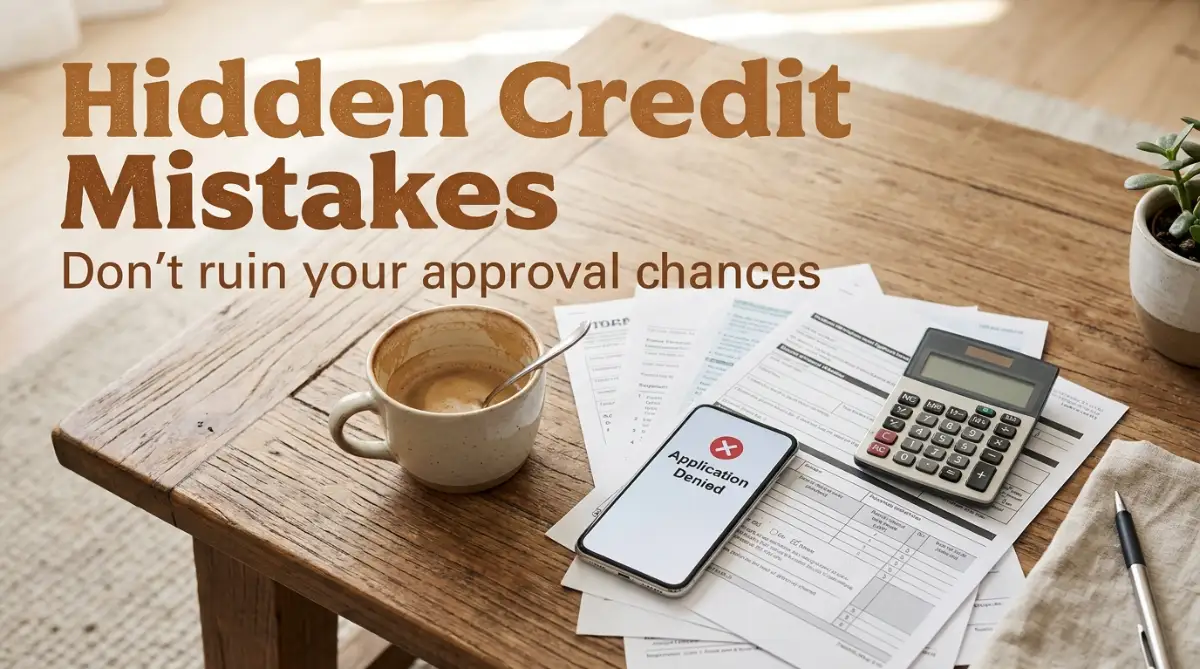
While these services seem like a harmless way for managing your monthly budget, they carry a dark secret. Many of these modern payment platforms do not report your on-time payments to the bureaus. This means you get zero positive benefits for paying responsibly.
However, the second you miss a payment, they will absolutely report the negative mark. You take on all the risk of borrowing without getting any of the long-term rewards. If a bank sees multiple missed payments from online shopping apps, they will assume you are living far beyond your means.
If you want to finance a purchase, it is almost always better to use a traditional method where your good behavior actually builds your reputation.
Maxing Out Single Cards
We talked earlier about keeping your overall debt levels low, but there is a hidden layer to this rule. Your utilization is calculated both overall and on a per-card basis.
Let us say you have three credit cards, each with a five thousand dollar limit. Your total limit is fifteen thousand dollars. If you spend four thousand dollars on just one card and leave the other two completely empty, your overall utilization looks decent.
However, the algorithm sees that one specific card is nearly maxed out. To a lender, maxing out a single account signals extreme financial stress. They assume you are heavily relying on that specific card to survive the month.
Instead of putting a massive purchase on one account, try spreading your normal daily expenses across multiple cards. This keeps the individual balances low and shows lenders you are in complete control of securing affordable financing.
Disputing Accurate Negative Marks
When people finally check their reports and see a legitimate missed payment, they sometimes try to game the system. They read terrible advice online telling them to dispute the mark, hoping the bank just forgets to verify it.
The major reporting agencies have highly sophisticated systems designed to catch these fake disputes. If you falsely dispute a legitimate late payment, the system will easily verify it with your bank. The negative mark will stay exactly where it is, and you will have wasted an entire month waiting for the result.
Instead of playing games, focus on drowning out that old mistake with a flood of new, positive behaviors. Lenders care much more about what you did over the last six months than what you did three years ago. According to educational resources from MyFICO, recent positive payment history is the strongest indicator of future reliability.
If you truly have an honest mistake on your file, you absolutely should dispute it. Just make sure you gather all your proof, like bank statements and confirmation emails, before you file the claim.
Your Action Plan for Guaranteed Loan Success
Taking control of your borrowing power does not require a finance degree or a massive salary. It simply requires you to pay attention to the small details that most people ignore. You have the power to turn your financial story around starting today.
Stop letting hidden mistakes dictate whether you can achieve your family goals or handle life's surprises. Start by pulling your exact records today to see exactly where you stand. You cannot fix a problem if you refuse to look in the mirror.
Automate your minimum payments immediately so you never accidentally miss a due date again. Find out your statement closing dates and make it a habit to pay down balances before that snapshot is taken. Keep those old, dusty accounts open to protect your long history of good behavior.
Remember that every single action you take leaves a footprint. By being intentional with your spending and managing your available limits wisely, you build an incredibly strong foundation. This strong foundation gives you absolute leverage when negotiating terms for improving long-term financial health.
You deserve the peace of mind that comes from knowing you will be approved when an emergency hits. Protect your financial reputation fiercely, and the banks will practically beg to do business with you.
Burning Questions Borrowers Always Ask
How fast can my numbers change if I pay off my debt?
Once you make a large payment, it usually takes about thirty to forty-five days for the new balance to reflect on your profile. The bureaus only update your information when your bank sends them a new report, which typically happens once a billing cycle.
Will asking for a personal loan quote hurt my chances?
Not at all, as long as you specifically ask the lender for a "pre-qualification" or a soft pull. Soft inquiries do not impact your reputation, allowing you to safely compare different interest rates before making a final decision.
Can my partner's bad financial habits affect my application?
Your individual file is completely separate from your partner's, even if you are married. However, if you apply for a joint loan together, the bank will look at both profiles and heavily weigh the lower numbers.
Is it safe to use credit repair companies to fix my mistakes?
You should be extremely careful, as many of these companies charge massive fees for things you can easily do yourself for free. If you need legitimate help, it is much safer to reach out to certified, non-profit counselors from organizations like the National Foundation for Credit Counseling.
Why did my numbers drop after I finally paid off my car?
This is a very common frustration. When you pay off an installment loan, that specific account is marked as closed, which temporarily alters your active account mix. Do not panic, as your numbers will bounce back shortly as long as you continue paying your other bills on time.
I honestly wish someone had pulled me aside and taught me all these secrets before I faced that embarrassing rejection years ago. Taking a few minutes today to check your reports and adjust your payment habits will save you endless frustration down the road. My biggest hope is that you use these exact strategies to walk into your next loan application with total, unshakable confidence!
Disclaimer: The information provided in this article is for educational and informational purposes only and does not constitute financial, legal, or professional advice. Always consult with a certified financial advisor or professional before making any major financial decisions or applying for loans. We are not responsible for any actions taken based on this content.