The Day the Phone Stopped Ringing and the Letters Began
Let's get one thing straight right away: signing your name on someone else's loan is a massive financial gamble. You might think you are just helping a family member get a car or a friend rent an apartment, but the bank sees it entirely differently. To them, you are the ultimate backup wallet. If your friend misses a payment, your money, your credit score, and your peace of mind are instantly on the hook. I want to show you exactly what happens when that agreement falls apart, and more importantly, how to defend your own bank account before it is too late.
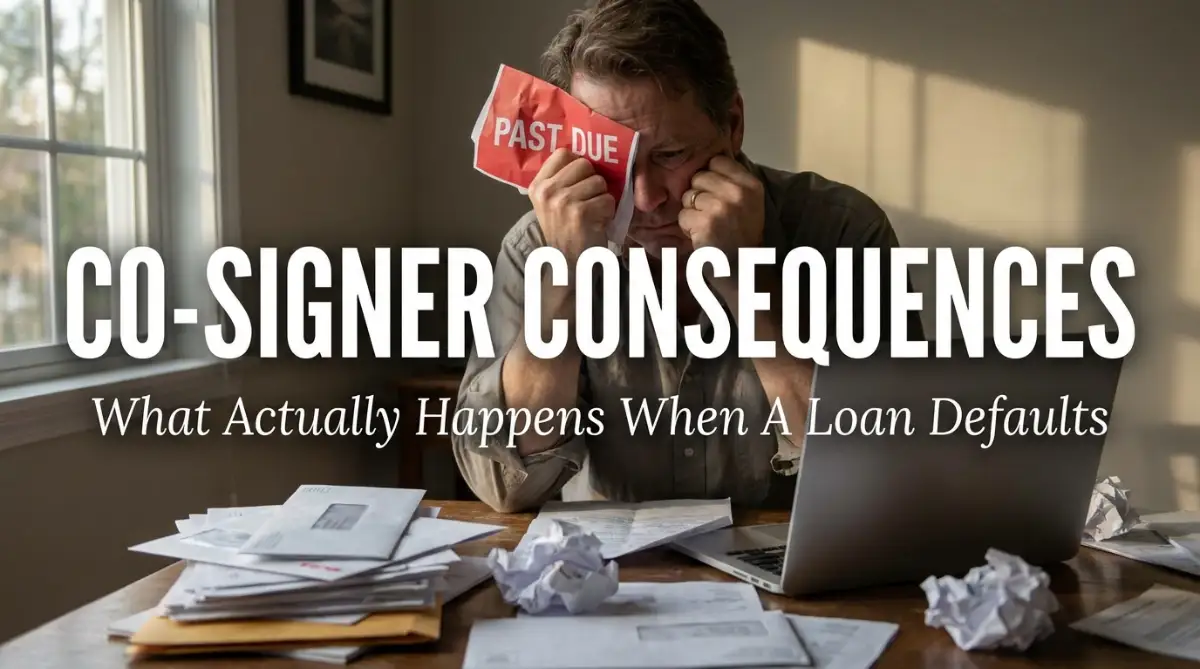
The voice on the other end was cold, mechanical, and demanding money for a car loan I did not even drive. I had co-signed for a close friend who promised me he had everything under control.
He lost his job, hid the truth from me out of shame, and completely stopped making his monthly payments. By the time the bank contacted me, the account was already in severe default.
My heart sank as I realized my own financial security was suddenly on the edge of a cliff. I was not just a backup contact; the bank viewed me as the primary target for their missing money.
Every single day, normal people make the generous decision to help a family member or friend get a loan. They sign on the dotted line because they want to help someone they love get a car, an apartment, or an education.
The daily stress bleeds into your work life, your marriage, and your overall health. People in this situation often feel trapped, angry, and deeply betrayed by the person they tried to help.
What You Need to Know Upfront:
- You are an equal target: Lenders do not care who drove the car or lived in the apartment; you owe the money just as much as the main borrower.
- Instant credit damage: A payment missed by just 30 days will tank your credit score instantly, often without giving you any warning.
- Your assets are at risk: If the loan defaults, debt collectors can legally garnish your wages and empty your personal savings accounts.
- How to fight back: You can force a refinance, hunt down a co-signer release clause, or negotiate a "Pay for Delete" settlement to save your finances.
Breaking Down the Chain Reaction of a Missed Payment
When a financial agreement goes south, the bank does not care about personal excuses or sad stories. They only care about the legal contract both parties signed at the very beginning.
Most people mistakenly think a co-signer is just a character reference or a secondary backup option. In the eyes of the law, a co-signer is entirely equal to the main borrower.

If the primary borrower misses a payment by even a single day, the negative clock starts ticking for both people. Let us look closely at how this nightmare actually unfolds in the real world.
Think of a joint contract not as a backup parachute, but as a co-pilot seat in a plane. If the main pilot passes out and the plane dives, the co-pilot is going down with them.
The Immediate Credit Score Carnage
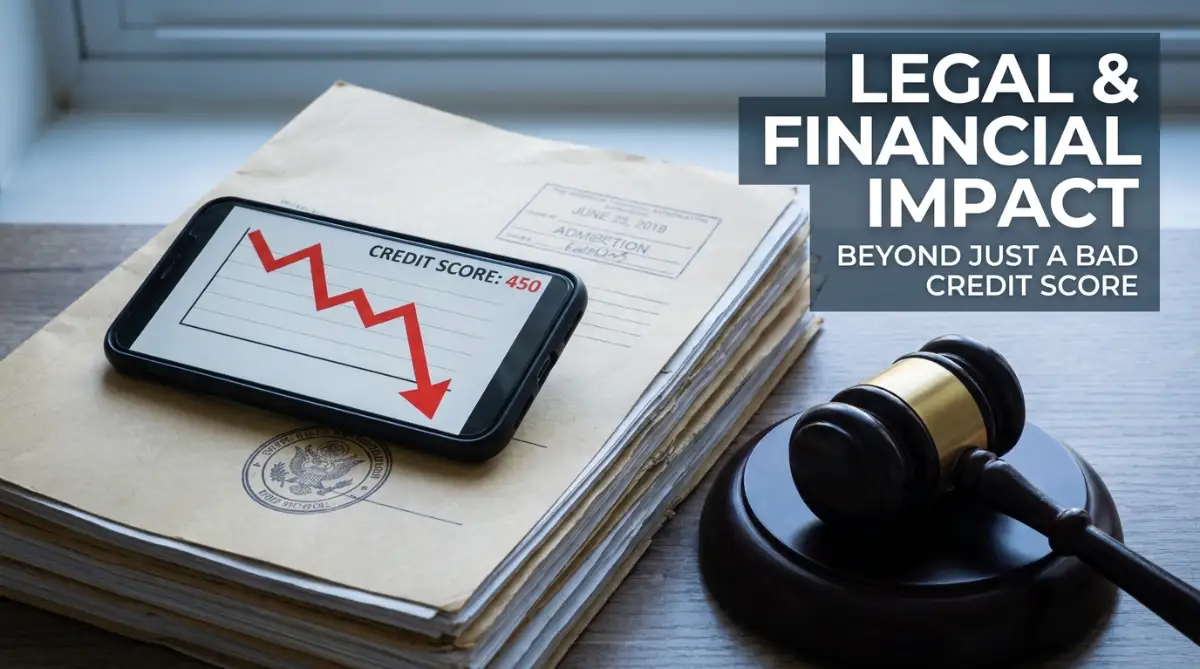
The very first thing that happens when a loan goes into default is massive damage to credit reports. Financial institutions typically report missed payments to the major credit bureaus after thirty days of non-payment.
Once that thirty-day mark passes, a massive red flag is permanently stamped onto both credit profiles. For a co-signer who has spent years building an excellent credit history, this single event can be devastating.
A single missed payment can easily drop a great credit score by over one hundred points overnight. This sudden drop happens completely without warning if the main borrower is hiding their financial struggles.

Suddenly, the co-signer might find their own credit cards unexpectedly canceled or their credit limits heavily reduced. When they try to apply for a mortgage or a simple auto loan for themselves, they get rejected immediately.
The Domino Effect: What Happens When Payments Stop?
To give you a clear picture, here is exactly how fast a single missed payment escalates for your credit profile:
| Days Past Due | What Happens to the Co-Signer? | Credit Score Impact |
| --- | --- | --- |
| 30 Days Late | Reported to credit bureaus. You get your first penalty mark. | Drops by 50 to 100 points instantly. |
| 60 Days Late | Late fees pile up. The lender starts calling your phone directly. | Negative mark locks in for up to 7 years. |
| 90+ Days Late | Loan moves to default status. Account sent to third-party collections. | Severe damage; extreme difficulty getting new credit. |
Pro Tip: I learned the hard way that you should always set up duplicate account alerts if you ever co-sign a loan. I now make sure the lender sends a direct text message to my phone the exact moment a payment is even one day late, giving me time to fix the issue before the credit bureaus find out.
Watch this breakdown to understand exactly how banks treat joint liability differently than you might expect.
The Onslaught of Aggressive Debt Collectors
Banks are very quick to lose patience when a defaulted account stops generating money. After a few months of missed payments, they will often sell the debt to a third-party collection agency.
These agencies buy the debt for pennies on the dollar and use extremely aggressive tactics to get paid. Because the main borrower is usually broke or ignoring calls, collectors will focus all their energy on the co-signer.
They know the co-signer likely has a better job, more savings, and a strong desire to protect their reputation. Expect endless phone calls during dinner time, text messages, and letters demanding full payment immediately.
Collection agencies will legally pull your credit report to find your current employer and home address. The mental harassment becomes a daily routine that slowly breaks down your ability to focus on normal life.
The Real Threat of Lawsuits and Court Judgments
If the collection calls do not force a payment, the situation moves from annoying to legally dangerous. The lender or the collection agency has the total legal right to file a formal lawsuit against the co-signer.
They do not have to sue the primary borrower first; they will simply sue whoever is easiest to collect from. Getting served with a court summons by a local sheriff is a humiliating and terrifying experience.
If you ignore the lawsuit or lose in court, the judge will issue a formal legal judgment against you. This judgment gives the creditor incredible power over your personal financial life.
They can legally force your employer to withhold a large chunk of your paycheck every week. This is known as wage garnishment, and it means your boss will know exactly what kind of financial trouble you are in.
Bank Levies and Stolen Savings
A court judgment does not just stop at taking a piece of your weekly paycheck. Creditors can ask the court for permission to freeze and empty your personal bank accounts.
Imagine walking to a grocery store, swiping your debit card to buy food for your family, and getting a declined message. You check your banking app on your phone and see a completely zeroed-out balance.
Quick Fact Check: Can they really take my entire paycheck?
No, but they can take a big chunk of it. Under federal law, creditors can legally garnish up to 25% of your disposable earnings, or the amount by which your income exceeds 30 times the federal minimum wage—whichever is lower. However, if they freeze a standard bank account, they can often sweep the entire available balance up to the total debt amount you owe.
The bank is legally required to hand your hard-earned savings over to the creditor to satisfy the defaulted loan. Even worse, they can place a legal lien on your physical property, like your family home or your car.
A property lien means you absolutely cannot sell or refinance your house until the entire defaulted loan is paid off. You become a financial hostage in your own life because of someone else's failure to pay their bills.
The Tax Bomb Nobody Warns You About
Sometimes, a lender decides that collecting the full amount is simply impossible and they give up. They might agree to settle the debt for a smaller amount or cancel the remaining balance entirely.
While this sounds like a massive relief, it actually triggers a hidden financial trap set by the government. When a lender forgives a debt over a certain amount, they report that forgiven money to the tax authorities.
The government considers forgiven debt as taxable income for the year it was canceled. You will receive a specific tax form in the mail showing that you suddenly "earned" thousands of dollars.
Because you are the co-signer, you might be forced to pay heavy income taxes on money you never actually touched. It is the ultimate insult; paying taxes on a canceled loan that you originally co-signed to help a friend.
Destroyed Relationships and Emotional Scars
The financial mechanics of a default are terrible, but the emotional destruction is often permanent. When a primary borrower stops paying, they usually stop communicating out of pure embarrassment.
The co-signer feels incredibly used, disrespected, and foolish for trusting someone they cared about. Family gatherings turn toxic, and long-term friendships vanish into thin air over a car loan or an apartment lease.
Myth vs Reality of Co-Signing:
- Myth: The bank will only come after me if the main borrower dies or goes bankrupt.
- Reality: The bank will come after you the very minute a single payment is missed, regardless of the borrower's status.
- Myth: I can just call the bank and ask them to remove my name from the loan.
- Reality: Lenders almost never release a co-signer unless the loan is entirely paid off or completely refinanced.
The Impact on Future Borrowing Power
Even if a co-signer manages to scrape together the money to pay off the defaulted loan, the damage lingers. The late payments and the default status remain on a credit report for up to seven long years.
During this long period, the co-signer will face incredibly high interest rates on any new loans they try to get. Buying a new car will suddenly cost thousands of dollars more in interest charges alone.
Landlords might refuse to rent you an apartment because your credit history shows a severe default. Your auto insurance premiums can even spike dramatically because insurance companies view bad credit as a sign of high risk.
You are forced to put your own life goals on hold, delaying a house purchase or a business venture. The shadow of that single defaulted agreement follows you around like a dark cloud for nearly a decade.
When Auto Loans Crash and Burn
Let us look at a very common real-life scenario involving auto loans. John co-signs a truck loan for his younger brother, Mark, because Mark has no credit history.
Mark loses his job six months later and decides to hide the truck in a friend's garage to avoid the repo man. The bank cannot find the truck, so they turn all their aggressive legal attention directly onto John.
John is now legally responsible for paying the full monthly payment on a truck he does not possess. If the bank eventually finds and repossesses the truck, they will sell it at a public auction for a huge loss.
The difference between the auction price and the total loan balance is called a deficiency balance. John will be completely on the hook to pay this leftover balance, receiving absolutely nothing in return.
The Apartment Lease Disaster
Another incredibly common trap is co-signing an apartment lease for a college student or a friend moving to a new city. Sarah co-signs a lease for her cousin, believing it is just a simple formality to help her get settled.
Her cousin stops paying rent after three months and completely trashes the apartment before sneaking out in the middle of the night. The landlord does not waste time chasing the missing cousin; they immediately file a lawsuit against Sarah.
Sarah is suddenly hit with a massive bill for unpaid rent, late fees, and thousands of dollars in property damage. The eviction goes squarely on Sarah's public record, making it nearly impossible for her to rent her own apartment in the future.
She has to empty her personal emergency fund just to settle with the landlord and keep herself out of a courtroom. This scenario happens every single day, leaving kind-hearted people financially ruined.
Can You Protect Yourself Before the Default Happens?
If you are currently a co-signer and suspect the main borrower is struggling, you must act fast. Do not wait for the collection letters to start piling up in your mailbox.
Have a very direct and uncomfortable conversation with the borrower about their current financial reality. Ask to see the loan statements directly or log into the online portal yourself to verify payments are being made.
If they cannot pay, it is usually cheaper for you to make the monthly payment yourself to protect your credit score. Yes, it hurts to pay someone else's bill, but it hurts far less than a court judgment or a wage garnishment.
You can also pressure the borrower to aggressively sell the asset, like the car, to pay off the loan before a default officially happens. Taking immediate control of the sinking ship is the only way to ensure you do not drown with it.
Expert Strategies to Defend Your Money and Reclaim Control
Finding out that a loan you backed has gone bad feels like a punch to the chest. But panicking will only give the banks and collection agencies more power over your life.
You actually have specific, highly effective tools available to protect your finances before the situation completely destroys your future. The key is to stop acting like a helpless victim and start treating this like a serious business negotiation.
Banks deal with defaults all day long, so they have standard procedures you can use to your advantage. Let us walk through some advanced moves to secure your money and stop the bleeding immediately.
Hunting Down the Hidden Co-Signer Release Clause
Many people assume they are trapped in a financial contract forever, but that is not always the absolute truth. Some specific loan contracts, especially student loans and certain auto loans, actually contain a hidden escape hatch.
This is known as a co-signer release clause, and lenders rarely talk about it because it reduces their security. You have to read the original paperwork carefully or demand a copy from the lender to see if this clause exists.
Usually, the primary borrower must make a certain number of on-time payments, and pass a credit check, for you to be legally dropped from the account. If they meet these conditions, you can file formal paperwork with the bank to remove your name permanently.
To understand your specific rights regarding this process, you should review the official guidelines on releasing a co-signer from joint debt provided by the Consumer Financial Protection Bureau. It is a brilliant way to walk away clean without paying a single dime.
Forcing a Complete Loan Refinance
If the release clause does not exist, your next best weapon is forcing the primary borrower to refinance the debt. Refinancing simply means the borrower takes out a brand-new loan in their name only, and uses that money to pay off the old joint loan.
When the old loan is officially closed, your legal obligation completely vanishes into thin air. Of course, the main borrower needs to have a decent income and an acceptable credit score to qualify for this new loan.
You might have to sit down with them and help them navigate the application process to ensure it actually gets done. If the debt involves a vehicle, you can point them toward a reliable guide on how to get approved for your first auto loan so they know exactly what lenders expect.

Sometimes, helping them fix their own financial mess is the fastest way to untangle yourself from the disaster.
Negotiating a "Pay for Delete" Settlement
When an account is already severely behind and sitting with a ruthless collection agency, standard rules no longer apply. The collection agency probably bought your friend's bad debt for a tiny fraction of the original amount.
This means they have massive wiggle room to accept a smaller lump-sum payment to close the account forever. You can offer them a chunk of cash, but you must demand a specific agreement called a "Pay for Delete" arrangement in return.
In this written agreement, the agency promises to completely erase the negative default history from your credit report once you pay. You must get this promise in writing before you hand over any of your hard-earned money.
Knowing how to communicate with debt collectors is a powerful skill, and the Federal Trade Commission outlines exactly how to deal with aggressive debt collectors safely. Never let a collector bully you over the phone without knowing your legal boundaries.
Aggressively Shielding Your Personal Wealth
If a lawsuit seems completely unavoidable, you need to quickly build a fortress around your personal savings. Creditors want easy access to liquid cash, meaning they will target your main checking and savings accounts first.
You should absolutely talk to a certified financial planner or an attorney about legally moving your money into protected accounts. Certain types of retirement funds, like a 401(k), are generally safe from standard creditor lawsuits and judgments.
If you own a small company, you must completely separate your personal money from your business money right away. Learning how to properly protect your personal assets from business loan risks is a great mindset to adopt for any joint financial threat.
The harder you make it for a creditor to find your money, the more likely they are to give up and settle for less.
Repairing the Invisible Credit Damage
Once the bleeding stops and the default is finally settled, you have to repair the massive damage done to your credit profile. This requires patience, discipline, and a very strategic approach to borrowing money again.
Start by keeping your current credit card balances extremely low, ideally paying them off completely every single month. Avoid the temptation to close old credit card accounts, because older accounts actually make your credit score stronger.
Many people accidentally make things worse by practicing hidden habits ruining your credit score without realizing it. By identifying those small daily errors, you can speed up your score's recovery process by several months.
It feels deeply unfair to rebuild a score you did not ruin, but taking control is the only way to move forward.
The Dangerous Traps That Make a Bad Situation Worse
When panic sets in, human beings naturally make impulsive decisions to protect themselves. Unfortunately, dealing with a defaulted joint contract requires a cool head and very logical thinking.
Many well-meaning people accidentally pour gasoline on the fire by taking the wrong advice or hiding from the truth. If you step into these common psychological and financial traps, you might multiply your losses overnight. Let us look closely at the destructive habits you absolutely must avoid.
The Illusion of Verbal Promises
The most common and devastating mistake is believing the primary borrower when they say, "I will handle it next week." Remember, this person has already broken a legal contract with a massive bank, so their word is currently worthless.
When you get a late notice in the mail, you cannot afford to wait around for them to magically find the money. Every day you wait for their verbal promise to come true is another day your credit score burns to the ground.
You must verify everything directly with the lender through their online portal or by calling customer service yourself. Trusting someone who is hiding their financial failure is a guaranteed way to wake up with a frozen bank account.
If a borrower tries to sweet-talk you, demand to see actual bank receipts showing the payment was successfully processed.
The Toxic Debt Spiral
Another terrifying mistake happens when a desperate person tries to borrow fast money to pay off the default. Because their credit is dropping rapidly, traditional banks will refuse to give them a personal loan.
They turn to shady, high-interest lenders just to get the collection agencies to stop calling their house. They might blindly sign a terrible agreement without knowing how to spot predatory payday loan contracts before it is too late.
Taking on a loan with a 400% interest rate to fix a defaulted car loan is like drinking poison to cure a headache. You are simply trading one aggressive creditor for a much more dangerous and expensive one.
If you cannot afford to settle the debt with your current savings, you should seek out a legitimate guide to debt consolidation and recovery instead. Always choose a slow, structured recovery over a fast, toxic cash advance.
Ignoring Official Legal Summons
Burying your head in the sand is a natural trauma response, but it is the worst possible legal strategy. When the sheriff drops a thick envelope on your front porch ordering you to appear in court, you cannot ignore it.
If you fail to show up on the requested court date, the creditor wins an automatic default judgment against you. The judge will give them the absolute right to garnish your wages and empty your bank accounts immediately.
Even if you have no money to pay the debt, showing up to court forces the creditor to prove their case legally. Sometimes, creditors lose the original paperwork, and the judge will completely dismiss the case if you are simply brave enough to stand there.
You can read up on exactly how court judgments for debt collection work to understand why appearing in court gives you fighting power.
Risking Your Family Home for a Sinking Ship
In extreme moments of panic, some people look at the equity in their family house as a quick rescue fund. They might consider taking out a second mortgage to pay off their friend's defaulted luxury car or failed business loan.
This is an incredibly dangerous gamble because you are attaching unsecured debt directly to the roof over your family's head. If you lose your job next month and cannot pay that new mortgage, the bank will foreclose on your home.
There are smart ways to unlock your home's equity safely, but paying off someone else's broken promises is never one of them. You should never risk your family's basic shelter to save a secondary asset that you do not even own.
The Myth of Hiding Your Assets
Some people think they can outsmart the legal system by quickly transferring their money to a relative's bank account. They might sell their car to their brother for one dollar right before the court issues a judgment.
Judges and lawyers call this a "fraudulent transfer," and it is highly illegal and incredibly easy to track down. When the court discovers what you did, they will reverse the transaction and potentially hit you with severe penalties.
Instead of playing silly games that make you look guilty, use proper legal exemptions that your state provides for debtors. Always fight the battle out in the open using the actual laws designed to protect regular consumers.
Rebuilding Your Life After the Financial Storm
Going through a messy loan default is undeniably one of the most stressful experiences a person can endure. You stepped up to help someone achieve their dreams, and you were rewarded with endless anxiety and financial loss.
However, this specific event does not define your entire financial future or your worth as a person. The credit system is a math formula, and math can always be corrected with time, smart habits, and consistent effort.
The negative marks will eventually age off your report, the collection calls will stop, and your score will slowly climb back up.
Your Immediate Action Checklist:
- Log into the lender's portal today and check the exact status of the joint account.
- Freeze your credit reports at all three major bureaus to prevent any surprise inquiries.
- Change all your notification settings so you get an email the exact second a payment is missed.
- Stop arguing with the primary borrower and start communicating directly with the bank.
By stepping out of the shadows and facing the lender directly, you strip away their power to intimidate you. You can negotiate, you can settle, and you can definitely survive this temporary setback. Take a deep breath, gather your paperwork, and start treating your financial recovery like a very winnable game.
Common Questions About Defaulted Joint Loans
Can I remove myself as a co-signer if the main borrower refuses to help?
No, you generally cannot remove yourself unilaterally just because you want out. The lender holds a legally binding contract with you, and they will only release you if the debt is fully paid or officially refinanced.
Will my credit score instantly recover if I pay off the entire defaulted amount?
Paying off the debt stops the aggressive collections and prevents a court lawsuit. However, the history of late payments leading up to the default will remain on your credit report for seven years, though its impact lessens over time.
Can a debt collector take my house because I co-signed a personal loan?
A standard debt collector cannot just take your home out of the blue. They must first sue you, win a judgment in court, and then attempt to place a lien on your property, which is a very long and complicated legal process.
Does filing for bankruptcy wipe out a debt I co-signed for someone else?
If you personally file for bankruptcy, the co-signed debt can usually be discharged from your legal responsibility. However, the lender will then aggressively pursue the primary borrower for the full amount, as the debt itself still exists.
Can I legally sue the primary borrower for the money I lost?
Yes, you have the right to file a lawsuit against the primary borrower in civil court or small claims court to recover the money you paid. But remember, if they are already entirely broke, winning a lawsuit against them will not magically produce any actual cash.
I know exactly how suffocating it feels when you are drowning in debt you did not create. I spent months feeling angry and helpless, but the moment I stopped waiting for an apology and started taking aggressive legal action, everything changed. You have the strength to fix this mess, rebuild your wealth, and come out of this situation smarter and stronger than ever before.
Disclaimer: The information provided in this article is for educational and informational purposes only and does not constitute financial or legal advice. Always consult with a certified financial planner or a licensed attorney before making any major decisions regarding debt settlements, lawsuits, or joint financial contracts.