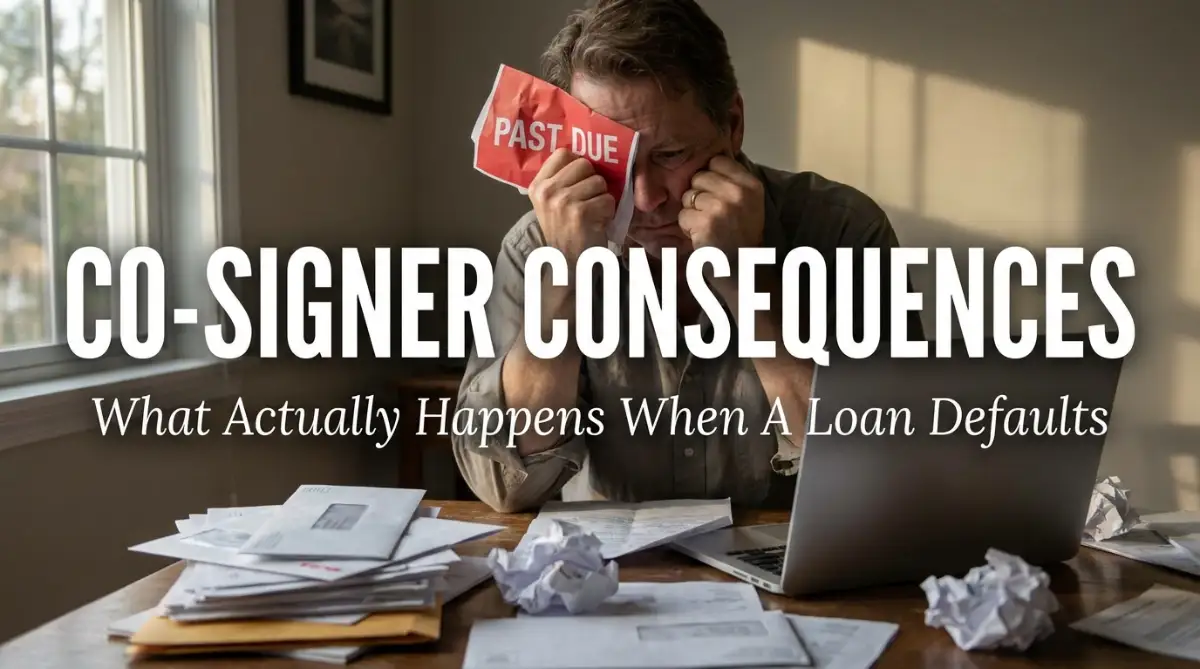
How I Almost Lost Everything to a Simple Signature
Have you ever been so desperate for cash to fix a broken car that you signed a paper without reading it? I did exactly that, and it turned a small emergency into a massive financial nightmare. Before you grab a pen and sign away your next paycheck to a flashy storefront lender, let me show you the hidden traps they pray you never notice.
That one simple signature almost cost me my entire savings and my sanity. Every single morning, ordinary people wake up with this exact same heavy weight pressing down on their shoulders. They take out a small short-term loan just to keep the lights on or buy groceries for their family. Instead of a helpful lifeline, they get dragged into an endless cycle of aggressive collection calls and shrinking bank accounts.
You are constantly forced to choose between feeding your family or paying an outrageous rollover fee just to buy another week of time. This daily struggle slowly chips away at your peace of mind, leaving you feeling completely powerless. But you do not have to remain in the dark anymore.
I finally learned how to decode their deceptive language, and I want to share exactly what you need to look for. By knowing these specific warning signs, you can protect your wallet and your mental health from these financial predators.
Your Quick Survival Guide (Read This First):
- Watch the Real APR: Do not fall for "flat fees." A $15 fee for two weeks is actually a massive 400% APR.
- Block Auto-Withdrawals: Never give a payday lender permission to pull money directly from your checking account.
- Spot the Arbitration Clause: If the contract says you cannot take them to court, you usually have 30 days to mail a letter opting out.
- Say No to Rollovers: Rolling over a loan just charges you a new fee without touching the actual money you originally borrowed.
Decoding the Fine Print: Identifying the Traps Before You Sign
When you are in a rush to get emergency funds, reading a ten-page legal document is the last thing on your mind. Predatory lenders count on your panic and exhaustion. They want you to just skim the bold headings and sign on the dotted line without asking any questions.
However, taking just five extra minutes to review the specific terms can save you from months of financial misery. You need to approach these agreements like a detective looking for hidden clues. Let's explore the most dangerous traps these companies hide deep within their paperwork.
The Illusion of Small Interest Rates (The APR Trap)
One of the most common tricks is how they present the cost of borrowing the money. The lender might look you right in the eye and say they only charge a simple fifteen percent fee. That sounds completely reasonable until you realize they mean fifteen percent for a single two-week period.
If you calculate that into an Annual Percentage Rate (APR), it often skyrockets to over four hundred percent. Imagine buying a simple cup of coffee for five dollars, but because you took a week to drink it, the barista forces you to pay fifty dollars. That is exactly how predatory APRs function in the real world.
Always look for the exact APR number, which the law requires them to list in the document. If the number is buried, printed in tiny text, or the lender tries to talk fast to distract you from it, you should walk right out the door. Legitimate lenders are always transparent about the true yearly cost of your borrowing.
The 3-Second Red Flag Checklist:
- No Credit Check? Run. They do not care if you can actually afford to pay it back; they just want open access to your bank account.
- Blank Spaces? Never sign a paper with blank lines. They can legally write in whatever extra fees they want after you leave.
- Electronic Access Required? If they refuse to let you pay by paper check or money order, they are planning to drain your account automatically.
The Endless Loop of Rollover Clauses
A rollover clause is perhaps the most destructive weapon in a predatory lender's arsenal. When your due date arrives and you cannot pay the full amount, they generously offer to extend your deadline. But this extension comes with a brand new, extremely high fee tacked onto your original balance.
Pro Tip: I remember thinking extending my loan was a lifesaver. My biggest mistake was ignoring the math behind the rollover fee, which instantly doubled what I originally owed. Always ask for a payment plan instead of accepting a rollover extension.
Before you know it, you are only paying off the newly generated fees, while the main loan amount never actually goes down. It is like trying to empty a swimming pool with a leaky bucket. You exhaust all your energy and money, but the water level stays exactly the same.

You must carefully search the contract for words like "renewal," "extension," or "courtesy rollover." If the agreement automatically renews your debt without requiring your explicit permission each time, you are stepping into a massive trap. Safe contracts will offer structured, declining repayment schedules, not endless fee-generating loops.
Myth vs. Reality: Are They Really Trying to Help?
The Myth: Payday loan companies provide a valuable community service for people with bad credit who have no other options.
The Reality: These businesses base their entire profit model on your failure to repay the loan on time. If everyone paid their debts perfectly on the first due date, the predatory lending industry would go bankrupt overnight. They intentionally design the terms so that you are forced to borrow again and again.
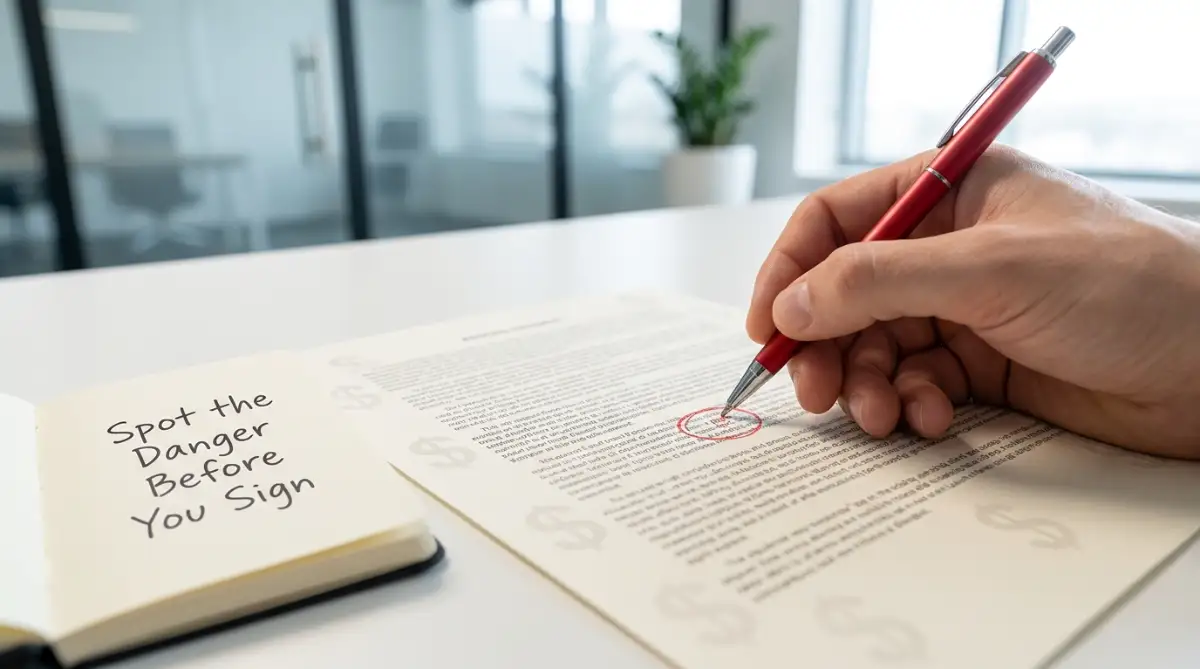
Sneaky Prepayment Penalties
Common sense tells us that paying off a debt early is a financially responsible thing to do. You might get an unexpected bonus at work and decide to clear your loan ahead of schedule. Shockingly, many predatory contracts actually punish you for doing this.
They include hidden prepayment penalties that force you to pay the full interest amount anyway, even if you settle the debt weeks early. They do this because they want to guarantee their maximum profit, regardless of your good financial behavior.
Watch This Quick Video to Understand Hidden Loan Fees Better:
If you want to visually spot exactly where these fees hide on a standard loan document, this breakdown is incredibly eye-opening.
Never sign an agreement that penalizes you for getting out of debt faster. A fair and honest lender will only charge you interest for the exact number of days you actually held their money. Always search the document for the phrase "no prepayment penalty" to ensure you are safe.
Giving Away the Keys to Your Bank Account (ACH Authorizations)
This is a trap that catches thousands of unsuspecting borrowers completely off guard. Deep in the paperwork, there is usually a section requesting ACH authorization. This gives the lender legal permission to directly withdraw money from your checking account whenever they want.
While automatic payments can be convenient with a trusted bank, they are extremely dangerous with predatory companies. If your balance is low, they will repeatedly try to pull the funds anyway. Each failed attempt will hit you with massive overdraft fees from your own bank.
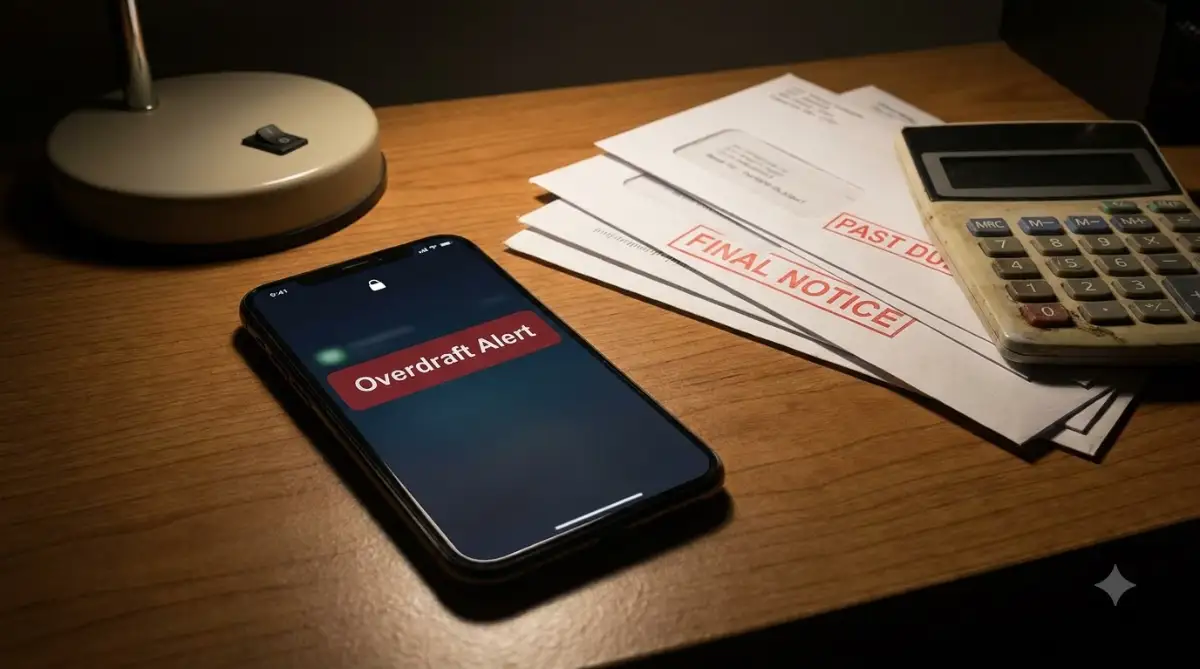
You might wake up to find your account drained right before your rent check is supposed to clear. Some lenders will even split the payment into smaller chunks, pinging your account five or six times a day just to bypass your bank's safety limits.
Always check if the contract allows you to revoke bank access at any time without a penalty. If the lender insists that permanent, unchangeable bank access is mandatory for approval, consider that a massive warning sign. You should always retain the final control over your personal checking account.
Mandatory Arbitration and Giving Up Your Voice
Imagine buying a faulty product from a store, and when you try to complain, they tell you that you are legally forbidden from taking them to court. This is exactly what a mandatory arbitration clause does in a loan agreement. By signing it, you surrender your right to join a class-action lawsuit or sue the lender in a real court.
Instead, any dispute must be handled by a private arbitrator. The catch is that the lender usually gets to pick and pay the arbitrator, creating a massive conflict of interest. You are essentially fighting a battle on their home turf, with a referee they hired.
They bury these clauses at the very end of the document, knowing you are too tired to read the final pages. If you see terms like "binding arbitration" or "waiver of jury trial," you need to pause immediately. You are signing away your fundamental legal rights just for a few hundred dollars.
The Danger of Blank Spaces
This might sound like simple common sense, but you would be surprised how often it happens under pressure. A loan agent might tell you that their printer is acting up, or that they will fill in the remaining dates and fee structures later. They hand you a contract with obvious blank spaces and ask you to just sign at the bottom.
Never, ever sign a document that has missing information. Once your signature is on that paper, a dishonest lender can write in absolutely anything they want. They can change the interest rate, alter the due date, or add surprise processing fees that you never agreed to.
If there is a blank line that does not apply to your specific situation, ask the agent to draw a thick line through it before you sign. This simple action prevents anyone from adding unauthorized terms after you leave the building. Protect your signature as if it were actual cash in your hand.
Phantom Charges and Junk Fees
Predatory lenders are experts at inventing brand new words for taking your money. The actual interest rate might be regulated by local laws, so they find sneaky ways to charge you outside of the interest umbrella. You need to look out for random additions like "document processing fees," "application review charges," or "priority funding fees."
Honest Loan vs. Predatory Loan Breakdown:
These junk fees do not go toward paying down your actual principal balance. They are purely designed to inflate the overall cost of borrowing. Always ask the loan officer to clearly explain every single line item on the receipt. If they stutter, get defensive, or say it is just a "standard system charge," you are likely being scammed.
The Threat of Wage Garnishment Clauses
Some of the most aggressive lenders will try to include clauses that target your employer. If you fall behind on payments, they want the right to contact your boss and legally demand a portion of your paycheck. This is known as a voluntary wage assignment.
Not only does this destroy your paycheck before you even receive it, but it also creates massive embarrassment at your workplace. Your employer suddenly knows about your private financial struggles. Always search the agreement for the words "wage assignment" or "payroll deduction."
A trustworthy lender will evaluate your ability to repay based on your current budget, not by holding your future paychecks hostage. Knowing these specific red flags empowers you to read any financial document with total confidence. You now have the knowledge to spot the traps before they snap shut.
Outsmarting the System: Expert Level Defense Strategies
Fighting back against a deceptive financial agreement can feel like playing a rigged game of chess. The lender controls the board, and they designed the rules to ensure you lose your hard-earned money. But once you understand their playbook, you can flip the script entirely.
Protecting your wallet requires more than just reading the fine print carefully. You need actionable, aggressive defense strategies that put a solid wall between the predatory company and your personal bank account. Let me walk you through the most powerful moves you can make to regain total control over your money.
The 30-Day Arbitration Opt-Out Secret
Most people do not realize that many shady contracts actually have a hidden escape hatch. When you sign an agreement with a forced arbitration clause, you are legally giving up your right to sue the company in a real court. However, consumer protection laws often force these lenders to offer an opt-out window.
You typically have exactly thirty days from the day you sign the contract to reject the arbitration clause. To do this, you must mail a physical, written letter to the lender's corporate address stating that you refuse the binding arbitration terms. Make sure you send this letter via certified mail so you have undeniable proof they received it.
If they ever try to illegally harass you or steal extra funds, you will still retain your full legal right to take them to small claims court. Taking this one simple step terrifies predatory lenders because it shows them you know your exact legal rights. You instantly go from being an easy target to a highly educated borrower.
Building an Iron-Clad Wall Around Your Checking Account
Giving a payday loan company direct access to your checking account is incredibly risky. If you are struggling to make a payment, they will often try to drain your funds before your rent check even clears. You must know how to permanently cut off their digital access to your money.
Simply asking the lender to stop pulling money is almost never enough. You have to take the fight directly to your personal bank and issue a "Revocation of Authorization" order. This is a formal request telling your bank to block any future automated clearing house transactions from that specific lending company.
I strongly suggest walking into your local bank branch and speaking to a manager face-to-face about this issue. They can help you set up a targeted stop-payment order on your account to block the lender's merchant ID. If you need a comprehensive guide on managing your daily finances safely, learning how to start protecting your bank account is a great first step.
Exactly What to Say to Your Bank (Word-for-Word Script):
“Hi, I need to revoke an ACH authorization for [Insert Lender Name]. I want to place a hard stop-payment order on their specific merchant ID immediately so they cannot pull any more funds from my checking account.” (Write this down and read it directly to the bank teller so they know exactly what you want to do!)
Securing Hard Proof for Every Single Conversation
Predatory lenders are notorious for making sweet verbal promises over the phone that magically disappear when you ask for them in writing. A collection agent might promise to waive your late fees if you just make a small partial payment today. The moment you make that payment, they deny ever offering you a deal.
From this day forward, you must treat every single interaction with your lender like a serious legal proceeding. If they call you on the phone to discuss your account, politely tell them that you want all communication done through physical mail or email. If they refuse to put an offer in writing, that offer simply does not exist.
Keep a detailed journal right next to your phone. Write down the exact date, the exact time, the name of the representative, and a summary of what they said during every call. If you ever need to file a formal complaint using Consumer Financial Protection Bureau guidelines, this meticulously kept log will be your strongest piece of evidence.
Creating a Buffer with Alternative Credit Options
The absolute best way to defend yourself against predatory contracts is to avoid needing them in the first place. You have to build a personalized safety net so you never have to walk into one of those brightly lit storefronts ever again. This means aggressively seeking out local community resources that actually want to see you succeed.
Many local credit unions offer specialized small-dollar loans designed specifically for people with low credit scores. These community-focused programs cap their interest rates legally and give you plenty of time to pay the money back. If you want to dive deeper into these community options, checking out safe borrowing alternatives can completely change your financial trajectory.
You can also look into paycheck advance apps that charge a flat, transparent monthly membership instead of wild interest rates. The goal is to establish multiple backup plans before an actual emergency hits your household. When your car breaks down next time, you will have a safe, predictable way to pay the mechanic.
The Most Dangerous Pitfalls That Trap Innocent Borrowers
Even when you know the red flags to look for, the intense stress of a financial emergency can cause you to make panic-driven decisions. Fear is a powerful emotion, and lenders use it to push you into making mistakes that benefit their profit margins. You must remain incredibly calm and avoid these common, destructive traps.
The Debt Spiral of Taking a Second Loan
This is perhaps the most heartbreaking mistake I see hard-working people make. When the massive balloon payment comes due, you panic because your bank account is practically empty. To stop the immediate collection calls, you drive to a completely different payday lender across town to borrow enough money to pay off the first one.
You feel a temporary sense of relief, but you just poured gasoline on a raging fire. You are now paying a brand new set of origination fees, processing charges, and sky-high interest rates. This is how a small three-hundred-dollar emergency morphs into a massive thousand-dollar nightmare in just a few weeks.
You cannot borrow your way out of predatory debt using more predatory debt. You have to break this endless chain by learning the exact steps for breaking the cycle of debt permanently. It requires making tough lifestyle choices temporarily, but it is the only way to actually win the battle.
Ghosting the Lender and Hoping They Disappear
When the threatening letters start piling up in the mailbox, human nature tells us to just hide under the covers. You might block their phone numbers, shred their letters without opening them, and hope they eventually get tired and go away. I can promise you that ignoring a predatory lender is the worst possible strategy you can choose.
Silence gives them the legal ammunition they need to escalate the situation very quickly. They will start calling your workplace, contacting your family members, and eventually filing a lawsuit to garnish your weekly paycheck. You have to face the beast directly, no matter how uncomfortable or scary it feels in the moment.
Send them a formal written letter requesting a hardship payment plan or a settlement agreement. Even if they say no, you have created a paper trail showing that you actively tried to resolve the debt in good faith. If the situation gets out of hand, reviewing your legal options through trusted Federal Trade Commission consumer rights platforms can give you immense peace of mind.
Trusting the Word of a Friendly Sales Rep
You walk into the loan store, and the person behind the counter is incredibly polite, smiling, and completely understanding of your bad situation. They tell you not to worry about the scary legal words on page four because "we never actually enforce that part." Because you are stressed and desperate for a friendly face, you believe them.
You must remember that the smiling representative is a highly trained salesperson working on a strict quota. They are paid to make you feel comfortable enough to sign away your rights. The actual legal department that collects your money does not care about the verbal promises that friendly clerk made to you.
The written contract is the only thing that holds any power in a courtroom. If the friendly representative tells you a specific fee will be waived, force them to cross out that fee on the paper and initial it before you sign. Never put your financial safety in the hands of a verbal promise from a total stranger.
Draining Your Future to Pay for Today
In a desperate attempt to get the aggressive debt collectors off their backs, many people make the tragic mistake of raiding their protected assets. They will cash out their tiny retirement accounts or drain the college fund they started for their children. They sacrifice their long-term security just to satisfy a greedy payday lender.
Predatory lenders have absolutely no legal right to touch your protected retirement funds. By voluntarily handing that money over, you are paying massive early withdrawal penalties and taxes just to feed a broken system. You are permanently damaging your future just to buy a few weeks of quiet time today.
There are always better options than destroying your life savings. You can negotiate settlements, seek out local charities, or completely restructure your monthly spending by creating an emergency budget. Keep your retirement money locked away where it belongs, safe from the hands of greedy collection agents.
Your Personal Roadmap to Financial Safety
Navigating the dark waters of short-term emergency loans is incredibly stressful, but you are not powerless. You now possess the exact knowledge required to spot their hidden traps, decode their confusing language, and protect your hard-earned money. Knowledge truly is your sharpest weapon against a predatory financial system.
Your first priority should always be creating distance between the lender and your daily checking account. Revoke those automatic withdrawal permissions immediately and force them to communicate with you on your own terms. Do not let them hold your grocery money hostage with surprise ACH pulls in the middle of the night.
Take a deep breath and start auditing every single financial document you have recently signed. Highlight the APR, circle the rollover clauses, and look aggressively for any sneaky junk fees they tried to slide past you. If you discover you are trapped in a bad agreement, taking time for exploring personal finance strategies will help you map out a safe exit route.
Do not let feelings of shame or embarrassment keep you isolated in your struggle. Millions of incredibly smart, hard-working people fall into these traps every single day because the system is intentionally designed to confuse them. Reach out to local credit counselors or utilize legal aid resources in your state if the harassment becomes too heavy to carry alone.
You have the strength to completely rewrite your financial story starting this very minute. My biggest realization was that the moment I stopped running and faced my messy contracts head-on, the fear instantly vanished. I took my financial power back one small step at a time, and I know you can do exactly the same today.
Answers to Your Most Pressing Payday Loan Questions
Can I actually go to jail for failing to repay a payday loan?
No, you absolutely cannot go to jail for owing money to a payday lender. Unpaid debt is a civil matter, not a criminal one, meaning debtors' prisons do not exist for this issue. If a collection agent ever threatens you with arrest or police action, they are blatantly breaking the law and you should report them immediately.
How do I instantly stop a lender from calling my employer?
You can stop this harassment by sending a formal "Cease and Desist" letter via certified mail. In this letter, explicitly state that your employer strictly prohibits personal collection calls at the workplace. Under federal law, debt collectors must stop contacting your job once they receive this formal notification.
Is it really possible to negotiate the final payoff amount?
Yes, many predatory lenders will eventually accept a lump-sum settlement for less than what you actually owe. Once your account is severely past due, they would rather get a guaranteed smaller amount today than chase you for years. Start by offering exactly what you originally borrowed, minus all the inflated junk fees, and negotiate from there.
What happens if I close my bank account to block their payments?
Closing your bank account will successfully stop the lender from draining your remaining daily funds. However, the original debt does not magically disappear, and the lender will likely send your account to a hostile collections agency. It is a temporary tactical move to protect your rent money, but you still need a solid plan to handle the actual debt balance.
Will taking out one of these loans help me build my credit score?
The vast majority of payday lenders do not report your on-time payments to the three major credit bureaus. This means paying them back perfectly will do absolutely nothing to improve your credit history. If you are serious about improving your score safely, learning how to rebuild bad credit through secured credit cards is a much better path.
Disclaimer: The content provided in this blog post is for informational and educational purposes only. I am not a licensed financial advisor, attorney, or certified professional. The information shared is based on personal research and experiences. Always consult with a qualified financial planner or legal expert before making major financial decisions, signing contracts, or taking action regarding existing debts.