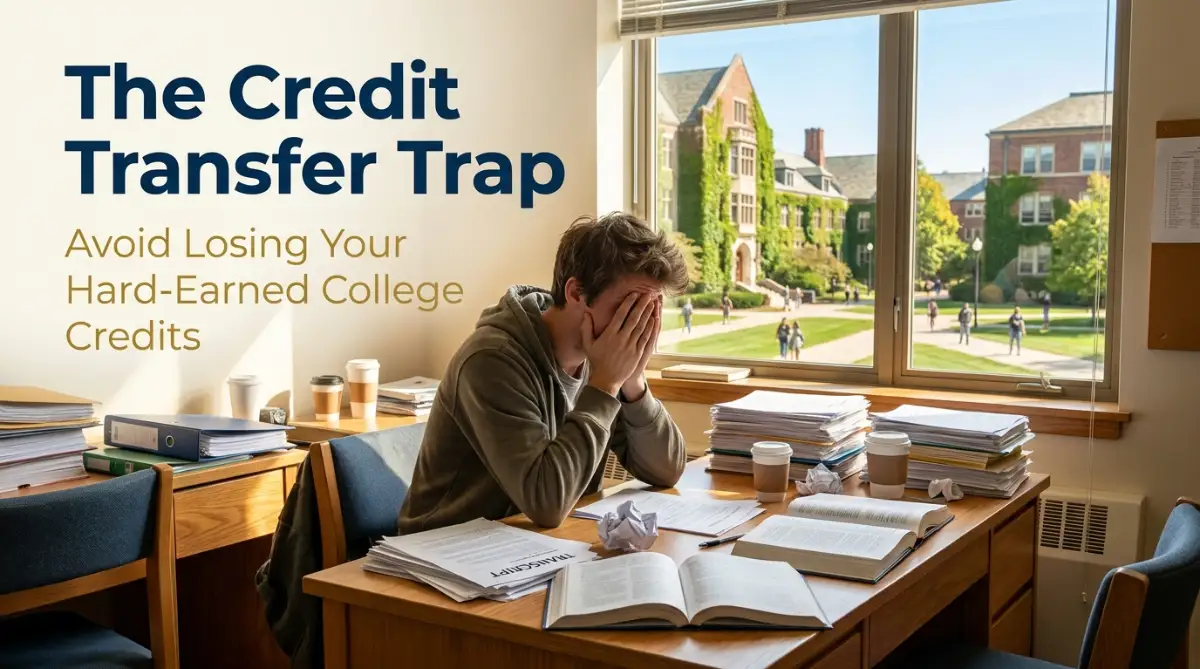
The Shocking Reality of the Admissions Office
I still remember sitting in my new university advisor's office, holding a stack of papers that represented two full years of my hard work. I felt a cold drop of sweat slide down my back as she casually took a red pen and crossed out class after class on my official transcript. "These simply will not count toward your major," she told me with a sympathetic, but firm look.
Just like that, I lost an entire year of my life and thousands of dollars because of a simple misunderstanding. My heart sank deep into my stomach as I realized I was essentially starting my junior year completely behind schedule.
I spent countless sleepless nights staring at the ceiling, wondering how I was going to pay for an extra year of tuition. My dream of graduating on stage alongside my friends suddenly felt like a heavy, impossible burden. I felt entirely helpless because I thought I had followed all the standard advice my high school teachers gave me.
The worst part about the whole experience was the heavy mental exhaustion that came with feeling cheated by the education system. Normal people like you and me are not trained to read massive, confusing university policy manuals. We just want to get a good education, earn a respectable degree, and start building our careers without drowning in debt.
Yet, the current college transfer system forces everyday students to become amateur administrative experts overnight. This hidden friction causes endless stress, friction at home regarding finances, and completely ruins the joy of moving to a big campus. But after surviving this terrible gauntlet myself, I realized that the transfer process is just a highly specific matching game.
Once you understand how the university actually grades your past work, you can easily protect your time and money.
Decoding the Hidden Language of University Admissions
To beat the anxiety of this process, you need to understand exactly what happens behind the closed doors of an admissions office. A university transfer evaluator is basically a professional risk investigator. Their only job is to figure out if the classes you took at a smaller school perfectly match their strict academic standards.
They do not hate community college students, and they certainly do not want to reject your hard work just for fun. Universities genuinely want transfer students because they usually bring great diversity and maturity to the campus. The evaluator just needs concrete proof that you are fully prepared for high-level, advanced coursework.
When you look at the system through that lens, the endless rules about course numbers make a lot of sense. They are simply building a highly detailed academic safety net to ensure you do not fail your senior classes. Your job is to hand them the exact materials they need to approve your file as quickly as possible.
The Myth of the Automatic Transfer Degree
The absolute biggest trap I see students fall into is believing that an associate degree is a magical, golden ticket. Many two-year schools advertise that earning an associate degree guarantees admission to local state universities. While the admission part might be true, they leave out a very dangerous technicality about your major.
You might get accepted into the university as a general student, but the specific department you want might reject your credits. Let us pretend you spent two years earning a general Associate of Arts degree.
Now, imagine you want to declare a major in Mechanical Engineering at your new university. The engineering department will look at your general education classes and immediately say you are completely missing the correct math foundation.
They will force you to go back and take calculus and physics before you can even touch an engineering book. This means your "guaranteed" transfer degree just bought you an extra three semesters of expensive catch-up work. You have to align your early classes perfectly with your final career goal, not just a general graduation requirement.
Understanding the Course Equivalency Trap
Once you realize that general degrees are not enough, you have to look closely at individual classes. This brings us to the most dangerous phrase in higher education: course equivalency.
Course equivalency is a simple math equation comparing your old community college class to the new university class. Most beginners make the terrible mistake of assuming that matching titles mean matching credits.
For example, you might take a class called "Introduction to Psychology" at your local community college. When you arrive at the university, they also have a class named exactly "Introduction to Psychology."
However, the university might refuse to accept your class because your old school did not require a massive final research paper. If the university believes their version of the class is significantly harder, they will force you to take it again. The title of the book does not matter to them; only the depth of the learning matters.
Before we discuss how to force the university to accept your classes, you must understand how advisors actually review your file. Watching this brilliant breakdown can completely change the way you select your classes next semester.
The Secret Power of the Syllabus
Having a matching course title is great, but you need actual evidence to win a fight with an admissions counselor. The evaluator needs to verify exactly what you learned during those sixteen weeks in the classroom.
This sounds incredibly simple, but it is actually where most beginners completely ruin their chances of saving money. You cannot just hand them a one-page transcript with a letter grade and expect them to understand your hard work.
Universities have a strict rule regarding the syllabus for every single class you try to transfer. If they question a class, they will demand to see the original, highly detailed syllabus you received on the first day of school.
They will heavily scrutinize the weekly reading assignments, the textbook used, and the grading scale. If you threw away your syllabus at the end of the semester, you have absolutely zero evidence to defend yourself. You will have to awkwardly email old professors, hoping they still have a copy saved on their computer.
Always build a digital folder on your computer and save every single syllabus as a PDF document. This tiny habit is the ultimate safety shield against losing thousands of dollars in academic credits.

Navigating the Danger of Elective Overload
There is a very common trap that overly eager students fall into when trying to explore different career paths. They take a photography class, a beginner pottery class, and a fun creative writing class. They proudly earn excellent grades and assume these classes will naturally boost their final university standing.
In the academic world, these fun classes are known as free electives. Every bachelor's degree has a strict limit on how many free electives you are legally allowed to use.
If your degree program only allows twelve credits of free electives, and you bring twenty credits, the extra eight are completely dead. You technically earned them, but they offer absolutely zero value toward your final graduation date.
This means you paid money and spent months studying for classes that just sit uselessly on your transcript. Always research the strict elective cap for your specific target major before signing up for fun, random classes.
Lower Division vs Upper Division Confusion
Most beginners completely forget that universities split their classes into two very distinct categories based on difficulty. The first two years are called lower-division courses, usually numbered in the 100 or 200 range. The final two years are upper-division courses, usually numbered in the 300 or 400 range.
Community colleges are legally only allowed to teach lower-division, introductory courses. This creates a massive headache for students who try to take advanced subjects too early.
If you take a class called "Advanced Business Marketing" at a community college, the university will flag it. The university considers "Advanced Business Marketing" to be a 400-level course reserved only for college seniors.
Because you took it at a two-year school, they will strictly classify it as a 200-level introductory credit. You will still have to take the true upper-division version of the class to satisfy your actual degree requirements. Never try to knock out advanced degree requirements at a basic community college level.
Pro Tip from My Own Experience:
I made the massive mistake of trying to finish my entire business management core at my local two-year school. I proudly handed my transcript to the university, thinking I was completely done with my major requirements. My advisor informed me that the university has a strict policy requiring at least half of your major classes to be completed on their specific campus. Always check the "residency requirement" of your target university before trying to speedrun your major.
The Double-Edged Sword of Academic Quarters
The academic calendar you study on can actually become a hidden enemy during the transfer process. We all assume that every school in the country operates on the exact same schedule. However, many community colleges operate on a quarter system, while massive universities operate on a traditional semester system.
A semester is generally sixteen weeks long, while a quarter is only ten weeks long. Because the quarter is significantly shorter, a quarter credit is mathematically worth much less than a semester credit.
If you bring ninety quarter credits to a semester-based university, they will use a strict conversion formula. They usually multiply your quarter credits by two-thirds to find the true semester value.
Suddenly, your ninety credits shrink down to just sixty credits, making you feel like you lost massive ground. This is perfectly normal math, but it causes extreme emotional panic if you are not expecting the sudden drop in numbers.
Why Outdated Articulation Agreements Fail
When you first enroll in a community college, a friendly counselor will usually hand you an articulation agreement. This is an official, legally binding contract between the community college and a specific local university. It shows you a beautiful, clearly marked pathway of exactly which classes will transfer perfectly.
Relying on this document is a fantastic strategy, but it contains a highly dangerous expiration date. Universities completely rewrite their degree requirements and update their catalogs almost every single year.
If you start community college using a guide printed three years ago, that specific pathway might not exist anymore. The university might have added a brand new computer science requirement to the business degree while you were studying.
When you finally apply to transfer, they will hold you accountable to the newest rules, not the old piece of paper. You must constantly check the online transfer portal every single semester to ensure your specific agreement is still actively valid.
Protecting Your Hard-Earned Grade Point Average
We all know that maintaining a high grade point average is highly recommended for earning scholarships and grants. But the admissions office looks at your grades very differently when you cross the bridge into a new school.
Many universities completely wipe your grade point average clean the moment you become an official transfer student. They accept the actual credits you earned, but they do not factor your previous grades into your new institutional math.
This means you start your junior year at the university with a completely blank slate, a literal 0.0 grade point average. If you struggled heavily during your first two years, this fresh start can feel like an absolute blessing.
However, if you worked tirelessly to maintain a perfect 4.0 at your community college, losing that cushion feels terrible. The investigator wants to see a highly responsible human being perform well under the intense pressure of university-level work. You must be mentally prepared to prove your academic worth all over again on the new campus.
Creating a Team of Expert Allies
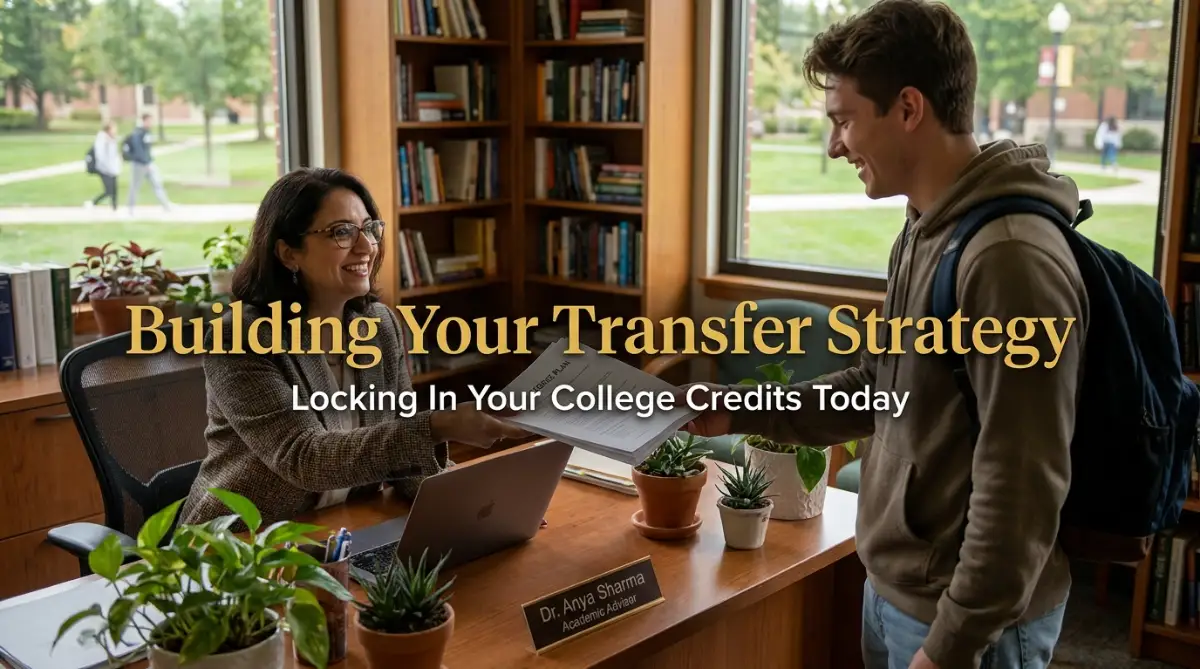
You do not have to fight this complicated administrative battle completely by yourself in the dark. A great transfer advisor is worth their weight in gold when dealing with a strict university department.
A good advisor will carefully review your planned schedule before you even register for the semester. They know exactly which classes trigger a red flag at the local state school and will help you pick safer options.
If the university evaluator misunderstands a course title, your community college advisor will step in and aggressively argue on your behalf. They speak the secret academic language perfectly and know how to present your syllabus in the best possible light.
Always ask highly specific questions if you do not understand a sudden change in your degree plan. Do not just blindly sign up for classes without knowing exactly how they apply to your final career goal. Education is your best weapon against expensive mistakes, and a great team will always teach you the rules.
Strategic Moves to Protect Your Academic Future
Now that you understand how the admissions office actually thinks, you can stop playing defense and start playing offense. Successful transfer students do not just cross their fingers and hope for the best when they send in their transcripts. They actively manage their academic portfolio the exact same way a professional manages a business.
You need to build a protective wall around the credits you have already earned. The best way to do this is by taking complete control of the evaluation process long before you ever fill out an official application.
Mastering the Pre-Transfer Audit Request
You do not actually have to wait until you are formally accepted to find out which classes will transfer. Most large universities have a hidden service called an unofficial transfer audit. You can directly email the transfer admissions department and politely ask them to review your current community college transcript.
They will run your classes through their internal system and give you a highly accurate estimate of what counts. According to research from the National Center for Education Statistics on transfer patterns, students who check their status early are significantly more likely to graduate on time. This early warning system gives you plenty of time to pivot if you realize a certain class will not be accepted.
If the university says no to an unofficial audit, you can easily use free public tools provided by the school. Most state colleges have a public transfer equivalency database hidden somewhere on their main website. You just type in your current community college, and it generates a massive list showing exactly how past students transferred their classes.
The Art of the Formal Academic Appeal
Sometimes, the university software simply makes a mistake and automatically rejects a perfectly good class. When this happens, most students just accept defeat, hang their heads, and pay to take the class all over again. You should absolutely never accept a rejection without fighting back through a formal petition process.
Every single university has an official form you can fill out to appeal a denied credit. To win this fight, you must attach the original course syllabus, a letter from your old professor, and examples of your graded assignments. You are basically building a legal case to prove that your brain holds the exact same knowledge as their native students.
The American Association of Collegiate Registrars and Admissions Officers actively encourages schools to review these appeals fairly. If you can clearly show that your community college class covered the exact same textbook chapters, the department head will usually override the computer system.
Protecting Your Personal Finances During the Move
We often focus so much on the academic side of transferring that we completely forget about the severe financial impact. Having to retake just three classes at a university price can easily cost you thousands of extra dollars out of pocket. Many students panic when they get this unexpected bill and turn to highly dangerous funding methods just to stay enrolled.
I have seen brilliant students absolutely destroy their financial future because they did not have a plan for extra tuition costs. They start swiping high-interest credit cards for textbooks, developing hidden habits that completely ruin their credit score before they even graduate.
Instead of panicking, you should immediately set up a meeting with the university financial aid office. If you are forced to take an extra semester, they can often find hidden campus grants or safe federal loans to cover the gap. You must always protect your long-term financial health while chasing your academic dreams.
Dangerous Traps That Cost You Time and Tuition
The journey from a small community college to a massive university campus is filled with invisible landmines. If you accidentally step on one of these administrative traps, the consequences are incredibly expensive. It is not just about losing a few credits; it is about losing entire years of your youth and piling on unnecessary stress.
Many students walk into these traps simply because they trust the wrong people for advice. They listen to their friends, older siblings, or random internet forums instead of checking the official rulebooks. Let us walk through the most devastating mistakes you must absolutely avoid at all costs.
The Financial Aid Time Limit Disaster
Most beginners mistakenly believe that financial aid will just quietly pay for classes forever until they finally graduate. They assume they can take as many random electives as they want without any serious consequences. However, the government places a very strict cap on how much money they will lend you for a single degree.
The Federal Student Aid office strictly enforces a rule known as the maximum timeframe limit. Basically, they will only pay for 150 percent of the credits required for your specific major. If your bachelor's degree requires 120 credits, the government completely cuts off your funding once you attempt 180 credits.
If you take sixty random, useless credits at your community college, you are actively burning through your financial aid safety net. By the time you get to the expensive university, you might completely run out of federal money. This terrifying situation forces many desperate students to learn how to spot predatory payday loan contracts just to pay for their final semester.
Assuming All Math Classes Are Created Equal
The most common subject that gets completely rejected during a transfer is mathematics. Students usually just sign up for whatever math class fits their morning schedule, thinking "math is just math." This assumption will completely derail your entire degree plan if you are aiming for a highly specific career.
For example, a standard "College Algebra" class is perfectly fine if you are majoring in English or History. But if you want to study Business Finance, the university will demand a very specific "Calculus for Business" course instead.
If you bring them normal algebra, they will throw it in the trash and make you start over. Always work backward from your dream university major to find out exactly which flavor of math they demand.
Drowning in Unexpected Commuter Debt
Moving to a new university often means you can no longer walk to class or take the local town bus. Suddenly, you need a reliable car to commute to the massive new campus across the city. Many transfer students rush out in a panic to buy a vehicle without understanding how adult financing actually works.
Taking on a terrible car loan while trying to pay university tuition is a recipe for a total financial meltdown. You need to carefully research how to get approved for your first auto loan so you get a safe, affordable monthly payment.
If you sign a bad contract out of desperation, that massive monthly car bill will eat up your textbook money. You should always separate your academic excitement from your major financial decisions to keep your stress levels low.
The "Sunk Cost" Major Change
When students finally arrive at the big university, they sometimes realize they actually hate their chosen major. They might take their first real engineering class and discover that the math is simply too overwhelming. They desperately want to switch to a marketing degree, but they feel trapped by their past choices.
They think about all the community college classes they already took and decide to suffer through a degree they hate just to avoid "wasting" credits. In psychology, this is called the sunk cost fallacy, and it is a terrible way to plan your future career.
Yes, changing your major means some of your old classes will drop into the useless elective pile. But working in a miserable career for the next forty years is a much bigger waste of your life. Do not let the fear of losing a few community college credits force you into the wrong profession.
Ignoring the Hidden Warning Signs of Private Debt
If your credits do not transfer properly, the sudden extra tuition bill can easily cause blind panic. When the federal government says no to more money, students often turn to private student loan companies. These companies aggressively target transfer students who are desperately trying to finish their last few semesters.
Before you sign away your future income, you must recognize the warning signs of a predatory loan. High variable interest rates and hidden origination fees can trap you in debt for decades.
If you make a mistake and end up with terrible private loans, you will eventually need to understand the real guide to debt consolidation just to survive after graduation. It is always better to pause your education for a semester and save cash working a part-time job than to sign a highly toxic private loan contract.
Trusting Your Friends Over the Catalog
Your friends are fantastic for studying, grabbing lunch, and keeping your spirits high during exam week. However, they are absolutely terrible sources of academic transfer advice. A friend might confidently tell you that a certain biology class transferred perfectly for them last year.
What they do not know is that the university quietly changed the biology degree requirements just two months ago. The College Board strongly advises transfer students to rely strictly on official, written documentation from the university itself.
If a university advisor tells you something important, politely ask them to send that exact advice to you in an email. Having a written paper trail is your only defense if the university suddenly changes their mind next year. Your friend cannot protect you from a rejected transcript, but a saved email from the department head absolutely can.
Your Master Blueprint for a Seamless Campus Move
When you finally pull back the curtain on the higher education system, the mystery completely disappears. You are left with a simple, highly logical checklist of academic rules that anyone can master. You now know exactly how to manage your course equivalencies, protect your financial aid, and avoid the hidden traps that catch normal students off guard.
The secret to a stress-free transition is simply overwhelming the university with extreme preparation and total transparency. When they question a class, you hand them a perfectly organized PDF folder containing every single syllabus you ever received. By making the academic evaluator's job incredibly easy, you force them to happily approve your file just to move it off their crowded desk.
As you plan for your upcoming graduation, remember that navigating this administrative maze is actually incredible practice for the real world. You are learning how to advocate for yourself, negotiate with large organizations, and protect your own financial interests. These are the exact same professional skills you will use every single day in your future career.
I genuinely know how scary it feels to hand over your entire academic history to a stranger in an admissions office. But I also know the incredible, unmatched feeling of finally walking across that giant university stage with a diploma in your hand. You completely have the power to conquer this administrative puzzle, and your future degree is absolutely worth the temporary paperwork. Take a deep breath, organize your digital files today, and step confidently onto your brand new campus.
Common Questions About Transferring College Credits
Can a university legally reject all my community college credits?
Yes, a university has the total legal right to reject credits if they come from a school that lacks proper regional accreditation. This is why you must always verify that your community college is fully regionally accredited before paying for your very first class. If your school has the correct accreditation, the university will usually accept the credits, though they might only count as general electives.
Do my old grades appear on my new university diploma?
Your old community college grades will always remain on your original, permanent transcript from that specific school. However, your new university diploma and your final university GPA will only reflect the classes you physically took on their campus. Your old grades do not magically erase, but they stop affecting your daily academic standing once you transfer.
What should I do if a required class does not transfer?
If a mandatory class is rejected, your first step is to immediately file a formal academic appeal using your saved course syllabus. If the department head denies your appeal, you will unfortunately have to retake their specific version of the class. Try to take the replacement class during a cheaper summer session to save money and keep your graduation timeline perfectly on track.
Is it cheaper to finish my associate degree before transferring?
Finishing your two-year degree first is almost always mathematically cheaper because community college tuition is significantly lower than university pricing. However, this only saves you money if every single class in that associate degree perfectly applies to your future bachelor's degree. If you are taking random classes just to finish the associate degree, you are actually wasting time and money.
How long does the credit evaluation process actually take?
During the busy summer enrollment season, a full transcript evaluation can easily take anywhere from four to six weeks to complete. The admissions office has to manually review thousands of transcripts from different schools all across the country. You should always send your official community college transcripts several months early so you are not blocked from registering for fall classes.
Disclaimer: The information provided in this article is for educational and informational purposes only and does not constitute official academic or financial advice. University transfer policies change frequently and vary heavily by state and institution. Always consult directly with a licensed academic advisor and the official financial aid office at your specific target university before making any enrollment or financial decisions.