
The Heavy Burden of Choosing the "Wrong" Path
I completely remember sitting at my family dinner table, feeling a heavy, uncomfortable knot in my stomach. My uncle looked right at me and asked what I planned to do with my history major, loudly joking that I was just training to be a professional coffee barista. I forced a polite smile, but deep down, I was absolutely terrified that he might be right. I spent countless nights scrolling through online job boards, desperately looking for anything that matched my exact degree title. The constant fear of graduating into a lifetime of heavy debt and low-paying jobs kept me wide awake for months. I honestly thought I had ruined my professional future before it even had a chance to start.
It is incredibly easy to feel defeated when society constantly tells you that your education is entirely useless. Everyday people with humanities backgrounds constantly face exhausting questions from friends, parents, and even strangers. People always ask, "What are you actually going to do with that?" with a tone of deep pity. This endless questioning completely destroys your self-confidence and makes you feel like an imposter in the professional world.
The pressure to suddenly switch to an engineering or business track is intense for so many students. You start believing that your passion for literature, philosophy, or sociology is just a silly hobby rather than a real career foundation. This intense mental pressure leads to severe anxiety and depression during what should be the best years of your life. You begin to hide your true interests just to sound more employable to corporate recruiters. We carry this heavy shame into job interviews, already believing we are the least qualified person in the room.
If you are feeling that exact same chest-tightening anxiety right now, I know exactly what you are going through. You are definitely not alone in this struggle. Millions of incredibly smart, talented people face this exact same roadblock every single day. The good news is that the common narrative you hear from society is entirely based on outdated information.
Let us take a deep breath and look at the actual facts together. The modern job market works very differently than our parents think it does. Your education has a massive amount of hidden power that most people simply do not understand. We are going to break down these terrifying illusions and show you exactly how to win.
Reclaiming Your Confidence: A Blueprint for Humanities Graduates
To fix this massive confidence problem, we need to completely change how you view your own education. The internet is full of bad advice that tries to force everyone into the exact same corporate mold. By understanding how modern companies actually operate, you can finally apply for jobs with real pride and peace of mind. Let us replace the fear with solid, practical knowledge that you can use to upgrade your resume today.
Myth 1: You Have Absolutely No Marketable Skills
This is perhaps the biggest and most damaging roadblock stopping everyday people from applying to great jobs. When you look at job descriptions asking for data analysis or software proficiency, you might easily panic. You think to yourself, "I only know how to write essays, so I cannot possibly work here." This exact thought process keeps thousands of highly intelligent people stuck in entry-level retail positions.
The reality is that your academic training gave you the exact skills that modern executives desperately want. You know how to read a massive amount of complex information and summarize the most important parts quickly. You understand how to build a logical argument and persuade other people to agree with your point of view. These are not soft, useless traits; these are highly profitable business skills.
Every single company in the world needs people who can communicate clearly. When a software team builds a new product, someone has to explain to the public how it actually works. Your ability to write clearly, think critically, and understand human behavior makes you incredibly valuable in any corporate office.
Myth 2: Technology Companies Only Hire Programmers
New graduates almost always fall into the trap of thinking the tech industry is a closed off fortress. You see massive companies like Google or Apple and assume they only hire people with computer science degrees. The logic seems simple enough: tech companies build software, so they only need software engineers. This is a massive misunderstanding of how huge organizations actually function.
Are you ready to see what tech recruiters are actually looking for? Watch this quick breakdown before you skip your next application.
To understand why tech companies need you, you have to look at the bigger picture of product development. A software engineer can write the code for a new application, but they often struggle to design an interface that regular humans enjoy using. This is exactly where roles like User Experience (UX) Writing, Customer Success, and Product Marketing come into play. Tech companies need sociologists, psychologists, and writers to make their products actually usable for the general public.
Think of a tech company like a major movie production. The engineers are the camera operators and the lighting crew. However, you still need scriptwriters, directors, and marketing teams to make the movie a massive success. Your liberal arts background prepares you perfectly for these essential, high-paying non-technical roles.
Myth 3: You Are Doomed to Earn a Low Salary Forever
Social media platforms are flooded with memes about English majors living in poverty. These jokes are heavily amplified because they get easy laughs and high engagement online. What you do not see are the thousands of humanities graduates who eventually become CEOs, marketing directors, and leading political consultants. This creates a massive illusion that your starting salary will be your permanent salary forever.
The actual reality of earning potential tells a completely different story. Studies consistently show that while STEM majors often have higher starting salaries right out of college, liberal arts majors catch up quickly by their mid-thirties. Because you know how to learn rapidly and adapt to new situations, you are much more likely to be promoted into management positions. True wealth in your career is rarely built in the first two years; it is built through continuous growth and leadership.
If you approach your career with a mindset of constant learning, your income potential is completely unlimited. You must shift your mindset from "I am just a history major" to "I am a professional problem solver." Focus on combining your excellent communication skills with basic business knowledge to make yourself unstoppable.
Translating Your Academic Jargon into Corporate Language
When you first start writing your resume, it feels incredibly difficult to describe your college experience. You might list things like "wrote a forty-page thesis on the French Revolution" or "analyzed Victorian literature." While these are amazing academic achievements, a corporate hiring manager simply does not know what to do with that information. This communication gap is why so many great resumes get thrown straight into the trash.
You need to learn the art of professional translation. You are not changing what you did; you are simply changing how you talk about it. Instead of saying you wrote a long history paper, you say you "managed a long-term independent research project from initial concept to final publication." Instead of saying you debated in class, you say you "facilitated group discussions and presented complex ideas to large audiences."
By changing your vocabulary, you instantly show employers that you understand the business world. You are directly answering their needs using the exact words they wrote in the job description. This simple mental shift will double the number of interview callbacks you receive.
Proving Your Value When You Lack Direct Experience
I hear this excuse all the time from people who want to apply for marketing or sales jobs but feel intimidated. People look at the requirement for "two years of experience" and their brains immediately shut down. They assume that because they studied political science, they have zero relevant experience for a corporate role.
Let me share a very real analogy with you. Do you know exactly how to run a massive corporate social media account on your first day? Probably not. However, you do know how to research an audience, understand what they care about, and write a compelling message. You already have the foundational ingredients; you just need to learn the specific recipe the company uses.
Pro Tip: When I first started applying for office jobs, I used to completely hide my philosophy background because I thought it made me look unemployable. I quickly realized that confidently talking about my ability to break down complex, confusing arguments was actually my biggest selling point during interviews. Never apologize for your education; use it as a weapon.
You can easily build your own experience right now without waiting for someone to hire you. Start a small blog, volunteer to manage a newsletter for a local charity, or organize a community event. These practical, self-started projects prove to employers that you can take initiative and apply your academic brain to the real world.
The Ultimate Advantage of Extreme Adaptability
One of the most dangerous myths is believing that a highly specialized degree is the only safe choice. When a student studies one very specific type of accounting software, they feel totally secure in their job prospects. But what exactly happens when artificial intelligence suddenly automates that specific software? That highly specialized worker is instantly out of a job and struggles to pivot.
Understanding human adaptability is your greatest weapon in a changing economy. Industries breathe in and out, constantly shifting as new technologies emerge. While technical skills often become outdated every five years, the ability to think critically never goes out of style. You are trained to ask the right questions, challenge assumptions, and learn entirely new subjects from scratch in just a few weeks.
To survive the modern job market, you must embrace this flexibility. You can start your career in sales, pivot into marketing, and eventually run a customer success team. Your degree did not lock you into a single room; it gave you a master key that can open almost any door in the building.
Navigating the Interview Room Like a True Professional
Because your degree does not have a direct, obvious job title attached to it, you will get asked about it in interviews. Hiring managers will look at your resume, tilt their heads, and ask, "So, why did you study English if you want to work in project management?" If you hesitate or look embarrassed, you will instantly lose their trust. You must have a powerful, confident answer prepared and rehearsed.
Do not give them a weak answer like, "I just really liked reading books." Instead, look them right in the eye and explain the strategic value of your choice. Tell them, "I studied English because I wanted to master the art of clear, persuasive communication. I learned how to take massive amounts of messy information and turn it into a structured, easily understandable narrative."
When you frame your education as a deliberate, strategic choice, the interviewer instantly respects you. You completely shift the power dynamic in the room. You are no longer a lost student begging for a chance; you are an articulate professional offering a unique perspective.
By actively debunking these common myths, you are already miles ahead of the average job seeker. You now know to ignore the societal hype, focus on your highly valuable soft skills, and translate your academic wins into corporate victories. The journey ahead requires a lot of smart marketing on your part, but armed with the right facts, you can easily secure a fantastic career.
Strategic Blueprints for Building a High-Income Career
Now that we have completely cleared away the societal noise and fake career rumors, it is time to build a real action plan. Knowing that your education has massive value is only the first step of the journey. To actually secure high-paying positions and climb the corporate ladder, you need to adopt a completely different approach to the job market. You cannot rely on your degree title alone to open doors.
Let us walk through the exact professional habits that turn ordinary graduates into highly sought-after industry leaders. These are the exact methods smart professionals use to completely outshine candidates with standard business degrees.
Creating the Ultimate "Double Threat" Resume
Your academic background gives you incredible communication skills and deep critical thinking abilities. However, to get past modern resume scanning software, you need to combine those soft skills with a few highly recognizable hard skills. You do not need to go back to school or spend thousands of dollars to achieve this. You simply need to spend a few weekends learning the basic tools that companies use every single day.
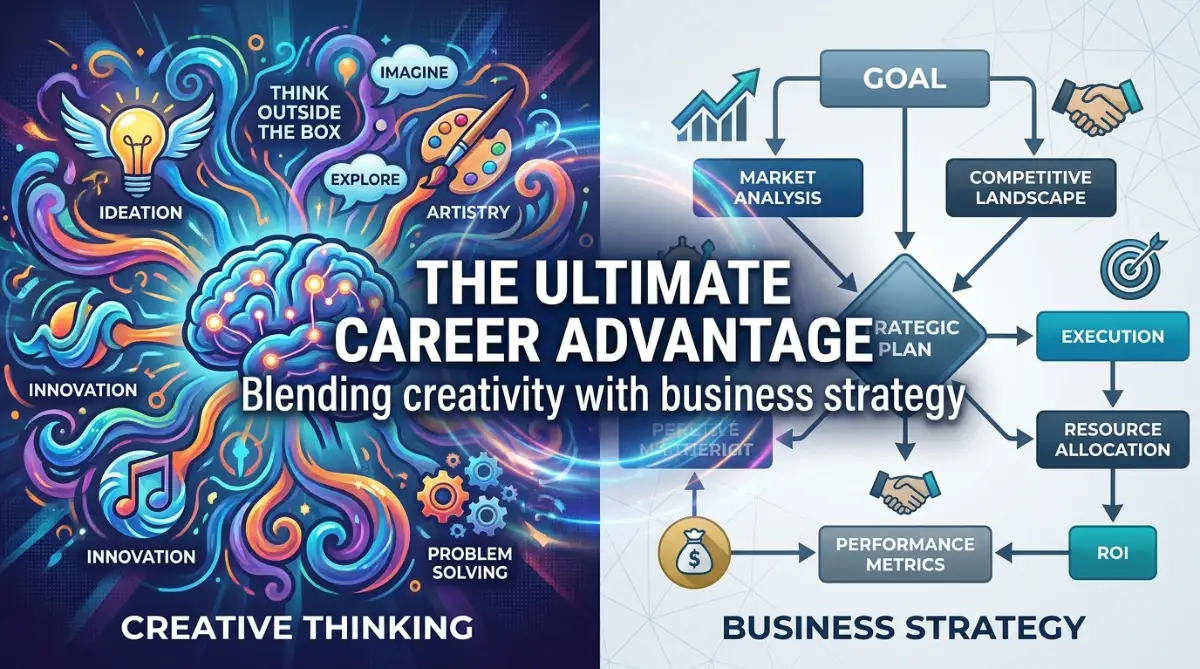
If you understand human psychology from your sociology degree, add a basic certification in Google Analytics. Suddenly, you are not just a thinker; you are a data-driven marketing strategist. The World Economic Forum clearly highlights in their latest global research that analytical thinking combined with creative problem solving is the most demanded skill combination today. Employers absolutely love candidates who can write a beautiful email and also read a basic spreadsheet.
Think of your humanities background as a massive, powerful engine in a car. Adding a few technical skills, like basic HTML or project management software, simply gives that engine a steering wheel. When you combine deep human understanding with basic technical tools, you become entirely unstoppable in the modern workplace.
Building a Public Portfolio of Tangible Work
In the corporate world, hiring managers rarely care about your college GPA or the specific classes you attended. They only care about what you can actually build, manage, or create for their company. Since your degree does not have an obvious, physical output like an engineering prototype, you have to create your own proof. You need to show them your brain in action.
Start taking your academic research and turning it into publicly accessible content. If you wrote a massive paper on political systems, break it down into a series of highly engaging blog posts on LinkedIn. According to the National Association of Colleges and Employers (NACE) hiring guidelines, employers actively search for candidates who demonstrate clear digital communication and leadership. A public portfolio proves you can take complex ideas and make them digestible for the general public.
A Real-Life Scenario: The Power of Proof
Imagine two different history majors applying for the exact same corporate communications job.
Candidate A simply hands in a standard paper resume that says they read a lot of books and wrote excellent essays in college. Candidate B hands in a resume with a link to a personal website where they publish a weekly newsletter breaking down historical events for modern business leaders.
Candidate B will get the job offer every single time. They did not just claim they could write and research; they actually proved it in the real world. You must stop asking employers to simply trust your academic record. Build a small, professional online presence today and force them to see your massive potential.
Expanding Your Professional Network Without Fear
Many students from the arts and humanities feel incredibly awkward attending traditional business networking events. They feel like they do not belong in rooms filled with finance and accounting professionals. This self-doubt causes them to isolate themselves, completely missing out on the hidden job market. You have to realize that your unique perspective makes you the most interesting person in that room.
Business leaders get completely bored talking about spreadsheets all day long. They actually enjoy having deep, meaningful conversations with people who understand culture, history, and human behavior. When you confidently introduce yourself and ask intelligent questions, people remember you. Your ability to hold a fascinating conversation is a massive professional advantage that you should use constantly.
If you are ever thinking about starting your own independent consulting agency, this networking skill is absolutely required. Knowing exactly how to get your business loan approved usually comes down to how well you can pitch your story to a bank manager. Your communication skills give you a massive edge in any negotiation, whether for a job or for funding.
The Dangerous Career Traps That Keep Graduates Unemployed
Even with the best intentions, new job seekers naturally fall into a few very predictable and painful traps. I have seen incredibly smart, talented people settle for miserable, low-paying jobs simply because they let insecurity override their common sense. These are not minor mistakes that cost you a single interview; these are catastrophic errors that can ruin your financial future for years. We need to talk about these dangers openly so you never have to experience that deep, sinking feeling of failure.
Hiding Your Degree Out of Pure Embarrassment
This is the absolute worst professional decision you could possibly make in your entire life. When you listen to society's jokes, you might feel tempted to downplay your major on your resume. You bury it at the very bottom or try to make it sound like something else entirely. By doing this, you are actively telling the employer that you are ashamed of your own choices.
If you do not respect your own education, no hiring manager will ever respect it either. You spent four years doing incredibly difficult mental labor, analyzing texts, and solving abstract problems. The American Association of Colleges and Universities (AACU) clearly states that the vast majority of executives specifically want to hire people with broad, multidisciplinary training. You have exactly what they want, but you are hiding it in the closet.
Never apologize for your major during an interview. If you sound defensive or embarrassed when asked about your studies, the interviewer will instantly lose confidence in you. Stand up straight, look them in the eye, and explain exactly how your unique background makes you a better problem solver than a standard business major.
Falling into Desperation and Accepting Predatory Offers
When you struggle to find a job that perfectly matches your degree, extreme financial panic usually sets in. You watch your friends get corporate jobs while you are still working at a local coffee shop. This desperate feeling often pushes graduates to accept terrible job offers with awful pay just to escape unemployment. Sometimes, the financial pressure even forces them to make highly dangerous borrowing decisions.
If you are struggling to pay your rent while job hunting, you might be tempted by fast cash loans. You must learn how to spot predatory payday loan contracts before they completely ruin your life. These high-interest traps are specifically designed to target desperate young people trying to survive in expensive cities. A bad loan can destroy your credit for a decade, holding you back long after you finally land a great job.
You must recognize the warning signs you can't ignore when dealing with sketchy employers or shady lenders. Never accept a job that demands you work sixty hours a week for minimum wage just because you feel unhireable. Protect your time and your mental energy so you can keep applying to companies that actually respect your brain.
Ignoring Your Real-World Financial Health
It is very easy to become completely obsessed with fixing your resume while entirely ignoring your personal financial health. I have seen graduates ignore massive credit card bills because they are too stressed about upcoming job interviews. They assume that once they get a high-paying corporate job, all their money problems will just magically disappear.
Your career should serve your real life, not destroy it. If you are carrying heavy debt from college and living expenses, ignoring it will only damage your future. You need to understand the hidden habits ruining your credit score right now. Having terrible credit can actually cause you to fail background checks for high-level corporate positions, especially in the finance or government sectors.
If you have already made some bad money choices, do not panic. Focus on a real guide to debt consolidation and recovery to get your life back on track safely. A strong financial foundation at home gives you the extreme confidence you need to negotiate higher salaries in the interview room.
Failing to Negotiate Your Starting Salary
Because many arts graduates feel lucky just to get a corporate job offer, they almost never negotiate their starting pay. They happily accept the very first number the company offers, terrified that asking for more will make the employer angry. This single mistake can cost you hundreds of thousands of dollars over the course of your career.
You already know how to build a strong argument; you spent four years doing it in college. You need to apply those exact same research skills to your own life. Use your communication training to confidently explain why you deserve a higher starting rate based on market data. The persuasion tactics you use in the corporate world are the exact same skills you need to negotiate lower mortgage rates when you eventually buy a house.
Always ask for a higher salary, better benefits, or more vacation time. If a company wants to hire you, asking for a fair market rate will not make them cancel the offer. You must advocate for yourself because absolutely nobody else in the corporate world will do it for you.
Clearing Up Your Biggest Career Doubts
Are liberal arts degrees becoming obsolete with artificial intelligence?
Actually, the exact opposite is happening in the market today. Artificial intelligence is extremely good at writing basic code and organizing simple data, but it cannot understand human nuance, empathy, or complex cultural context. As computers take over repetitive technical tasks, highly creative human thinkers are becoming more valuable than ever before.
Can I really get a job in tech without knowing how to code?
Yes, absolutely. The technology sector employs thousands of people in marketing, human resources, product design, and customer success. The Bureau of Labor Statistics frequently reports that humanities majors easily secure high-paying roles in tech by managing communication and team strategy. You just need to show an interest in the technology itself.
Will I need to go back to school for an expensive master's degree?
You definitely do not need another degree to find a great job right now. Gaining one or two years of real-world work experience is far more valuable than adding more academic debt to your name. Only consider a master's degree if a very specific career path, like licensed psychology or law, absolutely requires it by state regulations.
How do I explain my totally unrelated major during an interview?
You explain it by completely shifting the focus away from the subject matter and onto the core skills you learned. Tell them your major taught you how to analyze complex problems, communicate clearly under pressure, and manage long-term research projects. Connect those exact skills to the daily tasks listed in their specific job description.
Do employers actually care about my college GPA?
Unless you are applying for a highly competitive medical school or a top-tier investment bank, most employers never look at your GPA. They care far more about your actual ability to solve their daily business problems. Focus heavily on building a strong portfolio and practicing your interview skills rather than worrying about an old test score.
Your Personal Action Plan for Professional Success
You now possess the exact knowledge needed to completely bypass the terrible mistakes most new graduates make. You understand that your degree is not a weakness; it is a highly flexible tool that allows you to adapt to any industry. By ignoring the noisy jokes on social media, you are already thinking like a seasoned, highly successful professional.
Your next steps are incredibly simple and highly effective. First, sit down and completely rewrite your resume to remove confusing academic jargon. Replace those words with strong, clear business language that hiring managers actually understand. Next, spend just one hour this weekend learning a basic technical skill to instantly make your profile twice as attractive. Finally, start reaching out to alumni from your school who are working in interesting corporate roles to build your professional network.
Never let anyone convince you that your passion for learning was a financial mistake. My personal career only took off when I stopped apologizing for my background and started aggressively marketing my unique ability to understand human behavior. You have the power to take complete control of your professional journey today, so step into that interview room with extreme confidence and claim the success you deserve.
Disclaimer: The information provided in this article is strictly for educational, career planning, and informational purposes only and does not constitute official financial, legal, or professional counseling. The job market is highly unpredictable, and individual results will always vary based on personal effort and location. Always conduct your own independent research before making any major career or financial decisions.