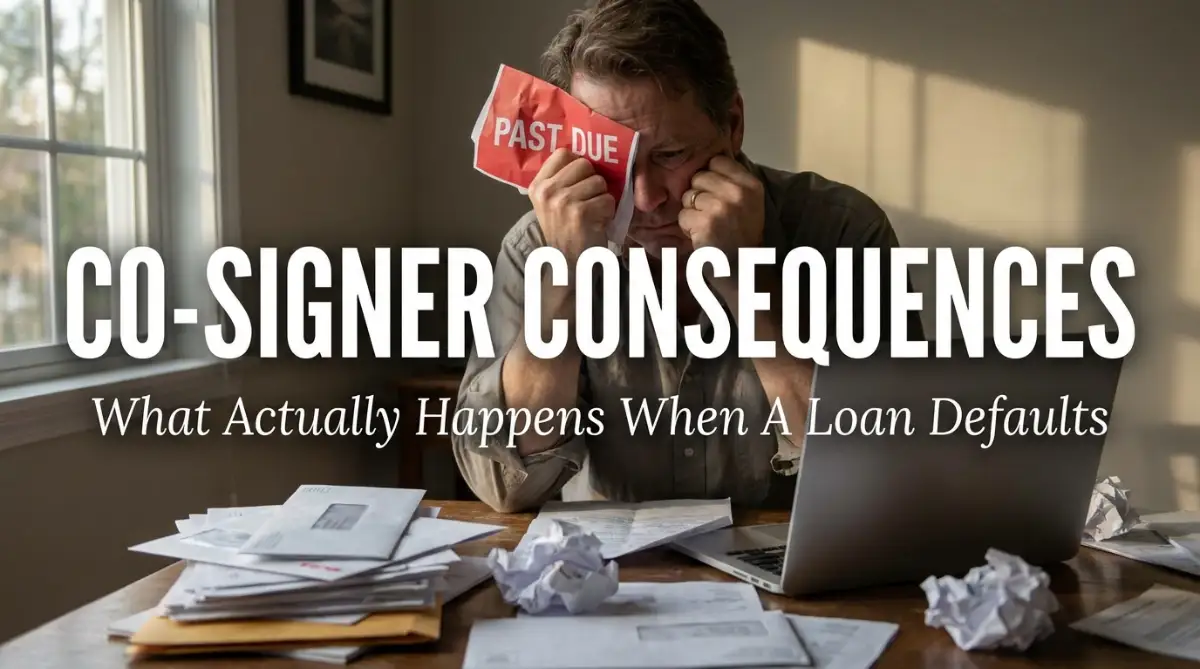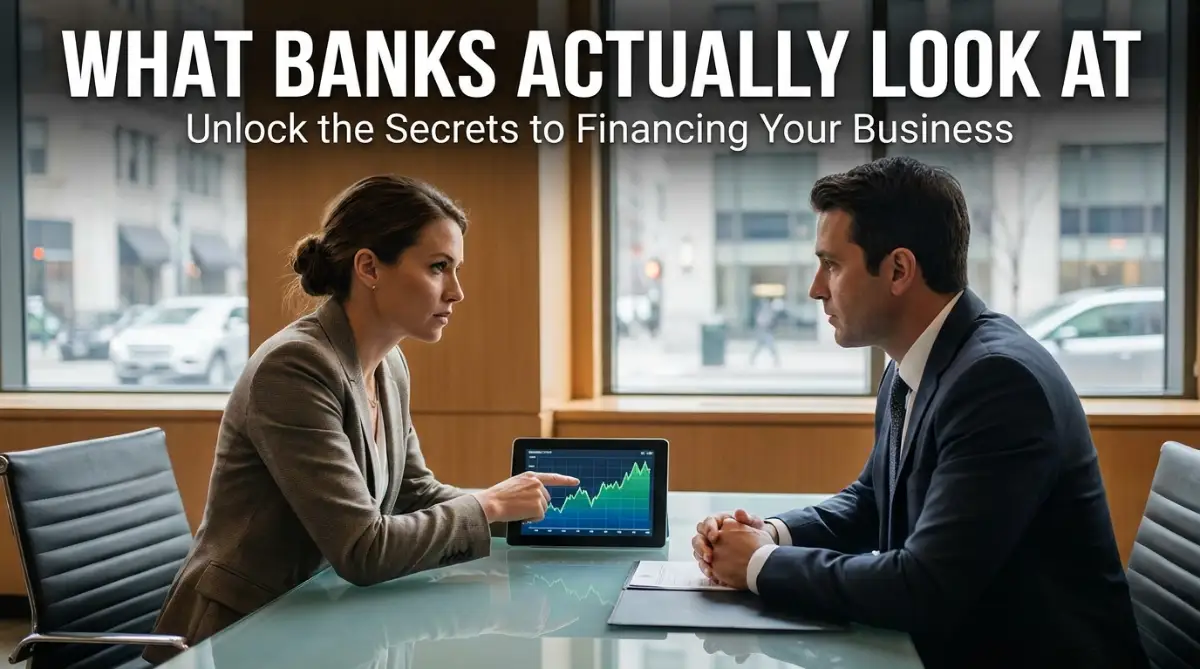
The Hidden Wall: Why Getting a Business Loan Feels Impossible
Walking into a bank to ask for business funding shouldn't feel like going on trial. You pour your heart, sweat, and savings into building a solid company, only to get handed a confusing rejection letter from a loan officer who barely looked at your product. I know exactly how frustrating that silent walk back to your car feels. But here is the secret: getting a "yes" has absolutely nothing to do with your passion. Let me show you exactly what bankers are secretly looking for behind closed doors, so you can flip the script and secure the cash you actually deserve.
I genuinely thought my endless passion and one unexpectedly great sales month would easily secure the funding I desperately needed. I poured my entire savings into the company, and this meeting was my only lifeline to keep things running. Instead of a handshake and a check, I received a polite rejection that completely crushed my spirit.
That walk back to my car felt like the longest walk of my life. I felt entirely defeated, confused, and terrified about how I would cover next week's payroll. It is incredibly isolating when you know your business has potential, but the financial system just closes its doors on you.
This lack of transparency causes unnecessary panic and makes you doubt your own abilities as a founder. You are not alone in this struggle, and your business idea is not necessarily bad just because a lender said no. You simply need to understand the hidden checklist these institutions use to judge your application.
Your Fast-Track Funding Checklist:
- Calculate your Debt Service Coverage Ratio (DSCR) to ensure it sits safely above 1.25.
- Clean up your personal FICO score, as it directly impacts your initial approval odds.
- Never mix your personal grocery bills with your business checking account.
- Prepare CPA-level financial documents before your meeting—never walk in with a messy spreadsheet.
Decoding the Banker’s Brain: The Core Approval Elements
To beat the system, you have to think exactly like the person reviewing your file. Loan officers do not care about your passion or your beautifully designed logo. They are strictly trained to look at numbers, historical data, and risk factors to protect their institution's money.
If you want to hear a "yes," you must present your business as a safe, boring, and highly predictable investment. Let us break down exactly what happens behind closed doors when you submit your financing request.
The Silent Dealbreaker: Your Cash Flow Stability
Many business owners confuse total revenue with actual cash flow. You might have generated a million dollars in sales last year, but if your expenses were incredibly high, your bank account might be empty. Banks do not look at how much money you make; they look at how much money you keep.
When an underwriter opens your file, they immediately check your Average Daily Balance. They want to see that your business bank account has a healthy buffer of cash sitting in it at all times. If your account frequently drops close to zero or goes into overdraft, it sends a massive red flag to the system.
They also closely examine the consistency of your deposits. If you have one massive deposit in January and then absolutely nothing for three months, lenders get very nervous. They prefer a business that brings in small, steady, and highly predictable amounts of money every single week.
To prove your cash flow is stable, you need to calculate your Debt Service Coverage Ratio (DSCR). This is a simple mathematical formula lenders use to see if you can afford a new monthly payment. Basically, they divide your net operating income by your total debt obligations.
If your business makes $10,000 in clear profit each month, and your new loan payment will be $5,000, your DSCR is 2.0. Most financial institutions require a minimum DSCR of 1.25. This means for every dollar of debt, you must have one dollar and twenty-five cents of actual profit to cover it safely.

Quick Check: Do You Pass the Banker's Math Test?
Let's keep it super simple. Grab your calculator and test your own numbers right now:
- Net Operating Income: Exactly what your business makes after paying basic expenses.
- Total Debt Service: Your upcoming new loan payments.
- The Formula: Income ÷ Debt Payment.
- The Goal: If your final number is under 1.25, stop right there. You need to boost your sales or lower your current debts before handing over an application.
The Personal and Business Credit Connection
There is a massive misconception that once you form an LLC or a Corporation, your personal finances are totally separate from your business. This is completely false when it comes to getting small business funding. Until your business is a massive, multi-million dollar enterprise, your personal credit score is your business credit score.
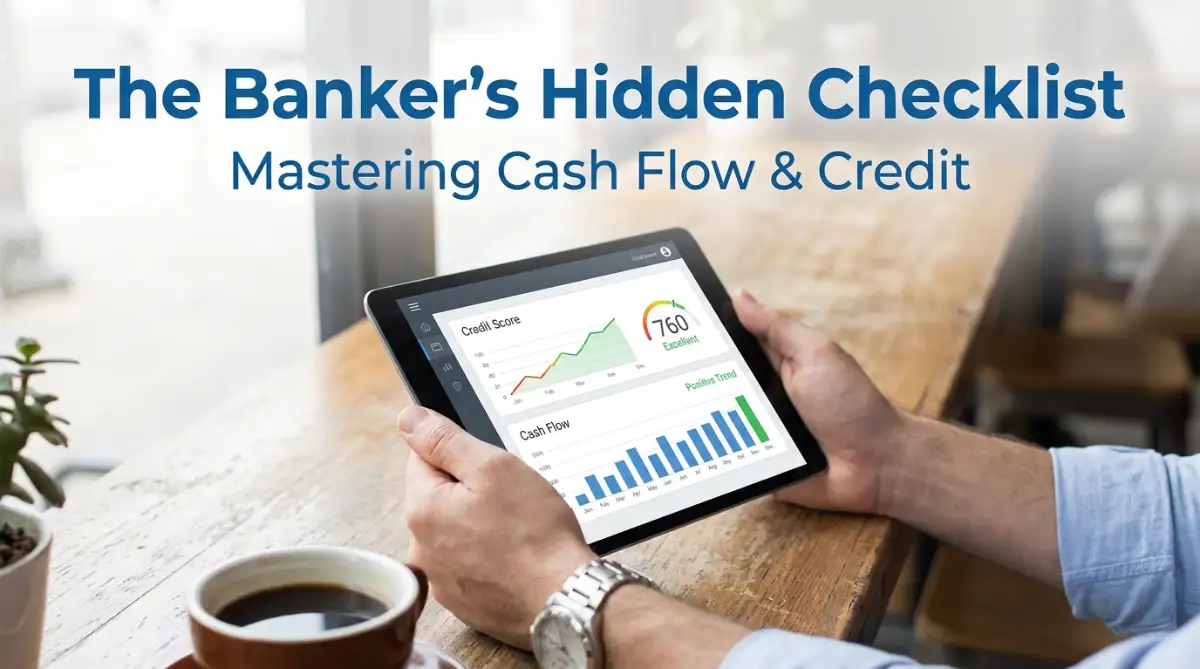
Lenders will pull your personal FICO score before they even look at your business plan. They figure that if you cannot manage your personal credit cards, you will likely struggle to manage a massive business loan. You generally need a personal credit score of at least 680 to even get a conversation started with a traditional lender.
If you want to truly understand the secret math lenders use to approve or deny your application, you must watch this eye-opening breakdown right now.
7
Along with your personal score, they will also check your business credit profile through agencies like Dun & Bradstreet. If you have a history of paying your vendors or suppliers late, it gets recorded on your business credit report. A poor payment history with suppliers tells the bank that you are struggling to keep up with current bills.
Myth vs. Reality: Credit Scores
- The Myth: Opening a business bank account automatically builds your business credit score over time.
- The Reality: Business credit is only built when you open specific trade lines with vendors who actively report your payment history to business credit bureaus.
- The Myth: Paying off a collection account immediately fixes your credit score for a loan application.
- The Reality: While paying it off is good, the negative mark still stays on your report and requires time to age before a strict lender will overlook it.
A Quick Story From the Inside:
- I recently spoke with a former loan underwriter who dropped a massive truth bomb on me. They admitted that automated banking systems often reject applications purely because the business address listed on the paperwork is a P.O. Box or a virtual office. Always use a real, physical commercial address or your actual home address to instantly build credibility with their software.
Collateral and the Personal Guarantee Trap
Banks are inherently terrified of losing money. Even if your cash flow is perfect and your credit is outstanding, they still want a backup plan. This backup plan is called collateral, and it is a major deciding factor in the approval process.
Collateral simply means physical assets the bank can legally seize and sell if you stop making your payments. This could be real estate, heavy machinery, business inventory, or even large outstanding invoices from your clients. If your business is purely service-based and has no physical assets, getting approved becomes significantly harder.
Pro Tip from Experience: I learned the hard way that walking into a branch completely unprepared is a massive mistake. I once handed a loan officer my raw, unorganized bank statements instead of a clean profit and loss report, and it instantly destroyed my credibility. Always take the time to format your financial documents professionally before anyone else sees them.
Because many small businesses lack heavy assets, banks will almost always require a Personal Guarantee. When you sign a personal guarantee, you are legally promising to pay back the loan out of your own pocket if the business fails. This means your personal home, your savings account, and your car are on the line.
Before you submit your financing request, you need to honestly ask yourself if you are willing to risk your personal assets. If a lender senses that you are hesitant to sign a personal guarantee, they will immediately deny your application. They want you to have just as much skin in the game as they do.
A Bulletproof Business Plan Needs Numbers, Not Dreams
Many founders submit business plans filled with beautiful graphics, inspiring mission statements, and massive goals. Lenders skip past all the pretty words and flip directly to the financial projections section. They want to see hard data, realistic growth models, and a clear path to repayment.
Your business plan must clearly state exactly how every single penny of the loan will be used. If you simply write "working capital" or "marketing," the underwriter will likely reject you for being too vague. You need to say, "Purchasing two new delivery vans to expand our route, which will increase monthly revenue by 15%."
Furthermore, your financial projections must be grounded in reality. If your business grew by 5% last year, do not project a 500% growth rate for next year unless you have iron-clad contracts to prove it. Lenders appreciate conservative, mathematically sound estimates much more than wild, optimistic guesses.
The Dreaded Industry Risk Classification
You could have the perfect application, excellent credit, and amazing cash flow, but still get denied because of what you sell. Every financial institution maintains a secret list of high-risk industries that they simply refuse to work with. They categorize your business using standard NAICS or SIC codes.
Historically, restaurants, retail clothing stores, and event planning businesses fall into the high-risk category. The failure rates in these sectors are statistically very high, making lenders extremely cautious. If you operate in one of these fields, the bank will scrutinize your application twice as hard.
How to Offset a High-Risk Industry Label
If you know your industry is considered risky, you have to overcompensate in other areas. You must show them a massive cash reserve in your bank account to prove you can survive a slow season. Showing long-term, signed contracts with reliable clients can also help ease their fears about industry instability.
Owner's View vs. Banker's View
Understanding the massive gap between how you see your business and how a lender sees it is essential. Here is a quick breakdown of exactly how perspectives differ during the underwriting process.
Time in Business and Historical Stability
Startups rarely get traditional bank funding simply because they have no track record. Financial institutions generally want to see at least two full years of operating history before they will hand over a large sum of cash. They need to see how your business handles different seasons, tax times, and minor economic dips.
When you apply, they will ask for two years of business tax returns and two years of personal tax returns. They will meticulously compare your tax returns to the profit and loss statements you provide. If the numbers on your tax returns do not perfectly match your internal bookkeeping, your application will be flagged for fraud.
Many small business owners legally write off as many expenses as possible to lower their tax bills. While this saves you money during tax season, it actively hurts your chances of getting a loan. When you show a very low taxable income, the bank mathematically assumes your business does not make enough money to afford a new monthly payment.
You often have to choose between saving money on taxes or showing a high profit to secure future funding. You cannot have both at the same time. If you plan to apply for significant funding soon, you might need to strategically reduce your tax write-offs to show a stronger net income on paper.
Organized Financial Documentation is Non-Negotiable
A messy application tells the lender that you are a messy business owner. If you hand them a shoebox full of receipts or a chaotic Excel spreadsheet, they will assume you do not take your finances seriously. You must present highly organized, CPA-prepared documents.
Your Balance Sheet needs to accurately list every single asset you own and every liability you owe. Your Profit and Loss (P&L) Statement must be up to date, ideally printed directly from professional accounting software like QuickBooks. When your paperwork looks like it belongs to a Fortune 500 company, the underwriter automatically trusts you more.

Lenders also closely inspect your Accounts Receivable aging report. If you have thousands of dollars in invoices that are more than 90 days past due, the bank considers that money lost. They want to see that your customers pay you quickly and reliably, proving that your revenue is real and not just theoretical.
Going Beyond the Basics: Insider Secrets to Secure Your Funding
Getting a financial institution to say yes requires much more than just a decent credit score and an active checking account. You need to position yourself as an incredibly smart, low-risk partner. To do this, you must master a few advanced strategies that most small business owners never even think about.
The biggest secret in commercial lending is that relationships actually matter just as much as your paperwork. You should never walk into a branch for the very first time on the day you desperately need money. You need to start building a friendly, professional connection with a local business banker months before you ever ask for a single penny.
I highly recommend moving your daily operating accounts to a local community bank or a credit union rather than a massive national chain. According to recent survey data from the Federal Reserve Banks on small business credit, smaller community institutions historically approve a much higher percentage of local business applications. They take the time to actually understand your local market and your specific business model.
Stop by your local branch once a month just to deposit checks or ask a simple question. Shake hands with the branch manager and casually mention how your business is growing. When the time finally comes to submit your paperwork, they will recognize your face and naturally want to advocate for your success.
The Power of the "Story" Behind Your Numbers
Underwriters spend their entire day staring at boring spreadsheets. If your numbers look slightly imperfect, they will automatically assume the worst unless you tell them otherwise. You must control the narrative by providing a written explanation for any strange dips in your revenue or temporary spikes in your expenses.
For example, maybe your profit dropped significantly in one specific quarter because you bought a large piece of equipment with cash. To a banker looking blindly at a chart, it just looks like you lost a lot of money. You need to include a short, professional note explaining that this was a strategic investment to double your production capacity.
When you proactively explain your financial history, it proves that you are completely engaged in your daily operations. This level of transparency instantly builds trust and shows the underwriter that you have nothing to hide.
Mastering the Art of Negotiation and Structure
Most founders simply accept whatever terms the lender offers them because they are just relieved to be approved. However, you absolutely have the right to negotiate the structure of your funding. Understanding the difference between fixed vs variable interest rates can literally save your company thousands of dollars over the life of the loan.
If a lender offers you a variable rate during a time when economic conditions are shifting, your monthly payment could suddenly skyrocket without warning. You should always push for fixed-rate options whenever possible so your monthly expenses remain 100% predictable. Predictability is the ultimate key to surviving tight cash flow months.
You also need to think about the type of financing you actually need. If you need money to cover occasional payroll gaps, asking for a massive lump-sum term loan is a bad idea. You should ask for a revolving line of credit instead, so you only pay interest on the money you actually use.
Stress-Testing Your Own Business First
Before you ever submit an application, you need to perform a "stress test" on your own operations. This means looking at your budget and asking yourself what happens if your biggest client suddenly leaves. Can you still afford this new monthly payment if your sales drop by twenty percent next month?
If the honest answer is no, then you are simply not ready to take on new debt. Banks will run these exact same disaster scenarios on their computers before they approve you. If they see that your margins are paper-thin, they will deny you to protect you from inevitable bankruptcy.
Sometimes, a better short-term strategy is to focus on cleaning up your current balance sheet. Taking a few months to fully understand the real guide to debt consolidation and recovery can completely transform your financial profile. Paying off smaller, high-interest debts first will dramatically improve your cash flow and make you look incredibly attractive to premium lenders.

Fatal Application Pitfalls That Guarantee a Rejection Letter
Even if your business is highly profitable, making a few common administrative mistakes can ruin your chances of getting funded. Lenders are actively looking for simple reasons to throw your application in the trash so they can move on to the next file. You must aggressively avoid these major red flags.
The Nightmare of Co-mingled Funds
The absolute fastest way to get your application denied is by mixing your personal money with your business money. I have seen so many hardworking entrepreneurs pay for their home groceries using their business debit card. Conversely, they often pay business vendors out of their personal checking accounts just because it is convenient at the moment.
This habit creates a massive, tangled mess that makes it impossible for an underwriter to determine your true business profit. The U.S. Small Business Administration (SBA) strongly warns founders that failing to separate accounts can completely pierce your corporate liability protection. From a lending perspective, it makes you look like an absolute amateur.
Mixing funds also completely messes up your financial tracking and creates hidden habits ruining your credit score. The bank will demand to see clean, isolated business statements. If they have to filter out your personal Netflix subscription and fast-food purchases, they will simply reject you.
Hiding Bad News and Past Mistakes
Nobody has a completely perfect financial past, and loan officers absolutely know this. Maybe you had a minor tax lien a few years ago, or you missed a few vendor payments during a rough economic season. The worst thing you can possibly do is try to hide these negative marks from the bank.
Lenders have access to deeply comprehensive reporting tools, and they will absolutely find everything. If they discover a bad debt that you conveniently "forgot" to mention, they will immediately assume you are trying to commit fraud. Trust is easily broken and almost impossible to rebuild.
If you have a blemish on your record, you must bring it up yourself during your very first meeting. Look the banker in the eye, explain exactly what happened, and show them the exact steps you took to ensure it never happens again. Bankers actually respect a business owner who takes full accountability for their past mistakes.
Falling for the Quick Cash Trap
When a traditional bank takes too long to process an application, many desperate founders turn to alternative online lenders. These online platforms often promise massive amounts of money deposited into your account in just 24 hours. While the speed is incredibly tempting, the terms are often financially devastating.
Many of these fast-cash offers are actually Merchant Cash Advances (MCAs), which carry astronomical interest rates. Before you sign any paperwork out of desperation, you must learn how to clearly spot predatory payday loan contracts before signing. These daily-payment structures will drain your bank account so fast that you will not even be able to pay your own staff.
If you already have multiple short-term, high-interest loans, a traditional bank will rarely approve you for new funding. They view these desperate borrowing habits as a massive sign of financial distress. Always check if you are signing a predatory loan by closely reading the fine print regarding daily sweeps and hidden origination fees.
Asking for the Wrong Amount of Money
You would be amazed at how many founders walk into a bank without a specific dollar amount in mind. When a lender asks how much capital you need, and you say, "As much as you can give me," the meeting is basically over. This shows that you have not done any real financial planning or forecasting.
On the flip side, asking for too little money can be just as dangerous. If you need $100,000 to launch a new product, but you only ask for $50,000 because you are afraid of getting denied, you are setting yourself up for failure. The bank knows that an underfunded project will inevitably crash, leaving you unable to repay even the smaller amount.
According to the strict commercial lending manuals provided by federal regulators like the Office of the Comptroller of the Currency (OCC), examiners expect loan officers to verify exact uses of funds. You must present a detailed, itemized list proving exactly why you need the specific amount you requested. Every single dollar must be accounted for on paper.
Your Blueprint for Financial Approval and Growth
Securing capital for your company does not have to feel like playing the lottery. When you understand the hidden metrics lenders use, you can confidently take control of the entire process. It all comes down to organizing your paperwork, stabilizing your cash flow, and proving that you are a highly responsible borrower.
Start by auditing your own business today, long before you actually need a cash injection. Clean up your bookkeeping, open a dedicated business checking account, and start monitoring your personal credit score closely. Preparation is the only true shortcut to success.
By focusing on slow, steady profitability rather than just wild revenue claims, you instantly become the exact type of client banks love to work with. Treat your financial documentation with the exact same respect you treat your best paying customers.
I remember the exact moment my first real funding was finally approved, and the overwhelming sense of relief that washed over me. You absolutely have what it takes to get that same approval letter, as long as you stay organized, honest, and completely committed to mastering your numbers. Take a deep breath, gather your documents, and go show them exactly what your business is made of!
Common Questions About Business Funding Applications
Can I get a commercial loan with bad personal credit?
It is extremely difficult to get traditional bank funding with a low personal credit score. Most major institutions require a minimum FICO score of 680 to even consider an application. If your score is lower, you might need to explore micro-lenders, specific government-backed startup programs, or focus on aggressive credit repair first.
How long does a bank take to approve a commercial application?
Traditional banks are notoriously slow and incredibly thorough. The entire process, from your first application to having the funds deposited, usually takes anywhere from 30 to 90 days. You must plan well ahead and never rely on bank funding for a sudden, unexpected emergency next week.
Do underwriters actually read my business plan?
Yes, but they do not care about the emotional or marketing parts of your plan. They skip directly to the financial projections, executive summary, and the specific breakdown of how the requested funds will be utilized. Keep your plan highly focused on realistic numbers, market analysis, and solid repayment strategies.
What is the absolute easiest type of funding to get for a new business?
For brand-new businesses with no historical revenue, business credit cards are usually the easiest stepping stone. They rely almost entirely on your personal credit score and income rather than business history. You can find more helpful guides and financial strategies on the Wayfare Press platform to help you navigate these early startup stages.
Will the bank check my spouse's credit score?
If you live in a community property state, or if your spouse is a legal co-owner of the company, their credit will absolutely be checked. Furthermore, if you are required to sign a personal guarantee, the lender will want to see the complete financial picture of your household. Always discuss major business debt with your partner before applying.
Disclaimer: The information provided in this article is for educational and informational purposes only and does not constitute financial, legal, or tax advice. Every business situation is entirely unique, and lending requirements change frequently. We strongly encourage you to consult with a certified public accountant (CPA) or a licensed financial advisor before signing any binding loan agreements or making major financial decisions for your company.