My Personal Battle with Disappearing Cheap Flights
I still remember the exact afternoon I felt completely betrayed by my own computer screen. I was planning a much-needed holiday and had been quietly checking flight prices to my dream destination for several days.
Every single morning, I would open my laptop, type in my preferred travel dates, and write down the cheapest airfare I could find. At first, the prices looked completely reasonable and fit perfectly inside my limited vacation budget.
But then, something incredibly frustrating started to happen right before my eyes. The exact same flight route I had looked at just a few hours earlier suddenly jumped up by nearly a hundred dollars.
I panicked and instantly refreshed the web page, desperately hoping it was just a temporary system glitch. Instead of going back down, the price increased again, leaving me feeling completely helpless and angry.
My heart sank, and I immediately texted a friend to complain that the airline was definitely spying on my search history.
Like clockwork, my friend confidently gave me the exact same advice we have all heard a thousand times on the internet. She told me to close my web browser, clear all my tracking cookies, and open a secret private window to magically reset the expensive price.
I followed her instructions perfectly, feeling like a clever internet hacker about to beat a massive corporate system. I opened that dark-themed private tab, typed in the airline website, and searched for my exact dates one more time.
To my absolute horror, the ticket price was still exactly the same elevated amount, and my stress levels went completely through the roof. This incredibly common scenario destroys the mental peace of thousands of normal travelers every single day.
We spend countless hours hunting for the best family deals, only to watch our hard-earned money slip away due to invisible internet rules we cannot see. People actually lose sleep over booking flights, constantly worrying if they are getting scammed by a clever booking algorithm.
Families are forced to delay their annual vacations simply because sudden price jumps make their trips completely unaffordable. Solo travelers and college students abandon their adventurous plans out of pure frustration and a feeling of complete powerlessness.
The mental exhaustion of trying to outsmart a travel website completely destroys the initial joy of planning a holiday. You are left feeling totally defeated, wondering if the entire airline industry is just one giant trap designed to empty your bank account.
Today, I want to pull back the curtain and share the honest reality of how these booking platforms actually function behind the scenes. We are going to break down the exact mathematics of ticket pricing so you never have to feel this stressed again.
Unmasking the Secret World of Airline Pricing
We have all been conditioned to believe that airline companies use our personal search history as a weapon against us. The logic seems perfectly sound to most of us when we sit alone in front of our computer screens.
If a travel website knows you want a specific seat on a specific day, they will naturally charge you more money for it. This simple fear is exactly why the private browsing trick became the most popular piece of travel advice on the internet.
However, the reality of how airlines actually price their empty seats is completely different from what we imagine. Airlines use highly advanced mathematical systems called Revenue Management, and these massive computers do not care about your personal web browser at all.
Instead of tracking you individually, they constantly measure the overall global supply and demand for every single flight route in the world. Think of it like a very popular local bakery that only bakes a limited number of fresh chocolate cakes every morning.
If ten different people walk in right when the store opens and buy a cake, the bakery owner knows demand is extremely high today. The owner might immediately decide to raise the price of the remaining cakes because they know the neighborhood is desperate for them.
The busy owner does not care if you specifically looked through the shop window yesterday afternoon. They only care that their total inventory is dropping rapidly and people are actively handing over cash right now.
The 'Fare Bucket' Reality You Never Knew About
To understand why your ticket price jumped so suddenly, you have to understand an industry concept called fare buckets. When an airline schedules a new flight, they do not just set one single price for every seat in the main economy cabin.
Instead, they divide all the available economy seats into multiple different imaginary categories or buckets. Each specific bucket has a completely different price tag, even though the physical seats are exactly the same.
The cheapest bucket might only hold exactly five seats, meant specifically to attract early planners and budget travelers. Once those specific five seats are purchased by anyone on the internet, that cheap bucket is completely gone forever.
The automated system instantly moves to the next available bucket, which is always more expensive than the last one. So when you saw your price jump, it was not because the airline saw your browser cookies.
It simply happened because another traveler, maybe halfway across the world, actually bought the last cheap seat while you were thinking about it.
The Cache Memory Trap (Why Prices Appear to Jump)
There is another highly technical reason why you might see a sudden price increase when you search multiple times in a row. This involves how travel search engines and booking websites actually store their massive amounts of data to run quickly.
When you search for a flight on a major booking aggregator, the platform does not always ask the airline for a fresh price right that second. Searching the airline's main database for every single user request would completely crash their central servers.
Instead, the booking site shows you a recently saved price from their local computer memory, which is technically called a cache. This cached price might actually be several hours old, and it naturally looks incredibly cheap and tempting to click on.
When you finally decide to click the checkout button, the website is forced to contact the airline to confirm the actual ticket exists. At that exact moment, the system realizes the cheap seat was already sold hours ago, and it shows you the new, higher price.
This creates the very strong optical illusion that the website raised the price just because you showed interest. In reality, the cheap price you saw initially was just a ghost, an outdated memory of a ticket that was already gone.
Myth vs Reality: The Great Internet Debate
Let us break down exactly what happens when you try to use private browsing to trick the big booking platforms. Understanding these facts will save you countless hours of useless screen refreshing and unnecessary anxiety.
Many people think their cookies directly tell the airline they are desperate to fly on a specific holiday date. In truth, airlines base their prices on millions of global data points, not your personal computer habits.
Travelers also believe going incognito hides their identity and forces the website to reset the price to the original cheap fare. The reality is that the cheap fare was either sold out to a real person or was simply an outdated cached memory.
We often fear that searching for the same route repeatedly triggers an automatic price penalty just for us. What actually happens is that frequent searches from thousands of different users signal high demand, which changes the overall market rate.
As you can clearly see, the private browsing trick is mostly just a psychological comfort blanket for stressed-out travelers. We use it because we desperately want to feel like we have some tiny bit of control over a massive, unpredictable system.
Practical Steps to Actually Outsmart the System
Now that we know the private window is mostly a comforting myth, what can we actually do to save money? You certainly do not have to just accept whatever high price the airline throws at you on your first search.
There are several incredibly practical and totally logical ways to find cheaper airfare without pulling your hair out. These steps do not require any secret computer hacker knowledge, just a bit of patience and smart planning.
Shift Your Focus to Day and Date Flexibility
The absolute biggest factor in flight pricing is not your internet browser, it is the actual calendar. If you insist on flying out on a Friday evening and returning on a Sunday afternoon, you will always pay the highest possible premium.
These are the exact times when every single business traveler and weekend vacationer wants to be in the sky. The automated algorithms are specifically programmed to squeeze maximum profit out of these peak travel times.
Instead of opening a private window, try opening a flexible calendar view on your favorite search engine. Look closely at the prices for flying out on a Tuesday or Wednesday, which are traditionally the least popular days to travel.
You will very often see a massive drop in the fare, completely unrelated to your search history or computer cookies. Simply moving your trip by twenty-four hours can easily save you hundreds of dollars in a completely natural way.
Embrace the Power of Automated Price Alerts
Stop driving yourself crazy by manually checking prices every single morning and night before you go to sleep. This constant manual checking is exactly what leads to the anxiety and frustration I experienced in my own early story.
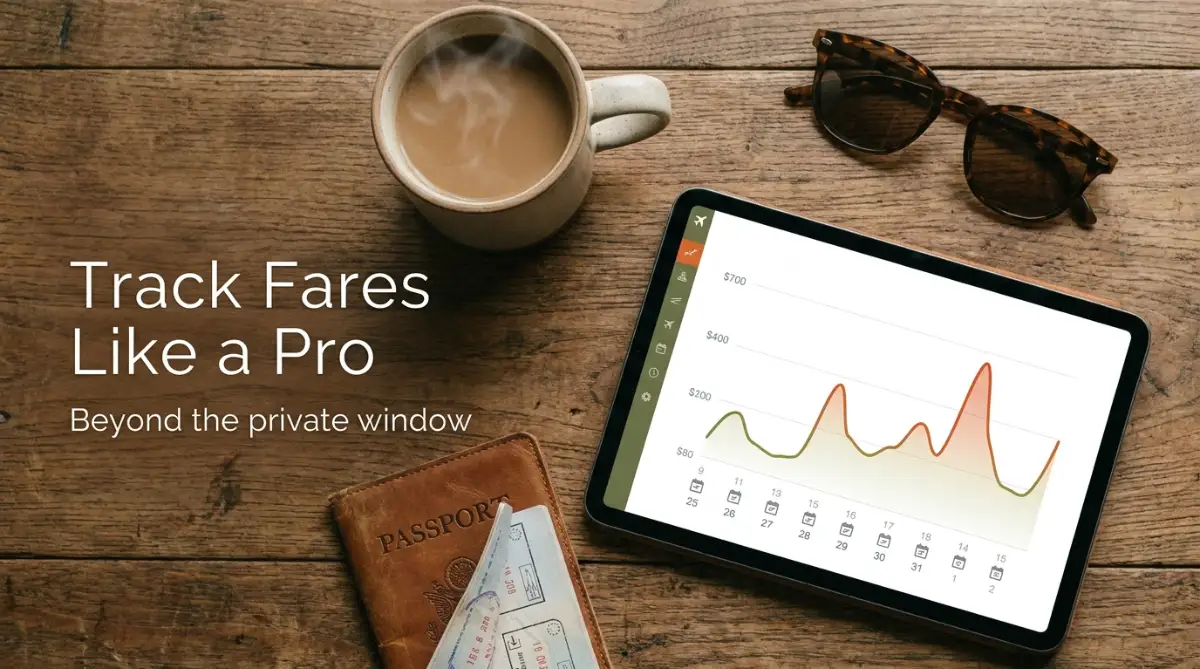
Instead, let modern technology do the hard work for you completely automatically in the background. Almost every major flight search engine offers a simple price tracking feature that you can set up in less than ten seconds.
You just enter your ideal route and dates, and the system watches the background data constantly while you live your life. When the airline releases a new batch of cheap tickets or demand suddenly drops, you get an instant email notification.
This takes the heavy emotion completely out of the booking process and gives you peace of mind. You do not have to wonder if the price will go down tomorrow, because the tracker will notify you the exact minute it happens.
Pro Tip: I used to waste hours manually writing down prices in a notebook until I realized I was fighting a losing battle against a machine. Once I set up automated email alerts for my routes, I found a flight to Europe for half the price without ever opening a private tab.
Consider the Hidden Value of Secondary Airports
Sometimes the airline algorithm is completely locked into charging a fortune for flights landing in a major, highly popular city airport. The landing fees are high, the global demand is insane, and the airlines have zero reason to offer you any discounts.
No amount of digital masking will change the simple fact that everyone wants to land at that specific busy terminal. However, the system might be practically giving away tickets to a smaller regional airport located just an hour away by train.
When you do your initial searching, always select the option to include nearby airports in your search results. You might discover that taking a cheap local bus from a secondary airport saves you half the cost of the main flight.
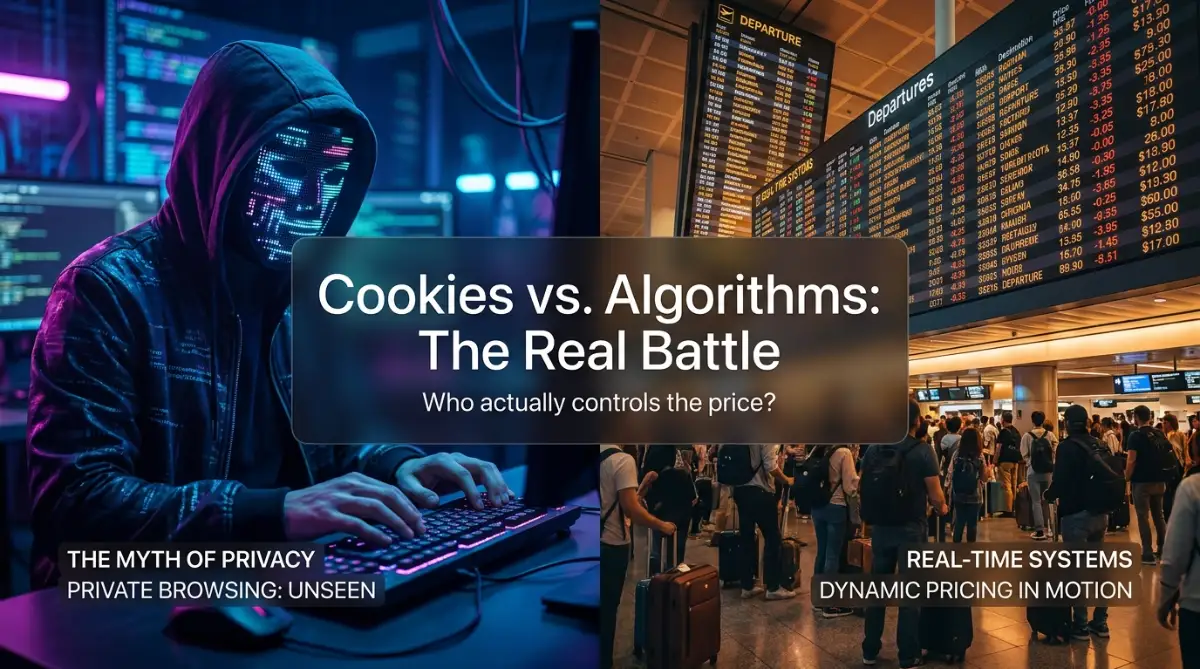
This is how you actually beat the revenue management system, by finding the alternative routes where they desperately need more passengers.
Understand the True Concept of Booking Windows
There is a massive internet misconception about when you should actually hand over your credit card details to get the best deal. Some people think booking a whole year in advance guarantees the cheapest price, while others wait until the absolute last minute hoping for a desperate sale.
Both of these extreme strategies usually result in you paying significantly more money than you actually should. Airlines do not release their absolute cheapest promotional fares eleven months in advance because they want to test the waters to see who will pay top dollar early.
Similarly, last-minute deals are mostly a thing of the past in the modern aviation industry. Business travelers are usually the ones booking flights three days before departure, and airlines know these large companies will pay whatever outrageous price is demanded.
The ideal sweet spot for booking a normal holiday is usually between one and three months before your departure date. This is exactly when the revenue algorithms start heavily adjusting prices based on how many empty seats are realistically left on the physical plane.
Here is an inside look at how airline computer systems actually adjust their ticket prices second by second:
The entire modern airline industry is built on complex mathematics, historical probability, and global demand. It is absolutely not built on tracking individual people through their personal computer screens or phone apps.
Once you deeply accept this reality, you can stop fighting invisible ghosts in your web browser. You can finally take a deep breath, approach your vacation planning with a clear head, and use real strategies that actually impact your wallet.
Stop blaming your computer cookies, and start looking at the bigger picture of how global travel demand naturally flows. When you play by the real rules of the game, finding affordable flights becomes an exciting challenge rather than a stressful nightmare.
Moving Beyond the Browser: Real Booking Strategies That Actually Work
Now that we know the private browsing trick is essentially an internet ghost story, you might be wondering how to actually win this game. The truth is, the travel industry relies on massive computer networks that process millions of transactions every single second.
You cannot trick a multi-billion dollar system by simply clearing your web history or opening a dark browser window. However, you can absolutely outsmart the system by understanding how the airlines actually want you to behave.
If you start thinking like a savvy market analyst instead of a stressed-out consumer, you will find opportunities that normal travelers completely miss. Let me share some incredibly powerful strategies that have completely transformed the way I plan my family holidays.
The Magic of the "Positioning Flight" Method
Most people naturally start their search by typing in their closest local airport and their final dream destination. They blindly accept whatever high price the search engine spits out, assuming that is just how much travel costs these days.
This happens because smaller regional airports usually operate as massive monopolies for one or two specific airlines. When there is absolutely no local competition, the airlines have zero incentive to offer you a decent discount.
Instead of booking one expensive continuous ticket, smart travelers use a strategy called a positioning flight. You book a very cheap domestic flight from your small local airport to a massive international hub like New York, London, or Los Angeles.
Then, you book a completely separate ticket from that highly competitive major hub directly to your final vacation spot. Because airlines are constantly fighting for dominance at these massive hubs, the prices drop dramatically due to intense competition.
This extra step might seem like a bit of a hassle at first glance, but it regularly saves people hundreds of dollars per ticket. The research on global aviation demand consistently shows that high-traffic routes offer the best consumer value.
Leveraging the Foreign Currency Advantage
There is a fascinating quirk in the global banking system that you can sometimes use to heavily discount your international trips. When you shop for tickets online, airlines automatically display prices based on the physical country you are sitting in right now.
They use your location to show you prices in your local money, which often includes a hidden premium. However, the value of global money is constantly shifting up and down every single minute on the trading floor.
Sometimes, buying a ticket in a different country's currency is noticeably cheaper than buying it in your own money. You can simply scroll down to the bottom footer of the airline's website and change your regional settings.
This completely forces the website to display the exact same ticket price in a foreign currency. If you use a travel credit card that has zero foreign transaction fees, your bank will automatically do the conversion for you at the official daily rate.
Just like you would focus on understanding fixed and fluctuating costs in your personal life, understanding currency fluctuations can leave extra cash in your pocket.
The Hidden 24-Hour Safety Net
Airlines love to make you feel like your purchase is completely final the exact second you hit the checkout button. They use strict language to convince you that making any changes will result in massive penalty fees.
Because of this intense pressure, travelers often hesitate to book a good deal, only to watch the price skyrocket the very next morning. What the airlines intentionally fail to advertise is a powerful consumer protection law that works heavily in your favor.
In many major countries, including the United States, the government transportation regulations legally require airlines to give you a twenty-four-hour grace period. This means you can book that incredibly cheap ticket right now to lock in the absolute lowest price.
If your boss suddenly denies your vacation request the next morning, you can simply cancel the ticket and get a full, immediate refund. You do not have to pay a single penalty fee, as long as you cancel within that exact twenty-four-hour window.
This powerful safety net completely removes the anxiety of booking quickly when you spot an amazing, unadvertised discount.
Dangerous Traps That Will Drain Your Travel Budget
Even when you start using advanced booking strategies, the internet is still a minefield of emotional traps and deceptive marketing. Booking websites are beautifully designed by behavioral psychologists who know exactly how to make you panic and spend more money.
When we feel rushed, anxious, or scared of missing out on a family trip, we stop making logical financial decisions. Falling for these hidden traps is essentially exactly like identifying unfair financial agreements; if you do not read the fine print, you will get burned.
Let us look closely at the most common and expensive mistakes people make when they try to book flights online. Avoiding these deceptive pitfalls will automatically keep your hard-earned money safe from corporate greed.
The "Only 1 Seat Left" Panic Button
You finally find a decent price for a weekend getaway, and you are just about to ask your partner if the dates work. Suddenly, a bright red message flashes urgently on the screen warning you that there is only one seat left at this price.
Your heart rate instantly spikes, and you quickly grab your wallet before a stranger on the internet steals your perfect deal. This is a highly engineered psychological trick known as a dark pattern, designed purely to create an intense feeling of fake scarcity.
In almost every case, that scary red text does not mean the entire airplane is almost full and about to sell out. It usually just means that the specific imaginary fare category we discussed earlier is temporarily running low.
Even if that specific seat gets sold to someone else, the next available price level might only be five dollars more expensive. The government has actually started investigating these manipulative online design tactics because they intentionally mislead normal consumers.
Never let a red countdown timer or a flashing warning sign force you into making a rushed, emotional purchase. If you feel pressured, it is a massive warning sign of a bad deal that you should definitely step away from.
Falling Hard for the Basic Economy Illusion
Airlines recently invented a brilliant corporate strategy to make their initial search results look incredibly cheap on Google. They created a highly restrictive ticket class called Basic Economy, which systematically strips away absolutely every normal comfort you expect.
When you first see the price, you feel a massive rush of excitement because you think you just found the ultimate discount. But as you slowly click through the checkout pages, you realize you have to pay extra money just to choose a physical seat.
Then you realize you are not even allowed to bring a regular carry-on bag without paying another massive penalty fee at the gate. By the time you add all the basic travel necessities back into the trip, the ticket is actually way more expensive than a standard economy seat.
This sneaky tactic is a prime example of fixing hidden financial habits by learning to read the actual terms and conditions. Always compare the final checkout screen of a Basic Economy ticket against a regular ticket before you finalize the payment.
The Third-Party Booking Nightmare
We all naturally love using large travel search engines to compare prices across dozens of different airlines all at once. These tools are fantastic for initial research, but they often tempt you to book through completely unknown, heavily discounted third-party agencies.
You might see a random website you have never heard of offering the exact same flight for forty dollars less. It is extremely tempting to click that link, hoping to save a little bit of cash for your actual vacation dinners.
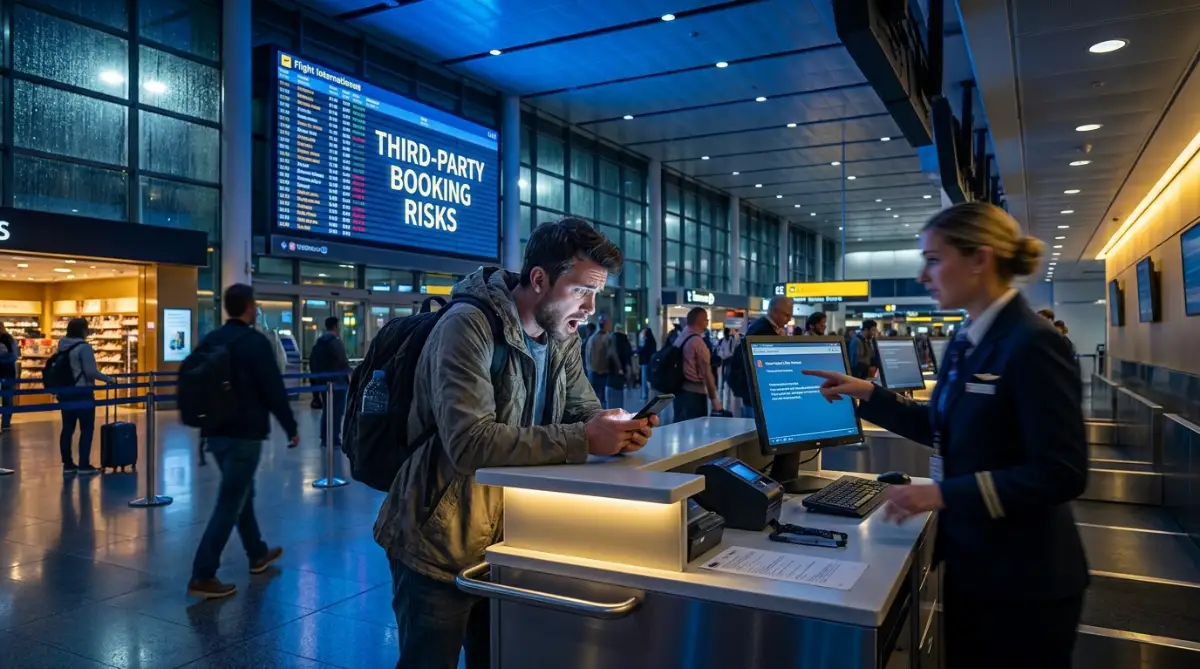
However, booking through these unverified online agencies is incredibly dangerous if absolutely anything goes wrong with your travel plans. If a winter storm delays your flight or the airline changes the schedule, the airline will simply refuse to help you.
They will tell you to call the discount agency you bought the ticket from, leaving you stranded in the airport. When you try to call that cheap agency, you will likely spend five hours on hold listening to terrible robotic music.
This is exactly why keeping your hard-earned money safe means paying a tiny bit more to book directly with the official airline. When you deal directly with the carrier, you actually have legal rights and immediate access to real customer service agents.
Waiting for the Impossible Last-Minute Sale
There is a very stubborn, old-fashioned myth that showing up at the airport with your bags packed will get you a cheap standby ticket. This might have been a fun reality thirty years ago, but modern aviation software has completely killed the last-minute discount.
Airlines know exactly who buys tickets at the very last minute, and it is almost always desperate corporate employees flying for emergencies. A business executive who urgently needs to fly to a sudden client meeting does not care if a ticket costs two thousand dollars.
Because the airlines know these desperate corporate buyers exist, they purposely raise the prices drastically in the final two weeks before departure. If you wait until the last minute hoping for a magical family discount, you will absolutely be punished with the highest possible fare.
You should treat flight booking like exploring comprehensive financial strategies; planning ahead always yields the best possible return on your investment. Waiting is no longer a smart strategy, it is just a terrible gamble where the house always wins.
Your New Blueprint for Stress-Free Travel Planning
Booking a holiday should be an incredibly fun and inspiring experience from the very first moment you search for ideas. It is completely unfair that invisible tracking algorithms and shady marketing tricks have turned it into a deeply stressful internet chore.
By understanding how these massive global systems actually operate behind the scenes, you completely take all of your power back. You no longer have to blindly rely on outdated internet myths or feel like your own computer is actively working against you.
You can look straight past the fake urgency warnings, the deceptive basic economy fares, and the completely useless private browser tricks. Instead, you are now fully equipped to use actual market data, flexible calendars, and smart tracking alerts to secure the best value.
Remember that every single flight search is just about understanding what the automated system actually needs from you. The more flexible you are with your travel dates, the more leverage you naturally have over the airline's pricing robots.
Stop fighting against your web browser, and start working gracefully alongside the natural flow of human travel demand.
My personal hope is that this guide lifts a very heavy weight off your shoulders the next time you sit down to plan an adventure. You absolutely deserve to travel the world, make amazing memories, and enjoy your time off without feeling like you are constantly being tricked. Take a deep breath, close that useless incognito window, and start planning your next beautiful journey with total confidence today.
Honest Answers to Your Biggest Airfare Questions
Does clearing my browser cache actually do anything at all?
Clearing your cache is wonderful for keeping your personal computer running fast, but it does absolutely nothing to change flight prices. The airline sets the final price based on global seat availability, not what is stored in your personal temporary internet files. You are honestly just deleting your saved passwords for no good reason.
Do virtual private networks (VPNs) actually lower flight prices?
A VPN can occasionally help if you are trying to book a domestic flight inside a completely different foreign country. However, for standard international or domestic travel from your home country, the massive global pricing systems usually see right through it. The slight currency difference you might find is rarely worth the massive hassle of faking your location.
Is Tuesday night really the best time to book a flight?
This is a very old, completely outdated myth from the days when human travel agents loaded new prices into the system manually every Tuesday morning. Today, complex computer algorithms adjust prices automatically every fraction of a second based on live global demand. The physical day of the week you sit at your computer matters very little in the modern era.
Why do some flight prices jump drastically overnight?
Airlines constantly file new pricing structures based on incredibly complex formulas related to fuel costs, weather, and predicted seasonal demand. If an imaginary fare bucket expires right at midnight, the system automatically moves everyone to the next highest price tier. It is just the cold, hard logic of supply and demand happening in real-time while you sleep.
Are budget airlines actually cheaper in the long run?
Ultra-low-cost carriers look amazing on paper because their initial advertised ticket prices are astonishingly low. However, they aggressively charge you for every single extra detail, including printing your boarding pass or bringing a small backpack. If you need to check a bag and choose a seat, a standard airline is very often the cheaper and more comfortable overall option.
Disclaimer: The information provided in this article is strictly for educational and informational purposes and does not constitute professional financial or travel advisory services. Airline pricing algorithms and international booking policies change frequently, and individual results may significantly vary. Always verify final prices directly with official airline websites and carefully read the terms and conditions before making any binding purchases.