The Midnight Airport Nightmare No One Warns You About
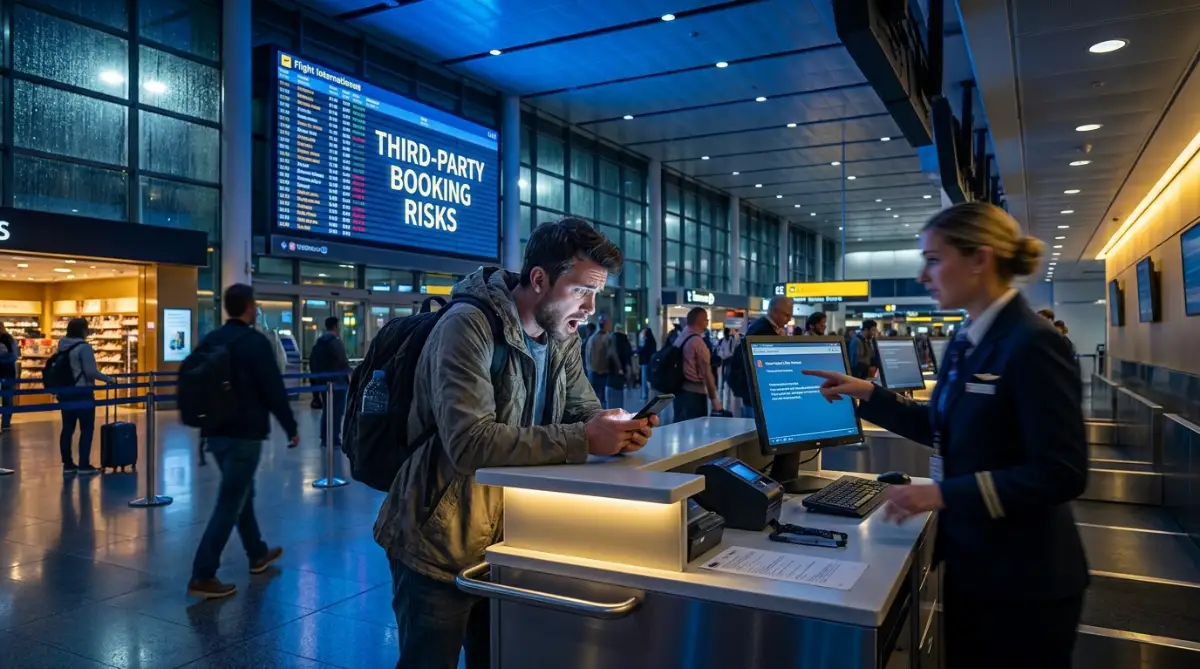
I was standing at the airport check-in counter with my heavy bags, ready for a much-needed vacation, when my heart suddenly sank. The airline agent looked at my passport, typed on her keyboard, and frowned before saying, "I am sorry, but your ticket does not exist in our system." I had paid a large sum of money to a popular online travel agency just three weeks prior. My confirmation email looked perfectly normal, yet the airline had absolutely no record of my seat. I spent the next four hours sitting on the cold airport floor, calling a customer service number that kept putting me on hold. That night, I missed my flight, lost my money, and promised myself I would never make that booking mistake again.
Unfortunately, my story is not unique. Millions of everyday people fall into this exact trap every single day. We see a heavily discounted ticket on a shiny website and immediately click the purchase button. It feels like a massive win for our budget.
But what happens behind the scenes is a completely different story. Regular families are showing up to airports only to find out their flights were canceled days ago. The airline never notified them because the third-party agency held their contact information.
This causes unbelievable mental stress for travelers. Imagine planning a trip to see your aging parents or attending a best friend's wedding, only to be turned away at the boarding gate. The financial loss is bad, but the emotional damage is far worse.
People are losing their hard-earned savings while trying to fight automated chatbots for a refund. It completely destroys the peace of mind that should always come with traveling. You start your journey with anxiety instead of excitement.
How the Middleman Trap Actually Works
To truly protect yourself, we need to understand what happens when you hit that final payment button. When you buy directly from an airline, you form a direct legal contract with them. They are fully responsible for getting you from point A to point B.
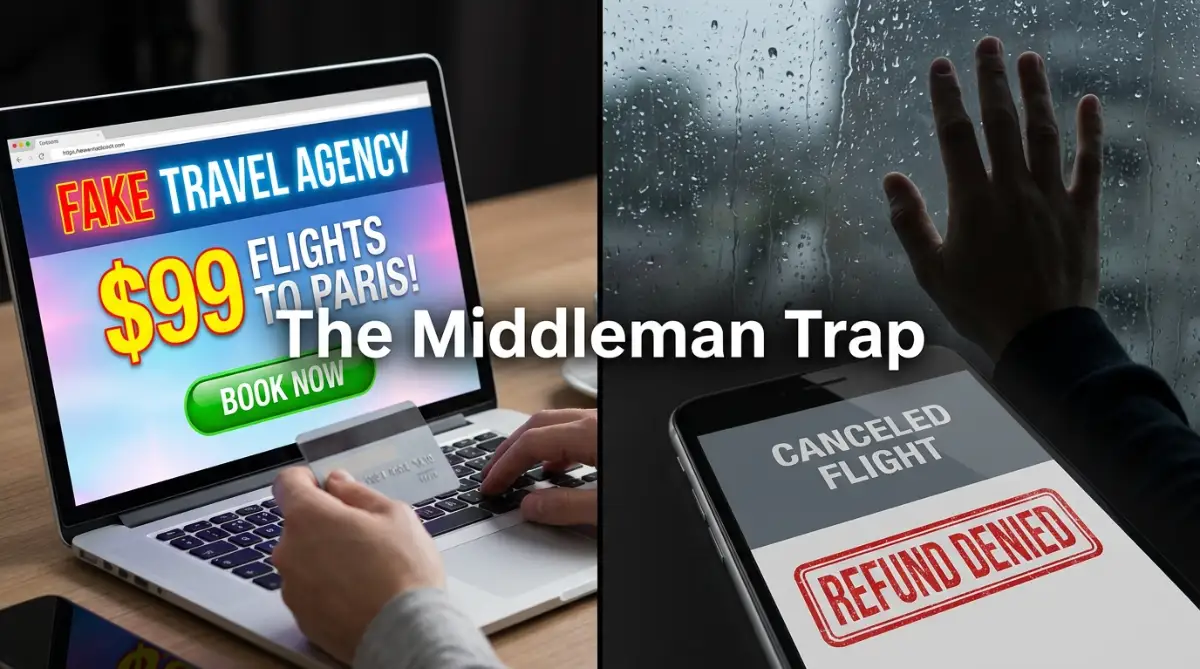
However, when you use an online middleman, things get highly complicated. The agency buys the ticket on your behalf, effectively becoming the legal owner of that reservation. You are simply their client, not the airline's direct customer.
This creates a massive wall between you and the airline. If a problem happens, the airline will simply point you back to the agency. And as you might guess, those agencies are rarely eager to help.
The Myth of the Guaranteed Seat
Many travelers believe that holding a confirmation email means they have a guaranteed seat on the plane. This is a very common misunderstanding. Third-party websites often sell tickets they do not actually possess yet.
They use software to grab tickets in bulk, but sometimes the airline system rejects their request. You get a nice email from the agency, but the actual airline ticket was never issued. This is called a "ghost booking."
You only find out about this ghost booking when you try to check in online 24 hours before departure. By then, the ticket prices for a new flight have skyrocketed. You are left entirely stranded with no good options.
I remember making the mistake of trusting a booking reference number from an agency without verifying it. Now, the very second I book any flight, I take the PNR code and enter it directly into the official airline’s app to ensure my name actually shows up in their active system.
The Customer Service Black Hole
Are you ready to see exactly how these booking mistakes happen in real time? Watch this short, eye-opening breakdown that explains the hidden dangers of third-party tickets before you read our next safety steps!
Let us talk about what happens when you need to change your flight. Life is highly unpredictable, and sometimes emergencies force us to alter our travel plans. If you booked directly, you simply call the airline and pay the standard change fee.
With a third-party agency, you enter what feels like a customer service black hole. First, you have to find a working phone number for the agency, which they intentionally hide on their website. Then, you deal with outsourced call centers where agents have no real power to change airline tickets.
Even if they agree to change your flight, they will charge you their own massive penalty fee on top of the airline's fee. I have seen situations where changing a ticket through an agency costs more than buying a brand-new flight. They hold your reservation hostage because they know you have no other choice.
Hidden Fees and the Baggage Illusion
One of the biggest tricks used by these platforms is the illusion of a cheaper price. You search for a route, and the middleman shows a price that is fifty dollars cheaper than the official airline website. You feel incredibly smart for finding this deal.
But this is just a clever marketing illusion. That slightly cheaper ticket usually comes with massive restrictions that are hidden in the fine print. Often, it is a "basic economy" fare that does not allow a single carry-on bag.
When you get to the airport, the airline forces you to pay a massive penalty to check your bag. That initial fifty-dollar saving quickly turns into a hundred-dollar loss. Furthermore, the agency might charge a "processing fee" just for sending you the final ticket.
Schedule Changes and Missed Connections
Airlines change their flight schedules all the time. Sometimes a flight is moved back by ten minutes, and sometimes it is delayed by twelve hours. When you book directly, the airline sends a text message to your phone the second this happens.
When you use a middleman, the airline sends that notification to the agency's generic email address. The agency is supposed to forward that message to you. Unfortunately, their automated systems often fail to do this.
You might show up for a morning flight only to realize it was changed to the previous night. You missed the plane completely, and the airline considers you a "no-show." Because you were a no-show, you lose the entire value of your ticket and receive zero compensation.
The Connecting Flight Nightmare
International travel often involves connecting flights with different airline carriers. This is where third-party websites take the biggest risks with your safety. They will piece together two separate tickets from completely unpartnered airlines to give you the lowest price.
This is known as a "self-transfer" or a "hacker fare." They do not clearly explain what this actually means for your journey. It means your bags will not be transferred automatically to your final destination.
You have to land, go through immigration, collect your bags, and check in all over again for the second flight. If your first flight is delayed by even a few minutes, you will miss your second flight. Neither airline will help you or offer a free replacement, because they are not officially partnered together.
Why Refunds Take Months to Process
Getting your money back from a canceled trip is another massive struggle. If an airline cancels a direct flight, they usually return your money to your credit card within a few business days. The process is smooth and legally regulated.
When a middleman is involved, the airline sends the refund to the agency's bank account. The agency then holds onto your money for as long as possible to earn interest on it. They will ignore your emails and claim they are "still waiting for the airline."
People often wait six to eight months just to get a simple refund. Some agencies even refuse to give cash back, offering only a restrictive voucher that expires quickly. You are forced to use their terrible service again just to avoid losing your money entirely.
Overbooking and the First to Get Bumped
Airlines frequently overbook their flights, selling more tickets than there are actual seats on the plane. They do this expecting a few people to cancel at the last minute. But when everyone shows up, they have to deny boarding to some passengers.
How do airlines decide who gets left behind? They look at the type of ticket you purchased. Passengers who bought cheap tickets through obscure third-party websites are always the first target.
You hold no loyalty status with the airline, and your ticket generated the least amount of profit for them. Therefore, you are the easiest person to bump off the flight. Direct buyers and frequent flyers are always given priority seating during an overbooking crisis.
Navigating the Illusion of Support
Many of these booking websites proudly advertise "24/7 Premium Support" on their checkout pages. They even charge an extra ten dollars for this supposed premium protection. This gives travelers a false sense of security.
In reality, this premium support just means you get to speak to a human instead of a robot. It does not grant the agent any special powers to override airline policies. When severe weather grounds hundreds of flights, those support lines simply crash.
You cannot bypass the agency to talk to the airline gate agent either. The gate agent's computer system locks them out from modifying third-party reservations. You are essentially trapped in a bureaucratic loop while your vacation slips away.
The Security Risks of Shared Data
We rarely think about our personal data when trying to score a cheap flight. But booking through unverified platforms exposes your sensitive information to numerous security risks. You are handing over your passport details, date of birth, and credit card numbers.
Many small or shady booking sites do not have strong cybersecurity measures in place. Your data could be sold to advertisers or, worse, stolen in a data breach. You are trusting a random company with the exact details needed for identity theft.
Official airlines invest millions of dollars into secure payment gateways and data protection. By trying to save a few dollars, you might be risking your entire digital identity. It is a gamble that most regular travelers simply do not understand.
The Truth About Airline Alliances
To travel safely, it helps to know how major airlines work together. Major carriers group themselves into global alliances. When you book directly through an alliance member, you are protected across all their partner airlines.
If one flight is delayed, the partner airline automatically knows and rebooks you for free. Third-party platforms often ignore these alliances to scrape the absolute bottom of the barrel for cheap seats. They mix and match airlines that deeply hate each other.
This ruins the seamless travel experience. You are forced to deal with multiple different boarding passes, baggage policies, and terminal changes. It turns a simple international trip into an exhausting puzzle that you have to solve alone.
Protecting Your Family's Travel Plans
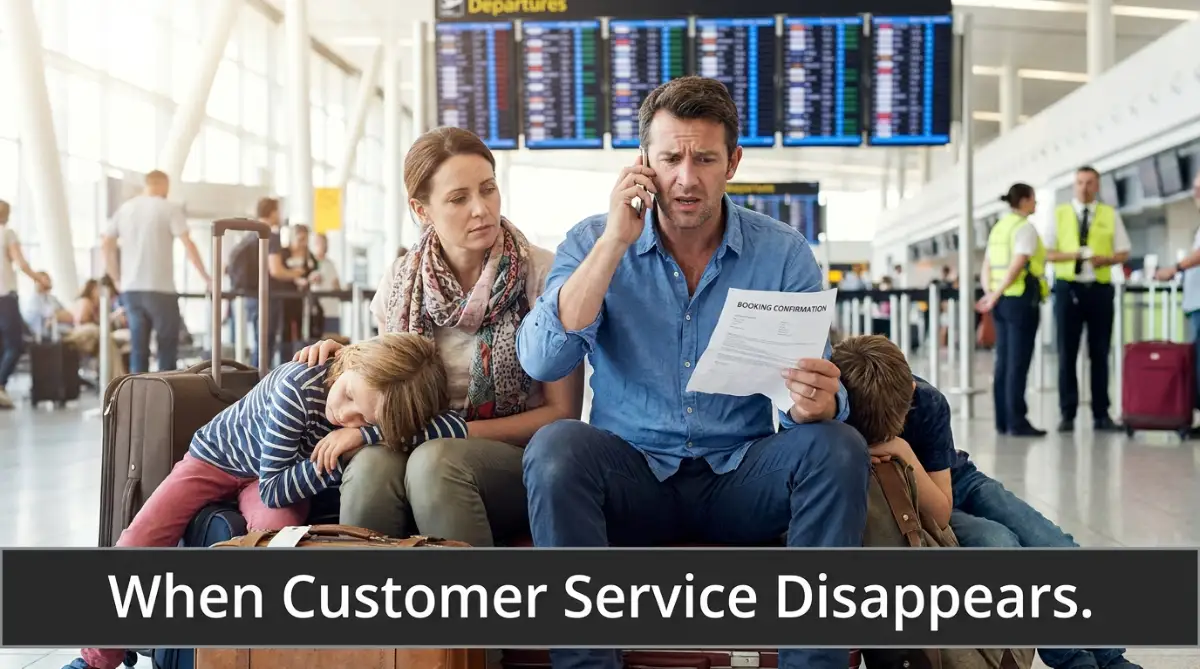
When you are traveling alone, getting stuck at an airport is annoying. When you are traveling with small children or elderly parents, it becomes an absolute nightmare. Kids need food, rest, and a predictable schedule.
A random twelve-hour delay caused by a third-party ticketing error can ruin a family's physical health. You might find yourself sleeping on airport benches because the agency refuses to pay for a hotel room. Airlines will provide hotels for their direct customers, but they will proudly ignore middleman clients.
Your family deserves a safe, reliable, and stress-free journey. Paying a slightly higher price on the official airline website is essentially an insurance policy for your peace of mind. It ensures that when things go wrong, you have a massive corporation legally bound to fix the problem immediately.
Pro Strategies to Outsmart the Travel Industry System
Now that we understand how the middleman trap works, it is time to take back control of your travel plans. You do not have to abandon online search tools entirely. You just need to change exactly how you interact with them.
The smartest travelers use booking aggregators strictly as search engines, never as a digital checkout counter. You should absolutely use platforms like Skyscanner or Google Flights to find the best routes. They are amazing tools for mapping out your options and comparing prices across multiple airlines.
However, once you find the perfect flight schedule, you must immediately close that third-party tab. Open a brand-new window and go directly to the official website of the airline operating that flight. This simple habit completely eliminates the middleman from your legal contract.
It is very similar to figuring out the honest truth about whether incognito mode gives you cheaper flights. You have to cut through the marketing noise to find out what actually works. By booking directly, your money goes straight to the airline, ensuring you get real customer service when things go wrong.
The Secret of Fare Basis Codes
Every single airline ticket comes with a hidden string of letters and numbers called a fare basis code. Most casual travelers never even notice these codes on their receipts. However, these codes strictly dictate every single rule regarding your seat.
When you buy from an unauthorized agency, they always sell you the most restrictive fare basis code available. This specific code tells the airline computer system that your ticket cannot be changed, refunded, or upgraded under any circumstances. You are locked into a rigid contract without even knowing it.
If you book on the official airline website, they clearly explain what each fare class allows. You can easily pay a slightly higher price to get a flexible fare code. This flexibility is the ultimate insurance policy for your hard-earned vacation time.
Why the Airline App is Your Best Friend
One of my favorite travel secrets is heavily relying on the official mobile app of the airline I am flying with. As soon as you purchase your direct ticket, you should download their app and log into your reservation. This puts you directly in the airline's communication loop.
If your gate changes or your departure is delayed, the app pushes a notification to your screen instantly. Third-party agencies simply do not have the technical ability to send you real-time operational updates. Relying on an agency for flight updates is like leaving your digital front door wide open, much like the hidden dangers of registering a domain name without privacy enabled.
I made it a strict personal rule to check the airline app exactly 24 hours before my departure. Once, the app warned me about a severe weather delay before the airport screens even updated, allowing me to instantly switch to an earlier flight for free!
Navigating Credit Card Travel Portals
You might be wondering about booking flights through premium credit card portals provided by major banks. These are definitely a step above random discount websites because they offer decent customer service. However, they are technically still third-party travel agencies powered by large backend networks.
If a massive storm cancels hundreds of flights, you still cannot walk up to the airline desk for immediate help. The airline agent will still tell you to call your bank's travel portal to fix the reservation. This can leave you stranded on hold while direct customers get the last available seats on the next plane.
Treat your travel points carefully, just as you would carefully protect your personal assets from business loan risks. If you have the option, transfer your credit card points directly to the airline's frequent flyer program instead. Booking a reward flight directly through the airline is always the safest possible route.
Understanding your rights is also incredibly helpful. I highly recommend briefly reviewing the official guidelines set by the US Department of Transportation regarding flight delays. Knowing what an airline legally owes you gives you massive leverage during a travel crisis.
Dangerous Booking Habits That Will Cost You
Making a tiny mistake during the booking process can completely ruin your international journey. Many travelers rush through the checkout page because a countdown timer tells them the price will expire soon. These fake urgency timers are designed to make you panic and skip reading the fine print.
Falling for these manipulative sales tactics is one of the easiest ways to lose your money. It is surprisingly similar to falling for the silent warning signs of fake remote job offers. You see a deal that looks too good to be true, and your logic completely disappears.
Let us break down the absolute worst habits people fall into when trying to secure a cheap flight. Avoiding these specific traps will save you from massive financial penalties at the airport counter.
The Name Correction Nightmare
One of the most common mistakes is making a small typo in your name while booking through an agency. You might accidentally swap two letters or forget to include your middle name exactly as it appears on your passport. If you booked directly, most airlines will fix a minor typo over the phone for free.
If you use a middleman, a simple typo becomes a complete disaster. The airline refuses to touch the ticket, and the agency will claim the airline does not allow name changes. They will force you to cancel the entire ticket and buy a brand-new one at a massive markup.
The standards outlined by the International Air Transport Association are very strict regarding passenger identification. Your ticket must match your passport exactly, letter for letter. Never rush through the passenger details page just to secure a seemingly low price.
Overlooking Foreign Transit Visas
When discount websites piece together strange flight routes, they rarely warn you about international transit laws. They might route you through a country that requires a specific transit visa just to switch planes. If you show up at the first airport without that visa, you will be denied boarding immediately.
This happens frequently with "hacker fares" where you have two separate tickets. Because the airlines are not officially connected, you have to formally enter the transit country to grab your luggage. This means you must clear customs and immigration, which requires proper legal documentation.
Ignorance of these laws is never accepted as a valid excuse by airport security. You will lose the entire value of your trip and get sent straight home. Always verify your transit requirements before purchasing a weird connection.
Ignoring the 24-Hour Safety Net
Many casual travelers do not know about the mandatory 24-hour refund rule for direct bookings. If you book a flight directly with an airline in many major countries, you have 24 hours to cancel it for a full cash refund. This law exists to protect consumers from sudden buyer's remorse or accidental bookings.
However, many third-party platforms actively try to bypass this legal requirement. They will tell you that your ticket is strictly non-refundable from the very second you press buy. They hide behind international borders and complex terms of service to keep your cash.
The Federal Trade Commission warnings on travel scams frequently highlight how these platforms deny legally mandated refunds. If you use a discount agency, you completely forfeit that beautiful 24-hour safety net. You are financially trapped the moment your credit card is charged.
The Baggage Allowance Illusion
Another destructive habit is assuming your cheap ticket includes the right to carry a normal suitcase. Discount platforms intentionally strip away baggage allowances to make their base price look unbeatable on search engines. You might show up to the airport expecting to check a bag, only to face an aggressive fee.
Dealing with unexpected airport fees completely drains your vacation excitement, just like what really causes electric vehicle battery degradation. You slowly lose all your positive energy before the trip even begins. When you finally reach the gate, you feel frustrated and financially exhausted.
Always calculate the total cost of the trip before paying the middleman. Add the cost of a checked bag, a carry-on, and seat selection to their advertised price. You will almost always find that buying a standard ticket directly from the airline is actually cheaper.
Ignoring Red Flags on Booking Sites
Sometimes, travelers completely ignore terrible online reviews just to save twenty dollars. They visit a website they have never heard of, purely because a search engine ranked it highly. They ignore the poorly translated text, broken images, and missing contact information.
Trusting a shady website with your travel plans is incredibly dangerous. It is just like ignoring the unspoken risks of installing solar panels on an aging residential roof just because the installation was cheap. The foundation is broken, and a massive collapse is completely inevitable.
Always check Better Business Bureau travel booking advice before handing your credit card to an unknown company. If a website has hundreds of complaints about missing refunds or ghost tickets, you must walk away. No amount of potential savings is worth the anxiety of a canceled trip.
Your Blueprint for Stress-Free Global Travel
We have covered a lot of hidden traps, but your future travel experiences do not have to be stressful. You now possess the exact knowledge needed to navigate the aviation industry safely. The key is simply removing the unnecessary layers between you and the actual airplane.
Whenever you prepare for a new journey, stick strictly to the direct booking method. Let the massive corporations handle the complicated logistics of international travel while you focus on the fun parts. You deserve to walk into an airport feeling confident, relaxed, and fully protected.
Clear communication with your airline ensures a smooth journey. Doing things incorrectly creates chaos, much like the silent formatting mistakes that drive readers away from a good story. Keep your travel plans clean, direct, and firmly in your own control.
I used to constantly stress about whether my cheap tickets were actually valid, losing sleep days before my trips. Since I started booking directly, I have experienced a profound sense of peace, knowing the airline is legally obligated to take care of me. You completely deserve that exact same peace of mind on your next adventure.
Questions Travelers Secretly Ask About Booking Platforms
Can the airport gate agent help me if I booked through an agency?
Unfortunately, airport gate agents are usually locked out of modifying third-party agency tickets in their computer systems. They will almost always instruct you to step aside and call the online agency's customer service number. This is why you often see frustrated travelers crying on their phones near the boarding area.
Are all online travel aggregators basically scams?
Not all of them are outright scams, but they operate on a business model that heavily prioritizes volume over customer care. They make their profit through hidden markups, strict penalty fees, and selling your travel data. While some are legitimate businesses, they still act as a massive barrier during travel emergencies.
How do I know if my third-party ticket is actually confirmed?
Never trust the confirmation email sent by the booking platform alone. You must take the six-digit alphanumeric PNR code provided in that email and enter it directly on the official airline website. If the airline website cannot find your reservation, you do not have a real ticket.
Why is the exact same flight sometimes more expensive on the airline website?
Airlines bundle essential services like standard customer support, free 24-hour cancellation, and rebooking guarantees into their baseline prices. Third-party sites strip all these basic protections away to display an artificially lower initial price tag. By the time you add necessary bags and basic flexibility, the agency price is usually higher.
Will I get my money back quickly if the online agency goes bankrupt?
If a third-party booking site suddenly shuts down, getting your money back becomes a legal nightmare. The airline will not refund you because they technically paid the agency, leaving you stuck as an unsecured creditor. Always use a major credit card so you can file a quick chargeback dispute if a company vanishes.
Disclaimer: The information provided in this article is for educational and informational purposes only. Travel policies, airline rules, and consumer protection laws change frequently and vary by country. Always verify specific terms and conditions directly with your chosen airline and consult official government travel advisories before making any financial commitments or international travel arrangements.