The Nightmare Hiding Above Your Ceiling
I still remember standing in my living room, staring at a massive brown water stain spreading across my freshly painted white ceiling. It was the middle of a heavy spring rainstorm, and water was slowly dripping down my wall, ruining the hardwood floor below. Just three months earlier, I had proudly signed a contract to have a massive solar array installed on my home. I thought I was making a smart financial move to eliminate my power bill.
Instead, I ended up causing severe structural damage to my house because I allowed a heavy energy system to be mounted on a fifteen-year-old roof. I felt completely foolish and incredibly stressed out as I frantically called contractors, trying to figure out who was to blame.
This is a quiet, highly stressful reality that thousands of homeowners face every single day. You get excited about the idea of generating your own clean energy and saving money on utilities. The salesperson shows you beautiful charts of your future savings, but they conveniently forget to inspect the actual physical condition of your house.
When you put heavy equipment on a weak foundation, the results are always disastrous. The mental toll of this mistake is absolutely exhausting. Every time the wind blows hard or the rain starts falling, you find yourself pacing the house, looking for new leaks.
Instead of enjoying the peace of mind that comes with energy independence, you are constantly worried that your ceiling might collapse. The worst part is the feeling of being trapped in a blame game between the solar installers and your home insurance company. The installers claim the roof was already bad, and the insurance company refuses to cover the damage because you altered the structure.
Homeowners are left holding a massive repair bill that completely wipes out any savings the solar system was supposed to provide. We need to expose the real physical limits of residential architecture. It is time to look past the sales pitches and understand what actually happens when you drill massive metal bolts into an aging structure.
The Science of "Dead Load" on Older Architecture
To truly understand why old houses struggle with new energy systems, we have to talk about simple gravity. When a house is originally built, the architects calculate exactly how much weight the wooden framing can hold. This continuous, unchanging weight is known in the construction industry as the "dead load."
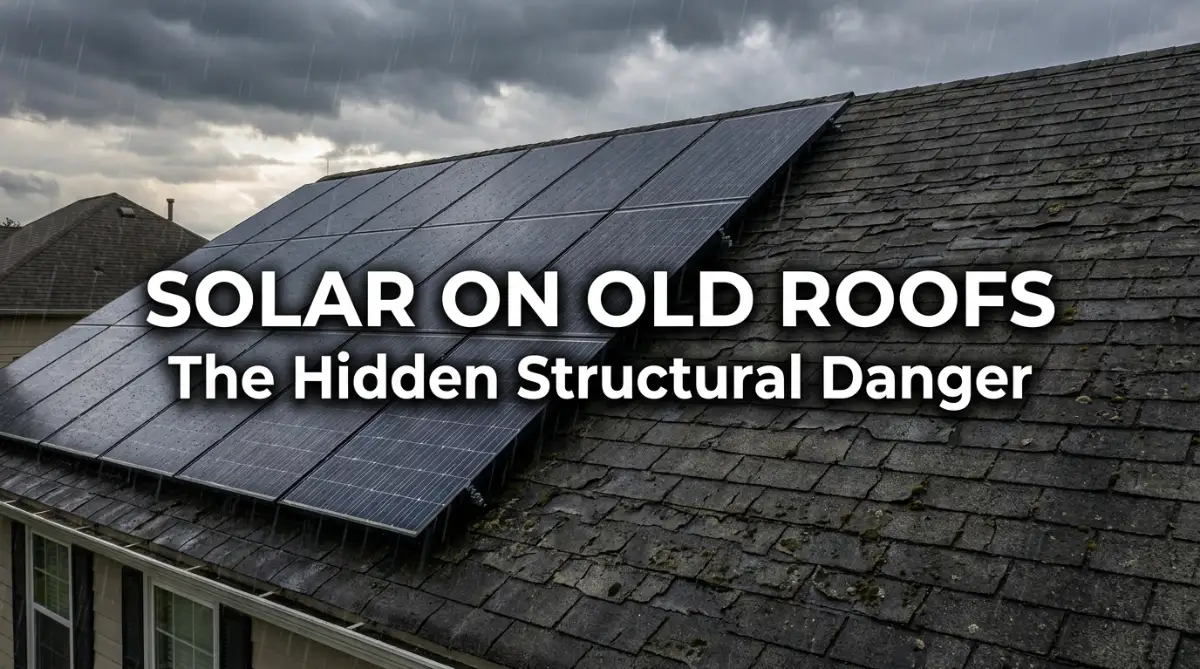
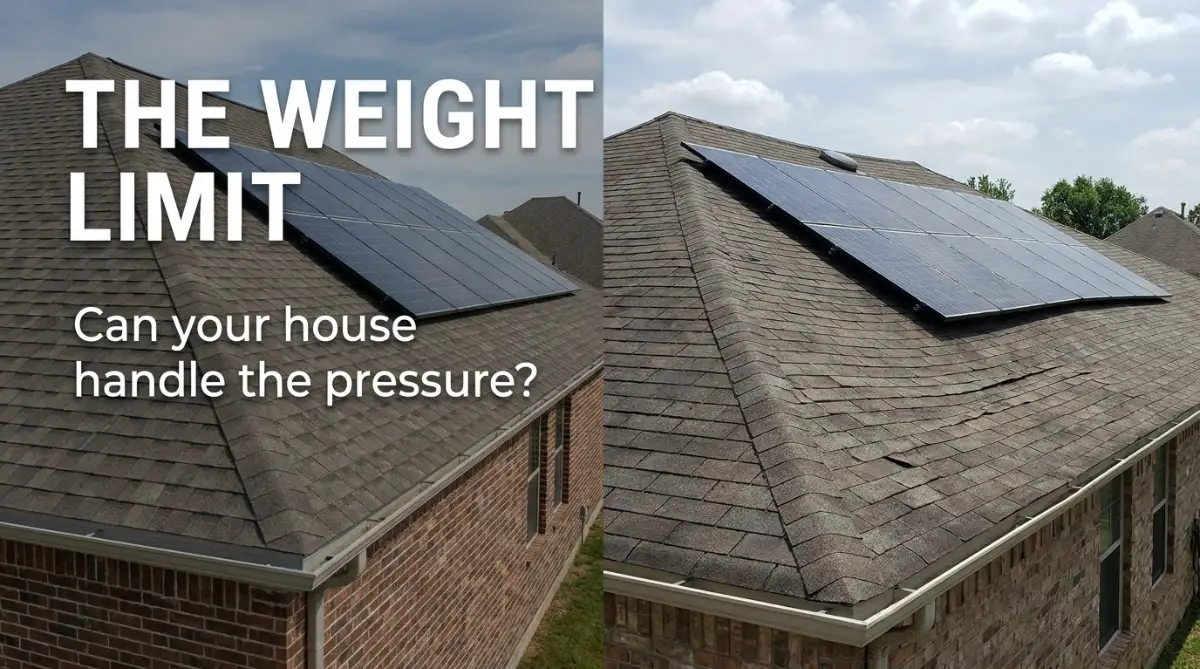
Your standard asphalt shingles, the wooden decking, and the protective underlayment make up the original dead load. An average residential solar system adds roughly three to four pounds of permanent weight per square foot. While that might not sound like a massive number, it completely changes the physics of your home.
When you spread that extra weight across a massive surface area, you are suddenly adding thousands of pounds to the top of your house. A brand-new house with fresh, sturdy wooden framing can easily absorb this extra pressure. But an aging house tells a very different story.
Over the decades, the wooden rafters holding up your house slowly lose their stiffness. They endure extreme summer heat, freezing winter moisture, and constant humidity changes. This continuous weathering causes the wood to slightly bow and soften over time.
When you drop two thousand pounds of heavy glass and metal onto those tired, softened wooden beams, they begin to aggressively sag. You might not notice it from the street right away, but the physical stress is immense. This sagging causes the internal walls of your home to shift, leading to cracked drywall and jammed doors inside your living room.
The Brittle Shingle Disaster
Let us talk about the actual surface of your house. Asphalt shingles are the most common roofing material in the world, and they have a very specific lifecycle. When they are brand new, they are highly flexible, rubbery, and incredibly effective at shedding water.
However, after baking in the direct sun for ten or twelve years, those shingles go through a massive chemical change. The essential oils inside the asphalt completely dry out. The shingles become incredibly stiff, fragile, and brittle.
Installing a solar array is a very aggressive construction process. Installers have to walk all over the surface carrying heavy equipment. When a worker steps on a brittle, aging shingle, it instantly cracks under the pressure of their work boots.
These microscopic cracks are almost impossible to see with the naked eye. But when the winter snow melts or the spring rains arrive, water easily finds its way through those tiny fractures. The water gets trapped underneath the shingle, slowly rotting the wooden decking below.
Furthermore, to attach the solar racking system, installers have to drill deep holes straight through your shingles and into the wood below. On a new, flexible roof, the roofing material naturally seals tightly around the metal bolts. But drilling a thick metal bolt through a dry, brittle older shingle is like drilling a screw into a dry cracker.
The material shatters and crumbles around the drill site. Installers try to cover these shattered areas with chemical sealants, but sealants naturally break down under UV sunlight over a short period. Once that sealant fails, you essentially have dozens of open holes pouring water directly into your attic.
The "Double Labor" Financial Trap
Perhaps the most heartbreaking part of ignoring an old roof is the financial trap you fall into a few years later. Let us imagine you install an expensive solar system on a roof that only has four years of life left. The installation goes smoothly, and you start enjoying your energy savings.
Four years later, your shingles start curling and failing naturally, and a contractor tells you it is time for a complete replacement. You cannot just rip off the old shingles and slide new ones underneath the heavy glass panels.
You have to hire a specialized crew to completely disconnect the electrical wiring and physically remove every single solar panel from your house. They have to carefully store this fragile equipment in your yard or garage. Then, a separate roofing crew comes in to tear off the old shingles and install the new ones.
Once the fresh surface is finished, the solar crew has to return, reinstall the mounting brackets, put the panels back up, and rewire the entire system. You end up paying for the solar installation twice.
This process of removing and reinstalling a residential system can easily cost thousands of dollars out of pocket. It is a massive, unexpected expense that completely ruins the return on investment you planned for. Replacing a questionable roof before adding the panels is always the cheapest long-term strategy.
Wind Uplift: The Invisible Enemy
Weight and water are not the only threats to an aging structure. We also have to consider the incredible power of aerodynamics. When you mount flat glass panels a few inches above your existing roof line, you accidentally create a massive wind sail.
When severe storms roll through your neighborhood, high-speed winds rush across the top of your house. The wind gets caught in the small gap between the panels and the shingles. This creates a powerful aerodynamic force known as "wind uplift."
The wind is literally trying to rip the panels straight up into the sky. The only thing keeping those panels attached to your house are the metal lag bolts screwed into your wooden rafters.
If your home is older and the wooden rafters have suffered from minor water damage or dry rot over the years, the wood becomes soft and spongy. A metal bolt screwed into spongy wood has absolutely no gripping strength.
During a severe storm, the aggressive upward pull of the wind can actually rip the bolts right out of the soft wood. I have seen terrifying photos of entire solar arrays being ripped off a house, taking large chunks of the wooden roof decking completely with them. It leaves a massive, gaping hole in the top of the house right in the middle of a rainstorm.
Quick Health Check: Is Your House Ready?
The Reality of Flashing Failures
Professional installers use pieces of metal called "flashing" to prevent water from entering the holes they drill. Flashing is designed to slide underneath the row of shingles above the drilled hole, directing water safely down the slope.
This technique works wonderfully on new architecture. But sliding a piece of stiff metal underneath a fifteen-year-old, sun-baked shingle is nearly impossible without causing extreme damage. The old shingles are so stiff that they snap in half as soon as the installer lifts them to insert the flashing.
Many lazy contractors know this happens. Instead of fixing the broken shingle properly, they will just smother the broken area with cheap roofing tar and hope it holds until their labor warranty expires.
This creates a ticking time bomb directly above your bedroom. The roofing tar will eventually dry out and crack open, usually right in the middle of the winter season when repairs are the most difficult to perform.
I completely ignored the condition of my own attic before signing my solar contract. I assumed the installers would warn me if my house was not ready for the upgrade. My massive realization was that sales teams are paid to sell equipment, not to protect my property. If I had simply taken a flashlight up into my attic for ten minutes, I would have seen the warning signs myself and saved thousands of dollars.
Watch this eye-opening video to see exactly how professionals check a roof for hidden structural damage before adding any weight.
The Moisture Trapping Phenomenon
There is another fascinating physical change that happens when you cover an old house with heavy panels. Shingles are designed to get wet in the rain and then bake completely dry in the direct sunlight. This wet-to-dry cycle is how they naturally manage outdoor moisture.
When you place a massive, dark solar array over a large section of your house, you block the direct sunlight from ever reaching those specific shingles again. That section of the house remains permanently shaded.
If the underlying roof is already old and slightly compromised, this permanent shade becomes a serious issue. When rain blows underneath the panels, the moisture sits there for days or even weeks because the sun cannot reach it to dry it out.
This constant, lingering moisture promotes the rapid growth of heavy moss, mildew, and damaging algae on the old shingles. The roots of the moss actually dig into the aging asphalt, widening the microscopic cracks we talked about earlier.
The shaded area basically becomes a damp, rotting sponge sitting directly on top of your wooden framing. It accelerates the aging process of the materials by years. What might have been a mildly old roof suddenly becomes a rapidly failing roof because you altered its natural drying cycle.
Understanding these physical realities is the only way to protect your biggest financial asset. Adding clean energy to your property is an amazing goal, but it must be done with extreme respect for the bones of your house. You cannot build the home of the future on a crumbling foundation from the past.
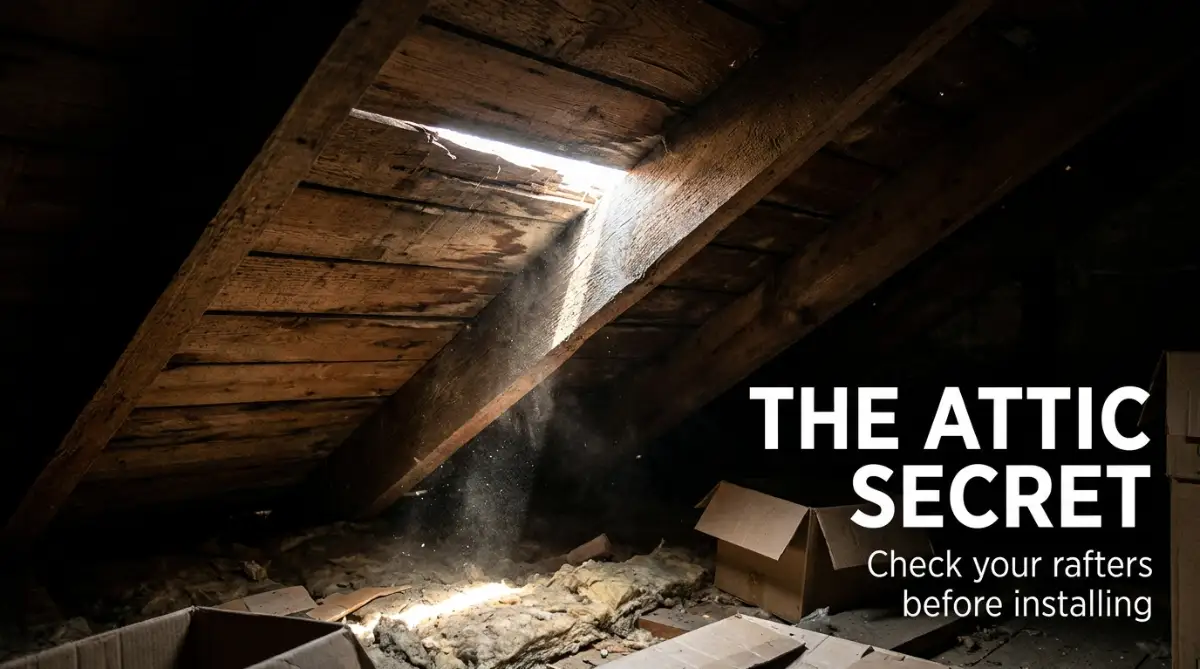
Expert-Level Strategies for Evaluating Your Roof's True Strength
If you want to protect your home and your bank account, you need to go beyond the basic sales pitch. The people selling you solar energy are highly trained in mathematics and electrical output. However, they are rarely certified experts in residential structural integrity.
You must take control of the inspection process yourself before signing any paperwork. The absolute best thing you can do is hire an independent structural engineer to evaluate your attic. Do not rely solely on the contractor provided by the solar company, as they often have a strong financial incentive to just approve the project quickly.
An independent engineer will climb into your dark attic and physically measure the exact thickness of your wooden rafters. They look for tiny signs of deflection, which is a professional term for wood that is already beginning to bend. If they find that your wooden beams are too weak, they might suggest a process called "sistering."
Sistering involves taking a brand-new piece of strong lumber and bolting it directly alongside your older, weaker rafters. This effectively doubles the strength of your roof frame from the inside of the house. It allows you to safely support the heavy glass panels without having to tear off the entire top of your house.
Understanding these building standards is incredibly important for your safety. You can actually read about strict residential load requirements directly through the International Code Council (ICC), which sets the exact safety rules that modern builders must follow.
Mastering the Asphalt Granule Test
You do not need a ladder to figure out if your shingles are nearing the end of their life. There is a brilliant, entirely safe trick you can do right from your front yard. The next time it rains heavily, grab an umbrella and walk over to where your gutters drain out.
Look closely at the water pouring out of your downspouts onto your driveway. Are you seeing a massive amount of tiny, black, sandy particles washing away? Those particles are called asphalt granules, and they are the only thing protecting your roof from severe UV radiation.
When an older roof starts shedding these granules rapidly, it means the asphalt underneath is completely exposed to the sun. The material is rapidly drying out and becoming too brittle to handle heavy construction boots. If you see piles of this black sand at the bottom of your gutters, your roof is definitely too weak to handle a new solar array.
Replacing a dying roof is definitely a heavy financial burden. Many homeowners panic when they realize they need to fix their house before they can go green. If you find yourself in this stressful situation, learning how to unlock your home's equity can be a brilliant way to fund a completely new, solar-ready roof.
Even if your past financial mistakes have left you with a less-than-perfect financial profile, you still have great options. You can easily discover can you get a home equity loan with bad credit by exploring specialized lending programs designed for essential home repairs.
The Hidden Danger of Multiple Shingle Layers
Here is a massive structural secret that catches many new homeowners off guard. Sometimes, when a previous owner wanted to save money, they did not actually remove the old roof during a replacement. Instead, they just nailed a brand-new layer of shingles directly over the old, rotting ones.
This is an incredibly dangerous scenario for a solar installation. Your house is now carrying double the dead weight before the heavy panels are even delivered. Driving a mounting bolt through two separate layers of tough asphalt creates a very loose, unstable connection.
The bolt will constantly wiggle and shift during heavy winds because it cannot grip the underlying wood tightly. When a solar installer sees two layers of roofing material, they should immediately stop the project. Unfortunately, many rushed contractors will just ignore it and start drilling anyway to get paid faster.
I actually caught a contractor trying to drill through a double-layered section on my neighbor's house last spring. I politely asked the worker if the long lag bolts were actually reaching the solid wood frame below. He looked completely embarrassed, stopped his drill, and eventually admitted that the connection was totally unsafe. Always demand that your installers physically prove they are anchoring directly into solid wood, not just thick layers of old asphalt.
Real-Life Scenarios: Disastrous Traps to Avoid
When you combine high-pressure sales tactics with complicated home construction, things can go wrong very quickly. I want to share a few specific scenarios that show exactly how people accidentally ruin their homes. Recognizing these traps before you sign a contract will save you months of extreme stress.
Scenario A: The "Free Roof" Financing Scam
Imagine a friendly salesperson knocking on your door with an offer that sounds absolutely magical. They look at your clearly aging house and say they will include a completely "free roof" if you sign up for their premium energy package today. They promise that the government tax credits will cover the entire cost of the new shingles.
This is one of the most common and dangerous traps in the home improvement industry. There is absolutely no such thing as a free roof. What the company actually does is secretly roll the massive cost of a new roof into your long-term energy financing contract.
They inflate the price of the solar equipment to hide the construction costs. You end up paying massive amounts of interest on that "free" roof over the next two decades. This predatory behavior completely destroys the financial benefits of generating your own power.
If a deal feels too good to be true, you need to step back and protect yourself. Reading up on how to spot predatory payday loan contracts teaches you the exact same contract-reading skills you need to evaluate shady solar financing offers.
If you feel pressured into signing a massive home improvement deal on the spot, you are likely in danger. Take a deep breath and review if are you signing a predatory loan before letting anyone touch your property.
Scenario B: The Drone-Only Inspection Check
Technology has made the construction industry much faster, but sometimes it makes it dangerously lazy. Today, many massive energy companies will not even send a human being to climb onto your house. Instead, they just fly a small drone over your property for five minutes and take a few high-definition photos.
They use these aerial photos to tell you that your house is perfectly ready for construction. A drone cannot see rotting wood hidden underneath the asphalt. A camera cannot feel how soft the wooden decking has become after years of silent moisture damage.
Relying entirely on a visual drone inspection is a massive mistake that leads to disastrous water leaks later. You must insist on a physical inspection. According to guidelines from the National Roofing Contractors Association (NRCA), a proper evaluation requires a certified professional to physically walk the surface and check for soft spots.
If your chosen installer refuses to send a human inspector into your attic, immediately cancel the project and find a different company. You should never let a company drill holes in your ceiling based on a few pictures taken from the sky.
Scenario C: The Insurance Policy Blame Game
This is the nightmare scenario that keeps homeowners awake at night. You install the system on a questionable roof, and a few months later, a massive leak ruins your living room ceiling. You confidently call your homeowner's insurance company to file a damage claim.
The insurance adjuster arrives, looks at the damage, and completely denies your claim. They state that the solar company caused the damage by drilling into a fragile structure. You then call the solar company, and they refuse to pay, claiming your house was simply too old and failed naturally.
You are left entirely alone with a massive repair bill. This happens because homeowners rarely read the fine print regarding unapproved structural modifications. The Insurance Information Institute (III) strongly recommends updating your policy and confirming coverage details in writing before the first panel is ever installed.
Always ask the solar company for a written "workmanship warranty" that specifically covers roof leaks caused by their mounting hardware. If they refuse to put this exact promise in writing, do not let them near your house.
Your Action Plan for a Secure Home Updgrade
We have covered some heavy and serious topics today, but the goal is not to scare you away from clean energy. The goal is to make sure your transition to green power is completely safe, highly profitable, and entirely stress-free. Generating your own electricity is an amazing feeling when it is done correctly.
You just need a clear, actionable plan to move forward confidently. Think of this process exactly like planning a major financial move. You would never jump into a huge mortgage without first understanding how to negotiate lower mortgage rates.
You should treat your roof with the exact same level of serious financial planning. If you discover that your house needs structural repairs first, take the time to fix your credit so you can get the best possible repair loan. Fixing the hidden habits ruining your credit score gives you incredible borrowing power for home upgrades.
When you are finally ready to finance the complete project, make sure you understand exactly how your loan works. Knowing the difference between fixed vs variable interest rates will save you thousands of dollars over the lifespan of your new solar array.
The Ultimate Homeowner Checklist
Before you sign any installation contract, walk through these three mandatory steps. First, go into your yard after a rainstorm and check your gutters for heavy asphalt granule loss. This is your first warning sign of a dying surface.
Second, grab a strong flashlight and carefully climb into your dark attic during the middle of the day. Turn off the flashlight and look up at the wooden ceiling. If you see tiny pinholes of daylight shining through the wood, your roof is already severely compromised.
Third, hire an independent roofing contractor to give you a brutally honest assessment of your home's remaining lifespan. Pay them a small fee just for their honest opinion, entirely separate from any solar sales pitch. For more unbiased guidance on preparing your home, you can always review the official homeowner resources provided by the Department of Energy (DOE).
When you take these proactive steps, you completely eliminate the anxiety of a collapsing ceiling. You get to enjoy the incredible feeling of watching your monthly power bill drop to zero, knowing your family is sleeping under a perfectly safe, incredibly strong roof.
I remember the massive wave of relief I felt when I finally stopped trusting sales brochures and started trusting independent home inspectors. My house is now generating brilliant, clean power safely, and I never lose a single second of sleep when the heavy rain starts pouring outside!
Common Questions About Structural Aging and Solar Panels
Can I just replace the shingles located directly under the solar panels?
This is a very common but terrible idea. Trying to replace only a small patch of shingles creates uneven seams across your roof. Water will easily get trapped in these uneven seams, eventually causing severe leaks right next to your heavy equipment.
How much weight does a standard residential solar array actually add?
A typical residential panel weighs roughly forty pounds, and the metal mounting brackets add even more weight. When spread across your roof, you are typically adding three to four pounds of permanent, constant pressure per square foot of surface area.
Will my home insurance cover leaks caused by careless solar installers?
In most cases, standard insurance policies will not cover damage caused by poor installation workmanship. You must force the solar company to provide a specific, written warranty that legally forces them to pay for any water damage their drilling causes.
What exactly is a structural engineer, and do I really need one?
A structural engineer is a highly trained professional who calculates how buildings handle weight and gravity. If your house is older than fifteen years or shows signs of a sagging ceiling, paying an engineer for a quick evaluation is the smartest money you will ever spend.
Does a metal roof last longer under solar panels than a standard asphalt roof?
Yes, metal roofs are absolutely fantastic for supporting heavy energy systems. They do not dry out or become brittle like asphalt, and installers can often attach the panels directly to the metal seams without drilling any deep holes into your house.
Disclaimer: The information provided in this blog post is for educational and informational purposes only and should not be considered professional structural, financial, or legal advice. Every home is built differently and subject to different local building codes. Always consult with a licensed structural engineer and a certified roofing contractor before making any heavy modifications to your property.