The Frustrating Illusion of Total Energy Independence
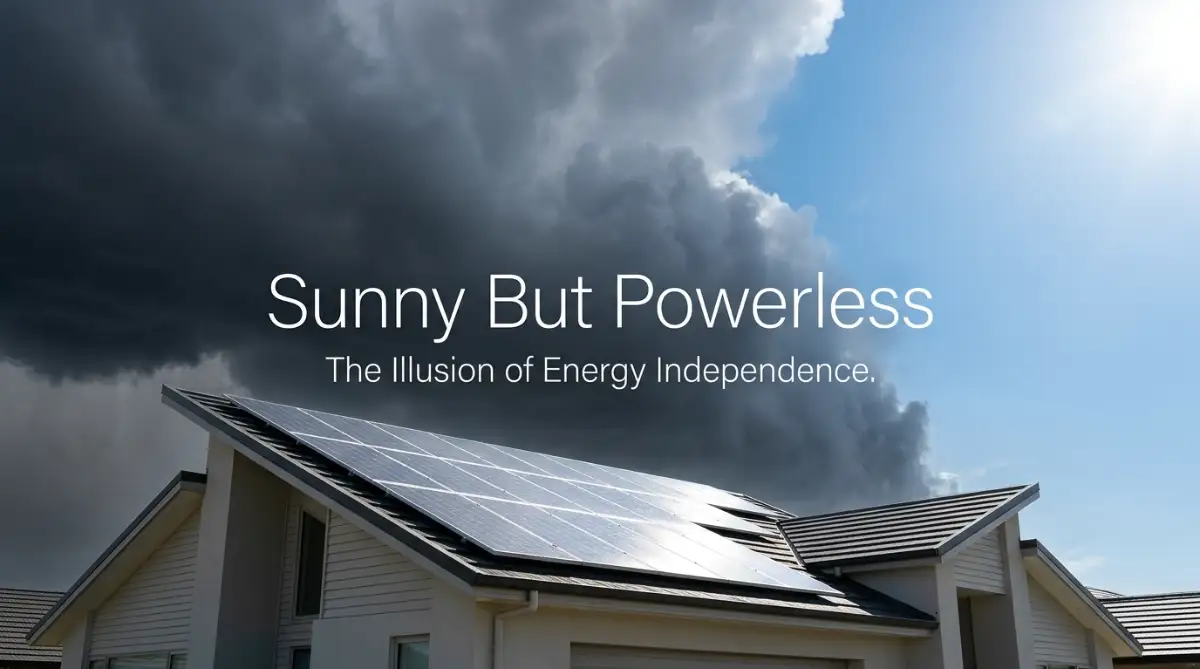
Let me paint a terribly frustrating picture for you. You just dropped twenty grand on beautiful new solar panels. The sun is shining, your power bill is dropping, and you feel completely invincible. Then a storm knocks out the neighborhood power grid, and suddenly, your fully solar-powered house goes completely dark. Wait, what? Most homeowners have no idea that their expensive roof setup is legally programmed to shut off during a blackout. Let me explain exactly why this happens and, more importantly, how you can fix it before the next big storm hits.
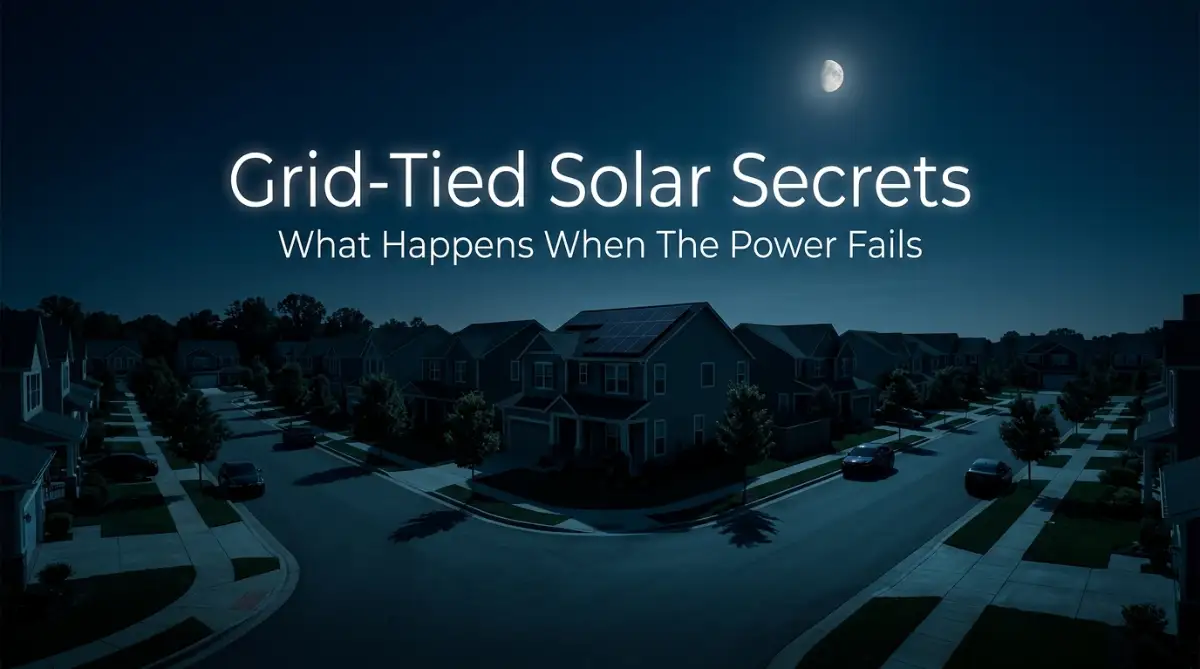
I told all my neighbors how amazing it felt to produce my very own power right from the sky. Then, a massive summer thunderstorm rolled through our town on a Tuesday afternoon. The wind howled, a large tree branch snapped a main power line down the street, and my entire neighborhood went completely pitch black.
I smiled confidently, expecting my home to remain a glowing beacon of light while everyone else sat in the dark. Instead, my television snapped off, the lights died instantly, and the hum of my refrigerator faded into absolute silence. I stood in the middle of my living room, completely shocked and angry.
The sun came back out just twenty minutes later, shining brightly directly onto my expensive solar panels. Yet, my house remained entirely dead, just like every other home on my street. I had spent thousands of dollars on a system that was supposed to protect me, but I was still completely at the mercy of the broken neighborhood power grid.
This sudden realization is a massive emotional blow for thousands of normal homeowners every single day. People buy these beautiful energy systems assuming they will act like an invisible protective shield against bad weather and failing utility grids. Finding out that your expensive roof technology shuts off the exact moment you actually need it most feels like a terrible betrayal.
The 60-Second Blackout Survival Guide:
- The Grid Tie Trap: Your solar panels rely on the city grid to balance power. If the city grid drops, your panels are legally forced to shut down.
- The Hero Switch: You cannot manually override this shut-off. Doing so is highly illegal and incredibly dangerous to line workers.
- The Ultimate Fix: Installing a home battery backup or a specialized "Sunlight Backup" inverter is the only safe way to trick your panels into working while the neighborhood is dark.
- Say No to Hacks: Never plug a cheap gas generator directly into a wall outlet to try and wake up your solar system. This "suicide cord" method causes deadly house fires.
The Hidden Mechanics Governing Your Home Energy Setup
To truly fix this terrible frustration, you have to understand exactly how the machines attached to your house actually think. The problem is not that your panels are broken or that the installation team did a bad job. The sudden shut-off is actually a highly specific, legally required safety feature built into every modern energy system.
We are going to break down the exact scientific process that happens the millisecond the grid fails. Once you understand the underlying rules of electricity, the whole mystery completely disappears.
Quick Fact-Check: Why the Shut-Off is Mandatory
If your panels kept pushing power backward into the broken street wires during a blackout, a utility worker trying to fix those lines could be electrocuted instantly. The National Electrical Code (NEC) requires every grid-tied inverter to have a rapid shutdown feature. It is not a glitch; it is a life-saving safety mechanism.
How a Standard Grid-Tied Connection Actually Works
Most residential solar setups are what we call "grid-tied" systems. This simply means your house is physically and electronically locked into the main utility grid on your street. You can think of the power grid like a massive, invisible checking account for your daily electricity.
When the sun is shining brightly, your roof produces way more energy than your television and lights can consume. Your home does not just throw that extra energy away. Instead, it pushes all that extra power backward through your meter and out into the neighborhood power lines.
The utility company happily accepts your extra solar energy and gives you energy credits on your monthly bill. When the sun goes down at night, your house pulls power back from the grid, using up those credits you earned during the day. It is a completely seamless, two-way street of flowing electricity.
The Problem with Relying on a Two-Way Street
This two-way street is amazing for lowering your monthly bills, but it has a massive hidden flaw during emergencies. Your house essentially treats the neighborhood power grid as its one and only storage battery. You push power into it during the day, and you pull power out of it at night.
Because your house relies completely on the grid to store and balance your energy, the two are completely inseparable. If the massive neighborhood grid suddenly collapses due to a fallen tree, your house loses its balancing partner. Without the grid to catch your extra power or supply your nighttime needs, the entire flow of electricity breaks down.
Your solar panels have nowhere safe to send their extra energy. If your house suddenly stops using power, that electricity has to go somewhere immediately. Because electricity travels near the speed of light, this lack of a storage partner creates a highly dangerous situation in less than a second.
The Anti-Islanding Safety Law (And Why You Are Kept in the Dark)
This brings us to the most important technological secret of the entire solar industry. It is a strict federal safety regulation known as "Anti-Islanding protection." Every single grid-tied inverter sold today must have this feature hardwired into its internal computer brain.
Imagine a severe storm knocks down the main power lines on your street. The utility company immediately sends brave men and women out in bucket trucks to physically touch those broken wires and repair them. They expect those broken wires to be completely dead and perfectly safe to handle.
Now, imagine your roof panels are still actively producing bright, hot electricity. If your system stayed on, it would push that dangerous voltage backward through your meter and straight into the broken street wires. You would essentially electrocute the exact repair workers trying to fix your neighborhood.
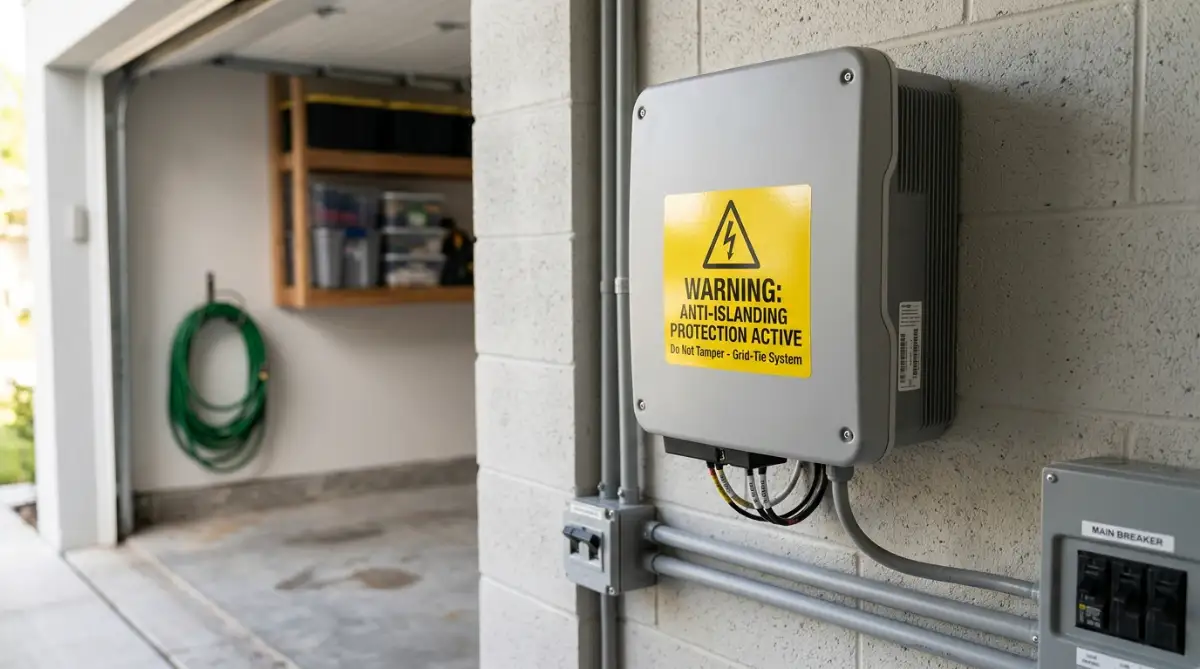
To absolutely guarantee the safety of those workers, your solar inverter is programmed to constantly monitor the heartbeat of the utility grid. It listens for a specific electrical frequency coming from the street. The exact millisecond that heartbeat stops, your inverter slams its internal switches shut and kills all power to your house.
Pro Tip: When my system first shut off during a sunny day, I thought I could just flip the breaker switch manually to force it back on. I quickly learned that the inverter's computer completely locks you out until it senses stable street power for at least five full minutes. Never try to force your inverter back on, as you can easily fry its delicate internal computer boards.
Watch this incredible visual breakdown that completely changed how I understand home solar power.
Why the Sun Shining Above Cannot Help You (Myth vs. Reality)
Many frustrated homeowners ask a very logical question during a blackout. They look up at the bright sky and wonder, "Why can't the panels just power my house directly while the grid is down?" It seems like such an obvious and simple solution.
The reality of raw solar energy is actually highly chaotic. The amount of electricity your panels produce changes wildly every single second. If a small, fluffy cloud passes over your roof, your power output instantly drops by half.
If the sun suddenly bursts through the clouds, your power output spikes massively. Your sensitive home electronics, like your expensive television and computer, absolutely hate this kind of unpredictable power. They require a perfectly smooth, steady stream of voltage to survive.
If your panels pushed their raw, fluctuating energy directly into your living room wall outlets, it would instantly destroy every electronic device plugged in. Your television would pop, your refrigerator compressor would stall, and your lightbulbs would shatter.
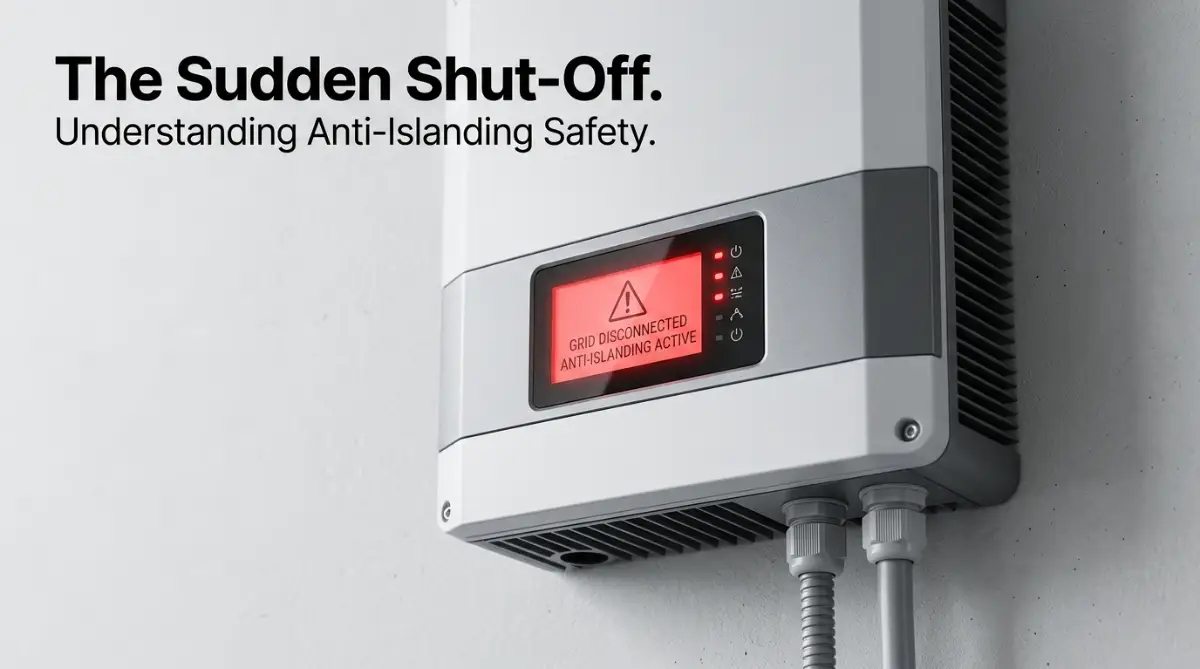
Understanding the Role of Your Inverter
This is why the inverter mounted on your garage wall is the true hero of your energy setup. The panels on your roof only produce raw Direct Current (DC) electricity. Your home appliances can only use smooth Alternating Current (AC) electricity.
The inverter acts as a highly advanced translator between the roof and your living room. It takes the chaotic, fluctuating DC power from the sun and carefully transforms it into perfectly safe, stable AC power for your house.
However, a standard grid-tied inverter is completely reliant on the street grid to perform this translation safely. It uses the massive stability of the neighborhood grid to absorb any sudden power spikes from passing clouds. Without the grid acting as a giant shock absorber, a standard inverter simply refuses to operate.
The Illusion of Net Metering
We often get trapped by the financial promises made by solar sales representatives. They talk constantly about a concept called "Net Metering." This is the billing system that allows you to trade your extra sunny energy for nighttime energy.
Salespeople often explain Net Metering by saying, "The grid acts just like a battery for your home." This is a helpful financial metaphor, but it is a terrible scientific explanation. The grid is a live network of flowing energy, not a physical storage box you can tap into whenever you want.
When you start believing the grid is an actual battery, you naturally assume you will always have power stored up for emergencies. Breaking this illusion is the very first step toward actually securing your home against unpredictable weather. You have to separate the financial benefits of solar from the physical reality of how electricity works.
Grid-Tied vs. Off-Grid vs. Hybrid Setups
To make things perfectly clear, it helps to look at the three entirely different ways a home can handle solar energy. Most people completely confuse these three different setups.
If you live in a normal neighborhood with paved roads and city water, you almost certainly have a standard Grid-Tied setup. Off-grid systems are incredibly expensive and usually reserved for remote cabins deep in the mountains. A Hybrid system is the ultimate middle ground, but it requires specific hardware that most standard installations simply leave out to save money.
What Happens to the Excess Energy Your Panels Produce?
When the neighborhood grid fails and your inverter slams shut, you might wonder what happens to all that sunlight hitting your roof. Do the panels overheat? Does the extra electricity build up and cause a fire hazard?
Thankfully, the physics of solar panels makes this completely safe. An electrical circuit must be fully closed for energy to actually flow. When your inverter shuts down, it opens the circuit completely, acting like a closed dam on a river.
The sunlight continues to hit the dark glass panels on your roof, but the panels simply stop converting that light into moving electricity. The solar cells just absorb the sunlight as normal physical heat, exactly like the dark asphalt shingles on the rest of your roof. The system just quietly goes to sleep until the utility company fixes the broken lines down the street.
How to Outsmart the Blackout and Keep Your Lights On
Now that you understand why the inverter automatically shuts off, we can talk about the actual solutions. You do not have to sit in the dark every time a strong storm blows through your town. With a few smart upgrades, you can legally and safely disconnect your house from a dead grid and keep your roof producing power.
The secret is to trick your solar inverter into thinking the neighborhood power grid is still running perfectly fine. To do this, you need a way to store the wild, bouncing energy of the sun and smooth it out for your home appliances. Let us explore the most effective ways to upgrade your current setup for total peace of mind.
The Magic of a Home Battery Backup System
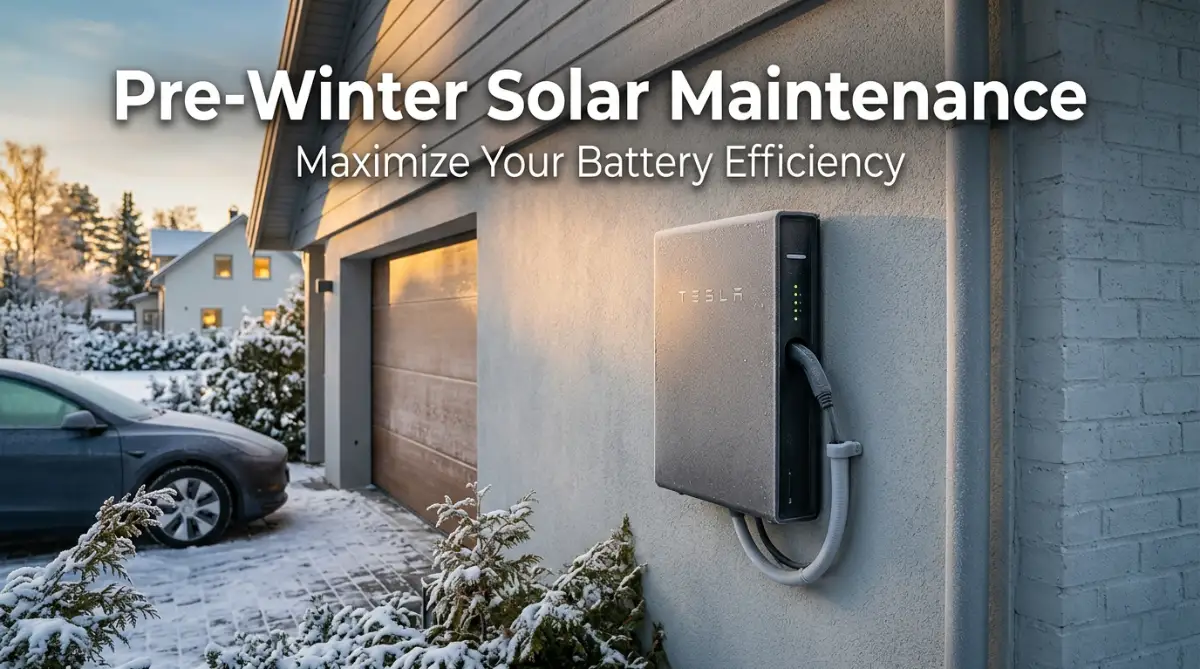
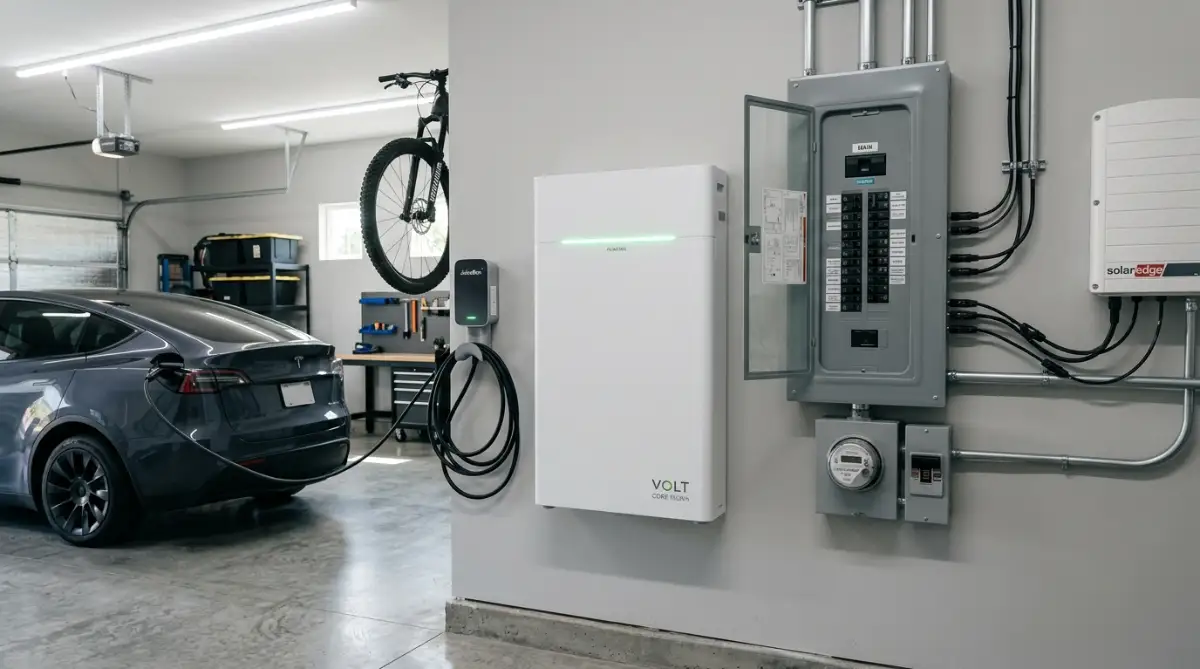
The absolute best way to keep your solar panels working during a blackout is to install a heavy-duty home battery system. Brands like Tesla, Enphase, and LG make massive batteries that mount directly to your garage wall. These batteries completely change the rules of how your home handles emergency energy.
When the street power suddenly dies, a smart battery system acts incredibly fast. It features a tiny computer called an Automatic Transfer Switch (ATS) that instantly cuts the physical connection to the broken street wires. This guarantees that you will not accidentally send any dangerous electricity back to the utility repair workers.
Once your house is safely isolated like a private island, the battery immediately steps in to play the role of the utility grid. It sends a strong, steady electrical heartbeat to your solar inverter. Your inverter senses this fake heartbeat, wakes back up, and starts pulling fresh power down from the sun again.
Creating a Private Micro-Grid in Your Garage
With a battery installed, your house essentially becomes its own miniature power plant. The sun hits the panels, the electricity flows into the battery, and the battery feeds your refrigerator and lights perfectly smooth power. It is a brilliant, completely self-contained loop that can run for days.
During the daytime, your panels will produce enough power to run the house and refill the battery at the exact same time. When the sun goes down, your house smoothly switches over to draining the battery power overnight. As long as you get decent sunshine the next morning, you can survive a week-long power outage without noticing it.
How a Battery Backup Creates a "Micro-Grid":
- Step 1: The street grid dies.
- Step 2: The automatic transfer switch (ATS) physically disconnects your house from the street.
- Step 3: The wall battery sends a "wake up" signal to your solar inverter.
- Step 4: The solar panels turn back on, feed your fridge, and recharge the battery simultaneously while the rest of your street stays completely dark.
Of course, adding heavy batteries to your home requires careful planning and a solid structural foundation. Before you start pulling thick wires through your ceiling, you should properly check your attic before going solar to make sure your roof framing can handle the extra conduit weight. A well-planned installation guarantees your system will run flawlessly when disaster strikes.
Exploring Sunlight Backup Technology (No Battery Required)
Batteries are amazing, but they are also incredibly expensive, often doubling the total cost of a solar project. Recently, some clever engineers figured out a way to keep your panels running during a blackout without using a massive wall battery. This new technology is called "Sunlight Backup," and it is available on specific modern micro-inverters.
Instead of using a battery to absorb the wild spikes in solar power, these smart inverters talk directly to your home appliances. If a dark cloud passes over your house, the inverters instantly dial back the power going to your living room. They balance the energy demand in real-time, matching exactly what the sun is currently providing.
According to the latest research on advanced inverter technology by the Department of Energy, these systems require you to pick just a few "essential" circuits, like your kitchen fridge and one light switch. You will not be able to run your heavy air conditioner, but your food will definitely stay cold. It is a fantastic budget-friendly option for families who want basic emergency security.
Pairing a Traditional Gas Generator with Solar
If you already own a portable gas generator, you might wonder if you can just plug it into your solar panel system. The short answer is that they do not naturally play well together. A standard cheap gas generator creates very "dirty" and unpredictable electricity that terrifies sensitive solar inverters.
If you try to run them at the exact same time, your solar inverter will likely reject the generator's power and shut down anyway. However, you can hire an electrician to install a manual transfer switch that keeps the two systems completely separated. You can use your solar panels during the sunny day, and manually switch over to your noisy gas generator at night.
This hybrid approach gives you incredible flexibility during a massive, week-long winter storm. You save a ton of money on gasoline during the day while the sun does all the heavy lifting. Then, when the snow clouds roll in, your trusty generator takes over to keep your family warm.
Disastrous Traps Homeowners Fall Into During Emergencies
Desperation makes incredibly smart people do incredibly dangerous things. When your house has been freezing cold for two days, and you know your roof could provide power, the temptation to break the rules is massive. Unfortunately, playing around with raw home electricity usually ends in total disaster.
I want to walk you through the most terrifying mistakes frustrated homeowners make during extended power outages. Understanding these hidden dangers will literally save your life and protect your massive financial investment from going up in smoke.
The Deadly "Suicide Cord" Mistake
The single most dangerous thing you can do during a blackout is try to build a "suicide cord." This is an illegal, homemade extension cord with two male plug ends. Desperate people plug one end into a running generator and the other end directly into their living room wall outlet.
They falsely believe this will push power backward into the house and wake up the solar panels. In reality, this completely bypasses your main safety breakers and sends raw, unregulated power crashing into your home wires. This act is the leading cause of accidental house fires during major winter storms.
Even worse, if you forget to turn off your main street breaker, that generator power will travel out of your house and down the street. You could easily kill a line worker who is trying to fix the neighborhood grid. The safety experts at the Occupational Safety and Health Administration (OSHA) constantly warn that back-feeding power without a proper transfer switch is both highly illegal and incredibly fatal.
Buying Cheap Unverified Internet Batteries
Because professional battery systems are expensive, many people turn to the internet to find cheap, unbranded lithium batteries. They watch a quick tutorial and try to wire these massive batteries straight into their solar inverters. This is an absolute recipe for a catastrophic garage fire.
Massive lithium batteries hold an unbelievable amount of chemical energy. If a cheap battery does not have a high-quality internal cooling computer, it can easily suffer from "thermal runaway." This means the battery gets hotter and hotter until it violently explodes, taking your entire garage with it.
You must only use certified storage equipment that communicates perfectly with your specific brand of solar panels. If you introduce a cheap, unverified battery into the mix, a sudden power surge can become one of the silent killers of your electric vehicle motor if it is plugged into the wall. Always pay a certified professional to handle your emergency storage upgrades.
Ignoring the Physical Health of Your Panels
People often assume that because solar panels have no moving parts, they never need any physical maintenance. When a blackout finally happens, they wonder why their expensive battery is not charging fast enough. The answer is usually sitting right on top of the glass.
Over a few years, dirt, thick pollen, and bird droppings can completely coat your expensive panels. This thick layer of grime blocks the sunlight, dropping your emergency power production by a massive margin. If you do not learn about pigeon proofing your home solar panels, an entire flock of birds can completely ruin your system's efficiency.
Even a single tree branch casting a shadow over one corner of a panel can shut down the whole grid. This is exactly why partial shading on solar panels is much worse than you think. You have to keep your roof completely clean and totally clear of tree branches if you want your system to save you during a dark winter storm.
Assuming Your Electric Car Will Save the House
There is a very popular myth right now that if the house dies, you can just plug your home appliances into your shiny new electric vehicle. While some brand-new premium trucks have built-in power outlets, most normal electric cars cannot share their battery power with your house. People find this out the hard way when the lights go out.
Your car's battery is designed to take power in, not push it out through the charging port. If the grid is down, your home charging station is completely dead. This situation is highly comparable to what really happens when your EV dies on the road and how to handle it, leaving you stranded and frustrated.
If a severe storm causes massive water damage in your neighborhood, you also have to worry about your parked car. Knowing how to protect your electric vehicle during severe flooding is just as important as keeping the lights on inside. Do not rely on your car as a magic emergency generator unless you have specifically paid for a bidirectional charging setup.
Common Questions About Blackouts and Solar
Do my solar panels still make electricity when the grid is completely down?
Yes, the physical glass panels are still completely capable of making raw electricity as long as the sun is shining. However, because your grid-tied inverter shuts down for safety reasons, that raw energy has nowhere to go. The panels simply absorb the sunlight as heat until the system is safely turned back on.
Can I just plug an extension cord directly into my solar panel on the roof?
No, you absolutely cannot do this under any circumstances. Solar panels produce raw Direct Current (DC) electricity, which will instantly destroy standard household devices like phones or televisions. You must run the power through a certified inverter to change it into safe Alternating Current (AC) electricity first.
Will a portable gas generator damage my solar inverter?
It definitely can if you wire them together incorrectly. Cheap gas generators produce a very unstable electrical frequency that can confuse and fry the delicate computer boards inside your solar inverter. You must install a physical transfer switch to keep the generator power and the solar power completely separated at all times.
How much does it usually cost to add a battery to my existing solar setup?
Adding a premium home battery system after your panels are already installed is a major home upgrade. You can generally expect to spend anywhere from ten thousand to fifteen thousand dollars for the battery, the smart transfer switch, and the professional labor. While it is expensive, it guarantees your house will never go dark during a major storm again.
Your Immediate Action Plan for Energy Security
Realizing that your expensive roof panels are completely useless during a neighborhood blackout is a deeply frustrating experience. You paid good money for energy independence, and you absolutely deserve to have your lights on when the storm hits. The good news is that you are no longer completely in the dark about how your system actually works.
You now understand the hidden anti-islanding safety rules that force your system to shut down. You also know that adding a smart battery or a specialized sunlight backup inverter is the ultimate way to legally break free from the grid. You have the exact knowledge you need to call a professional and finally fix this annoying limitation.
Do not wait until the next massive winter storm is already blowing through your town to make a decision. Look at your most recent power bill tomorrow morning and start budgeting for a proper emergency backup solution. Call a certified local installer and ask them specifically about adding an Automatic Transfer Switch and a storage battery to your existing setup.
I used to panic every single time the wind blew hard, terrified that all the food in my freezer was going to rot. Taking the extra step to upgrade my system gave me an unbelievable sense of calm and control over my own home. Take action this week, secure your family's energy supply, and you will never have to worry about a dark, freezing house ever again.
Disclaimer: This article is for informational and educational purposes only. Working with high-voltage solar equipment and home electrical panels is extremely dangerous and can be fatal. Always hire a licensed, certified electrician to perform any upgrades, and strictly follow your local building codes and utility regulations. We may earn a small commission if you click on certain external links, though this does not affect our editorial independence.