The Unexpected Nightmare on My Roof
I still remember the exact afternoon I checked my energy monitoring app for the very first time after installing my expensive new solar setup. My excitement was through the roof because it was a beautifully clear, sunny day. I confidently opened the app, fully expecting to see a massive spike in my daily power production. Instead, my heart sank as I stared at a surprisingly low number that made absolutely no sense to me.
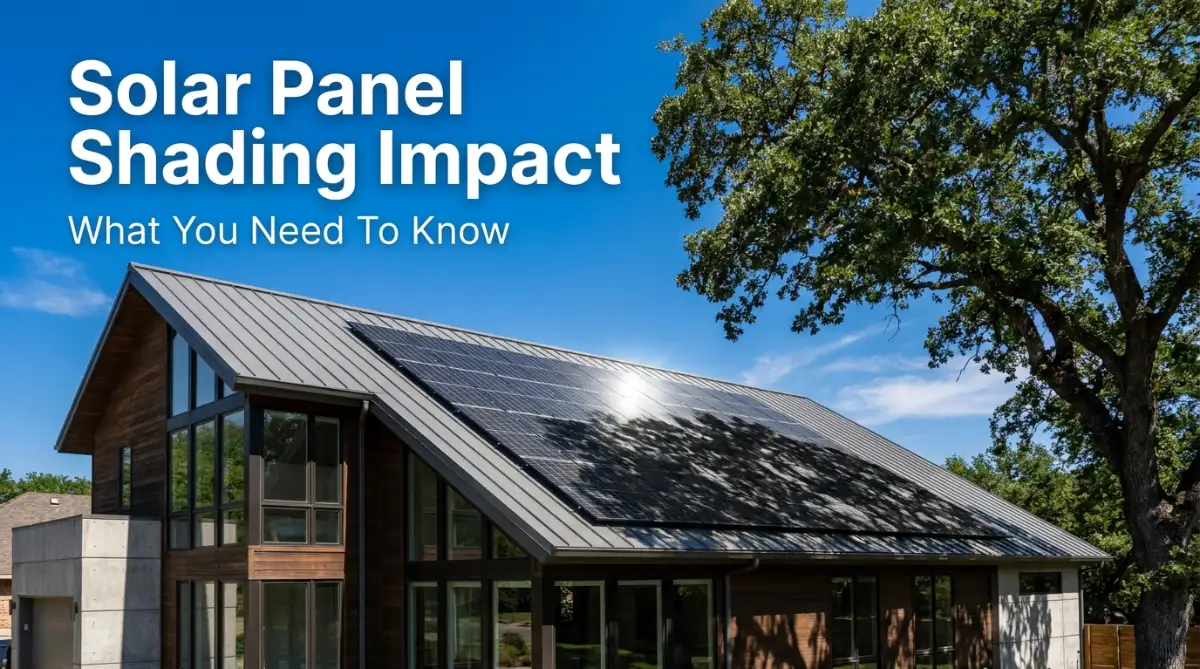
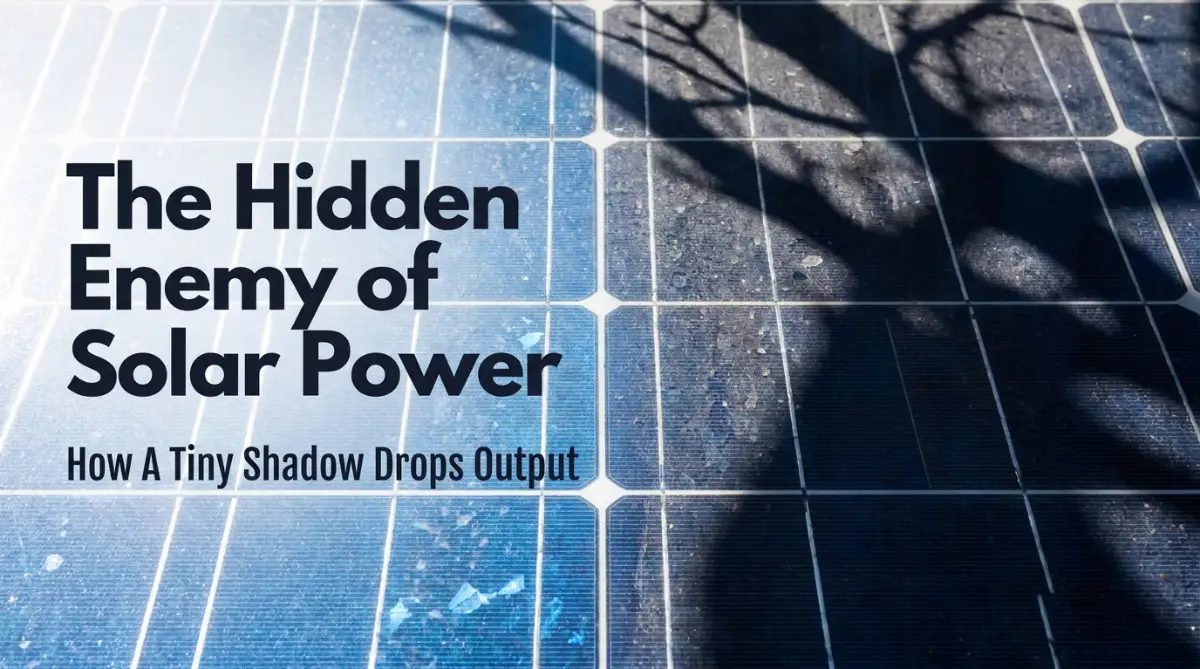
At first, I thought my brand-new inverter was completely broken or that the installation crew made a terrible mistake. I walked outside, stood in my front yard, and stared up at my roof trying to figure out what was going wrong. The sun was shining brightly on almost the entire roof, but I noticed one small thing. A single branch from my neighbor's large oak tree was casting a thin, dark shadow across just the bottom corner of my panels.
I honestly laughed it off at first, thinking a tiny bit of shade couldn't possibly affect a massive system that much. I assumed the rest of the panels basking in the direct sunlight would easily make up for that one shaded corner. But day after day, my daily energy output continued to suffer terribly, and my electricity bills barely dropped. The mental stress of feeling like I threw thousands of dollars down the drain was completely exhausting.
I found myself obsessively checking the app every hour, feeling my frustration grow every time that shadow crept across my roof. It felt totally unfair that a single tree branch could ruin my entire investment and destroy my peace of mind. I was losing sleep trying to calculate how much money I was losing every single week because of that stupid shadow.
That deep frustration forced me to stop complaining and start digging into the actual science behind how solar energy works. I realized I had to figure out exactly why a small shadow was causing such a massive drop in my daily power production. I spent countless hours talking to experts and testing different solutions to get my system back on track.
If you are currently watching a tree shadow slowly eat away at your expensive solar investment, I know exactly how helpless you feel right now. You are definitely not crazy for worrying about it, and you are certainly not alone in this frustrating battle. Let me share exactly what I discovered about this hidden energy killer and how you can take control of your system again.
The "Christmas Light" Effect: How A Tiny Shadow Ruins Everything
Most of us assume that a solar panel system works like a giant sponge soaking up water. We naturally think that if ten percent of the sponge is covered, we will only lose ten percent of the water. I definitely used to believe that logical, simple math applied to my roof. Unfortunately, the internal wiring of most standard solar installations completely ignores our basic logic.
To understand why your energy drops so drastically, you need to think about old-school holiday string lights. You probably remember those cheap strings of lights where one single broken bulb would instantly turn off the entire row. Your standard solar panels are wired together in a very similar chain, which the industry calls a "string."
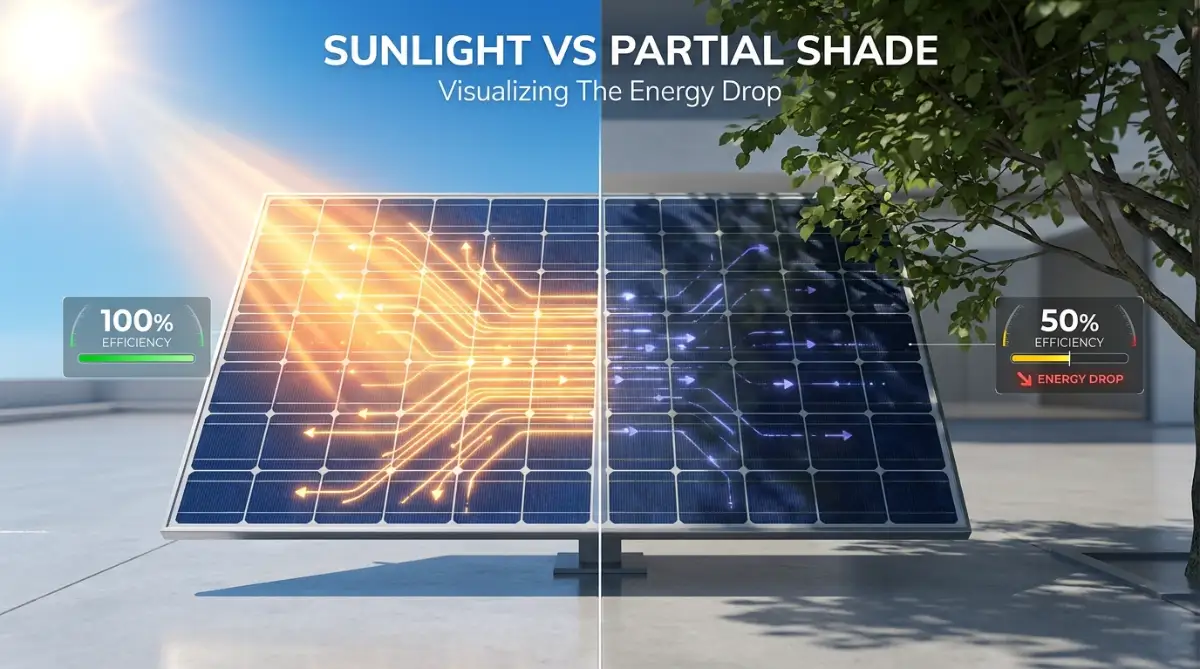
When a tree branch casts a dark shadow over just one single panel in that string, that specific panel stops producing electricity. But the problem does not stop there. Because the electricity has to flow through that shaded panel to get to the rest of the system, it creates a massive traffic jam. The overall performance of the entire connected string drops down to match the weakest, shaded panel.
So, if that one shaded panel is only operating at thirty percent capacity, every other perfect panel in that row is forced to operate at thirty percent too. This is exactly why a shadow covering just five percent of your roof can easily wipe out half of your daily solar energy output. It is a completely invisible bottleneck that secretly steals your power while you assume everything is working fine.
Recognizing the Difference Between Hard and Soft Shadows
Not all shadows treat your solar investment exactly the same way. You need to understand the difference between the types of shade hitting your roof to measure the real impact. Let's break down the two main types of shadows you will encounter throughout the day.
Soft shading happens when light is partially blocked but scattered, like on a very cloudy day or through thin, distant, leafless branches. During soft shading, your panels can still grab a decent amount of scattered sunlight from the atmosphere. Your energy output will definitely drop, but the panels will usually keep pushing a steady, smaller amount of power to your home.
Hard shading is the real enemy we are fighting against. This happens when a solid, thick object like a dense tree trunk, a heavy leafy branch, or a chimney casts a dark, defined shadow directly onto the solar cells. This solid black shadow completely blocks the sunlight from hitting the solar cells. This is the exact type of shade that triggers that terrible "Christmas light" bottleneck effect we just talked about.
[Pro Tip from My Own Experience]
I spent months trying to trim tiny, thin branches thinking they were the main problem, completely ignoring the thicker lower branches of my oak tree. I finally realized that focusing only on removing the sources of hard, solid black shadows instantly gave me back almost twenty percent of my daily power. Stop stressing over light, scattered shadows and aggressively target the thick branches that block the sun completely.
Before You Climb Onto Your Roof, Watch This Quick Breakdown!
Understanding exactly how your inverter handles shaded solar cells can save you from making a very expensive mistake. Check out this excellent visual demonstration below to see exactly how energy gets trapped by a single dark shadow.
How Your Specific Equipment Reacts to the Shade
The actual impact of a tree shadow heavily depends on the specific hardware your installer put on your wall. Some systems are highly sensitive to shadows, while others are built with special smart technology to fight back. Let's look at how different setups react to that annoying oak tree.
Standard string inverters are the most common and unfortunately the most vulnerable to partial tree shading. As we discussed, they wire everything together in a single chain. If you have a standard string inverter without any extra add-ons, you are taking the maximum amount of damage from that partial tree shade.
However, modern technology has introduced something called Microinverters. Instead of one big inverter on the side of your house, microinverters are tiny boxes placed under every single solar panel. This completely breaks the "Christmas light" chain effect once and for all. If one panel gets heavily shaded by a tree, only that specific panel loses power, while the rest of the roof keeps pumping out maximum energy.
Power Optimizers are another fantastic middle-ground solution. They are also placed under each panel, but they work alongside a main string inverter. They intelligently bypass the shaded panel, allowing the rest of the system to push past the traffic jam.
Here is a quick, easy-to-read comparison of how your daily power holds up based on your equipment:
The Secret Guardian: Bypass Diodes
Even if you have an older string system, your panels are not entirely helpless against tree shadows. Inside the panels themselves, manufacturers install tiny little lifesavers called bypass diodes. You can think of them as emergency detour roads built right into the solar panel.
A standard solar panel is actually made up of three separate sections. If a hard shadow covers one of those sections, the bypass diode automatically clicks on. It creates an emergency electrical bridge that completely skips over the shaded section of the panel.
This allows the power from the rest of the healthy panels to flow right past the blockage. Without these tiny diodes, that single solid shadow would completely shut off your entire roof. However, there is a small catch that you need to be aware of.
When a bypass diode activates, you completely lose the power from that entire section of the panel, not just the shaded spot. Plus, these diodes are not designed to be turned on and off every single day for years. If a tree shadow constantly triggers the exact same diode every afternoon, it can eventually burn out and permanently damage your panel.
Tracking the Invisible Power Drop
You cannot fix a problem if you refuse to measure it accurately. Staring out the window at the tree branches will not tell you how much money you are losing. You need to use real data to understand the exact financial impact of your partial shading issue.
Start by opening your solar monitoring app on a day when the sky is perfectly clear and blue. Look at your energy production curve. On a perfect, shade-free roof, that graph should look like a smooth, perfectly round bell curve peaking right at noon.
If you have a partial shading problem, that smooth curve will look like someone took a massive bite out of it. You will see a sudden, sharp drop in power at a specific time of day. For example, your power might climb beautifully until 2 PM, suddenly crash downward for an hour, and then slowly climb back up.
That sudden dip is your exact smoking gun. It tells you exactly what time the tree shadow is hitting your most sensitive solar cells. By knowing the exact time the power drops, you can walk outside and identify exactly which branch is causing the bottleneck.
The Myth of the "Winter Sun"
Many homeowners completely panic when they see their energy drop drastically as the seasons change. They assume their solar panels are breaking down or that the partial shade is somehow getting worse. We need to clear up a massive misunderstanding about how shadows move throughout the year.
As the earth shifts, the physical path the sun takes across your local sky changes dramatically. During the warmer months, the sun travels very high up in the sky. Shadows from nearby trees are usually cast straight down onto the ground, safely away from your roof.
But when the colder months arrive, the sun hangs much lower on the horizon. Because the sun is hitting that exact same tree from a much lower angle, the shadows become incredibly long. A tree that never bothered your roof all summer can suddenly cast a massive, dark shadow directly across your panels all afternoon.
This is not a system failure. This is simply the reality of moving shadows. You have to account for these long shadows when you are evaluating how badly a tree is impacting your daily output.
Actionable Strategies to Reclaim Your Power
Now that you understand exactly how the shade is stealing your energy, we need to talk about getting it back. You do not have to just sit there and accept a massive loss of power every afternoon. There are several highly effective steps you can take starting this week.
First, you need to conduct a professional shadow audit of your property. Walk outside exactly when your app shows the massive power dip. Take clear photos of your roof from the ground, documenting exactly where the hard shadow is falling.
Once you have identified the exact branches, call a professional, licensed arborist. Do not let someone just blindly hack away at a beautiful tree. A professional can specifically thin out the exact problem branches, completely eliminating the hard shadows without destroying the health or look of the tree.
Sometimes, the tree causing the problem is completely out of your control, like if it belongs to your neighbor or the city. If cutting the branches is absolutely impossible, you need to call your solar installer back to the house. Ask them to give you a quote for adding power optimizers to the specific panels getting hit by the shade.
This small hardware upgrade will cost a little bit of money upfront. However, by breaking that terrible "Christmas light" bottleneck, the upgrade will easily pay for itself by drastically increasing your daily power production. Stop letting a single shadow hold your entire solar investment hostage.
You paid good money for every single ray of sunshine hitting your roof. It is time to make sure you are actually capturing it. You have the knowledge now to track the problem, understand the hardware, and take clear steps to restore your daily energy output.
Smart Strategies to Outsmart Stubborn Tree Shadows
If you want to truly win the battle against partial shade, you have to think like a professional energy auditor. Most homeowners just stare at the trees and hope for the best, but you need a solid action plan. We are going to look at some advanced, proven methods to keep your energy production as high as possible.
One of the best-kept secrets in the solar industry is something called half-cut solar cell technology. If you are ever upgrading your panels or installing a new system, you absolutely must ask your installer for these specific panels. Instead of full-sized squares, the manufacturer literally cuts the solar cells in half during production.
Think of it like cutting a large sandwich right down the middle. If you accidentally drop one half of the sandwich in the dirt, you still have a perfectly good second half to eat. Half-cut panels work exactly the same way when a shadow hits them. If a tree shadow covers the top half of the panel, the bottom half continues to pump out maximum power without missing a beat.
You also need to become best friends with the advanced settings inside your solar monitoring software. Most people just look at the home screen and close the app, missing out on powerful tracking tools. Just like the hidden settings you need to change on a smartwatch to save battery, your inverter app has deeper menus that reveal individual panel performance.
You can actually set up automated custom alerts inside most modern apps. Tell the software to send a push notification to your phone if any specific panel drops below fifty percent capacity during peak sunlight hours. This instantly tells you exactly when a new branch has grown too long and started creeping over your roof.
Another incredible strategy involves working with your installer to change how the panels are physically wired together. This is known as adjusting your stringing configuration. Most standard installers will just wire your panels horizontally across the roof because it is the fastest and easiest way to finish the job.
However, if you have a tree sitting on the east side of your house, that shadow will sweep horizontally across your roof as the sun moves. If your panels are wired in vertical strings instead of horizontal ones, the shadow will only knock out one string at a time. The National Renewable Energy Laboratory (NREL) regularly publishes data showing how smart system design can drastically reduce shading losses.
We also have to talk about the physical cleanliness of your solar panels. This might sound completely unrelated, but dirt and dust actually act as a secondary form of shading. When a solid tree shadow hits a panel that is already covered in a thick layer of summer dust, the energy drop is twice as bad.
You need to schedule a professional cleaning for your roof at least twice a year. If you live in an area with a lot of pollen or heavy road dust, you might need to clean them every single quarter. Keeping the glass crystal clear ensures that the unshaded panels are working at absolute maximum capacity to make up for the shaded ones.
Finally, consider the concept of strategic power shifting in your daily routine. If you know that your massive oak tree blocks the sun completely at 3 PM, stop running your heavy appliances in the late afternoon. Run your dishwasher, washing machine, and pool pump right at noon when your roof is bathing in clear, bright sunlight.
Terrible Shading Mistakes That Will Drain Your Wallet
Trying to fix a partial shading problem without a solid plan can actually lead to much bigger disasters. I have seen homeowners panic and make expensive, permanent mistakes just to chase a few extra watts of power. Let's walk through the most dangerous pitfalls you need to avoid at all costs.
The most common and heartbreaking mistake is the "chainsaw massacre" approach to landscaping. A frustrated homeowner will hire a cheap, unlicensed tree trimmer to completely chop the top off a beautiful, eighty-year-old tree. This aggressive hacking usually kills the tree entirely within a few years, completely destroying your property value.
The Arbor Day Foundation strongly advises against this practice, known as "topping," because it causes weak, dangerous branches to grow back rapidly. Instead of killing your trees, you must hire a certified arborist who knows how to strategically thin out the canopy. They can remove just the specific branches blocking your sun while keeping the tree perfectly healthy and beautiful.
Another massive mistake is ignoring the health of the structure underneath your panels before you upgrade your hardware. Many people realize they need to add power optimizers to fight the shade, so they hire a crew to rip up the panels. However, they completely ignore the unspoken risks of installing solar panels on an aging residential roof structure.
If your shingles are already twenty years old, paying an installation crew to take the panels off, add optimizers, and put them back on is a terrible financial move. You will just have to pay them to do it all over again when the roof finally starts leaking next year. Always inspect your actual roof before you spend money upgrading your solar hardware.
I also see homeowners totally miscalculate how shading impacts their future energy plans. They buy a brand new electric car, plug it in every afternoon, and wonder why their energy bill is suddenly sky-high. They forget that the tree shadow is killing their solar power at the exact same time they are trying to charge their car.
If you are pulling heavy power from the grid every evening because your panels are shaded, you are paying premium utility rates. Understanding what really causes electric vehicle battery degradation is important, but powering that car with clean energy is just as significant. You have to sync your heavy charging habits with the hours your roof is completely shadow-free.
Finally, do not make the mistake of going into massive, high-interest debt just to replace a shaded solar system. Some aggressive salespeople will try to convince you to tear down your entire setup and buy a completely new microinverter system. They will push you into terrible financing deals that put your financial security at massive risk.
If you need to make hardware upgrades, be very smart about how you pay for them. You might be better off looking into how to unlock your home's equity through a secure loan rather than taking a shady high-interest solar loan. Always protect your personal assets and do the math to ensure the energy savings are actually higher than your new loan payments.
Your Personal Blueprint for Maximum Solar Power
We have covered a lot of ground today, and I want you to feel completely empowered to take back your energy production. You are no longer flying blind, simply guessing why your power bill is not going down. You now understand exactly how the internal wiring of your panels reacts to a single dark shadow.
Start your recovery process tomorrow by pulling up your energy monitoring app and finding the exact hour your power drops. Walk outside with your phone camera, stand under your roof, and find the exact tree branch causing the bottleneck. This one simple diagnostic step will save you weeks of frustrating guesswork.
Once you find the culprit, you have a very clear menu of solutions to choose from. You can have a professional arborist selectively thin the tree canopy to let the light shine through. If the tree cannot be touched, you can call your installer to upgrade your shaded panels with smart power optimizers.
Do not let a lack of perfect credit stop you from fixing a poorly designed system, either. There are plenty of clever ways to finance small solar upgrades, and learning if you can get a home equity loan with bad credit might give you the cash you need. The goal is to make smart, calculated moves that put more money back into your pocket every single month.
According to consumer guidelines from the Department of Energy, actively managing your system's exposure to the sun is the best way to guarantee a return on your investment. You paid thousands of dollars to capture the power of the sun. It is time to make sure nothing stands in your way.
My final piece of advice for you:
I spent way too many sleepless nights stressing over my own shaded panels before I finally decided to stop worrying and take action. You have the exact roadmap right in front of you now, so take a deep breath and start with step one tomorrow morning. I promise you, seeing that energy graph jump back up to full power is one of the most satisfying feelings in the world!
Answers to Your Biggest Solar Shading Worries
Do solar panels still work if they are fully in the shade?
Standard solar panels will produce practically zero usable electricity if they are completely covered in a solid, dark shadow. They require direct or heavily scattered sunlight to excite the electrons inside the cells. If a massive tree completely blocks the sun all day long, those specific panels are essentially turned off.
Will cutting off just one small tree branch actually help?
Yes, removing a single, strategically located branch can make a massive difference in your daily output. Because of how solar panels are wired in a chain, removing the one shadow that causes the bottleneck frees up the entire system. You do not need to cut down the whole tree; you just need to clear the specific path of the sun.
Are microinverters really worth the extra money for a shaded roof?
If your roof gets hit by different tree shadows throughout the afternoon, microinverters are absolutely worth every single penny. They treat every single panel on your roof as an independent power plant. This means a shadow on your garage will never impact the panels sitting in the bright sun on your living room roof.
How often should I check my energy app for shading issues?
You should make it a habit to do a deep dive into your energy graphs at least once every three months. As the seasons change, the angle of the sun shifts, creating entirely new shadow patterns on your property. Checking your app quarterly ensures you catch these new winter or summer shadows before they cost you too much money.
Does standard panel dirt make tree shade worse?
Absolutely, a dirty panel magnifies the negative effects of any tree shadow falling across it. Dirt acts as a permanent layer of micro-shade that constantly lowers your baseline energy production. When a solid tree shadow hits a dirty panel, your inverter struggles even harder to push power through the system.
Disclaimer: The information provided in this article is for educational and informational purposes only and should not be considered professional financial, legal, or certified electrical advice. Always consult with a licensed solar installer, certified arborist, or structural engineer before making physical modifications to your solar energy system, roof structure, or property landscaping.