The Silent Thief Stealing Your Daily Mileage
Did you recently notice your electric car isn't going quite as far on a full charge as it did when you bought it? It is a terrible feeling that makes you wonder if you just made a huge financial mistake. But do not panic. Your battery range dropping is not a mystery—it is just basic chemistry reacting to your everyday driving and charging habits. Let's look at exactly what is secretly eating your battery life and how you can easily stop it today.
I felt completely frustrated and lost in a sea of confusing forum posts. Let me tell you, watching your expensive car lose its juice faster than an old smartphone is a terrible feeling. I spent hours reading complicated engineering manuals trying to figure out what went wrong. I just wanted my reliable car back.
This is a quiet struggle happening in garages all around the world right now. You buy a shiny new electric car, feeling great about saving money on gas and helping the environment. Everything feels perfect for the first few months. Then, very slowly, you start noticing that you cannot go quite as far on a full charge.
You turn off the air conditioning on a hot day just to save a few miles of range. You hesitate to take sudden road trips with your family because you are worried the battery will not make it. The peace of mind you paid so much money for completely disappears.
We need to stop guessing and start understanding what is actually happening inside that massive battery pack.
Stop Battery Drain (Quick Checklist):
- Stop charging to 100% every day. Keep your daily limit strictly at 80% to reduce chemical stress.
- Avoid extreme heat. Parking your fully charged car in the hot sun all day actively ages the battery.
- Do not let your car sit at 0% or 100% for long periods (like during a two-week vacation). 50% is the safest resting spot.
- Only use ultra-fast public chargers for road trips, not for your daily commute.
What Actually Happens Inside Your Battery Pack
To stop the range drop, we first need to look at the exact science happening under your feet. Your car is basically powered by thousands of tiny chemical factories working together. These chemical factories are called lithium-ion cells.
Every time you press the accelerator, lithium ions physically move from one side of the battery cell to the other. When you plug the car in at night, those exact same ions travel all the way back. This constant back-and-forth movement is what gives your car the energy to drive.
However, this chemical movement is not perfect. Every single trip creates a tiny amount of wear and tear on the internal structure of the cells. Imagine a thick rubber band that you stretch out every single day.
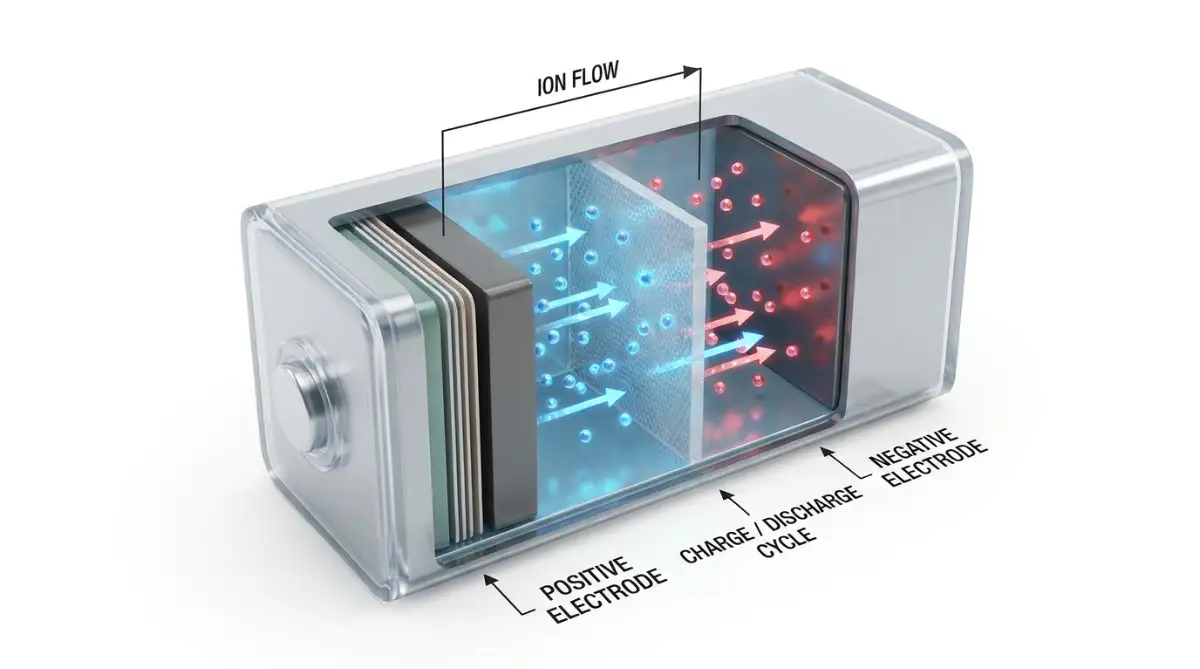
At first, the rubber band snaps right back to its original shape without any problems. But after stretching it thousands of times, it starts to lose its elasticity and becomes slightly loose. Your battery pack acts in a very similar way over the months and months of driving.
The physical space where the energy is stored slowly starts to break down on a microscopic level. Tiny formations called dendrites begin to build up inside the liquid parts of the battery. These build-ups permanently block some of the energy from moving around freely.
This means the battery simply cannot hold the exact same amount of energy it did when it rolled out of the factory. This process is entirely natural and happens to every single rechargeable device on earth. The problem is not that it happens, but rather how fast your daily habits are making it happen.
The Calendar Aging vs. Cyclic Aging Reality
You might think that leaving your car parked safely in the garage keeps the battery in perfect condition. That is actually a massive misunderstanding in the electric vehicle community. Batteries degrade through two completely different processes, and you are always fighting against both.
The first process is called calendar aging. Just like a piece of fresh fruit sitting on your kitchen counter, your battery is getting older just by existing. Even if you never drive the car, the chemicals inside are slowly reacting and breaking down over the months.
Temperature plays a massive role in calendar aging. If your car sits in a sweltering parking lot every single summer day, the battery bakes in the heat. Heat dramatically speeds up chemical reactions, which means your battery ages much faster when parked in direct sunlight.
The second process is cyclic aging, which comes from how you actually drive and charge the car. Every time you drain the battery and fill it back up, you complete a charge cycle. The deeper you drain it and the higher you fill it, the harder the cyclic aging hits your battery pack.
Understanding the difference between these two aging types gives you back control over your car. You cannot stop time, but you can definitely control how hard the battery works while it ages.
The 80/20 Sweet Spot Rule
If you want to protect your investment, you need to change how you look at the fuel gauge. With a gas car, you fill it all the way to the top and drive it until the empty light comes on. Doing this in an electric car is the fastest way to destroy your battery capacity.
Lithium-ion cells experience the most physical stress when they are completely full or entirely empty. When the battery sits at a hundred percent, the internal voltage is at its absolute highest point. This high voltage creates a ton of internal pressure, slowly damaging the cell walls.
When the battery drops below twenty percent, it struggles to pull the remaining energy out efficiently. This causes the battery to heat up, which again, damages the internal chemistry. The goal is to keep the battery in a comfortable, low-stress middle ground.
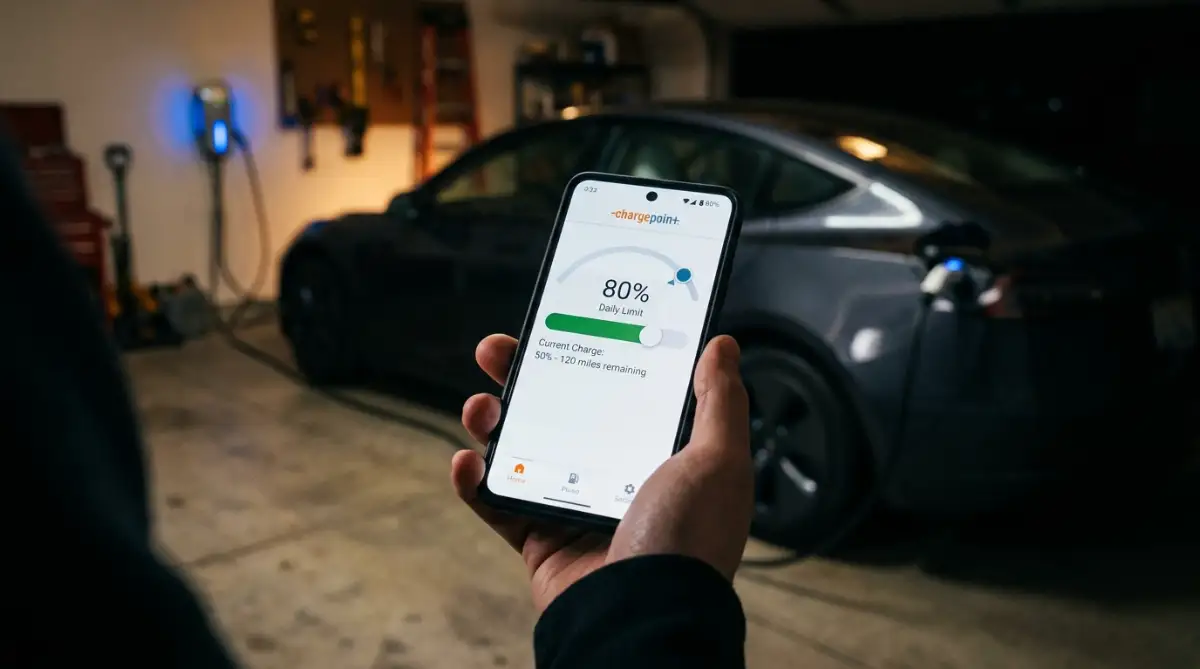
Always try to keep your daily state of charge between twenty and eighty percent. Most modern cars have a setting right on the main screen that allows you to limit the maximum charge limit. Set this limit to eighty percent for your normal, everyday driving routine.
Only charge it up to a hundred percent when you are planning to leave immediately for a long road trip. By keeping the battery in this comfortable middle zone, you drastically reduce the daily stress on the internal chemicals.
I used to plug my car in every single night and let it fill to the absolute top, thinking it was the best way to be ready for the morning. I quickly realized that leaving it sitting at a hundred percent charge was actually cooking the cells from the inside out. Once I started limiting my daily charge to eighty percent, I noticed my total range stabilized almost immediately.
The Daily Charging Rulebook (Do vs. Don't):
- DO: Plug in your car every time you park at home and set the max limit to 80%. Small, frequent sips of energy keep the lithium cells perfectly balanced and happy.
- DON'T: Drive the car all the way down to 5% and then charge it to 100% like an old gas tank. Deep draining puts massive physical stress on the internal chemistry and permanently speeds up degradation.
The Hidden Dangers of Constant Fast Charging
We all love the convenience of pulling up to a supercharger and getting hundreds of miles of range in just twenty minutes. DC fast chargers are incredible pieces of engineering for road trips. But using them as your primary way to fill up is a huge mistake.
Fast charging pushes an enormous amount of electrical current into the battery pack in a very short amount of time. This massive flow of electricity generates a tremendous amount of heat. As we discussed earlier, extreme heat is the worst enemy of battery chemistry.
Your car does have an active cooling system built-in to protect the battery during fast charging. It pumps liquid coolant around the cells to keep them from overheating and catching fire. However, even with the best cooling system in the world, the internal cell temperatures still spike significantly.
Frequent fast charging accelerates the cyclic aging process we talked about. The aggressive push of electrons actually causes microscopic cracking inside the battery electrodes over time.
Reserve fast chargers only for long highway journeys. For your daily driving needs, rely on Level 1 or Level 2 charging at your home or workplace. Slow charging generates almost no excess heat and gently fills the battery, extending its lifespan for years.
A Quick Comparison of Charging Impacts
Why Extreme Weather is Your Worst Enemy
Driving an electric vehicle through different seasons requires a slight shift in your habits. Batteries act exactly like humans when it comes to extreme weather. They hate being too hot, and they absolutely despise freezing temperatures.
During the freezing winter months, you will notice an immediate drop in your available daily range. The cold temperatures slow down the chemical reactions inside the battery cells. The electrons simply cannot move as fast, which means the battery cannot provide as much power to the motor.
To combat the cold, the car has to use its own battery power to run an internal heater just to warm up the battery pack. This means you are spending energy before the car even starts moving.
Preconditioning your car while it is still plugged in is a game-changer. Use your smartphone app to turn on the car's climate control about twenty minutes before you leave for work. Because the car is still plugged into the wall, it uses electricity from your house to warm up the battery and the cabin.
This simple habit ensures your battery is at the perfect operating temperature when you hit the road. It saves your battery from the harsh stress of pulling massive amounts of energy while freezing cold.
Learn How to Precondition Your Car Safely
Watch this helpful breakdown to understand exactly how temperature management affects your daily drive and how you can optimize it from your phone.
The Secret Role of Regenerative Braking
You probably already know that your car charges itself slightly every time you take your foot off the accelerator. This system takes the kinetic energy of the moving car and feeds it backward into the battery pack. It is a fantastic feature that saves wear on your brake pads and extends your daily driving distance.
However, regenerative braking can also interact with battery health in surprising ways. If you live at the top of a very steep hill and charge your car to a hundred percent, you face a unique problem. When you drive down the hill, the car tries to push more energy into a battery that is already completely full.
Most modern cars will physically disable the regenerative braking system in this situation to protect the battery from overcharging. But if the system is forced to handle heavy bursts of energy continuously, it creates micro-cycles of charging.
The best way to handle this is to use the different driving modes your car offers. If you are doing extreme mountain driving, adjust the regenerative braking strength to a moderate setting. This provides a smooth, consistent flow of energy back into the battery without causing massive voltage spikes.

Myth vs Reality: Battery Degradation
There is a lot of misinformation floating around social media about how quickly these cars die. Let us clear up some of the most common misunderstandings right now.
Myth: The battery will completely die after five years and need a thirty-thousand-dollar replacement.
Reality: Modern battery packs are designed to outlast the usable life of the car's physical body. You will slowly lose total range over a decade, but the battery will not just suddenly stop working completely.
Myth: You must completely drain the battery to zero before charging it to reset the memory.
Reality: That rule applied to old nickel-based batteries from the nineties. Doing that to a modern lithium-ion car battery will actively destroy its internal capacity. Always plug it in before it drops too low.
Understanding these realities stops the panic. Your car is incredibly smart and has dozens of internal computer systems actively trying to protect the battery pack. Your job is simply to give those computers the best possible conditions to do their work.
Understanding the Battery Management System
Every electric car has a powerful hidden computer called the Battery Management System. This computer acts as the brain for the entire power pack under your floorboards. It constantly monitors the exact temperature, voltage, and health of every single cell in real time.
If one specific area of the battery starts getting too hot during a drive, this computer instantly redirects coolant to that exact spot. It manages how fast energy comes in during charging and how fast it leaves when you press the pedal.
You actually have slightly more battery capacity than your dashboard tells you. Manufacturers intentionally lock away the top and bottom percentages of the physical battery. So when your screen says one hundred percent, the physical battery might only be at ninety-five percent.
This hidden buffer zone is designed specifically to absorb the natural degradation over the first few years of ownership. This is why you might not notice any range loss at all during your first year of driving. The computer is slowly eating into that hidden buffer to keep your daily experience smooth.
Once that hidden buffer is used up, you will start seeing the actual maximum range slowly drop. Knowing this helps you understand that early range drops are completely normal and not a sign of a broken vehicle.
Long-Term Parking and Storage Strategies
Sometimes life happens, and you need to leave your car parked for an extended period. Maybe you are going on a long vacation or traveling for business. How you leave the car during this time drastically impacts the battery health upon your return.
Never leave the car sitting in a garage with a completely full or completely empty battery for weeks at a time. The absolute best state of charge for long-term storage is exactly fifty percent. At fifty percent, the internal chemical pressure is perfectly balanced.
If possible, leave the car plugged into a Level 1 standard wall outlet while you are gone. Do not worry, it will not continuously pump electricity into the car. The internal computer will use the wall power just to keep the battery at a safe temperature while you are away.
Always check your owner manual for specific long-term storage modes. Some vehicles have a specific button on the touchscreen just for this scenario. It automatically manages the battery health perfectly while you enjoy your trip.
Your electric vehicle requires a totally different mindset compared to the gas-powered cars we grew up driving. You are no longer just filling a dumb metal tank with liquid fuel. You are managing a highly advanced chemical energy storage system. By treating it with a little bit of respect, you ensure it stays healthy, reliable, and fun to drive for many years down the road.
Expert-Level Strategies for Maximum Battery Health
Taking your electric vehicle care to the next level requires a deeper understanding of how energy actually flows. Most people just plug their cars in and walk away without giving it a second thought. However, if you want to keep your dashboard showing maximum miles for years, you need to understand micro-habits.
One of the most powerful concepts you can master is called the Depth of Discharge, or DoD. Think of your battery like a human muscle. If you constantly push a muscle to absolute failure, it takes a long time to recover and eventually gets injured.
Your lithium-ion cells react exactly the same way to deep electrical drains. If you regularly drive your car from ninety percent all the way down to ten percent, you are forcing a massive Depth of Discharge. This heavy cycle puts an enormous amount of physical stress on the internal chemistry of the pack.
Instead of doing one massive charge every three days, try doing small top-offs every single night. Plugging your car in when it drops to fifty percent and filling it back to seventy percent creates a very shallow Depth of Discharge. These micro-cycles are incredibly gentle on the battery and can literally double the lifespan of the cells.
If you want to dive deep into the exact science of shallow cycling, researchers at the National Renewable Energy Laboratory have published fascinating studies proving how smaller charges preserve lithium structures. It is a simple habit shift that pays off massively over time.
The Magic of Scheduled Preconditioning
We touched on extreme weather earlier, but there is an advanced software trick that many drivers completely ignore. Almost every modern electric vehicle has a feature called "Scheduled Departure" hidden inside the smartphone app. This is not just a luxury feature to warm your seats before work.
When you tell the car exactly what time you plan to leave the house, the internal computers go to work. About an hour before your departure, the car slowly starts pulling tiny amounts of electricity from your home wall outlet. It uses this slow energy to gently heat or cool the heavy battery pack to its perfect operating temperature.
By the time you unplug and pull out of the driveway, the cells are chemically relaxed and ready to release energy efficiently. If you skip this step and aggressively accelerate with a freezing cold battery, you actually cause microscopic tears inside the cell walls.
These tiny tears permanently reduce the amount of energy the battery can hold. Taking two seconds to set a departure schedule on your phone completely eliminates this cold-shock damage.
Mechanical Drag and Electrical Stress
Sometimes, the reason your battery is degrading has nothing to do with the battery itself. The physical condition of your tires plays a massive role in how hard your electrical system has to work. Electric vehicles are significantly heavier than traditional cars due to the massive battery packs underneath.
This extra weight means your tires compress more against the pavement. If your tire pressure drops even a few PSI below the recommended limit, it creates a huge amount of rolling resistance.
When your car has to fight against flat tires, the electric motor demands significantly more power to keep you moving at highway speeds. This constant heavy pull of electricity raises the internal temperature of the battery pack. Over months of driving with low tires, this added heat slowly cooks the battery chemistry.
Checking your tire pressure once a month is a brilliant way to reduce unnecessary electrical strain. You protect your expensive battery pack just by keeping a few extra pounds of air in your wheels.
When you are getting approved for your first auto loan, nobody warns you about how these tiny mechanical details impact your long-term investment. But knowing them now gives you a massive advantage.
Mastering Regenerative Braking Settings
Many new owners complain that their electric car feels jerky or difficult to drive smoothly. They often turn the regenerative braking feature completely off to make the car feel more like a traditional gas vehicle. This is a massive mistake for your long-term battery health.
Regenerative braking does not just save your brake pads; it acts as a gentle, continuous micro-charger. When you coast down a hill with regeneration turned on, the motor pushes a smooth, consistent stream of electrons back into the pack.
This smooth delivery is incredibly healthy for the battery compared to aggressive, high-speed wall charging. Learn to drive with the "one-pedal" driving mode activated. It takes a few days to get used to the feeling, but it drastically reduces the overall stress on your entire electrical drivetrain.
The Hidden Pitfalls Draining Your Battery Life
Even with the best intentions, it is incredibly easy to fall into traps that silently destroy your driving range. I have seen so many careful drivers ruin their batteries simply because they misunderstood how the technology actually works. Let us walk through the most dangerous mistakes you need to avoid at all costs.
The Airport Vacation Disaster
Picture this highly common scenario. You are flying out for a two-week family vacation, so you drive your electric car to the airport. You want to make sure you have plenty of juice for the drive home, so you charge the car to a full one hundred percent before parking it.
You leave the car sitting on the hot asphalt roof of the parking garage for fourteen days. This is an absolute nightmare for lithium-ion chemistry. The battery is stuffed to its maximum voltage limit, sitting entirely stagnant while the summer sun beats down on the metal roof.
The car's thermal management system will panic. It will try to run the internal air conditioning just to keep the battery from catching fire. This creates a massive parasitic drain, pulling power from a stressed battery for two straight weeks.
By the time you return from vacation, your battery has endured severe chemical aging. This single mistake can permanently shave two to three miles off your maximum range.
Airport Parking Pro-Tip:
If you are flying out for a week in the summer, park your car in a covered spot with exactly a 50% charge. Why 50%? Because at exactly half-charge, the internal pressure of the battery cells is entirely balanced. Your battery will experience virtually zero aging while you are sitting on the beach enjoying your vacation.
If you must leave your car at the airport, try to arrive with the battery around fifty percent. Park in a covered, shaded area if possible, and turn off all background security cameras. Treat your battery with care, similar to how you would work to protect your personal assets from business loan risks by planning ahead for worst-case scenarios.
The Danger of Unregulated Aftermarket Equipment
Electric vehicle accessories are flooding the online marketplace right now. You will find thousands of cheap charging cables, extension cords, and smart splitters promising to save you money. Buying a discount charging cable for a highly advanced vehicle is a terrible idea.
Your car communicates directly with the charging cable before it allows any electricity to flow. If you use a cheap cable with a faulty microchip, it can send unstable, dirty voltage straight into your car's internal inverter.
This unstable power forces the car to constantly adjust its intake, generating a massive amount of unnecessary heat. In worst-case scenarios, cheap cables can actually melt directly into your car's charging port. Always check that your home charging equipment is properly certified by Underwriters Laboratories (UL Solutions) or a similar safety organization.
A melted charging port is not covered by your factory warranty. Getting hit with a five-thousand-dollar repair bill because you tried to save thirty dollars on a cable is heartbreaking. It puts you in a tight financial spot, where you might have to figure out how to unlock your home's equity just to get your vehicle back on the road.
The "Gas Station" Mindset Trap
We are culturally programmed to wait until our fuel gauge hits empty before we stop for energy. Applying this mindset to your electric vehicle is the fastest way to ruin its resale value.
When a lithium-ion cell drops below ten percent, the internal chemical structure becomes incredibly fragile. The liquid electrolyte inside the battery begins to break down, forming solid crystals that permanently block energy storage.
If you constantly drive your car down to the red warning zone, you are actively shrinking your gas tank. These small, repeated mistakes compound over time, much like the hidden habits ruining your credit score without you even realizing it.
Never treat your driveway like a gas station. Treat it like a smartphone charging pad. Plug the car in every single time you park at home, even if you only drove five miles that day. Letting the car sip small amounts of energy from the wall keeps the battery perfectly balanced and stress-free.
Ignoring the Software Ecosystem
Your electric car is essentially a massive computer on wheels. Automakers are constantly learning new ways to optimize battery chemistry based on real-world driving data. When they figure out a better way to manage charging heat, they send that fix directly to your car via a software update.
Many drivers ignore these update notifications because they do not want to wait twenty minutes for the car to reboot. Ignoring an update means your battery is running on outdated, less efficient logic.
I strongly recommend connecting your car to your home Wi-Fi network. Let it automatically download and install these thermal management patches while you sleep. Staying updated ensures your battery management system is always fighting degradation with the latest scientific data available.
Your Actionable Blueprint for a Healthy Vehicle
Taking ownership of your battery health completely changes your driving experience. You no longer have to fear the sudden drop in range because you are actively managing the chemistry every single day.
We have explored the deep science of charging limits, the impact of extreme weather, and the silent mistakes that most drivers make. All of this information might feel overwhelming, but the daily execution is actually incredibly simple.
You just need to set your daily charge limit to eighty percent and leave it there. You need to plug the car in every night to let it sip power gently, and you need to keep your tires properly inflated. If you follow this basic routine, your car will easily outlast your expectations.
Protecting your battery is ultimately about protecting your wallet. According to data from the U.S. Department of Energy, a well-maintained electric vehicle battery can easily last twelve to fifteen years before needing replacement.
Maintaining that battery health ensures your car holds its maximum resale value. Making the right choices now prevents massive financial headaches later, much like deciding between fixed vs variable interest rates before signing a major contract. It is all about planning for the long game.
Instead of panicking over lost range and looking for a real guide to debt consolidation to pay off a broken battery, you can drive with total peace of mind. You are completely in control of how this machine ages.
I used to obsess over every single percentage point on my dashboard, letting range anxiety ruin my daily commute. Once I finally understood these simple charging rules and trusted the car's internal computers, driving became incredibly fun again. You have the exact knowledge you need right now, so go plug in safely and enjoy the quiet, smooth ride you deserve!
Real Questions Drivers Ask About Battery Health
Can I leave my EV plugged in while I go on vacation?
Yes, you absolutely should leave it plugged in while you are away. Just make sure to open your car's screen and lower the maximum charge limit to fifty percent before you leave. This allows the car to safely pull wall power to cool or heat the battery without overcharging the cells.
Does hot weather really cause permanent battery damage?
Extreme heat speeds up the internal chemical reactions inside the battery, which can definitely cause permanent capacity loss over several years. Whenever possible, park your car in a garage or under the shade during scorching summer days to give the cooling system a break.
Is it okay to charge to 100% once a week?
It is perfectly fine to charge to one hundred percent if you are planning to immediately drive a long distance right afterward. The real damage happens when the car is fully charged and just sits parked in your driveway for days at a time.
How do I check my actual battery health percentage?
Most modern electric cars do not show a direct "battery health" percentage on the main dashboard to prevent driver panic. However, you can ask your dealership to run a deep diagnostic test, or you can use reputable third-party smartphone apps that connect to your car's diagnostic port to read the actual cell degradation.
Disclaimer: The information provided in this blog post is for educational and informational purposes only and does not constitute professional automotive or mechanical advice. Vehicle software, charging protocols, and battery chemistries vary greatly between manufacturers. Always read your specific vehicle's owner manual and consult with certified dealership technicians before modifying your charging equipment or daily driving habits.