The Sweaty Palms of the Empty Battery Warning
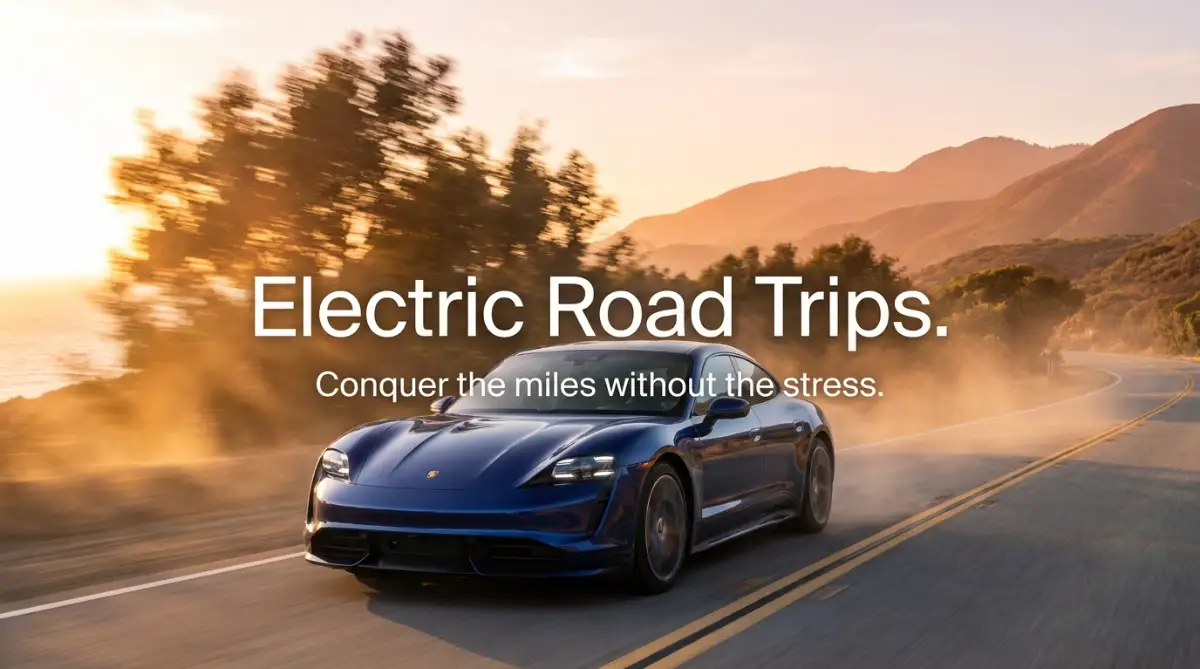
Let's be honest, staring at a dropping battery percentage while driving down a highway you don't know is terrifying. I bought my electric car to enjoy quiet, smooth road trips, not to do panic math in my head every time I passed a truck. If you are tired of range anxiety ruining your travel plans, you are in the right place. Today, I am going to show you exactly how to map out a stress-free long-distance drive, so you can stop staring at the dashboard and actually enjoy the view.
Every single time I pressed the accelerator to pass a slow truck, my battery percentage would instantly dip, sending a fresh wave of dread straight into my stomach.
Millions of everyday drivers go through this exact same mental torture. You buy a beautiful, quiet, and eco-friendly electric car with the dream of hitting the open road. But instead of enjoying the scenery, you spend the whole drive doing complicated math in your head.
You find yourself constantly asking if running the air conditioning will leave you stranded on the side of the road. This constant, nagging fear completely ruins the joy of traveling.
It feels like you are a slave to the battery meter. But the truth is, you do not have to drive in fear anymore.
Once you learn how the hidden rules of battery management actually work, that intense anxiety simply disappears. I am going to share exactly how you can turn that stressful dashboard math into a confident, completely relaxed driving experience.
Your Quick Road Trip Action Plan
- Ditch the Guess-O-Meter: Learn to rely on your actual battery percentage instead of false dashboard mileage predictions.
- Master the 80% Rule: Stop wasting your precious travel time at fast chargers; unplug at 80% and get back on the road.
- Watch Your Speed: See exactly how driving over 70 MPH secretly destroys your travel range through wind resistance.
- Sleep and Charge: Find out why booking hotels with overnight parking chargers is the ultimate road trip travel hack.
Rethinking How You Look at the Open Road
The biggest mistake you can make is treating your electric vehicle exactly like a gas-powered car. If you hop in, turn on the navigation, and just drive until the battery gets low, you are setting yourself up for failure.
A successful cross-country journey requires a completely different mindset. You have to start viewing your trip as a series of connected hops, rather than one massive, uninterrupted sprint.
When you shift your perspective, the whole journey becomes a lot more enjoyable. Let us look at some highly practical ways to map out your adventure safely.
The Secret Power of Dedicated Routing Apps
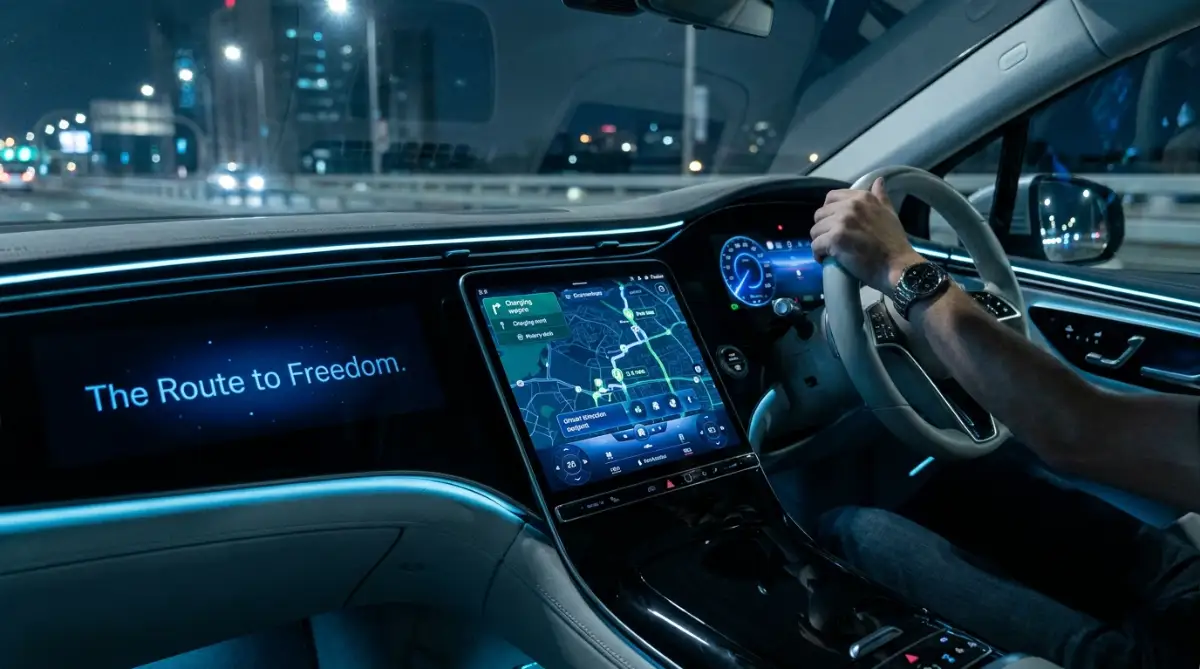
Your car’s built-in navigation is great for getting you across town, but it can sometimes let you down on a massive multi-state journey. The built-in systems do not always know if a specific charger is broken, in use, or completely blocked by a parked truck.
This is why seasoned EV travelers rely on dedicated third-party mapping tools. Applications like A Better Routeplanner (ABRP) and PlugShare are absolute game-changers for your mental peace.
These tools look at the exact make and model of your car. They calculate how heavy your car is, what the weather is doing, and even the elevation of the mountains you have to cross.
If you want to see exactly how these apps can perfectly predict your charging stops down to the minute, watch this quick breakdown before your next big drive.
Instead of guessing, these applications tell you exactly where to stop and exactly how many minutes you need to stay plugged in. They take all the scary guesswork out of the equation.
Why You Should Never Trust the "Guess-O-Meter"
Your dashboard range display is often jokingly called the "guess-o-meter" by experienced drivers. It is essentially the car trying to predict the future based on how you drove in the past.
If you just spent a week driving slowly around your neighborhood, your car will excitedly tell you that you have 300 miles of range. But the moment you hit the highway and start driving fast against a strong wind, that number will drop like a rock.
I made the massive mistake of trusting the guess-o-meter on a trip to the mountains. I thought I had plenty of range, but driving uphill used twice as much energy as I expected, leaving me barely limping into the charging station. Always plan for extra buffer room when changing driving environments!
You need to rely on battery percentages, not the estimated mileage. Think of your car battery just like your smartphone battery.
You do not look at your phone and think, "I have exactly three hours of screen time left." You think, "I have 40% left, I should probably plug it in soon." Treating your car battery the same way stops you from obsessing over false mileage promises.
The Science Behind Speed and Wind Resistance
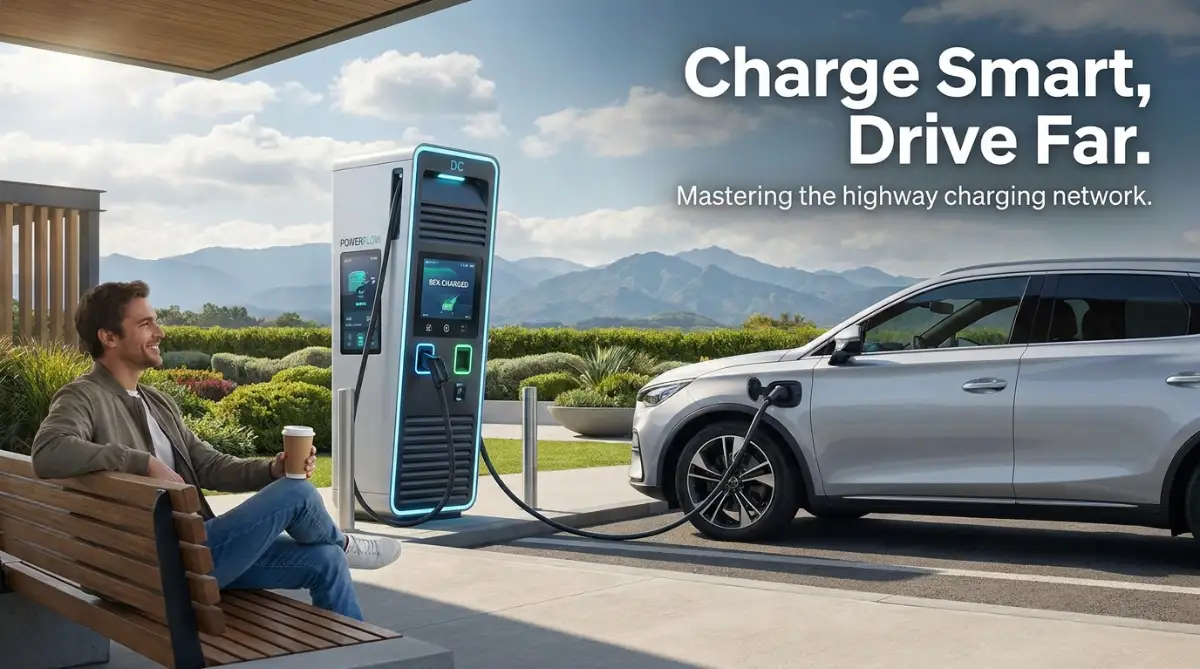
When you drive a traditional gas car, driving a little faster does not drastically change your fuel consumption. But in an electric vehicle, speed is the absolute biggest enemy of your battery life.
It all comes down to basic physics and wind resistance. Pushing a heavy metal box through the air takes energy.
When you increase your speed from 65 miles per hour to 75 miles per hour, the wind resistance does not just increase a little bit. It increases exponentially.
Quick Breakdown: How Speed Kills Range
Let us look at a simple scenario.
- Driving at 60 MPH: You easily hit your advertised range. The ride is smooth, and the battery drains predictably.
- Driving at 75 MPH: Your battery drains roughly 15% to 20% faster. You arrive at your destination much sooner, but you might not reach your planned charging stop.
- Driving at 80+ MPH: You are fighting massive air pressure. Your range will plummet, causing severe anxiety.
Slowing down by just five miles per hour can easily add twenty to thirty miles of extra range to your current charge. If you are ever worried about making it to the next plug, just move over to the right lane and drop your speed. It is the best safety net you have.
Mastering the Art of the 80% Charging Curve
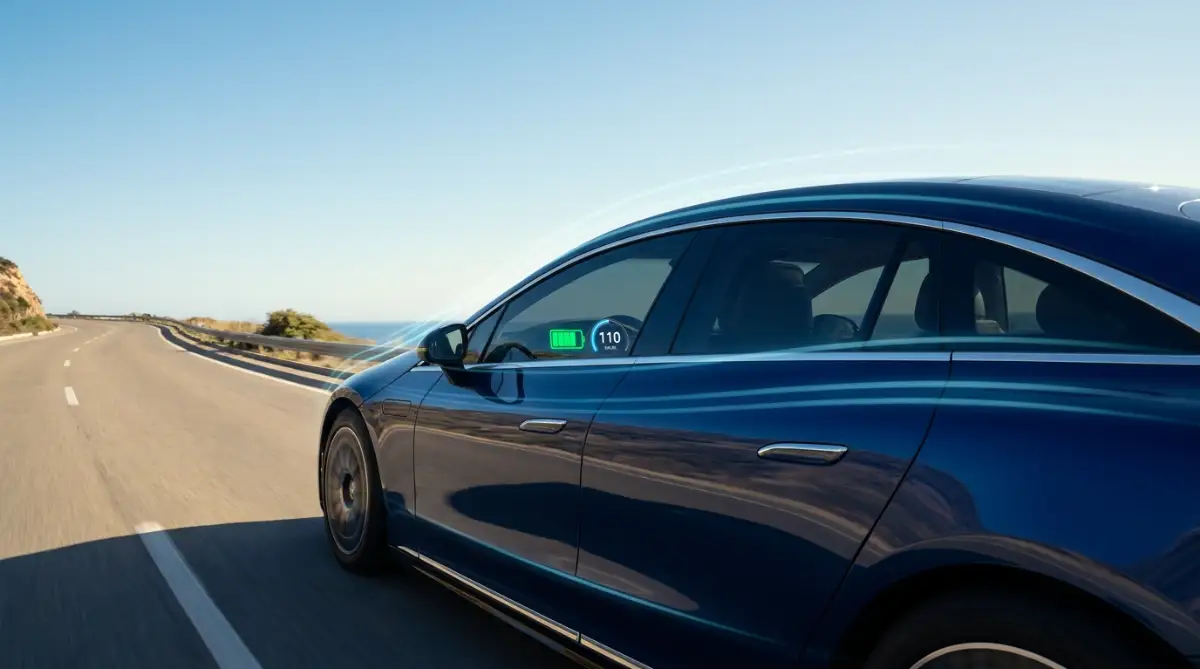
One of the most confusing things for new owners is understanding how fast chargers actually work. You pull up to a super-fast station, plug in, and expect the battery to fill up perfectly evenly.
But batteries do not charge at a steady rate. They follow something called a charging curve.
Think of filling your car battery like packing people into a crowded concert hall. At first, the doors open, and people flood in quickly because there are plenty of empty seats.
This is what happens from 10% to 80% charge. The energy rushes into the battery incredibly fast.
But once the battery hits 80%, the seats are mostly full. The system has to carefully squeeze the last few bits of energy into the remaining open spaces without causing damage.
Getting from 80% to 100% can often take just as long as getting from 10% to 80%.
Sitting at a public charger waiting for that final 20% is usually a massive waste of your precious travel time. The smartest strategy is to charge up to 80%, unplug, and drive to the next station. You will spend significantly less time waiting around at rest stops.
Myth vs. Reality: The 100% Charge Rule
- The Myth: Filling your battery to 100% at every stop gives you the fastest road trip possible.
- The Reality: The last 20% of your battery charges incredibly slowly to protect the internal cells from overheating. You might spend 25 minutes getting from 10% to 80%, and then sit there for another 45 minutes just to squeeze in that final 20%. Unplug at 80% and keep moving to save hours of travel time!
Weather Patterns and Temperature Truths
Electric cars love perfect, sunny, mild weather. They perform their absolute best when it feels like a nice spring day outside.
But if you are driving across the country, you are going to encounter extreme temperatures. You need to know how these extremes change your vehicle's behavior.
The Cold Weather Reality:
Cold weather is tough on batteries. The chemical reactions inside the power cells physically slow down when they get freezing cold.
On top of that, you are using the car's heating system to keep your family warm. Electric heaters pull a massive amount of energy directly from the main battery pack.
If you are driving in freezing temperatures, you should instantly subtract about 20% from your total expected range.
The Extreme Heat Reality:
Hot weather is generally better for range than freezing snow, but it still has an impact. Running your air conditioning on full blast will definitely drain the battery slightly faster.
However, the real issue in extreme heat is battery cooling. Your car has to work extra hard to keep the battery pack cool while you are driving fast on hot asphalt.
Always check the local weather forecasts along your route. Knowing that you are heading into a freezing mountain pass allows you to plan an extra charging stop before you get there.
The Magic of "Destination Charging"
While fast chargers on the side of the highway are great, they are not the only way to power your trip. The absolute best way to travel is to charge your car while you are fast asleep.
This is known as destination charging, and it completely changes the road trip experience.
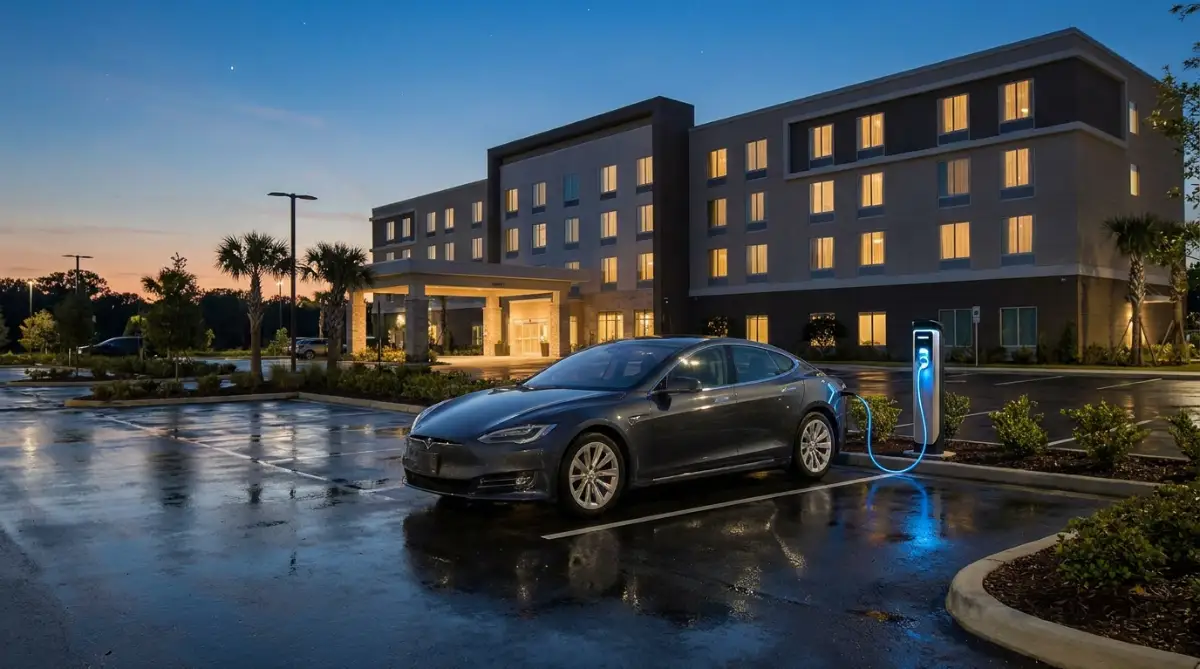
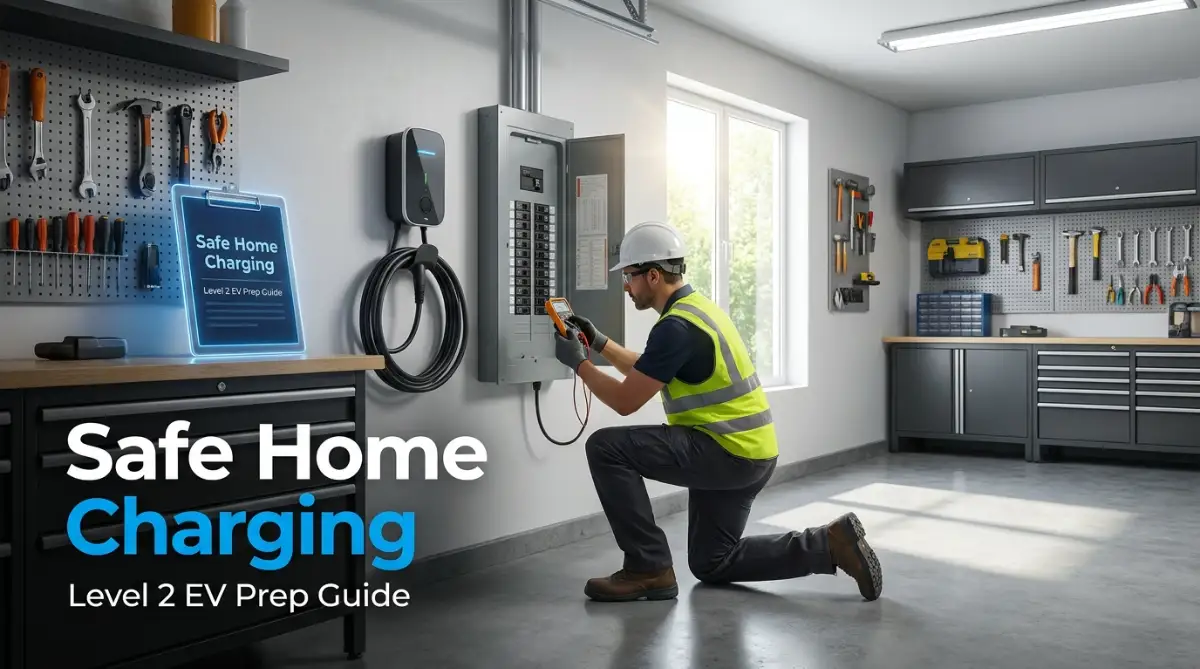
When you book your hotels or rental cabins for the trip, you must look for places that offer overnight EV parking. Many hotels now have standard Level 2 chargers right in their parking lots.
You arrive at the hotel tired, with a nearly empty battery. You plug the car in, grab your bags, and go to sleep.
When you wake up the next morning, the car is sitting at 100%, ready for another full day of exploring. You did not have to wait at a gas station, and you did not have to waste any daytime hours charging.
You get to start every single morning with maximum range and zero anxiety.
Preparing for the Unexpected Broken Charger
Even with perfect planning, you will eventually pull up to a charging station that is completely broken. The screen might be blank, or the credit card reader might refuse to work.
If you rolled into that station with exactly 1% battery left, a broken machine becomes a total disaster. You are officially stranded.
This is why the golden rule of EV travel is to always arrive at your charging stop with at least a 15% to 20% buffer remaining.
If the charger is broken, that 20% buffer gives you enough juice to comfortably drive to the next available station in town.
It is also incredibly smart to carry a portable charging cable in your trunk. It might charge incredibly slowly from a standard wall outlet, but an emergency slow charge is much better than calling a tow truck.
Being prepared for the unexpected turns a potential nightmare into a minor inconvenience. You remain totally in control of your journey.
Next-Level Highway Hacks for the Serious EV Traveler
Now that you understand the basic rules of battery management, it is time to look at how veteran drivers actually conquer massive trips. Anyone can drive an electric car to the grocery store. But safely crossing three state lines in a single day requires a few smart, advanced strategies.
These are not complicated engineering tricks. They are simple, practical adjustments that will make your long-distance driving incredibly smooth.
By applying these secrets, you will not just survive your road trip. You will actually enjoy the journey far more than you ever did in a gas-powered car.
Leveraging the Magic of Mountain Driving
Most new drivers are absolutely terrified of driving their electric car through the mountains. Going up a steep incline drains your battery incredibly fast, which naturally causes a lot of panic.
But what goes up must eventually come down. This is where your electric vehicle has a massive advantage over a traditional car.
When you drive down a mountain, you use a feature called regenerative braking. Instead of using your brake pads to slow the car down, the electric motor runs in reverse to capture the rolling energy.
This captured energy is sent straight back into your battery pack. I have personally gained almost twenty free miles of range just by coasting down a long mountain pass.
To maximize this, switch your car into its strongest regenerative braking mode before you start heading downhill. You will save your physical brakes from overheating, and you will arrive at the bottom with more energy than you started with.
To fully understand how your car performs in these varied environments, you can look into estimating realistic MPGe for highway driving through official government testing metrics.
The Real Cost of Roof Racks and Heavy Wheels
We talked earlier about how wind resistance destroys your battery life at high speeds. But the shape of your car matters just as much as how fast you drive it.
If you leave a bulky cargo box or empty bike racks on the roof of your car, you are creating massive drag. That simple piece of plastic on your roof can easily steal ten to fifteen percent of your total highway range.
If you do not absolutely need the roof rack for your trip, take it off before you leave the driveway.
The same rule applies to your wheels. Many people swap out their factory aero wheels for large, heavy custom rims because they look cooler.
Those heavy rims force the electric motor to work much harder to spin the tires. Keeping your vehicle as sleek and light as possible is the ultimate secret to stretching your battery capacity.
Question & Answer: Navigating the Charging Network Chaos
Let us address a very common frustration that catches many new travelers off guard.
Q: Can I just swipe my credit card at any public charger like a normal gas station?
A: Unfortunately, the public charging network is still a bit messy. While some newer stations have standard card readers, many older units require you to download their specific brand application to start the charge.
Q: How do I avoid sitting in a dark parking lot trying to download an app on a bad cell connection?
A: The trick is to set up your accounts before you leave home. Look at your planned route and identify which companies operate the fast chargers along your path. Download their apps, create your accounts, and save your payment information while you are sitting on your comfortable couch using high-speed Wi-Fi.
By doing this, you just pull up, tap your phone on the machine, and the electricity starts flowing instantly. You can even check a national map of alternative fueling stations to see exactly which networks dominate the states you are visiting.
Understanding Station Power Sharing
Here is an insider secret that most manufacturers do not openly advertise. Many charging stations actually share their power supply between two adjacent parking spots.
If you pull up to a station that has an "A" and "B" plug, they are likely pulling from the same power cabinet. If a car is already plugged into "1A," and you plug your car into "1B," your charging speed will instantly be cut in half.
You will be sitting there wondering why your car is taking two hours to fill up.
If the parking lot is mostly empty, always try to pick a charging stall that is completely separated from the other cars. Leave a space between you and the next vehicle.
This guarantees that you get the maximum amount of electricity pushed into your battery, getting you back on the road in record time.
The Hidden Road Trip Blunders That Leave Drivers Stranded
Even the most carefully planned trips can fall apart if you ignore the physical realities of driving a heavy machine across the country. I have seen highly organized people end up on the back of a tow truck simply because they made one bad assumption.
These mistakes will ruin your schedule, drain your wallet, and completely destroy your peace of mind. Let us look at the most dangerous pitfalls so you never have to experience them yourself.
The "Guaranteed Hotel Charger" Assumption
We already discussed how amazing it is to charge your car overnight while you sleep. But blindly trusting a hotel booking website is a massive mistake.
A hotel might advertise that they have electric vehicle parking, but they might only have one single plug for the entire building. If another driver gets there before you, you are completely out of luck.
Even worse, that single charger might have been broken for six months, and the hotel staff simply never bothered to update their website.
Never arrive at a hotel with a totally empty battery expecting a guaranteed charge. Always call the front desk directly a few days before your trip.
Ask them specifically if the charger is currently working and if they allow guests to reserve the spot. If they sound unsure, you must plan a backup stop at a fast charger nearby.
Neglecting the Health of Your Tires
Electric vehicles are incredibly heavy because of the massive battery packs packed into the floor. Because of this extra weight and the instant power of the electric motor, they chew through rubber much faster than standard cars.
Quick Check: The Penny Test for EV Tires
Since electric cars are heavy, tires wear down much faster than you think. Grab a standard penny and stick it upside down into your tire's tread groove. If you can see all of Lincoln's head, your tires are dangerously bald. Doing a long trip on bald tires with a heavy EV is a guaranteed recipe for sliding off a wet highway. Check this before you pack your bags.
Hitting the open highway with bald tires is a recipe for a terrifying accident. If you hit a heavy rainstorm with low tread, your heavy vehicle will hydroplane instantly.
Before you cross state lines, you must learn why electric vehicle tires wear out faster and inspect them closely. Look for uneven wear patterns on the inside edges, which often indicate an alignment issue.
If you are unsure what to look for, take your car to a professional shop. They can verify if your tires meet the necessary tire safety standards for heavier vehicles required for safe highway speeds.
Ignoring this simple check is the fastest way to turn a fun family vacation into a roadside disaster.
Pushing the Battery to Absolute Zero
Gas cars usually have a hidden reserve tank. When the fuel gauge hits empty, you usually have another thirty miles to find a gas station.
Electric vehicles do not play games like that. When the dashboard says you have zero percent left, the car will physically shut down and refuse to move.
Many new drivers try to stretch their range to avoid making an extra stop. They drive past a perfectly good charger because they think they can make it to the next one with 2% left.
If there is an unexpected traffic jam or a strong headwind, that 2% disappears in minutes. Once the battery dies, you cannot just walk to a gas station with a plastic red can.
You must know the exact steps for handling a dead EV on the highway because an improperly towed electric car can cause permanent battery damage. Always leave yourself a safety buffer of at least fifteen percent.
Consistently pushing the battery to the absolute limit is also terrible for the internal hardware. It creates severe stress on the components, which is one of the main factors in keeping the electric motor healthy on long drives.
Panicking During Extreme Weather Events
Mother Nature does not care about your road trip schedule. You might start your drive in beautiful sunshine and suddenly find yourself driving through a massive thunderstorm.
Heavy rain creates deep puddles on the highway. Because the main battery pack is located on the bottom of the car, many drivers panic when they have to drive through standing water.
While these cars are highly sealed against moisture, driving recklessly through deep water can still cause significant electrical problems. You need to know the safe limits for protecting your EV during unexpected heavy rain or flooding.
Extreme weather also heavily impacts your available range. Whether you are blasting the heater in a blizzard or running the air conditioning in a desert, your battery will drain faster than normal.
Independent research clearly shows the real-world impact of extreme temperatures on EV batteries, proving that range can drop by a significant margin. If the weather suddenly turns bad, immediately pull over and recalculate your next charging stop with a larger safety margin.
Your Pre-Trip Action Plan for a Stress-Free Journey
You just need to shift your mindset from driving until you are empty, to planning comfortable hops between reliable charging stops.
To make sure your next vacation is completely flawless, I want you to follow this simple checklist before you leave your driveway:
- Download the Right Apps: Get a dedicated route planner like ABRP and download the specific apps for the charging networks along your route.
- Set Up Your Payments: Add your credit card to those charging apps right now while you are sitting at home.
- Check the Weather: Look at the forecast for the entire route and mentally prepare to lose a little range if it gets very cold or rainy.
- Call Your Hotel: Speak to a real human at the front desk and confirm their overnight chargers are actually working today.
- Inspect Your Tires: Walk around your car, check the air pressure, and make sure you have plenty of safe tread left for the highway.
My very first long-distance electric trip was completely terrifying because I did not know any of these rules. But my last road trip was the most peaceful, relaxing vacation I have ever experienced. I promise you that once you trust the planning process and respect the limits of your vehicle, the open road truly becomes yours to enjoy. You absolutely have the skills to handle this, so pack your bags, set your route, and go make some incredible memories.
Common Questions About Cross Country EV Travel
Is it safe to plug in my electric car in the pouring rain?
Yes, it is completely safe to charge your vehicle during heavy rain or even snowstorms. The charging cables and the car's connection ports are heavily weather-proofed and designed to completely isolate the electrical current from the outside elements.
Should I charge my battery to 100% every single time I stop?
No, waiting for your battery to reach a full 100% at a public fast charger is a massive waste of your travel time. The charging speed slows down drastically after 80%, so it is much faster to unplug at 80% and just drive to the next station.
Does running the air conditioner drain the battery very fast?
Using the air conditioner does use some energy, but it actually has a very minimal impact on your overall highway range. Driving over 75 miles per hour burns significantly more battery power than keeping the cabin comfortably cool.
Can I use any public charger I see on the map?
Not all chargers fit all cars, so you have to check the plug type before you pull over. While adapters are becoming much more common, you still need to filter your map app to only show stations that specifically match your vehicle's connection port.
What is the absolute best speed for maximizing my highway range?
While driving 55 miles per hour is incredibly efficient, it is not always safe or practical on a busy interstate. Keeping your speed a steady 65 miles per hour offers the perfect balance between making good time and preserving your battery life.
Disclaimer: The information provided in this article is for educational and informational purposes only. Electric vehicle capabilities, charging network availability, and software applications change frequently. Always consult your specific vehicle’s owner manual and use highly rated routing applications to plan your journey safely. We are not responsible for any range loss, vehicle damage, or travel disruptions resulting from the implementation of these strategies.