The Shocking Reality of New EV Ownership
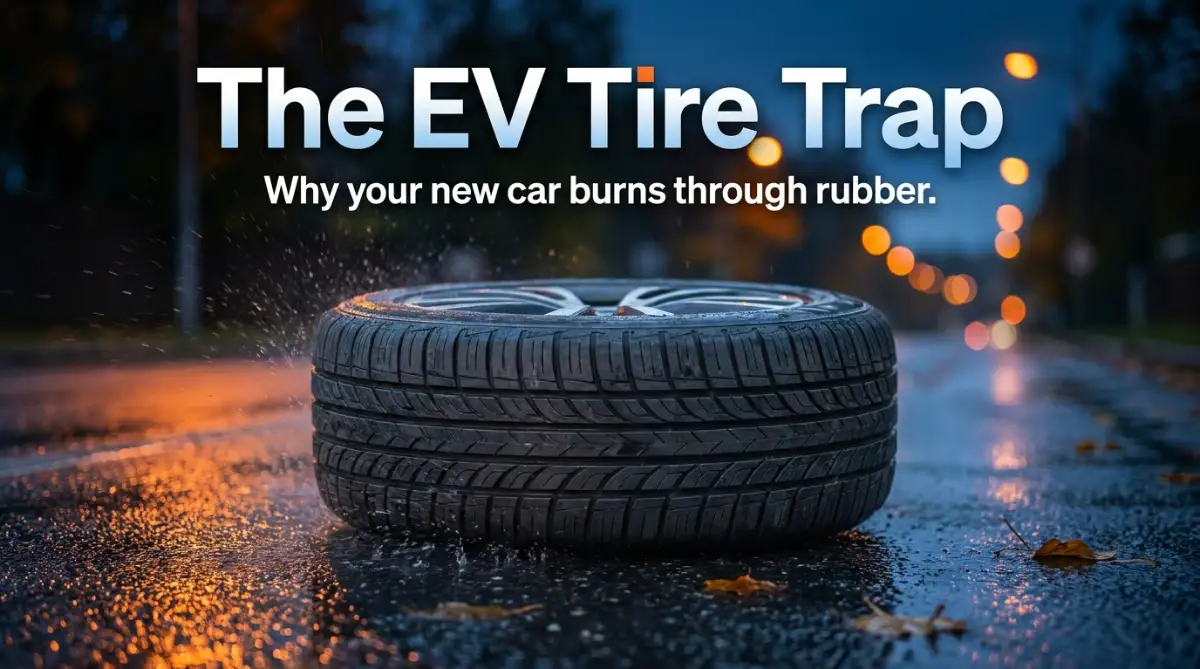
Ever taken your new electric vehicle in for a quick checkup, only to hear you already need a brand-new set of tires? I had that exact, wallet-draining shock just a few months into owning my EV. Most of us switch to electric cars to save money on gas, completely unaware of the heavy reality hiding underneath the floorboards. Let's break down exactly why your tires are melting away so fast, and the simple tricks you can use to double their lifespan.
My old gas-powered sedan could easily go tens of thousands of miles before needing fresh rubber. This sudden and unexpected expense felt like a massive punch to the gut. It completely ruined the joy and excitement of driving my quiet, environmentally friendly new ride. I drove home feeling confused, wondering if I had made a terrible financial mistake.
It is incredibly frustrating when you switch to an electric vehicle just to save money on expensive gas. You expect your daily running costs to drop, only to get hit with massive tire replacement bills. Regular people everywhere are completely caught off guard by this hidden maintenance reality. We carefully budget for our monthly car payments and home charging station setups, thinking we have it all figured out.
Then, right before a planned weekend road trip, you notice the treads on your car are completely bald. This creates a lingering, uncomfortable anxiety that follows you every single time you sit in the driver's seat. You find yourself nervously checking your wheels every week, wondering if they are actually safe for driving in the rain.
Tire Saving Cheat Sheet (Key Takeaways):
- EV batteries make your car incredibly heavy, causing tires to wear out 20% to 50% faster than gas cars.
- Zooming away from stoplights using "instant torque" literally rips microscopic pieces of rubber off your wheels.
- Turn your regenerative braking down to "low" when driving on the highway to stop unnecessary friction.
- Always buy EV-specific tires with a high "Load Index"—cheap gas-car tires can cause dangerous blowouts.
The Hidden Enemy Lurking Under Your Floorboards
To fix this frustrating issue, we first have to understand exactly what is happening to our cars. An electric car might look just like a regular gas car from the outside, but underneath, it is a completely different machine. The most significant difference between the two is the massive battery pack hiding right under your feet.
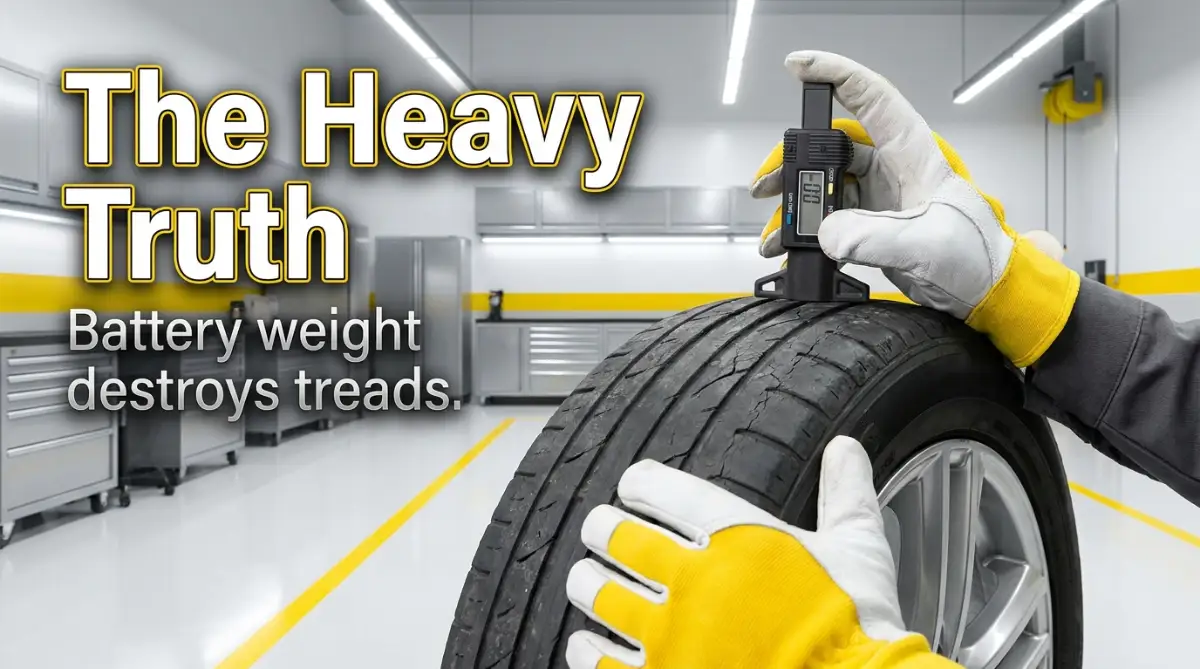
These massive battery packs are incredibly heavy, much heavier than a traditional gas tank and an engine combined. When you buy an EV, you are essentially driving around with a grand piano permanently strapped to your roof. This massive weight pushes down extremely hard on all four of your wheels at all times.
Gravity and physics are constantly working together to smash your rubber against the hard asphalt road. Every time you turn a corner, that immense weight forces the outer edges of your tires to scrape heavily against the pavement. This constant, heavy downward pressure naturally causes the rubber compounds to grind away much faster.
Think about walking around all day wearing a normal backpack versus carrying a backpack filled with solid bricks. Your shoes are going to wear out much faster if you carry those heavy bricks every single day. The exact same scientific principle applies directly to your new electric vehicle.
If you want to quickly understand the mechanics behind this heavy problem, watch this brilliant breakdown from a professional mechanic who explains EV weight perfectly.
The Thrill That Secretly Kills Your Treads
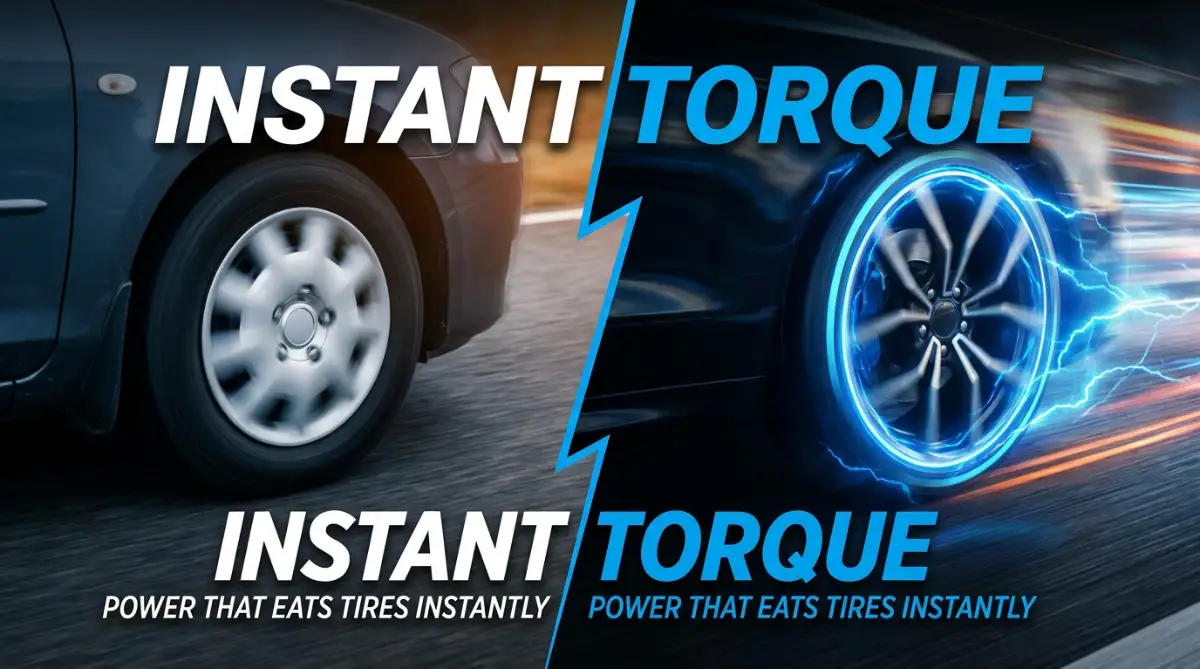
Aside from the massive weight, electric cars have another unique feature that completely destroys normal tires. This feature is called instant torque, and it is the main reason EVs feel so incredibly fun to drive. When you step on the gas pedal of a traditional car, the engine has to slowly build up power through different gears.
In an electric car, there are no traditional gears to slow the process down. The moment your foot touches the pedal, one hundred percent of the motor's power is instantly sent to the wheels. This instant burst of aggressive energy creates a violent twisting force against the pavement.
Every single time you launch quickly from a red light, you are acting like a professional drag racer. The tires literally claw at the ground desperately trying to find grip against that sudden surge of raw power. This microscopic slipping and grabbing tears tiny pieces of rubber off your tires without you even noticing.
I quickly realized my fun habit of zooming away from every single green light was literally burning money out of my wallet. Once I started treating my accelerator pedal like an egg I did not want to break, my tire life actually doubled. Sometimes the biggest problem is not the car itself, but how we unconsciously choose to drive it.
The Double-Edged Sword of Regenerative Braking
You probably love the one-pedal driving feature that most modern EVs offer today. Taking your foot off the accelerator and feeling the car naturally slow down is incredibly convenient. This system is called regenerative braking, and it uses the motor to slow the car while capturing free energy for your battery.
While this amazing feature saves your physical brake pads from wearing out, it puts massive stress on your tires. In a normal car, the wheels coast freely when you take your foot off the gas pedal. In an EV, the wheels are constantly being pulled backward by the electric motor to slow the heavy vehicle down.
This means your tires are constantly working hard in both directions, not just when you are accelerating. They are fighting the pavement to push you forward, and they are fighting the pavement to drag you to a stop. This constant push-and-pull friction acts like heavy sandpaper on your tread blocks.
If you live in a city with heavy stop-and-go traffic, this regenerative drag is happening hundreds of times a day. Over just a few months, this constant reversing of force will easily shave valuable millimeters off your tread depth.
Why You Cannot Just Buy Cheap Regular Tires
A lot of drivers think they can outsmart the system by buying cheap, regular gas car tires for their EV. This is a massive safety hazard and a terrible financial decision that will cost you more money very quickly. Regular tires are simply not built to handle the extreme weight and instant power we just talked about.
If you put a standard tire on a heavy electric car, the sidewalls will bulge out under the extreme pressure. The tire will heat up to dangerous levels while driving on the highway, increasing the risk of a sudden blowout. Furthermore, regular tires will actually reduce how far you can drive on a single charge.
Electric cars require specially designed tires featuring something called "Low Rolling Resistance." These specific tires are engineered with unique rubber compounds that easily glide over the road with minimal effort. This smooth gliding action is what allows your battery to get the maximum possible driving range.
Quick Comparison: Standard Tires vs. EV Tires
| Feature | Standard Gas Car Tire | EV Specific Tire |
| :--- | :--- | :--- |
| Weight Capacity | Built for lighter loads | Reinforced sidewalls for heavy batteries |
| Rubber Compound | High carbon black for durability | High silica for wet grip & low rolling resistance |
| Tread Design | Standard noise levels | Acoustic foam inside to quiet road noise |
| Lifespan | 40,000 - 60,000 miles | 20,000 - 30,000 miles (on average) |
However, making a tire glide easily often means making the rubber slightly stiffer and less aggressively grippy. When you combine a stiffer rubber with a heavy car and instant power, the tire naturally degrades faster. You are constantly fighting a balancing act between getting good battery range and keeping your tread alive.
Recognizing the Early Warning Signs
You cannot afford to wait until your annual vehicle inspection to check on your EV tires. Because the wear happens so rapidly, you need to know exactly what visual signs to look for every month. Catching a wear problem early can completely save a tire from being permanently ruined.
The first thing you want to check for is called "cupping" or "scalloping" on the outer edges. This looks like little dips or craters worn into the side of the rubber tread blocks. This specific type of wear often means the heavy weight of the car is overwhelming your suspension system.
Next, you need to run your hand completely flat across the main surface of the tire. If the center of the tire feels noticeably smoother than the outside edges, you have a serious pressure problem. Center wear usually means the tire is over-inflated, which happens often because EVs require much higher tire pressure than regular cars.
You should also look for a strange type of wear where the inside edge is completely bald while the outside looks perfectly new. This specific pattern is caused by improper alignment, which gets knocked out of place easily because EVs are so heavy. Hitting a small pothole in a heavy EV does significantly more damage to your alignment than hitting it in a light gas car.
Taking Immediate Control of Your Maintenance
Now that you understand exactly why this rapid degradation happens, you can start fighting back against it. The very first action you must take is buying a high-quality digital tire pressure gauge. Do not rely on the dashboard sensors alone, as they often only warn you when things are already dangerously low.
Check your tire pressure manually every single weekend while the tires are completely cold in your driveway. Keeping the pressure exactly at the manufacturer's recommended level helps the tire hold up that massive battery weight properly. Even being a few pounds under-inflated will cause the edges of your expensive tires to melt away in weeks.
Next, you must completely change how you view routine tire rotations. With a standard gas car, you might rotate your wheels every ten thousand miles and be completely fine. With an electric car, you need to rotate those wheels every five to seven thousand miles without fail.
Moving the tires around forces them to share the heavy burden of the battery weight equally over time. It prevents one single tire from taking all the abuse of the instant motor torque. This one simple habit of frequent rotation is the greatest secret to making your EV tires last significantly longer.
Mechanic's Pro-Tip on Tire Rotations:
If you want to stop buying tires every year, treat the 5,000-mile mark as your golden rule. Because your heavy battery puts intense pressure on the inside tread blocks, crossing your tires (moving the back left to the front right) distributes that heavy weight evenly. I set a simple calendar reminder on my phone so I never forget this rotation window!
Beyond Basic Maintenance: Mastering Your EV's Footprint
Getting your tire pressure right is just the starting point of keeping your electric vehicle on the road longer. If you really want to stop buying new tires every few months, you need to look slightly deeper into how you operate your car daily. Most drivers simply jump in, put the car in drive, and completely ignore the software settings available on their dashboard.
Your electric vehicle is essentially a massive computer on wheels. Just like you can adjust settings when your smartwatch keeps dying unexpectedly, you can adjust your car's software to protect your rubber. The most effective change you can make today is finding your car's acceleration profile in the main menu.
Almost every modern electric vehicle has a driving mode often labeled as "Chill," "Eco," or "Smooth" acceleration. This specific software setting intentionally limits the amount of instant torque the motor can send to the wheels from a dead stop. It acts as a safety net between your heavy foot and the fragile rubber touching the asphalt.
The Secret of Changing Your Regenerative Braking
Earlier, we talked about how regenerative braking drags your wheels backward to slow the heavy vehicle down. While this feature is amazing for city traffic, keeping it on the maximum setting is absolutely terrible for highway driving. When you are moving at highway speeds, you want the car to glide naturally.
If you keep maximum regenerative braking turned on during a long road trip, the car will aggressively pull back every single time you adjust your foot on the pedal. This creates a jerky, unpleasant ride and constantly scrubs your tires against the pavement. Instead, you should dive into your settings and switch the regenerative braking to its lowest possible level before hitting the highway.
This simple software adjustment allows the heavy car to roll freely using its own momentum. According to the Department of Energy's research on advanced tread compounding and efficiency, allowing a heavy car to coast naturally drastically reduces the friction heat building up inside the rubber. Less heat means your tires will stay strong and firm for thousands of extra miles.
Seeking Out Specialized Alignment Experts
Another massive secret that dealerships rarely talk about is the actual quality of your wheel alignment. Most standard tire shops will put your electric car on the machine and set the wheels to the basic factory specifications. However, standard factory specs are often completely wrong for how you personally drive your specific route to work.
If you drive heavily on winding country roads, the heavy battery pushes the car sideways, causing extreme wear on the outer edges. A standard alignment will not fix this issue at all. You need to find an independent, specialized suspension shop that truly understands the massive weight dynamics of electric vehicles.
These suspension experts can slightly tweak your "camber" and "toe" settings to perfectly match your daily driving habits. It is very similar to how a good accountant helps you protect your personal assets by looking closely at your unique financial situation rather than giving generic advice. A customized alignment usually costs a little bit more upfront, but it easily saves you thousands of dollars in ruined rubber over the lifetime of the car.
Understanding the Chemistry of Your Rubber
When it is finally time to actually buy a new set of tires, do not just blindly trust the salesperson behind the counter. You need to understand a little bit of the basic chemistry going on inside modern electric vehicle tires. Traditional tires use heavy amounts of carbon black in their rubber mixture to make them durable.
However, modern tires built specifically for heavy battery cars rely heavily on a special silica compound. This high-silica mixture is what allows the tire to grip the wet road tightly without sacrificing your daily battery range. If a salesperson tries to sell you a cheap tire without mentioning a high-silica compound, you should politely walk away.
People often search the internet for secret tricks, like wondering if using incognito mode give you cheaper flights, but there are no magic tricks for buying good tires. You simply have to invest in the right materials. A high-quality silica tire will confidently handle the heavy weight of your car without instantly turning into black dust on the pavement.
The Expensive Traps That Destroy New Rubber Fast
Even armed with good knowledge, I have seen incredibly smart people make terrible mistakes when maintaining their electric cars. The transition from gas to electric requires completely breaking old habits that we have relied on for decades. If you treat your new electric vehicle exactly like your old gas sedan, you are going to face a very expensive wake-up call.
The most common and dangerous mistake people make is ignoring the specific "Load Index" printed on the side of the tire. The load index is a two or three-digit number that tells you exactly how much physical weight the tire can safely hold. Because electric cars have massive battery packs, they require a significantly higher load index than regular cars.
A Real-Life Scenario of Choosing the Wrong Shop
Let me paint a picture of a very common disaster that happens to new owners. Imagine you get a flat tire on a Tuesday afternoon and quickly pull into the nearest discount tire shop to get it fixed. The mechanic looks at your wheel size and offers you a great deal on a standard touring tire that fits the rim perfectly.
You happily pay the cheap bill, completely unaware that the new tire has a load index meant for a lightweight gas car. A few days later, you load your family into the car for a weekend trip. The extreme weight of the battery, combined with the heavy luggage, completely crushes the weak sidewall of that cheap tire while you are driving at highway speeds.
This causes a sudden, terrifying blowout that leaves your family stranded on the side of a busy interstate. The National Highway Traffic Safety Administration frequently warns drivers about understanding the mechanics of tire friction and load limits to prevent these exact highway emergencies. Saving a hundred dollars at a discount shop is never worth risking a high-speed blowout with your family in the car.
Neglecting the Hidden Suspension Damage
Another massive pitfall is completely ignoring the health of your car's suspension system. The heavy weight of the battery does not just punish your rubber; it heavily abuses your shock absorbers and struts. When your shocks start wearing out, they can no longer keep the wheel pressed smoothly against the road.
Instead of rolling cleanly, the heavy wheel starts bouncing aggressively like a basketball as you drive over small bumps. Every time the tire slams back down onto the pavement, it violently scrapes away a chunk of the tread. You might think your tires are defective, but the real culprit is actually a worn-out suspension system hiding behind the wheel.
If you notice your car feeling slightly more bouncy than usual, you should immediately read up on independent suspension testing guidelines to understand what to check. Catching a weak shock absorber early will completely save your brand-new set of tires from being ruined in a matter of weeks.
The Trap of Inconsistent Home Charging
This one might sound incredibly strange, but your home charging habits actually impact your suspension and tires. When you plug your car in at home, the battery thermal management system kicks on to keep the battery cells healthy. If you constantly let your car sit completely dead in the freezing cold, the battery chemistry struggles.
While learning about electric vehicle battery degradation, I discovered that extreme temperature changes affect the overall weight distribution as the battery cooling system works overtime. While the impact on the tires is indirect, a poorly maintained battery often leads to sudden, jerky power delivery.
When the motor stutters or surges because the battery is cold and unhappy, that jerky motion transfers straight to your tires. It creates uneven stress on the rubber. Just like you carefully research the safety of installing solar panels on your roof, you must respect the complex electrical system resting inside your car.
When you first got approved for your first auto loan to buy this car, you probably did not expect things to be this connected. But in an electric vehicle, the health of the battery, the smoothness of the motor, and the life of the tires are all tied tightly together.
Your Action Plan for Long-Lasting Road Trips
You do not have to live in constant fear of expensive repair bills just because you drive a modern vehicle. The heavy weight and the instant power are fixed realities of electric cars, but how you manage them is entirely in your hands. You now possess the exact knowledge needed to protect your investment and keep your car rolling smoothly.
Instead of feeling frustrated, you can take proactive control of your driving experience starting today. Check your tire pressure this weekend while the car is cold, and adjust your acceleration settings before your next commute. These tiny, five-minute adjustments will completely change how your car interacts with the rough pavement.
A Quick Checklist for Tomorrow Morning
To make this incredibly simple, here is exactly what you should do before you drive anywhere tomorrow. First, completely turn off the "sport" or "aggressive" driving mode and put the car into its smoothest setting. Make a mental promise to treat the accelerator pedal gently when the traffic light turns green.
Second, check your dashboard menu to see exactly how many miles you have driven since your last tire rotation. If that number is anywhere near six thousand miles, pick up your phone and book a rotation appointment immediately. Do not wait for the car to remind you, because by the time the warning light comes on, the damage is already done.
Finally, walk around the car with a small flashlight and closely inspect the inner edges of all four wheels. If you see any smooth spots forming, you know it is time to visit a specialized alignment shop. Staying ahead of these tiny details transforms EV ownership from a stressful financial drain into an incredibly rewarding experience.
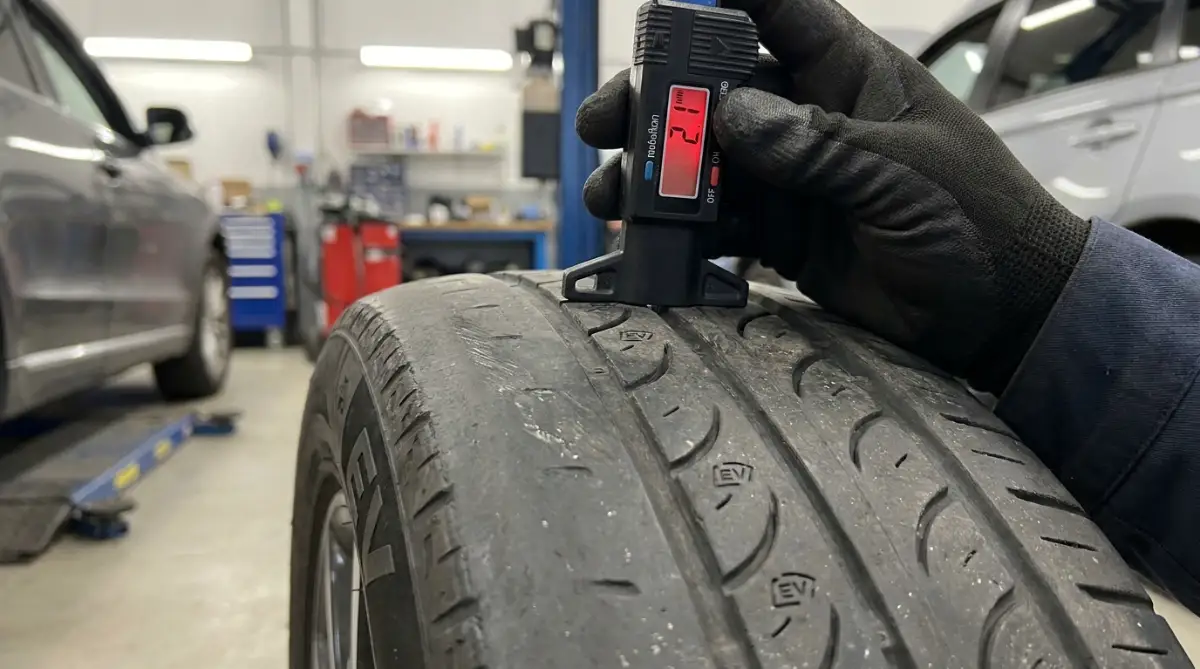
I finally stopped stressing over my tread life once I learned these simple habits and changed my driving style. My family road trips are completely worry-free now, and yours will be too!
Common Questions About Electric Car Tire Wear
Do all electric cars require special heavy-duty tires?
Yes, almost all modern electric vehicles require specifically designed tires featuring a higher load index. These special tires are heavily reinforced on the sidewalls to handle the massive weight of the battery safely. Using regular gas-car tires can easily lead to a dangerous blowout on the highway.
How many miles should my EV rubber actually last?
If you maintain perfect air pressure and rotate them frequently, a good set of EV tires should last roughly 30,000 to 40,000 miles. However, if you constantly use aggressive instant acceleration, you can easily destroy them in under 15,000 miles. Your personal driving habits dictate the lifespan more than the brand of the tire.
Can regenerative braking completely ruin my tread?
Regenerative braking does not ruin the tire, but keeping it on the maximum setting during highway speeds causes unnecessary drag. This constant pulling friction acts like sandpaper on your wheels over long distances. You should use strong regeneration in city traffic and low regeneration for smooth highway coasting.
Is it safe to just use the cheapest tires I can find?
No, buying the cheapest available tires for a heavy electric car is a massive safety hazard. Cheap tires lack the proper silica compounds needed to grip the road securely while managing the heavy battery weight. They will also drastically reduce your daily driving range by creating too much rolling resistance.
Disclaimer: The information provided in this article is for educational and informational purposes only. Automotive specifications, safety guidelines, and tire requirements vary significantly between different electric vehicle models. Always consult your vehicle's official owner's manual and speak with a certified mechanic before making any modifications to your car's suspension or tires.