The Panic Before My First Electric Car Purchase
Have you ever been super pumped about buying your first electric car, only to have a friend send you a scary video claiming the battery will microwave you alive? Yeah, that exact same thing happened to me. Before you cancel your order and go back to paying crazy gas prices, let me show you what happens when you actually measure the electromagnetic fields in these cars. Spoiler alert: making your morning coffee is probably exposing you to way more energy than your daily commute.
The video loudly claimed that sitting on top of a massive electric vehicle battery was exactly like sitting inside an active microwave. My heart instantly sank into my stomach. I was planning to drive my young kids to school in this new car every single morning. Suddenly, I felt like a terrible parent for even considering it.
My excitement turned into pure, exhausting anxiety in a matter of seconds. I started spending my nights scrolling through dark corners of internet forums, reading wild stories about invisible energy fields causing severe health problems. The more I read, the more confused and paralyzed I became about making a simple car purchase.
If you are reading this right now, I bet you know exactly what this heavy feeling of doubt feels like. You probably just want to enjoy the smooth, quiet ride of modern technology without worrying about unseen dangers harming your body. Instead, you are constantly second-guessing your choice because of scary rumors spread by people who do not actually understand science.
The reality is that fear-mongering takes a huge emotional toll on everyday consumers. When you are constantly stressed about invisible radiation, your daily commute turns from a relaxing drive into a nerve-wracking chore. People start avoiding long road trips or feeling guilty every time they strap their children into the back seat.
What You Actually Need to Know (In 30 Seconds):
- It is Non-Ionizing: The energy in an EV cannot harm your DNA. It is exactly like the safe energy surrounding your refrigerator.
- Built-in Metal Shields: Automakers put heavy metal boxes around the batteries (Faraday cages) that block almost all electrical fields from reaching the seats.
- Gas Cars Have It Too: Traditional cars are packed with wiring, alternators, and computers that make the exact same invisible fields.
- The Real Threat is Exhaust: Breathing in tailpipe pollution from a gas car is a proven health hazard; EV fields are completely harmless.
Breaking Down the Science of Invisible Energy
To fix this massive problem, we need to completely step away from scary social media posts and look at the actual physics of everyday life. We naturally fear what we cannot see, and electromagnetic fields are completely invisible to the human eye. However, once you actually understand how they work, the fear completely melts away.
Let us think of this energy like ripples moving across a quiet pond. Every single time electricity flows through a wire, it creates tiny, invisible ripples in the air around it. This is a basic rule of nature, and it happens absolutely everywhere on our planet, not just inside your car.
What Exactly Is an Electromagnetic Field?
Before we talk about cars, we need to define what an electromagnetic field actually is. In the simplest terms, an EMF is an area of physical energy that is produced by electrically charged objects. It surrounds anything that uses or carries electricity.
There are two completely different types of this energy, and mixing them up is exactly where the internet rumors start. The first type is called ionizing radiation, which includes things like X-rays and ultraviolet light from the sun. This type is powerful enough to break your DNA, which is exactly why the dentist puts a heavy lead blanket on you during an X-ray.
The second type is called non-ionizing radiation, and this is the kind we are dealing with today. This energy is incredibly weak and moves extremely slowly. It does not have nearly enough power to change your cells or harm your body in any way whatsoever.
The Ridiculous Microwave Comparison
One of the most popular myths online is that an electric car battery basically cooks you like a microwave oven. This sounds incredibly scary, but it completely ignores how different machines operate. A microwave uses a very highly concentrated, directed beam of energy specifically designed to vibrate water molecules rapidly.
An electric car battery does absolutely nothing like that. The battery stores direct current power and sends it to the motor to turn the wheels. The energy is not bouncing around the cabin trying to heat up your morning coffee or your body.
Quick Reality Check: EV Batteries vs. Microwaves
- The Myth: Sitting on an EV battery cooks your cells using high-frequency radiation.
- The Fact: EV batteries use direct current (DC) that creates an extremely low-frequency magnetic field. It simply does not have the physical power to generate friction or heat in human tissue.
- The Takeaway: You are safe. Your car is moving you forward, not warming up your lunch.
Pro Tip: I used to physically move my cell phone out of my pocket while driving because I was so paranoid about combining phone signals with car batteries. My biggest realization was that natural sunlight hitting my arm through the car window carried more active energy than the floorboards of my EV.
When scientists actually measure the field inside an electric vehicle, the results are incredibly boring. The levels are so low that they barely register above the natural magnetic background of the Earth itself. You are literally exposed to more intense energy just by walking outside on a sunny afternoon than you are by driving an EV across the country.
Comparing Your Car to Your Kitchen
Let me share a very practical way to look at this whole situation. Think about the standard appliances you use in your house every single day without a second thought. Your morning routine is entirely surrounded by non-ionizing electromagnetic fields.
When you dry your hair with a high-powered blow dryer, the motor is sitting just two inches away from your brain. That simple hairdryer produces an electromagnetic field that is significantly stronger than what you experience sitting in the driver's seat of an electric car.
Even your standard kitchen blender or your trusty coffee maker generates a localized field when you turn them on. We never panic about making a smoothie, because we intuitively know these household items are totally safe. An electric car is simply a larger, much better-shielded version of these everyday electrical tools.
How Automakers Shield You from Battery Power
Car manufacturers are heavily regulated companies, and they are not stupid. They know that safety is the number one selling point for family vehicles. Because of this, they design electric cars with heavy physical barriers to keep all electrical energy safely contained.
The massive battery pack is located at the very bottom of the car, completely separated from the passenger cabin. It is wrapped in thick, heavy layers of steel, aluminum, and advanced sound-deadening materials. This heavy metal casing acts perfectly as a Faraday cage.
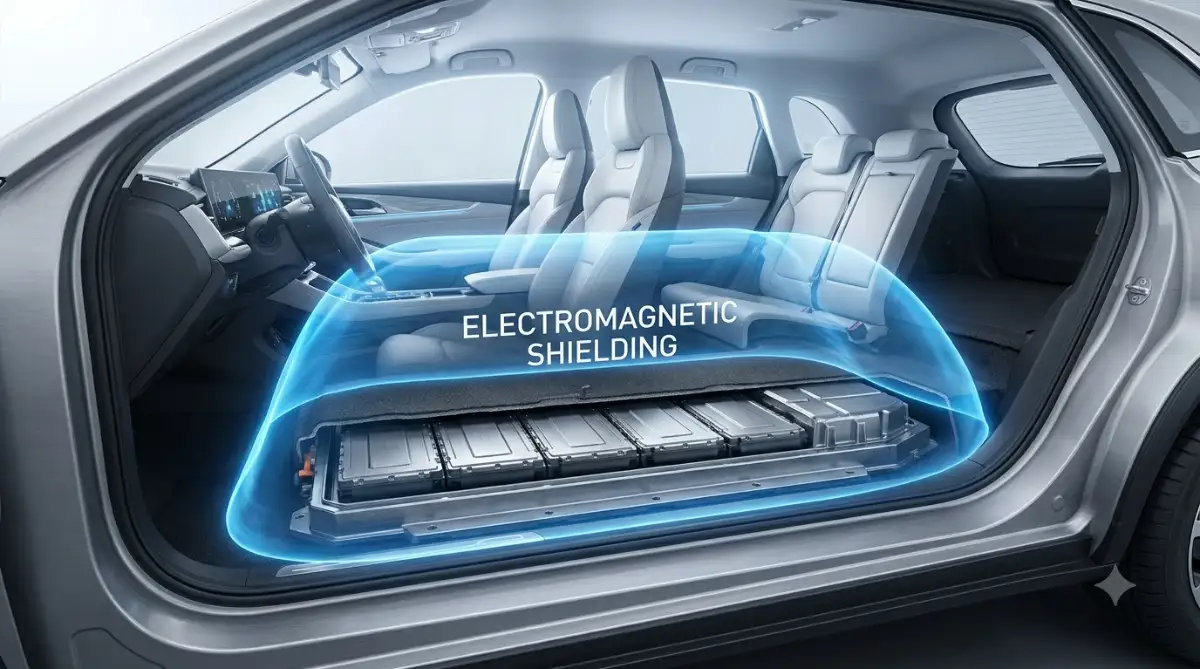
Watch this fascinating explanation: If you want to see exactly how this metal shielding blocks invisible energy from reaching your passengers, check out this brilliant visual demonstration of automotive safety!
A Faraday cage is basically a protective metal box that traps electrical fields inside and prevents them from leaking out. So, even when the battery is working its hardest to push the car up a steep hill, the energy is completely blocked from reaching the seats above it. You are perfectly insulated from the heavy electrical work happening underneath your feet.
The Real-World Testing and Government Standards
You do not have to just take my word for it, because independent scientists have tested this extensively. Governments around the world have established extremely strict safety limits for human exposure to electromagnetic fields. These limits are set by groups like the International Commission on Non-Ionizing Radiation Protection.
Independent researchers have driven electric cars for hundreds of hours with highly sensitive testing equipment placed on the seats. They tested the cars while accelerating, braking, and charging at high speeds. In every single reputable study ever conducted, the field levels inside the car remained at a tiny fraction of the recommended safety limits.
Everyday EMF Exposure Breakdown (In Microteslas ):
- Standard Hair Dryer: up to 400 µT (Right next to your head!)
- Kitchen Blender: up to 50 µT
- Earth's Natural Magnetic Field: around 30 to 60 µT
- Inside a Moving Electric Car: usually under 2 µT
- See? You are exposed to way more energy while getting ready for work in your bathroom than you are during a five-hour road trip in your EV.
Step 4: AI Image Generation Prompts (Custom Graphics)
In fact, testing shows that the highest energy readings usually do not even come from the battery. They come from the dashboard screens, the Bluetooth radio, and the wireless phone charger. These are the exact same features you already have in a standard gas-powered car.
Why the Internet Loves to Scare You
So, if the science is so incredibly clear, why are there so many scary videos and articles out there? The answer is unfortunately very simple: fear gets clicks. When people are frightened, they share content rapidly with their friends and family to warn them.
Content creators know that making a shocking, terrifying claim about a popular new technology will instantly get them thousands of views. They use complicated-sounding words like "radiation" to make their silly theories sound highly scientific. They completely rely on the fact that most regular people do not have a degree in electrical engineering.
We have seen this exact same pattern of fear-mongering happen throughout history. When regular cell phones first became popular, people swore they would melt our brains. When Wi-Fi routers were introduced to homes, people claimed they would ruin our sleep and make us sick.
The Truth About Magnetic Fields and Human Biology
To completely put your mind at ease, we have to look at how our bodies actually interact with the natural world. Human beings have evolved on a planet that is basically a giant, spinning magnet. The Earth itself generates a massive electromagnetic field that protects us from deep space radiation.
Our bodies are completely accustomed to living inside a magnetic field every second of our lives. The non-ionizing energy produced by an electric motor operates at extremely low frequencies. These frequencies simply pass through us without interacting with our cells, leaving absolutely no physical trace behind.
The only time non-ionizing energy becomes noticeable is when it generates heat, like holding a hot laptop on your legs for too long. But the climate control system in your car easily handles any mild heat generated by the electric motor. There is absolutely no biological mechanism for the tiny field in an EV to cause you any harm.
Debunking the Gas Car Myth
Many people who share these electric car myths completely ignore what is happening inside traditional gas-powered cars. If you drive a modern gasoline vehicle, you are basically driving a massive rolling computer. You are already surrounded by the exact same electrical fields that people fear in EVs.
Your gas car has a heavy alternator, an ignition system, dozens of sensors, seat heaters, and miles of electrical wiring hidden behind the dashboard. These components all generate electromagnetic fields while you drive. The electrical environment inside a gas car is remarkably similar to the environment inside an electric one.
By choosing an electric vehicle, you are actually removing yourself from real, proven health hazards. Gas cars constantly emit dangerous carbon monoxide, unburned hydrocarbons, and fine particulate matter right out of the tailpipe. Breathing in those toxic exhaust fumes in a busy traffic jam is a very real, well-documented danger to your lungs and your heart.

Moving Forward with Confidence
Instead of letting internet rumors steal your excitement, you can now look at your new vehicle with complete confidence. You understand the basic science of how it works, and you know how heavily it has been tested. You can finally enjoy that quiet, smooth ride knowing your family is sitting in one of the safest machines ever built.
Expert Strategies for a Worry-Free EV Experience
Now that we understand the basic physics behind these invisible fields, you might still feel a tiny bit of lingering anxiety. That is completely normal when you are adopting a brand new technology. I want to share some incredibly practical ways to put those remaining doubts to rest for good.
The best way to handle fear is with solid, undeniable facts. If you or your spouse are still feeling nervous about taking long road trips in your electric vehicle, you can actually test the environment yourself. You can purchase a basic EMF meter online for less than thirty dollars.
When you turn on the meter inside your car, you will see the numbers drop to a completely harmless baseline. You can then take that exact same meter into your kitchen and hold it next to your running refrigerator or your Wi-Fi router. Seeing the numbers spike in your own kitchen while remaining flat in your car gives you absolute, undeniable peace of mind.
Instead of worrying about fake radiation issues, you can redirect your energy toward real vehicle management. For example, learning what really happens when your ev dies on the road and how to handle it is a much better use of your time. Preparing for actual real-world scenarios keeps your family safe and reduces actual driving anxiety.
Manage the Real Sources of Energy
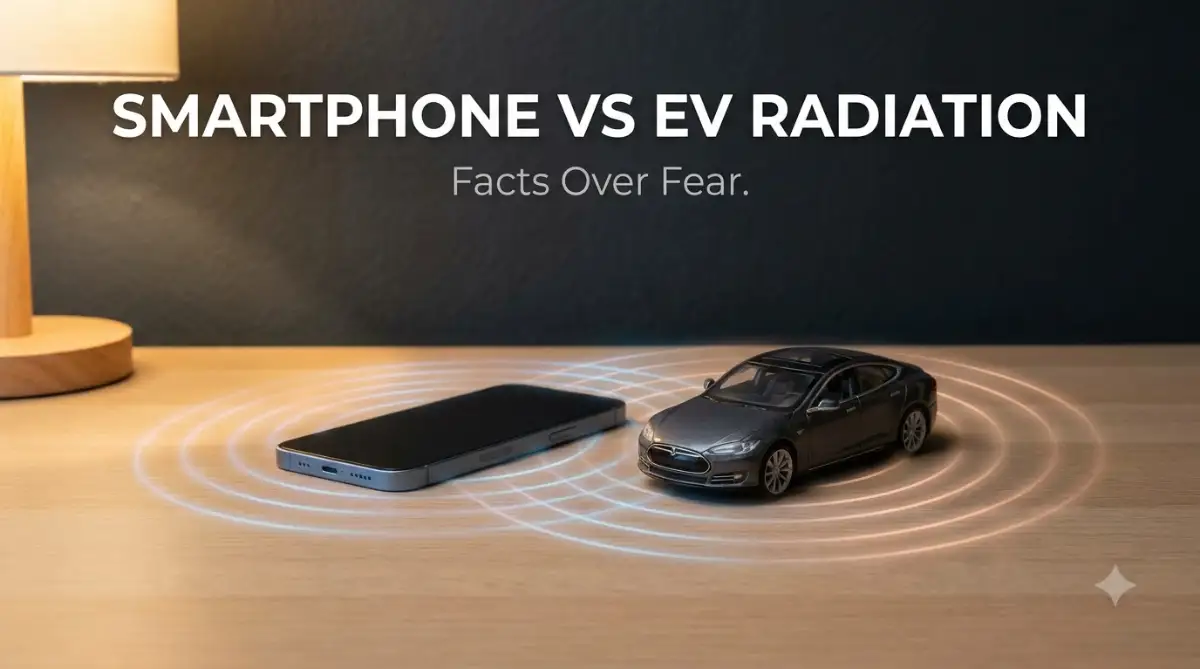
It is quite funny that people panic about their car batteries while holding a smartphone directly against their face. Your phone connects to cell towers miles away, requiring a relatively strong signal to operate. The electromagnetic field generated by your active cell phone is significantly higher than the ambient field of your car's floorboards.
If you genuinely want to lower your daily exposure to non-ionizing energy, start by managing your personal devices. Put your smartphone in the center console instead of keeping it in your pocket while you drive. Use the car's built-in Bluetooth system rather than holding the device right next to your brain during long calls.
Pro Tip: I used to let my kids play on heavy tablet computers right in their laps during entire road trips. My biggest realization was that moving those tablets to headrest mounts naturally created a safe physical distance. This completely reduced their direct exposure to device-generated heat and normal digital energy waves.
Understanding the simple rule of distance changes everything. According to detailed exposure guidelines published by the World Health Organization, electromagnetic fields lose their strength incredibly fast as you move away from the source. Just a few inches of physical distance drops the energy intensity down to almost zero.
Focus on Actual Vehicle Maintenance
When we get distracted by internet myths, we tend to ignore the actual physical components of our vehicles. The massive battery underneath you is heavily protected, but the mechanical parts attached to the wheels still need your attention. Fake worries often lead to real-world neglect.
Because electric cars are incredibly heavy and produce massive amounts of instant torque, they are hard on their rubber. You should spend your time understanding why do electric vehicle tires wear out faster than traditional cars instead of stressing about invisible energy. Checking your tire pressure weekly actually prevents accidents and saves you money.
You should also pay close attention to the cooling systems. The fluids that keep your battery at a safe temperature are essential for the lifespan of your vehicle. Learning about the silent killers of your electric vehicle motor and how to fix them will do far more to protect your investment than any internet conspiracy theory ever could.
The Hidden Costs of Believing Internet Rumors
When you fall down the rabbit hole of automotive conspiracy theories, the damage goes far beyond just feeling a little nervous. Believing these specific myths actually leads to highly irrational decisions that can cost you a lot of money. I have watched incredibly smart people make terrible choices simply because they were scared by a fake Facebook post.
The biggest danger is that these rumors steal your ability to make logical choices for your family's future. You might end up holding onto a decaying, polluting gas car way too long, missing out on massive fuel savings. Let us break down the specific traps you need to actively avoid.
The Fake EMF Shielding Scam
Whenever there is a popular fear, there is always someone ready to sell you a fake cure. Right now, there is a massive industry built around selling "EMF blocking" accessories to nervous car owners. These scammers target worried parents by selling expensive stickers, metal bracelets, and special seat covers.
They promise that sticking a tiny copper sticker on your dashboard will somehow neutralize the massive battery pack below you. This completely defies all known laws of physics. As noted by safety researchers at the IEEE Electromagnetic Compatibility Society, you cannot block a field with a random sticker; it requires complete metallic enclosure, which the car already has built-in.
Buying these fake products is just throwing your hard-earned money straight into the garbage. Worse yet, these fake shields often give people a false sense of security while ignoring genuine safety hazards. A fancy seat blanket will not help you if you do not know how to protect your electric vehicle during severe flooding or bad weather.
Home Charging Station Anxiety
Another massive trap people fall into involves the equipment they install in their own garages. People read a scary blog post and suddenly become terrified of their home charging station. They think the charger on the wall is leaking toxic radiation into their children's bedrooms.
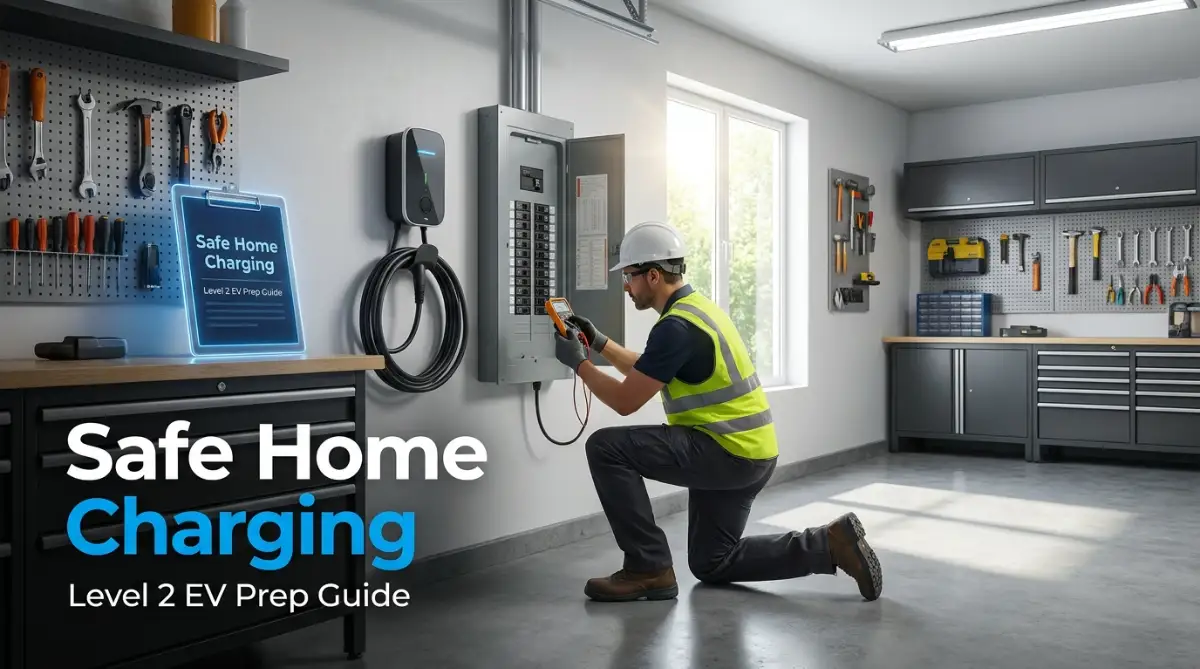
A home charger is basically just a smart electrical outlet. It passes electricity from your home's breaker box directly into the car, exactly like an electric oven. There is absolutely no free-floating radiation bouncing around your garage walls while the car charges overnight.
If you are upgrading your home's energy grid, you should be looking at practical safety, not fake science. For instance, if you plan to add solar energy to power your new car, you must learn why you must check your attic before going solar complete guide. Proper roof inspections and heavy-duty wiring safety are the real things you need to focus on as a homeowner.
The Social and Emotional Toll
We rarely talk about how much energy it takes to constantly defend your choices to misinformed friends and family. When you buy an EV, you will inevitably have an uncle or a neighbor who tries to lecture you about radiation. If you do not know the facts, these conversations turn into highly stressful arguments.
You might find yourself apologizing for a purchase you should be incredibly proud of. I have spoken to drivers who actually park their new cars around the corner just to avoid getting lectured by their neighbors. This kind of social pressure completely ruins the fun of owning a piece of modern technology.
When you arm yourself with clear, simple science, you take your power back. You can just smile, nod, and calmly explain how the heavy metal battery casing acts like a Faraday cage. Usually, when people realize you actually understand the physics, the annoying lectures stop almost instantly.
A Clear Road Ahead for Your Family
We have covered a massive amount of ground today, stripping away the nonsense and looking straight at the actual science. The bottom line is that the world is changing rapidly, and upgrading to an electric lifestyle is a fantastic choice. You do not have to carry the heavy burden of internet-fueled anxiety anymore.
Your car is a highly engineered marvel of modern safety, designed by teams of experts who put their own families in these exact same seats. The heavy physical shielding blocks the electrical energy completely. The tiny amounts of fields inside the cabin are no different than what you experience sitting in your living room watching television.
I want you to take a deep breath and finally let go of that nervous tension. My own daily commute became infinitely better when I finally stopped worrying about invisible monsters and just enjoyed the quiet, smooth acceleration of my car. You deserve to experience that exact same joy every single time you press the start button.
Everyday Questions About Electric Car Safety
Do EVs produce more electromagnetic energy than traditional gas cars?
No, the overall field levels inside the passenger cabin are remarkably similar between the two. Modern gas cars are heavily loaded with computers, massive alternators, and miles of electrical wiring that generate their own fields. Extensive testing shows that both types of vehicles fall well below any human safety limits.
Can the fields from an electric car interfere with my heart pacemaker?
According to medical experts at the Mayo Clinic, everyday household appliances and electric vehicles do not produce enough energy to disrupt modern pacemakers. The metal shielding inside the car keeps the intense electrical work far away from your chest. However, you should always consult your personal cardiologist if you have specific concerns about your specific medical device.
Are young children more sensitive to the battery energy in the back seat?
The energy levels are so incredibly low that they do not affect human biology at any age. Because the field is non-ionizing, it cannot alter cells or DNA in children or adults. Your kids are completely safe sitting directly above the shielded battery pack during your daily school runs.
Does sitting in traffic make the radiation levels build up inside the cabin?
Electromagnetic fields do not act like smoke; they cannot build up, get trapped, or linger in the air. The field only exists in the exact moment the electricity is flowing through the wires. The second you turn the car off, the field completely vanishes, leaving absolutely zero trace behind.
Disclaimer: The information provided in this article is for educational and informational purposes only. It is not intended as substitute medical advice or professional engineering analysis. Always consult with a qualified healthcare provider regarding medical devices like pacemakers, and refer to your vehicle manufacturer's official documentation for specific safety ratings and operational guidelines.