The Hidden Nightmare: When Rising Water Threatens Your Electric Car
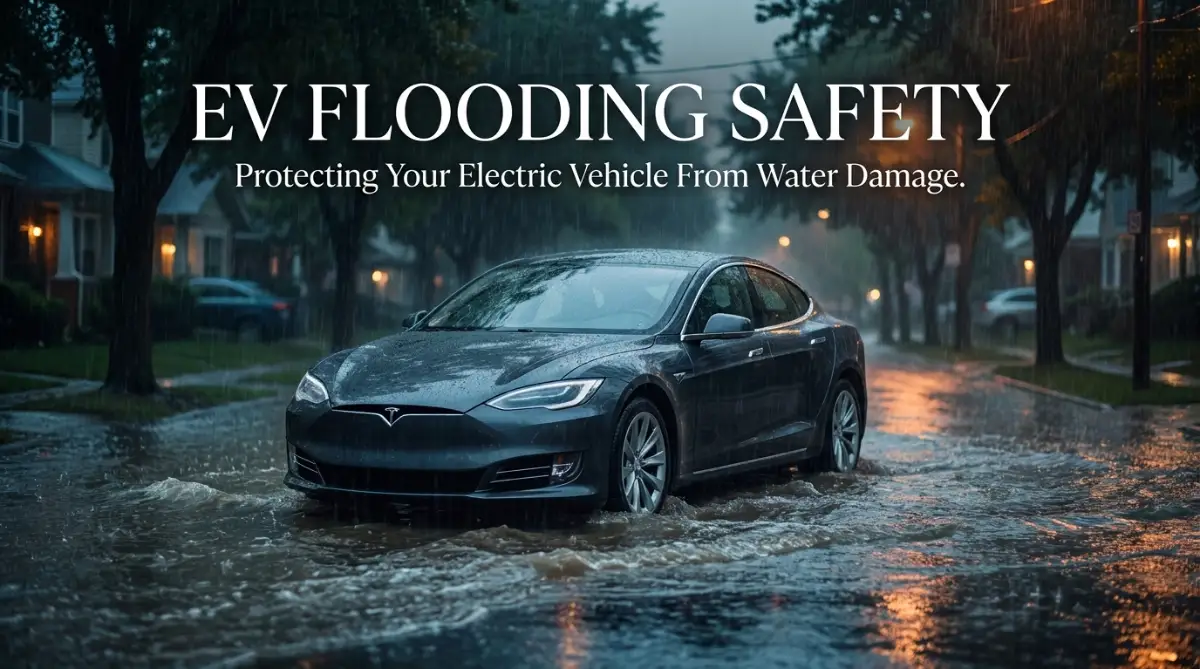
Have you ever watched a heavy rainstorm turn your street into a river and suddenly panicked about your electric car sitting in the driveway? You are definitely not alone. Mixing a giant high-voltage battery with rising floodwater sounds like a recipe for total disaster. But before you stress out, let me show you exactly how to protect your EV from severe weather, avoid expensive mistakes, and keep your family totally safe.
My electric vehicle was parked right in the driveway, and the murky floodwater was creeping closer to the tires. I rushed out in the pouring rain, my heart pounding, completely unsure of what to do next.
My mind raced with terrifying thoughts of electrocution, battery fires, and total vehicle loss. It felt incredibly overwhelming because nobody ever gives you a manual for this exact nightmare.
I just stood there in the dark, watching the water rise, wishing someone had told me exactly how to handle a flooded EV.
It becomes a part of your daily routine, taking you to work, dropping the kids at school, and making weekend trips a breeze. But when severe weather strikes, that amazing piece of technology suddenly feels like a dangerous liability sitting right outside your window.
People are genuinely scared that mixing a massive high-voltage battery with muddy floodwater is going to end in a disaster. We constantly see scary news reports about battery fires, making the fear feel very real and immediate.
The biggest problem is the total lack of clear, easy-to-understand information for everyday drivers. We are left guessing, relying on random internet rumors instead of solid facts.
That intense fear of the unknown is exhausting, leaving us feeling completely helpless against the forces of nature. We deserve to know exactly how to protect our families and our vehicles without needing an engineering degree to understand it.
Storm Survival Guide (Key Takeaways):
- Your EV is deeply sealed against rain, but standing floodwater can eventually break those seals over time.
- Never try to turn your car on after a flood—this instantly fries the electrical system if water got inside.
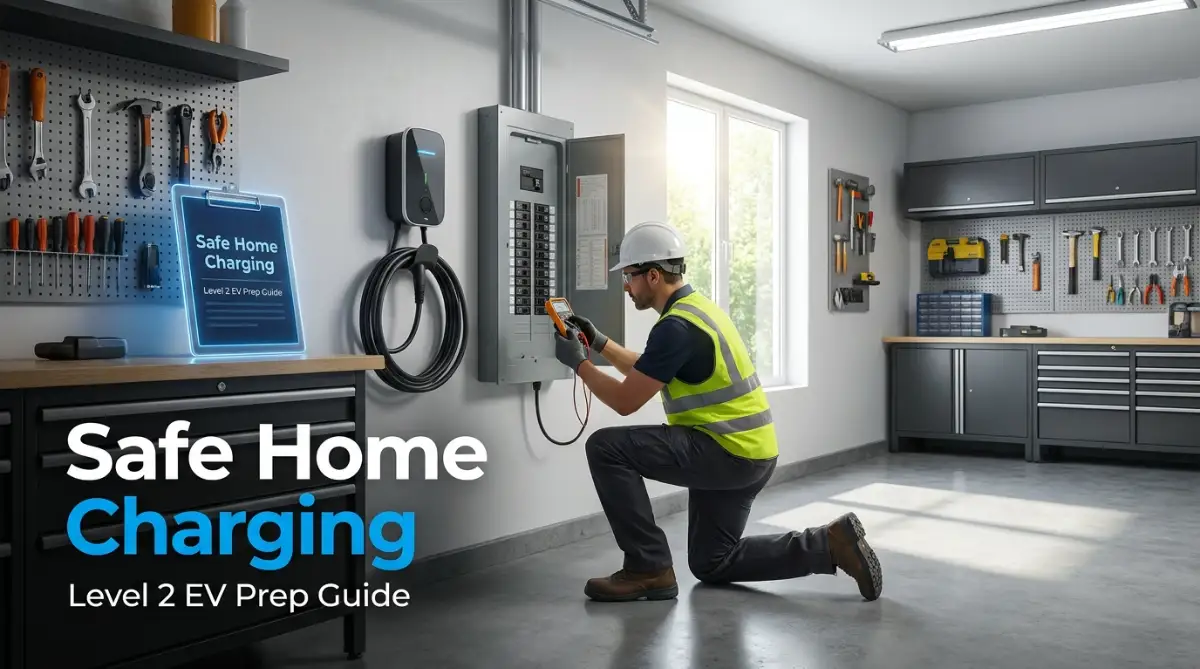
- Always unplug your home charger and flip the breaker off before the storm hits your street.
- Saltwater is the ultimate EV killer; it can cause random battery fires even weeks after the car dries out.
The Science of Water and High-Voltage Batteries
Understanding exactly how your car reacts to water is the absolute best way to calm your nerves. Car manufacturers know that it rains, and they know that floods happen.
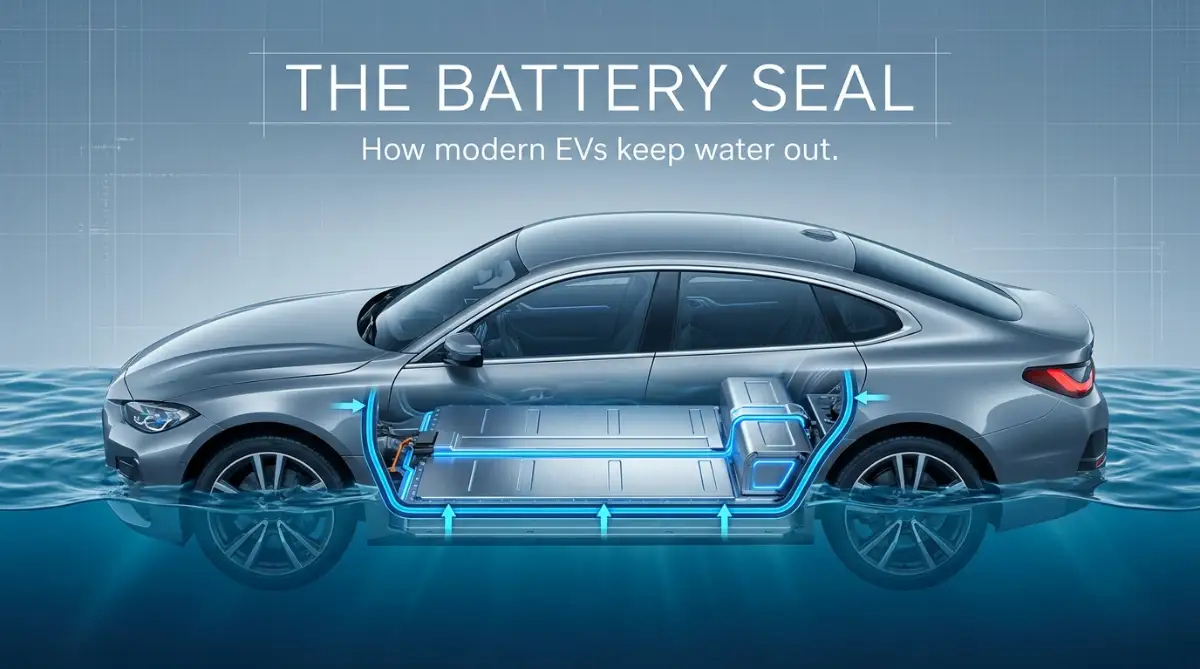
Because of this, modern electric cars are built like heavily armored tanks when it comes to moisture protection. The massive battery pack sitting under the floorboard is tightly sealed inside a heavy-duty metal enclosure.
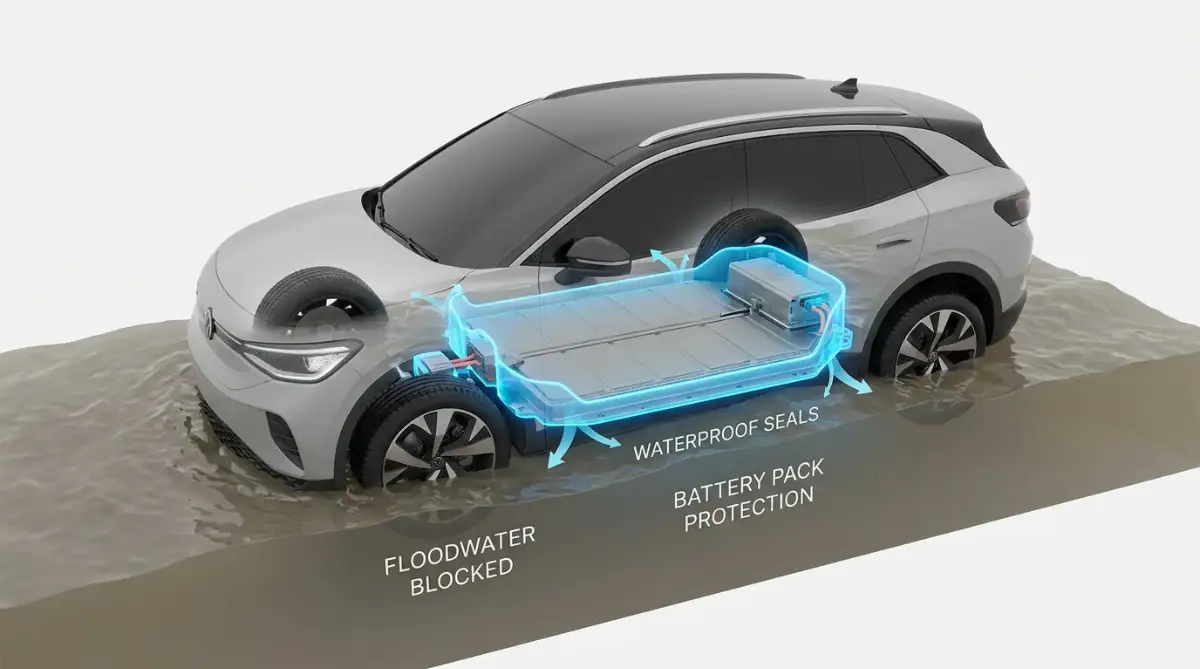
Engineers use specialized gaskets, strong waterproof glues, and thick seals to keep moisture entirely out of the sensitive areas. Most modern battery packs come with an IP67 rating, which is a scientific standard for dust and water resistance.
This simply means the battery can technically survive being submerged in shallow water for a very short period. However, surviving a quick dip in a puddle is totally different from sitting in a flooded garage for three days.
Water is incredibly tricky, and if it stays around long enough, it will eventually find a tiny weak spot. Over time, normal driving vibrations, tiny rock impacts, and general wear can slightly weaken those factory seals.
If dirty floodwater manages to seep inside the battery casing, it can cause a short circuit in the internal wiring. The car has built-in safety systems that will immediately cut the main power if it detects a serious fault.
This automatic shut-off is designed to protect you from getting shocked if you touch the metal body of the car.
Myth vs. Reality: Shock Hazards in the Water
Let us clear up the absolute biggest fear most people have right now.
Myth: Touching a flooded electric car, or stepping in the water around it, will instantly electrocute you.
Reality: Your car is designed to isolate the high-voltage system the second it detects a major problem.
The battery management system (BMS) acts as a highly intelligent brain that constantly monitors the electrical flow. If it senses water bridging a gap between electrical components, it instantly opens special switches called contactors.
This completely traps the high voltage inside the battery pack itself, keeping the outer shell of the car safe. While you should always be cautious around flooded vehicles, the Hollywood movie idea of the water instantly becoming electrified is largely false.
Smart Preparations Before the Storm Hits
When the weather forecast predicts heavy rain and potential flooding, taking early action is your best defense. The very first thing you need to do is evaluate exactly where your vehicle is currently parked.
If your driveway sits at a downward slope, or your street is known for collecting huge puddles, you need to move the car immediately. Find higher ground in your neighborhood, even if it means walking a few blocks back home in the rain.
Parking inside a residential garage is great, but only if that garage has never flooded in the past. If you know the water might reach your property, do not wait until the last minute to find a safer parking spot.
Another massive detail to remember is your charging equipment.
If a severe storm is rolling in, and you suspect water might reach your garage floor, unplug the vehicle immediately. Leaving a charging cable connected while the port is hit by driving rain and rising water is a terrible idea.
Yes, the charging handles are weather-resistant, but they are not meant to operate safely entirely underwater. Disconnect the cable from the car, wrap it up carefully, and store it as high off the ground as possible.
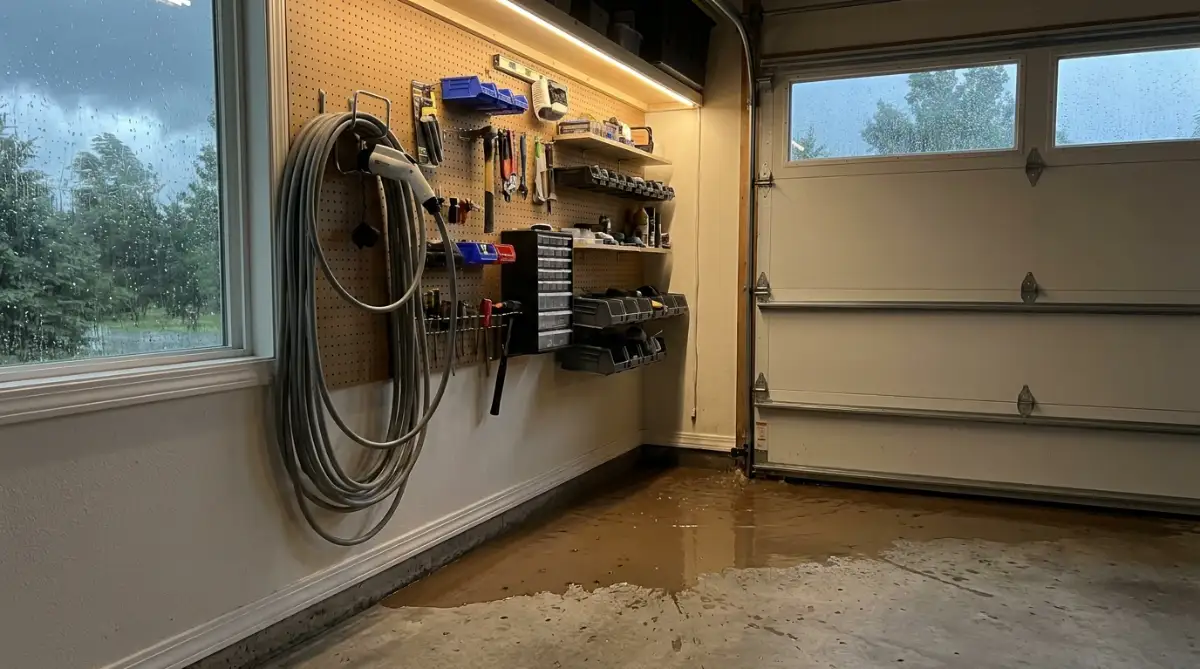
If the charger is hardwired to your wall, go to your home electrical panel and flip the breaker to the "off" position. Cutting the power to the charging station entirely removes any risk of electrical shorts if the water enters your garage.
Watch This Essential Breakdown
If you want to see exactly how water interacts with these complex systems in real-time, this visual breakdown is absolutely fantastic.
The Danger of Saltwater Exposure
Not all floodwater is exactly the same, and knowing the difference can literally save your car from bursting into flames. Freshwater from a heavy rainstorm is certainly bad, but coastal saltwater is an entirely different level of danger.
Saltwater is highly conductive, meaning electricity travels through it incredibly fast. When ocean water floods a neighborhood during a hurricane, it leaves behind a thick, corrosive layer of salt on everything it touches.
If this salty mixture gets inside a high-voltage battery pack, it creates rapid short circuits that generate a massive amount of heat.
Floodwater Types & Your EV Battery:
| Water Type | Danger Level | Immediate Action Required |
| :--- | :--- | :--- |
| Normal Rain / Puddles | Low | None. Modern EVs are completely sealed for everyday wet conditions. |
| Deep Freshwater (Floods) | High | Do not turn the car on. Tow it to a mechanic to check the factory seals. |
| Coastal Saltwater (Hurricanes) | Extreme | Stay away! Salt eats through battery seals instantly and causes fires. Call a tow truck. |
This extreme heat can quickly lead to a dangerous chemical reaction known as thermal runaway. This is when one battery cell gets too hot, catches fire, and immediately ignites the cell next to it.
A saltwater-induced battery fire can happen hours, days, or even weeks after the water has completely dried up.
My real-world advice here is pretty simple based on a scary mistake I almost made. I once thought driving through a flooded beach road was fine because the water looked shallow enough. My mechanic later explained that even splashing salty water under the car forces corrosive moisture deep into the battery seals, completely ruining them over time. Always wash the underside of your car with fresh water if you ever live near the coast during storm season.
How to React if You Are Caught Driving
Sometimes, you cannot simply park the car and hide inside your house. You might be driving home from work when a sudden flash flood completely transforms the road ahead of you.
The Floodwater Danger Zones for EVs:
- Under 4 inches: Generally safe. Just drive very slowly so the water does not splash up hard into the undercarriage.
- 4 to 6 inches: High risk! Your EV battery pack is located right at the floorboard level. Turn around if you safely can.
- Over 6 inches: Extreme danger. The heavy battery pack acts exactly like a boat hull. Your car will literally float away and you will lose all steering.
Your first instinct might be to just power through the water, especially because electric cars do not have a traditional engine air intake to flood. It is true that an EV will not stall out in deep water like a regular gas car would.
However, just because the car can drive through deep water does not mean you should ever attempt it.
The biggest risk on a flooded road is not the battery shorting out; it is actually the car floating away. Electric vehicles are heavy, but their large, flat battery packs under the floor act exactly like a boat hull.
If the water is moving fast enough, even just a few inches can completely lift the tires off the pavement. Once you lose contact with the road, you completely lose steering and braking control.
You become a heavy metal boat moving rapidly toward deep ditches, strong currents, or other hidden dangers.
Safely Inspecting Your Car After the Water Recedes
Let us imagine the storm has finally passed, the sun is coming out, and the floodwater has completely drained away. You walk outside and see a distinct mud line right across the doors of your beautiful car.
Your absolute first instinct will be to grab the key fob, unlock the door, and press the power button to see if it still works. Do not ever do this under any circumstances.
Pressing that start button tells the computer to send high voltage from the battery directly through the main cables. If there is hidden water resting inside the electrical connectors, attempting to start the car will fry the entire system instantly.
Instead, you need to treat the car as if it is critically injured and needs professional help. Do not plug the car into a wall charger either, as this will force electricity into a potentially compromised system.
Open all the doors to let the interior air out, preventing deep mold from permanently ruining the seats and carpets. Call your insurance company immediately, document the mud lines with clear photos, and arrange for a flatbed tow truck.
A certified technician needs to safely lift the car and physically inspect the high-voltage connections before it is ever powered on again.
Why Warning Signs Cannot Be Ignored
Sometimes, the water damage is not immediately obvious from the outside. You might have driven through a flooded intersection a few days ago without thinking much about it at the time.
Now, your dashboard is suddenly lighting up with strange error messages about the battery cooling system or drive motor. Pay very close attention to any sudden changes in how the vehicle accelerates, brakes, or charges at home.
If the car refuses to take a charge, or if the charging process stops randomly, moisture might have damaged the onboard charger.
If you ever notice a strange, sweet chemical smell coming from the floorboards, pull over safely and get out immediately. That smell is often the coolant leaking from a damaged battery pack, which is a major fire hazard.
Listen for unusual clicking sounds when you press the brake pedal, as water can easily ruin the sensitive electronic braking sensors.
By staying highly observant and trusting your instincts, you can catch a minor water damage issue before it becomes a total loss. Our electric cars are incredible pieces of modern engineering, but respecting their limits is the only way to keep our families safe when the weather turns wild.
Next-Level Defense: Expert Strategies for Storm Season
Once you understand the basic safety rules, it is time to upgrade your entire approach to storm preparation. Most people wait until the rain is actively flooding their street to start thinking about vehicle safety.
By taking a highly proactive approach, you can sleep peacefully while your neighbors are panicking. One of the absolute best things you can do right now is evaluate your home charging setup.
If your primary charger is mounted low on the garage wall, it is incredibly vulnerable to rising water. Hiring an electrician to move the charging station higher up the wall can instantly eliminate a massive risk.
You should also look into upgrading your home electrical setup with a dedicated emergency shut-off switch. If a severe flood hits, you want the ability to instantly kill the power to your garage without walking through standing water.
This relates perfectly to making sure your entire home infrastructure is safe, much like understanding the unspoken risks of installing solar panels on an aging residential roof structure. A weak foundation, whether it is your roof or your electrical grid, always fails when severe weather strikes.
Another incredibly smart strategy involves managing the environment around your parked car.
Even if the floodwater never physically touches the bottom of your battery pack, extreme moisture is still your enemy. After a massive rainstorm, the air inside your closed garage becomes completely saturated with heavy, damp humidity.
This thick moisture can slowly seep into the tiny electrical components of your car over several days. You might think your car is perfectly safe, but what really causes electric vehicle battery degradation and how to stop it is often this invisible, silent exposure to severe dampness.
To fight this, invest in a heavy-duty industrial dehumidifier for your parking area. Running a dehumidifier immediately after the storm passes pulls all that dangerous moisture out of the air.
If you live in a coastal area, checking the official Federal Emergency Management Agency (FEMA) guidelines on residential flood preparation can help you set up an effective barrier system. Using professional-grade sandbags around your garage doors can actually stop shallow water from ever reaching your tires.
You should also consider buying a set of heavy-duty automotive ramps.
If you know a storm is coming and you absolutely cannot move the car to higher ground, driving the car onto four sturdy ramps can give you an extra foot of clearance. That single foot of height is often the difference between a totally ruined battery and a perfectly safe vehicle.
Always keep an emergency kit near the car, but never store it inside the trunk during a flood warning. If the power systems fail, you might not be able to pop the electronic trunk to access your gear.
Keep your emergency supplies, flashlights, and insurance documents safely inside your house instead.
The Hidden Traps: Dangerous Moves You Must Never Make
When people are stressed out after a major weather event, they tend to make highly emotional and risky decisions. The absolute biggest mistake you can make is assuming your car is perfectly fine just because the outside looks dry.
I have seen people walk up to a car that was sitting in two feet of water the day before, and just press the start button. They think that if the dashboard lights up, everything is perfectly normal.
This is a catastrophic error that can easily cause a hidden electrical short to burst into flames. The National Fire Protection Association (NFPA) safety protocols for submerged vehicles strictly warn against interacting with any high-voltage system that has been exposed to deep water.
Water loves to hide inside the thick wiring harnesses and deep structural cavities of the vehicle frame.
Think about how incredibly fragile small electronics can be when exposed to moisture. It is very similar to figuring out why your smartwatch keeps dying hidden settings you need to change, where one tiny drop of sweat ruins the entire mainboard. Now multiply that risk by a massive thousands-of-pounds battery pack that holds enough electricity to power a house.
Another terrible mistake people make is trying to aggressively dry out the car themselves.
I have actually heard stories of people pointing high-powered industrial space heaters directly at the bottom of their cars. They think the intense heat will quickly evaporate the floodwater trapped near the battery seals.
In reality, extreme external heat can melt the sensitive plastic casings and severely damage the battery management sensors. You never want to introduce extreme heat to a high-voltage lithium-ion system, as it can trigger an unstoppable chemical fire.
Let the car air out naturally by simply opening the doors if it is safe to do so.
Ignoring the Silent Warning Signs
Many drivers also make the critical mistake of ignoring minor dashboard warnings after driving through deep puddles. They assume it is just a temporary glitch caused by a wet sensor that will magically fix itself.
Ignoring these alerts is exactly like ignoring the silent warning signs of fake remote job offers don't get trapped; if you look the other way, you will eventually pay a massive price.
If your car tells you there is a high-voltage isolation fault, it means water is already inside the danger zone. Pull over safely, get away from the vehicle, and call a professional tow truck immediately.
Trying to drive the car to the dealership yourself could leave you stranded in the middle of a busy highway when the safety systems completely shut down the motor.
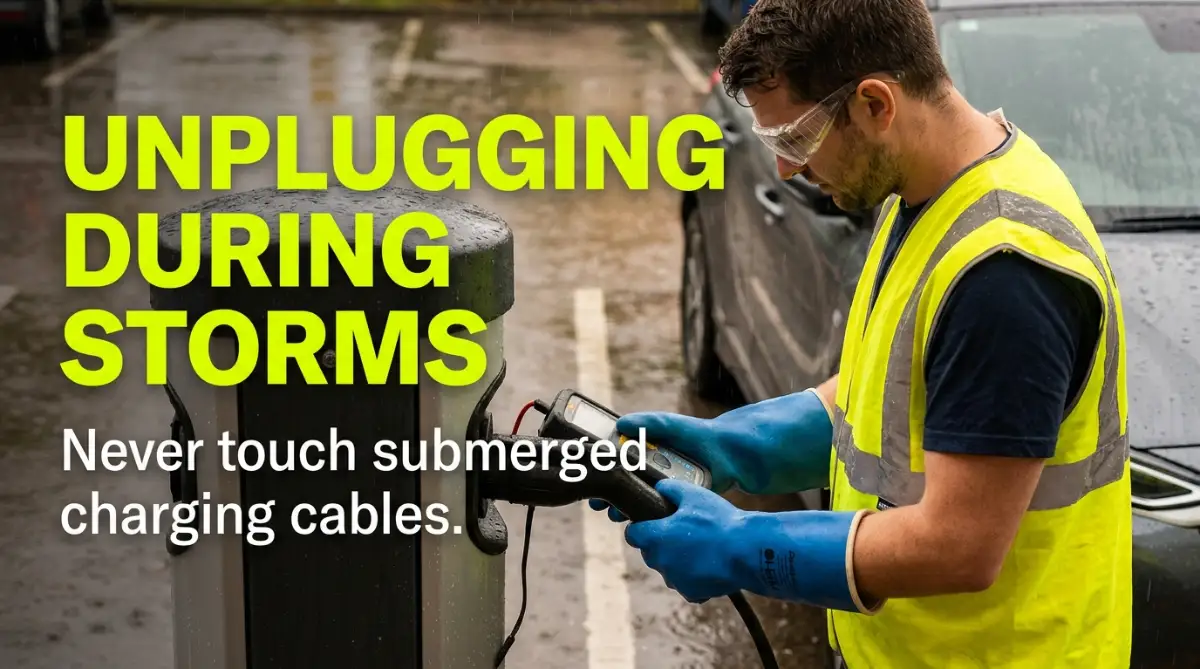
Finally, do not ever attempt to unplug a wet charging cable from the wall with bare hands.
If your garage flooded while the car was charging, the entire floor might still be electrically charged if the breaker did not trip. Always wear heavy-duty insulated rubber gloves and rubber boots if you absolutely must inspect the garage area.
Ideally, you should call your local utility company to shut off the power to the entire house before you go splashing through your flooded property.
Navigating the Financial Fallout and Insurance Realities
Dealing with the physical safety of your electric car is only half the battle. Once the storm clouds clear, the financial reality of potential flood damage hits you like a ton of bricks.
Replacing a fully waterlogged high-voltage battery can easily cost upwards of fifteen thousand dollars. For many families, an unexpected bill of that size is simply impossible to manage.
This is why having the absolute right type of auto insurance is non-negotiable for electric vehicle owners. You must verify that your policy includes comprehensive coverage, not just basic collision and liability.
Comprehensive insurance is the specific policy that covers environmental damage, falling trees, and deep floodwater.
If your car is declared a total loss, the insurance company will write you a check for its current market value. However, if you still owe a massive amount to the bank, that check might not cover the entire loan balance.
If you are stuck paying off a loan for a car that is completely destroyed, learning how to get approved for your first auto loan complete guide all over again becomes incredibly stressful. This is why having Gap insurance is an absolute lifesaver if you live in a flood-prone neighborhood.
It covers the painful difference between what the car is worth and what you still owe the bank.
You should also be highly suspicious if you are shopping for a used electric car right after a major hurricane hits your state.
Scam artists often take heavily flooded vehicles, clean the carpets, and sell them cheaply on the private market. Always run a detailed background check using trusted sources like Kelley Blue Book's consumer protection guides to ensure the car does not have a hidden flood title.
Protecting your massive investment requires extreme caution, exactly like knowing how to protect your personal assets from business loan risks. If you rush into a decision without verifying the facts, you might end up buying a dangerous, water-damaged ticking time bomb.
Always document every single inch of your car with clear, bright photos immediately after the storm.
Take pictures of the mud lines on the tires, the water level in the driveway, and any moisture sitting on the dashboard. Do not clean the car before the insurance adjuster comes to look at it.
They need to see the raw, untouched evidence of exactly how high the water reached. If you wipe away all the mud, they might try to deny your claim by saying the water never actually reached the battery pack.
If the financial burden of unexpected deductibles is holding you back from making a claim, you might need to look at creative emergency options. Sometimes, understanding how to unlock your home's equity even if your finances are struggling can provide the temporary cash flow needed to handle sudden disaster repairs.
Taking Back Control From the Unpredictable Weather
Living with the constant threat of severe weather can feel incredibly exhausting. Every time the sky turns dark, that familiar knot of anxiety tightening in your stomach is completely normal.
But you do not have to live in a state of constant fear anymore. By actively understanding exactly how your electric vehicle handles water, you take away the terrifying mystery of the unknown.
You now know that your car has incredible built-in safety systems designed entirely to protect you. You also know that early preparation, like moving the car and unplugging the charger, solves the problem before it even begins.
Emergency situations only turn into disasters when people are completely unprepared and panic under pressure.
Take a weekend to carefully walk around your property and identify the highest, safest parking spots. Talk to your family and make sure everyone knows exactly what to do with the charging cable if a storm rolls in.
Creating a simple, step-by-step emergency plan takes less than an hour, but it gives you total peace of mind for the rest of the season.
We can never stop the rain from falling, but we can absolutely control how safely we react to it. Treat your electric vehicle with deep respect, prioritize your personal safety above all else, and never gamble with deep floodwater.
I sincerely hope these exact steps give you the confidence to protect your family and your vehicle through any storm. When you prepare smartly today, you guarantee a much safer and brighter tomorrow for yourself.
Common Questions About EV Storm Safety
Can an electric car safely drive through a flooded street?
You should never intentionally drive any vehicle through deep, standing floodwater. Even though electric cars lack a traditional engine intake, strong water currents can easily lift the heavy vehicle off the ground, causing you to lose all steering control.
What happens if water gets inside my high-voltage battery?
If water manages to breach the heavy-duty seals, the car's intelligent management system will immediately detect an electrical short. It will automatically trigger high-voltage contactors to cut power instantly, keeping the outer frame safe from electrical currents.
Is it safe to charge my EV while it is raining heavily?
Yes, normal rain is perfectly safe because the charging handles are designed to be highly weather-resistant. However, if the water is actively rising from the ground and threatening to submerge the charging unit, you must unplug it immediately.
Will a flooded electric vehicle automatically catch on fire?
No, it will not happen automatically, but the risk of thermal runaway is definitely real if the internal components are compromised. Saltwater flooding is especially dangerous, as the highly corrosive salt can cause severe battery fires days or weeks after the water dries up.
Can I try to restart my car after the floodwater drains away?
Absolutely not, because hidden moisture inside the electrical connectors can cause a massive short circuit when you press the power button. You must have a certified professional safely inspect the entire high-voltage system before attempting to turn the vehicle on.
Disclaimer: The information provided in this article is for educational and informational purposes only. It does not constitute professional mechanical, electrical, or legal advice. Always consult with certified automotive technicians, emergency responders, or your vehicle's manufacturer regarding specific safety protocols for your electric vehicle. Do not attempt to interact with high-voltage systems that have been exposed to severe water damage.