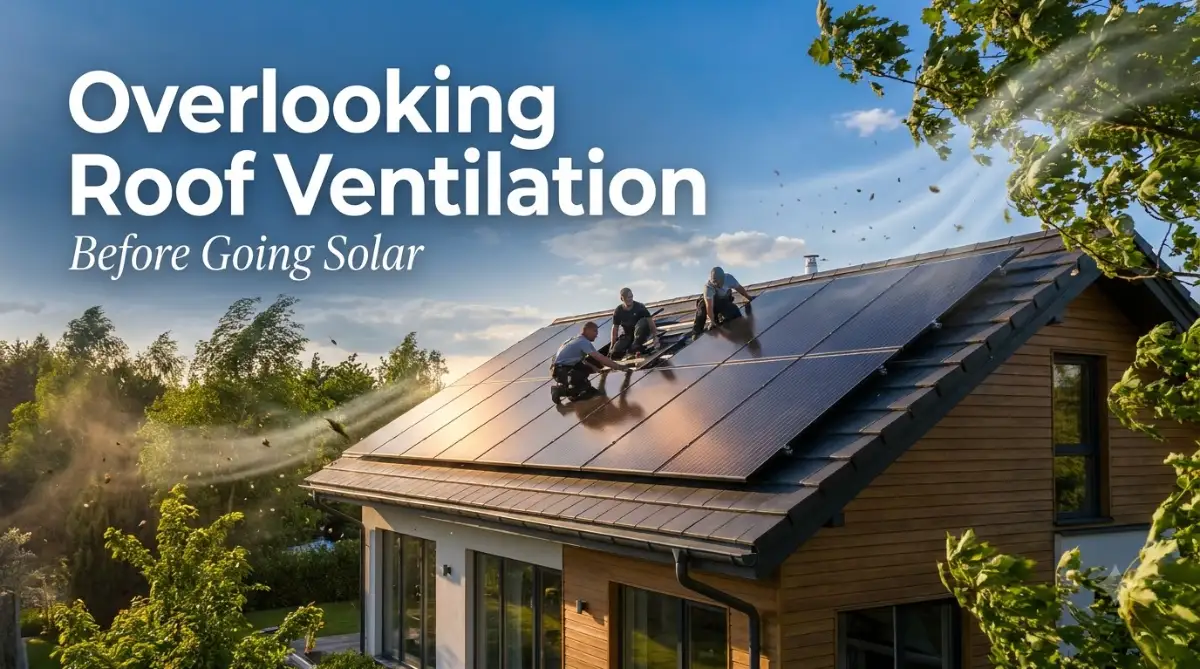
The Silent Problem Sitting Right Above Your Ceiling
Picture this: you just spent thousands of dollars on a shiny new solar setup to lower your power bills, but suddenly your AC is running non-stop. Your upstairs bedrooms feel like an absolute sauna. What went wrong? Most folks do not realize that slapping heavy glass panels on their roof can completely choke their home's natural airflow, trapping massive amounts of heat right above their ceilings. Let me show you how to avoid this expensive mistake before the installation crew even shows up at your house.
But just a few short months later, I noticed a strange, musty smell drifting down from my upstairs hallway. When I finally grabbed a ladder and climbed up into my dark attic to check it out, the trapped heat hit me like a physical wall. My beautiful new solar array was literally baking my roof from the outside in, and the trapped moisture was quietly destroying the wooden beams above my bedroom.
My dream of running a highly efficient, smart home quickly turned into a massive nightmare of endless worry. The heavy equipment on my roof had completely blocked my home's natural ability to breathe. I was spending half my working day just calling expensive roofing contractors to figure out how to stop the hidden mold from spreading into my living space.
If you are planning to go solar right now, I bet you are totally focused on battery sizes and energy savings. You probably assume that the installation team will automatically take care of your home's structural safety. Unfortunately, ignoring the airflow system underneath those heavy panels is the biggest mistake you can make.
This simple oversight causes severe headaches and financial stress for thousands of normal homeowners every single day. When hot air gets trapped under your roof, your indoor air conditioner has to work incredibly hard just to keep your rooms comfortable. You think you are saving money with free solar power, but your indoor cooling bills suddenly go right through the roof.
The Pre-Solar Roof Checklist:
- Check the Lungs: Ensure your bottom soffit vents and top ridge vents are completely clear of insulation and debris.
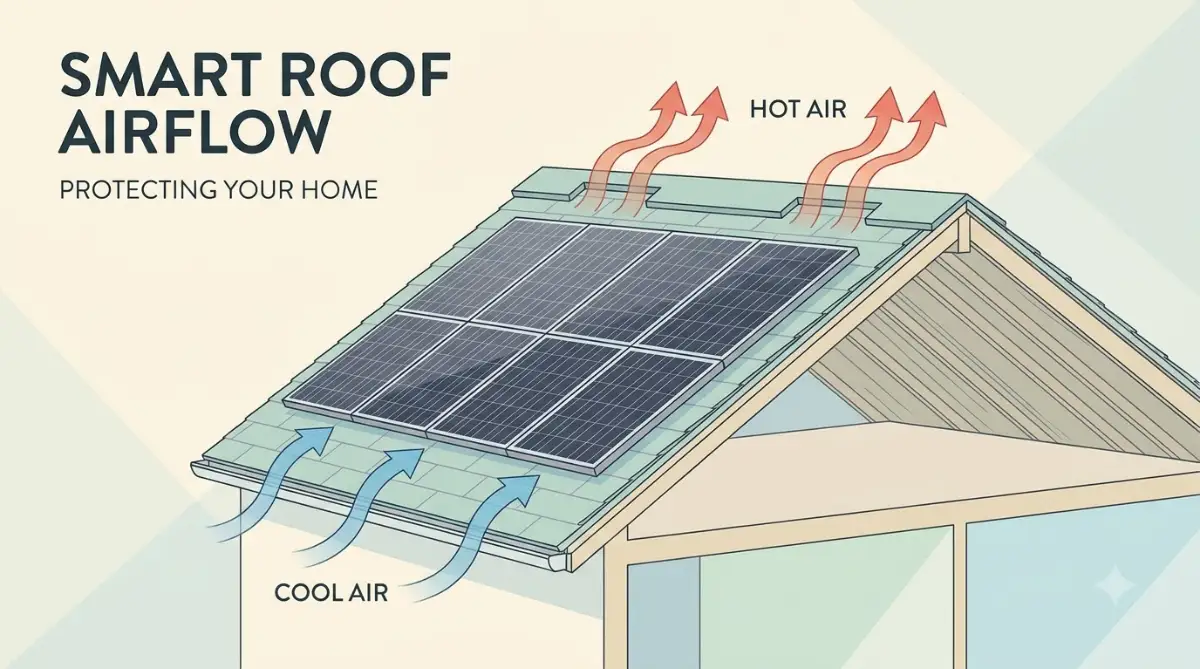
- Mind the Gap: Always demand a 5 to 6-inch gap between the solar panels and your roof shingles for wind cooling.
- Watch the Bathroom Fan: Double-check that your indoor exhaust fans pump steam entirely outside, not into your dark attic.
- Be the Boss: Force your solar installers to show you their vent plan on paper before they drill a single hole.
How to Protect Your Home Before the Panels Arrive
To fix this massive problem, we need to completely rethink how we look at our roofs. Simply bolting heavy metal racks over your shingles is no longer a smart strategy for modern homeowners. We need an active, healthy system that allows hot air to escape effortlessly while still supporting your new energy equipment.
Think of your attic like the lungs of your house. Just like you need to exhale hot air when you go for a run, your house needs to push out trapped heat and moisture every single day. By understanding some very basic building science, you can easily protect your property and ensure your solar investment actually lasts.
Understanding the True Science of Attic Heat
Let me share a very practical perspective on why trapped air is so dangerous for your house. When you place a massive, dark solar panel on top of your shingles, it acts just like a giant sponge for the afternoon sun. That panel absorbs a massive amount of solar radiation, and that heat has to go somewhere.
If there is no proper breeze flowing underneath the panel, that intense heat transfers directly straight down into your attic space. Your attic basically turns into a sealed pressure cooker. During a warm afternoon, the temperature inside a poorly ventilated attic can easily reach an astonishing 150 degrees Fahrenheit.
This extreme heat bakes your roofing materials from the inside out, causing your asphalt shingles to curl and crack prematurely. You are essentially paying a contractor to install heavy equipment that actively destroys your roof's protective layers. This is exactly why establishing clear airflow pathways is so incredibly important for your long-term financial health.
The Hidden Danger of Trapped Indoor Moisture
Heat is not the only enemy hiding up in your rafters; moisture is actually much worse. Every single time your family takes a hot shower, boils pasta on the stove, or runs the dishwasher, you create warm humidity. Because warm air naturally rises, all of that indoor moisture floats straight up into your highest ceilings.
If your roof vents are covered by poorly placed solar racks, that sticky moisture has absolutely no way to escape. When the warm, wet air hits the cooler underside of your roof at night, it instantly turns into heavy condensation. You basically create an artificial rainstorm inside your own attic.
Pro Tip: I actually thought blocking my attic vents would keep my house much warmer in the winter, which was a massive mistake. My biggest realization was that roofs need constant outside air flowing through them all year round, otherwise you are basically building a giant, highly destructive moisture trap.
When that condensation drips down onto your wooden roof trusses, the wood acts like a dry sponge. It drinks up the water and slowly begins to rot away in the dark. You will not even notice this structural decay until your ceiling starts showing ugly yellow water stains.
Why Heavy Equipment Needs Strong Bones
Now, let us talk about the absolute most important element of this entire situation: the sheer weight of your new system. A standard residential solar setup can easily add over a thousand pounds of dead weight to your roof structure. Your roof was originally engineered to hold that specific amount of weight, assuming the wood remains completely dry and healthy.
If poor ventilation causes your wooden beams to rot, they lose their natural structural strength. Putting a thousand pounds of heavy glass and metal on top of soft, decaying wood is a recipe for an absolute disaster. The roof will eventually begin to sag in the middle, creating a dangerous dip that pools rainwater.
This simple chain reaction is exactly why roofing inspectors get so nervous when they see blocked exhaust vents. The lack of air circulation directly weakens the exact wooden beams that are supposed to hold your expensive solar equipment. Protecting the airflow is directly tied to protecting the physical structure of your entire house.
If you want to understand exactly how heat gets trapped underneath your panels and damages your shingles, this quick visual breakdown will open your eyes.
Evaluating Your Home's Natural Breathing Process
Before you sign any paperwork with an installation company, you must clearly define how your house currently breathes. Every healthy roof has an intake system and an exhaust system. You need to verify that your solar panels will not interfere with either of these two critical areas.
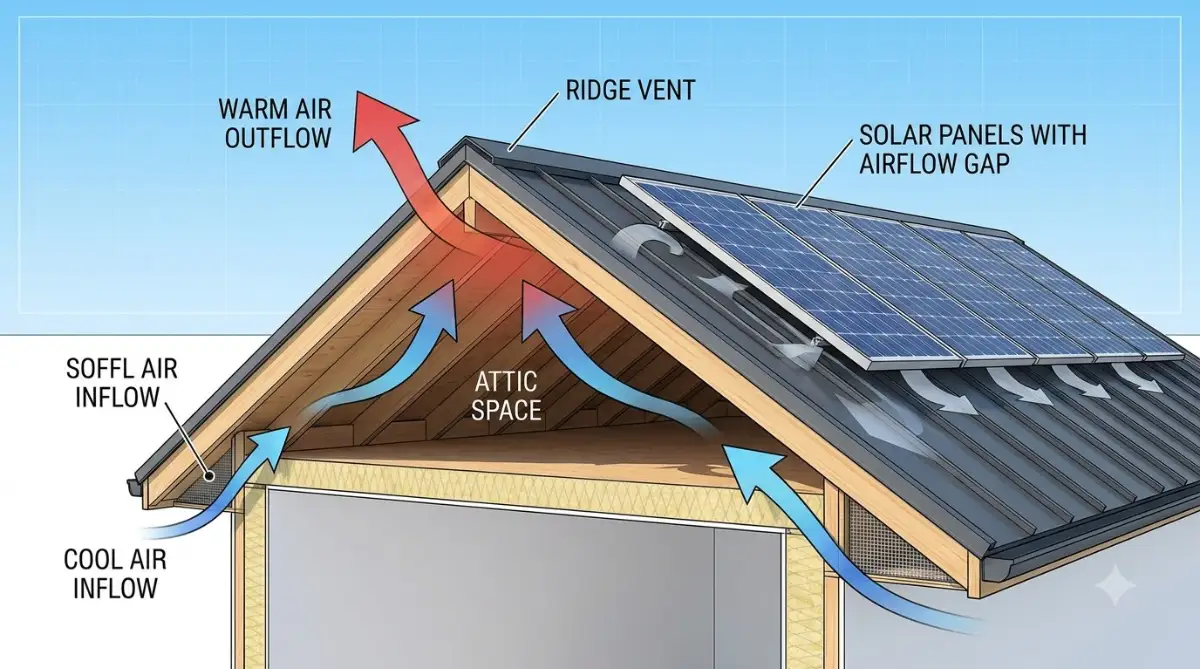
Start by walking around the outside of your house and looking up at the overhangs. You should see small metal grates called soffit vents tucked underneath the edges of your roof. These vents pull fresh, cool air directly from the outside into your attic space.
Next, look at the very top peak of your roof. You should see a raised cap running along the ridge, or several small box vents sticking up near the top. These are your exhaust vents, where the hot, stale air naturally pushes its way out into the sky.
When you combine clear intake vents with clear exhaust vents, you get a beautiful, continuous flow of natural cooling. You must firmly tell your installation team that they cannot place any solar equipment directly over these specific areas. Protecting these pathways guarantees that your home will continue to breathe properly long after the workers drive away.
Navigating Conversations with Your Installation Team
There is a huge misconception that solar installers are also roofing experts. Let us break down reality so you can clearly understand who you are hiring. Most solar technicians are brilliant electricians, but they are not always trained in advanced structural roofing mechanics.
Their primary goal is to fit as many panels onto your roof as physically possible so you generate maximum electricity. Sometimes, in order to fit one extra panel, they might accidentally cover a critical exhaust vent. They are not trying to harm your house maliciously; they are just deeply focused on the electrical output.
This is why you have to be your own strongest advocate during the design phase. When the company hands you the computer blueprint of your new system, ask them directly about the ventilation strategy. Make them physically point out exactly where your roof vents are located on their detailed drawing.
If they plan to build a heavy metal rack right over your main ridge vent, you must ask them to redesign the layout. Losing one single solar panel from your overall system will not ruin your energy savings. However, losing your roof's ability to breathe will absolutely ruin your house.
Why the Cooling Gap is Absolutely Essential
Another highly effective way to manage heat is to ensure there is a proper physical gap between the panel and your shingles. Many homeowners think that solar panels should be mounted completely flush against the roof for a sleek, modern look. However, mounting them too tight is a terrible idea for your system's efficiency.
Solar panels actually generate less electricity when they get too hot. If a panel is baking in its own trapped heat, its overall performance drops significantly. By leaving a healthy gap of at least five to six inches between the panel and the roof, you allow a cooling breeze to flow underneath.
This invisible layer of moving air acts as a natural heat shield for your shingles. It cools down the actual solar panel, which instantly boosts your electrical production on a hot summer afternoon. It also stops the intense radiant heat from transferring down into your delicate attic space.
Quick Temperature Check: Gap vs. No Gap
- Flush Mount (No Gap): Attic temperature can easily spike to 150°F+ on a sunny day.
- 6-Inch Gap Setup: Attic stays closer to a safe 105°F-115°F.
- The Result: A proper gap means your solar panels run cooler (producing more power) and your indoor AC does not have to fight trapped roof heat all afternoon.
Think of it exactly like sitting under a large umbrella at the beach on a scorching day. The umbrella absorbs the direct hit from the sun, while the cool ocean breeze flows underneath to keep you totally comfortable. That simple physical gap is the difference between a highly efficient energy system and a dangerous roof hazard.
Exploring Active Exhaust Solutions
Sometimes, older homes simply do not have enough natural ventilation built into their original design. If your attic is already feeling stuffy before you even add heavy equipment, you need to be highly proactive. You cannot just hope the problem will magically fix itself once the panels are installed.
In these specific situations, you might want to look into adding active exhaust fans to your roof. A smart solar-powered attic fan is an incredible tool for maintaining a healthy house. These fans automatically turn on when the attic gets too hot, actively sucking the dangerous heat right out of the building.
The best part is that these fans run entirely on their own tiny solar panels, meaning they do not add a single penny to your monthly electric bill. You can ask your installation team to install one of these fans on a clear section of your roof while they are already up there working. It is a very small extra cost that provides massive, long-lasting structural protection.
By taking these smart, practical steps, you completely eliminate the guesswork from your home improvement project. You build a deeply organized plan that protects your physical property while still giving you the clean energy you really want. This proactive approach guarantees that your family always has a safe, perfectly balanced roof over their heads.
Pro-Level Tactics for a Perfectly Balanced Roof
Now that we understand exactly how trapped heat destroys your house, it is time to take complete control of the situation. You do not have to be a licensed contractor to set up a smart, breathable roof environment. You just need to know a few advanced secrets that most installation companies conveniently forget to tell you.
I have spent countless hours climbing through dusty, dark attics, and I can tell you that the best solutions are actually incredibly simple. A healthy house relies on constant, passive airflow that runs completely in the background without any manual effort. When you optimize these natural pathways, your home basically cools itself for free.
Let us explore some highly effective, pro-level tactics you can use to protect your expensive solar investment. These smart strategies will keep your energy production extremely high while keeping your actual roof decking perfectly dry.
The Secret Power of Soffit Baffles
One of the most effective tools for saving your roof costs less than two dollars at your local hardware store. They are called soffit baffles, and they look like cheap plastic or foam trays. However, these tiny pieces of plastic are the absolute heroes of modern residential airflow systems.
When contractors blow fluffy pink insulation into your ceiling, they often accidentally cover up the intake vents at the extreme edge of your roof. This completely chokes the house, stopping fresh outside air from ever getting inside the attic. Even if you have the best exhaust vents in the world, they are totally useless if no fresh air can enter from the bottom.
You simply staple these plastic baffles against the wooden decking near the edge of your roof to solve this issue forever. They create a permanent, hard physical tunnel that pushes the fluffy insulation back. Following the Department of Energy guidelines on residential ventilation ensures that the cool afternoon breeze can always flow upward, cooling the back of your new solar array perfectly.
💡 Contractor Secret You Need to Know:
A pack of foam soffit baffles costs less than $20 at your local hardware store. When workers blow in new attic insulation, they almost always block the edge vents by accident. Installing these cheap baffles before putting panels on your roof will literally save you thousands of dollars in wood rot repairs down the road.
Stop Pests from Ruining Your Airflow
We often talk about wind and humidity, but we completely forget about the physical blockages caused by local wildlife. The gap between your new solar panels and your shingles creates a warm, highly protected shelter for animals. Birds, squirrels, and rodents absolutely love building their permanent homes in this cozy little space.
When a family of pigeons packs thick mud, twigs, and trash under your panels, they completely block the cooling breeze. The panel instantly overheats, your energy production drops, and moisture gets permanently trapped against your delicate shingles. This is why you must seriously look into the ultimate guide to pigeon proofing your home solar panels immediately after your installation team finishes.
Adding a simple wire mesh guard around the outer edge of your equipment keeps the animals out while letting the wind blow freely. It is a tiny extra step that prevents a massive biological disaster from rotting your roof. Keeping the pests away keeps the air moving, which ultimately keeps your bank account happy.
The Magic of Thermal Camera Inspections
You do not have to guess if your roof is dangerously overheating anymore. We live in an amazing era where professional diagnostic tools attach directly to our everyday smartphones. You can buy a small thermal imaging camera online for a very reasonable price and plug it right into your charging port.
On a hot sunny afternoon, simply walk around your upstairs bedrooms and point the thermal camera at the ceiling. If your new heavy equipment is trapping heat, you will clearly see bright red and orange glowing spots directly on your screen. This visual evidence instantly tells you exactly where the hidden airflow problems are located.
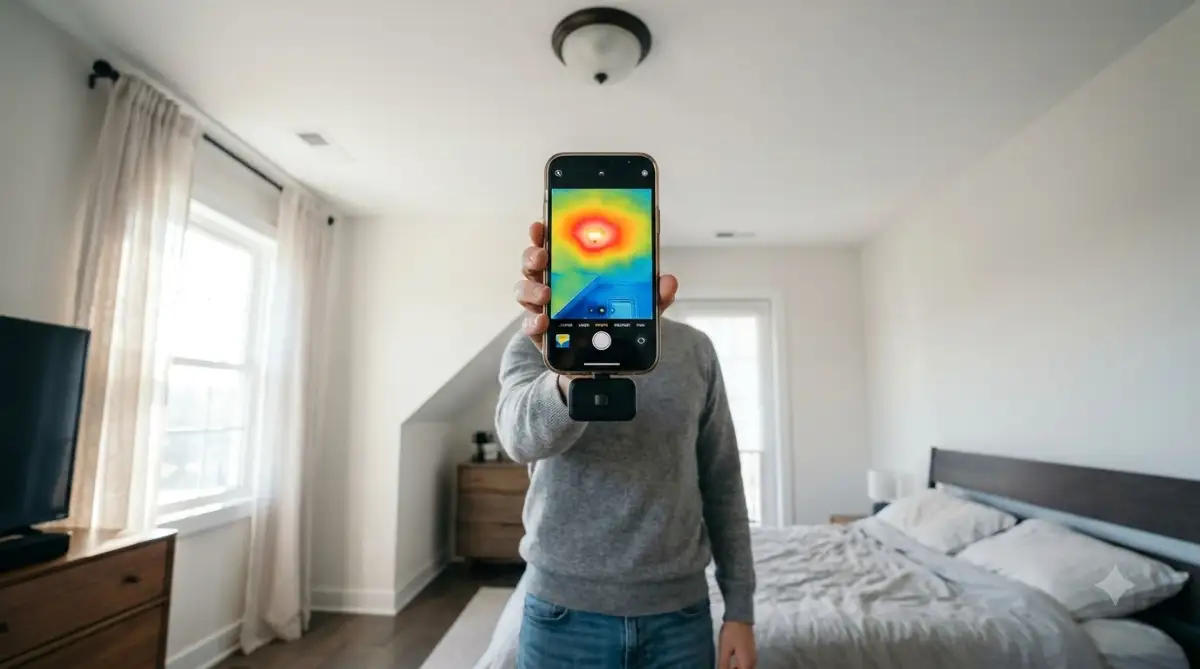
Catching these dangerous hot spots early prevents your drywall from baking and cracking over time. It is a brilliant, highly visual way to independently audit the work your solar contractor just finished. You become your own building inspector, armed with undeniable scientific proof.
Separating Bathroom Exhaust from Attic Space
Here is a massive hidden secret that quietly ruins thousands of homes every single month. Your bathroom ceiling fan is specifically designed to suck up hot, steamy air from your daily shower. Unfortunately, many older homes have exhaust pipes that just dump that sticky steam directly into the open, dark attic.
If your roof was perfectly clear, that moisture might eventually dry out during a hot summer day. But once you add a massive layer of solar glass over your shingles, that wet steam gets totally trapped inside. It hits the hot underside of your roof deck and instantly breeds highly toxic black mold.
Before you sign any paperwork, you must physically go upstairs and check where your bathroom pipes actually lead. They must vent completely outside the house, either through a dedicated side wall or a special roof cap. Fixing this one specific plumbing issue is arguably the most important step before adding modern energy equipment.
Understanding how all these home systems connect is the true secret to long-term wealth and property maintenance. For example, figuring out exactly how to stop ai hallucinations and fix machine generated text errors makes your digital work much better. In that exact same way, fixing your basic plumbing and airflow errors makes your physical house infinitely safer.
Dangerous Traps That Will Rot Your Rafters
Building a smart, energy-efficient home is an amazing journey, but the road is heavily paved with dangerous financial potholes. I have seen incredibly smart homeowners make terrible, rushed decisions simply because they were overly excited to get their panels turned on. They trust the wrong advice, cut a few corners, and end up paying for it dearly a few years later.
When an airflow system fails, the resulting physical damage is absolutely catastrophic. You are not just looking at replacing a few broken shingles; you are looking at replacing the entire structural skeleton of your house. Fixing a rotten roof costs tens of thousands of dollars and causes massive emotional distress for your whole family.
To protect your hard-earned money and your mental health, you have to recognize these hidden traps before you fall into them. Let us break down the most common, painful mistakes people make when combining heavy technology with traditional residential roofing.
The "It Looks Fine from the Ground" Trap
The absolute most common mistake is trusting a quick visual inspection from your front lawn. Many aggressive sales representatives will just look at your house from the sidewalk, punch some numbers into an iPad, and tell you everything is perfectly fine. They never actually climb a ladder to look at the health of your wooden beams.
You cannot determine the breathability of a house by looking at the color of the exterior shingles. A roof might look brand new on the outside while actively rotting from trapped humidity on the inside. This is exactly why you must check your attic before going solar using a bright flashlight and a heavy ladder.
You have to physically touch the wood, smell the air, and actively look for dark water stains. If your sales representative refuses to inspect the inside of your home, you need to find a much better company immediately. Accepting a major construction contract based on a sidewalk glance is a massive gamble with your family's safety.
Believing Vents Are Optional Accessories
Many homeowners look at the strange metal bumps on their roof and think they are just ugly, outdated decorations. When the installation crew suggests removing a few vents to fit more panels, the homeowner happily agrees to get a sleeker look. This is a fatal structural error that will destroy the property.
Those metal vents are the only active defense your house has against extreme weather changes. Removing them is like putting a tight plastic bag over a marathon runner's head. The house will quickly suffocate, and the trapped pressure will literally pop the metal nails right out of your expensive shingles.
According to building scientists at the National Renewable Energy Laboratory, maintaining proper exhaust channels directly impacts the electrical efficiency of your entire system. If the panels overheat because the house cannot breathe, your daily energy production plummets. You are sacrificing actual electrical performance just for a slightly smoother visual aesthetic on your roof.
Stacking Heavy Weight on Weak Bones
We often forget that solar technology is incredibly heavy. When you add heavy metal mounting racks, thick glass panels, and solid copper wiring, you add immense physical stress to the structure. If the airflow is already poor, the wood holding all this weight is probably soft and slowly decaying.
Think about how a heavy vehicle struggles when you severely overload it. Learning why do electric vehicle tires wear out faster than traditional cars teaches us that extra weight changes the entire physical dynamic of a machine. The exact same physics apply to your delicate roof trusses.
Proper airflow is not just a polite suggestion for homeowners. Strict building standards set by the American Society of Heating, Refrigerating and Air-Conditioning Engineers prove that continuous ventilation is mandatory for moisture control. If you place a thousand pounds of technology on top of a damp, poorly ventilated roof, the wood will eventually buckle and collapse.
Ignoring the Hidden Shadow Effects
When panels are installed without a proper airflow gap beneath them, they do not just trap heat inside the house. They also create extreme temperature differences across the actual surface of the solar panel itself. Some parts of the equipment get scorching hot, while other parts remain totally shaded and cool.
This rapid temperature imbalance causes the delicate solar cells to physically crack under extreme stress. This is very similar to understanding why partial shading on solar panels is much worse than you think when it comes to sudden voltage drops. Poor physical placement ruins the internal electrical flow, causing your expensive equipment to degrade years before its warranty expires.
Your installation crew must guarantee a minimum six-inch gap between the bottom of the rack and the top of the shingles. This gap acts as a dedicated wind tunnel, constantly pushing hot air out from under the glass. If they try to mount the panels flush against the roof to save time, you must immediately tell them to stop working.
The Misunderstanding of Active Cooling Costs
Sometimes, people realize their attic is too hot, so they randomly install cheap, heavy-duty electric fans to blow the air out. While active fans are a great idea, plugging a massive industrial fan into your home's main power grid completely defeats the purpose of going solar. You end up burning massive amounts of expensive grid electricity just to cool down your solar equipment.
This mistake is exactly like paying for a premium gym membership you never actually use. You have to be highly strategic about where you put your home investments. You should stop wasting money managing cloud tool subscriptions easily by doing a quick software audit, and you should audit your home energy usage the exact same way.
Instead of hardwiring a heavy electric fan, demand a dedicated solar-powered attic vent. These brilliant devices run entirely on their own tiny built-in panels, costing you absolutely nothing on your monthly utility bill. They work hardest during the absolute hottest part of the afternoon, perfectly balancing your home's temperature completely automatically.
Your Ultimate Pre-Installation Action Plan
We have covered a massive amount of building science today, from soffit baffles to advanced thermal camera inspections. The idea of completely auditing your roof might feel a little overwhelming right now, but I promise you it is incredibly straightforward. You just need to follow a logical, step-by-step checklist before anyone starts drilling holes in your house.
Quick Pre-Flight Checklist:
- Always inspect the dark attic yourself using a bright flashlight before signing a contract.
- Verify that your bathroom exhaust fans push steam outside, not into the attic.
- Make the installation team point out exactly where your roof vents are on their digital blueprints.
- Demand a six-inch cooling gap beneath every single panel to prevent overheating.
Your very first step for tomorrow morning is to simply grab a flashlight and carefully stick your head up into your attic space. Take a deep breath through your nose; if the air smells damp, musty, or incredibly stale, you already have an airflow problem. Do not let any solar company install heavy equipment until that specific breathing issue is completely resolved.
I want to assure you that combining clean energy with a healthy, breathable roof is entirely possible. My own home operates beautifully now because I finally understood how incredibly important that invisible cooling breeze really is. You deserve to enjoy your new solar panels without a single drop of anxiety, so take control of your roof today and build a home that lasts a lifetime.
Everyday Questions About Roof Airflow and Solar Systems
Do solar panels make the house hotter if the roof is badly vented?
Yes, absolutely. A poorly ventilated roof acts exactly like a tightly sealed oven. When the dark solar panels absorb intense afternoon sunlight, that radiant heat transfers directly through the shingles and gets trapped in your attic. This intense trapped heat forces your indoor air conditioning unit to work twice as hard just to cool your living room.
Can I add extra roof vents after my solar system is already installed?
It is possible, but it is extremely difficult and highly expensive. The workers will have to physically unbolt and carefully remove the heavy panels just to cut new ventilation holes in your wooden deck. This is exactly why you must plan your airflow pathways perfectly during the initial design phase, long before the solar panels arrive at your house.
How do I know if my soffit intake vents are completely blocked?
The easiest way is to go into your dark attic during a bright, sunny afternoon and turn off your flashlight. Look down toward the very edges of your roof where the ceiling meets the exterior walls. If you cannot see any tiny slivers of natural daylight peeking through the edges, your intake vents are likely smothered by old, heavy insulation.
Will a solar-powered attic fan fix all my indoor humidity problems?
An active solar fan is a fantastic upgrade, but it cannot fix a broken ventilation system all by itself. A fan works by sucking hot air out, but it strictly needs fresh air to replace the air it removes. If your bottom intake vents are completely blocked by dust and debris, the fan will just spin uselessly without actually cooling the wooden beams.
Does homeowner insurance cover roof rot caused by solar panels?
Usually, standard home insurance policies do not cover slow structural damage caused by poor ventilation or trapped condensation. The Insurance Information Institute often notes that routine maintenance issues are entirely the homeowner's personal responsibility. This is exactly why you must be highly proactive and protect your home's ability to breathe before the heavy equipment is ever installed.
Disclaimer: The information provided in this article is for educational and informational purposes only. We are not licensed roofing contractors or structural engineers. You should always consult with a certified roofing professional and a licensed solar installation expert to evaluate your specific property before making any structural changes to your home.