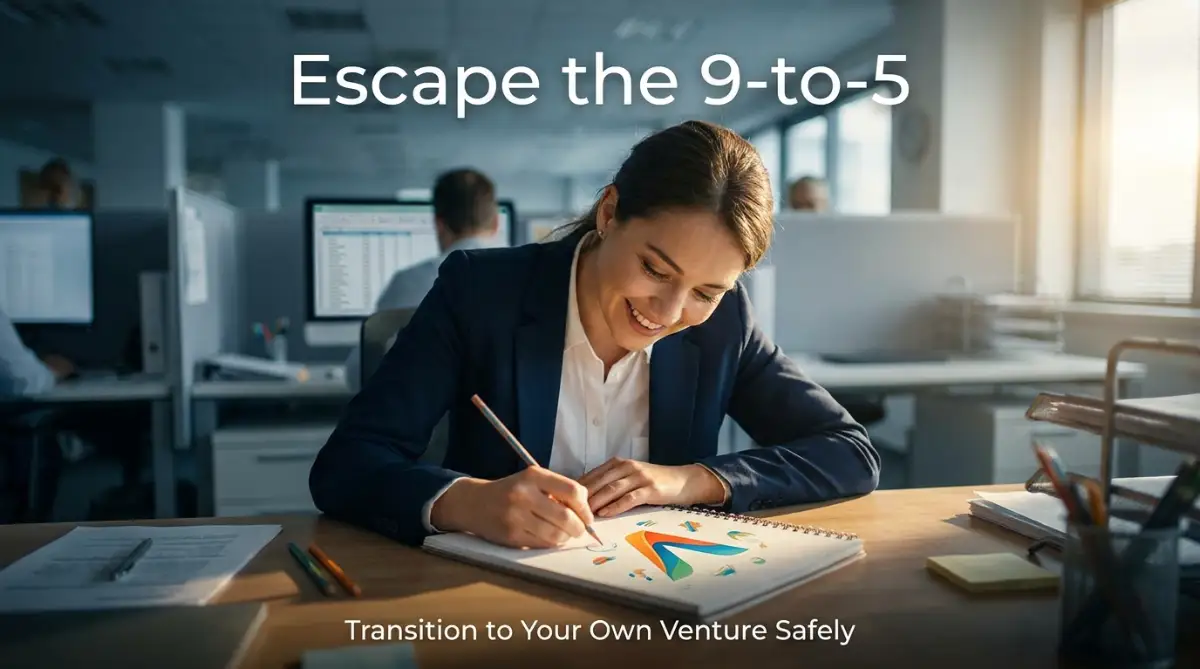
The Silent Launch: A Founder's Worst Nightmare
I spent six long months locked in my bedroom building what I thought was the absolute perfect software application. I skipped meals, ignored my friends, and poured my entire life savings into making every single feature completely flawless. My confidence was sky-high as I finally hit the launch button and pushed my product out to the public. I sat back, refreshed my screen, and waited for the massive wave of sales to roll in. Nothing happened. A whole week went by, and exactly zero people bought my product, leaving me totally broke and deeply confused.
That completely silent launch day is a nightmare that haunts thousands of first-time founders all over the world. We get a sudden flash of inspiration in the shower and immediately start building without asking a single question. We fall in love with our own brilliant ideas instead of falling in love with the customer's actual problems.
The daily mental struggle of a failed launch is incredibly heavy and hard to carry. You have to look your family in the eye and explain where all your hard-earned savings went. You start questioning your own intelligence and wondering if you are even cut out to be an entrepreneur. Your self-confidence shatters into a million pieces, making it hard to try again.
The absolute worst part is the massive regret of wasting all that precious time. Time is the one thing you can never buy back, and you spent it typing out solutions for a ghost town. This blind guessing game destroys bank accounts and ruins perfectly good mental health every single day.
People frequently max out their credit cards and take out huge personal loans based purely on a gut feeling. They assume that if they build something cool, people will naturally flock to buy it. This "build it and they will come" mindset is the most dangerous lie in the startup world.
Breaking the Guesswork Habit: How to Test Demand Like a Pro
The absolute smartest thing you can do as a founder is prove that people want your product before you actually make it. You do not need a massive team, expensive software, or advanced programming skills to figure this out. You just need a strong desire to learn the truth and a few simple strategies to test the market.
Think of product validation like testing the water temperature before you jump into a swimming pool. You would never dive headfirst into a dark pool without checking if it is freezing cold or completely empty. Validating your idea is simply dipping your toes in the market to see if it is safe to dive.
Let us explore exactly how you can test your bold business ideas in the real world today. We will walk through practical, proven steps that save you money, time, and emotional pain.
Myth vs. Reality in the Startup World
Before we get into the practical steps, we need to clear up some major misunderstandings about starting a business. Many new founders carry false beliefs that hold them back from finding true success.
Myth: If I tell people my idea, someone will definitely steal it and build it faster.
Reality: Ideas are incredibly cheap, but actual execution is incredibly hard. Nobody cares enough about your raw idea to drop their whole life and build it. Keeping your idea a total secret is the fastest way to guarantee failure because you get zero feedback.
Myth: I need a fully working product before I can ask anyone to pay me money.
Reality: People do not pay for working software; they pay to have their specific problems solved. If your promise is strong enough, people will gladly give you money before the product even exists.
Strategy 1: The "Fake Door" Landing Page Test
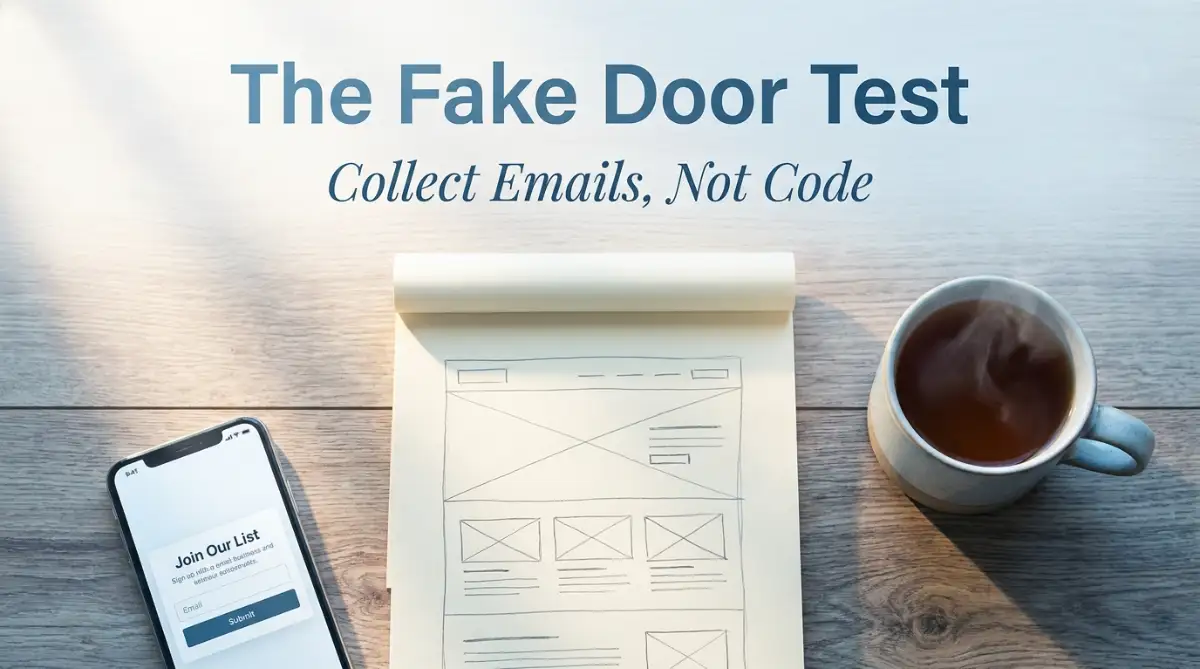
One of the most effective ways to see if people care about your idea is to set up a simple landing page. You do not need a product to have a website. You just need to explain what your future product will do and see who is interested.
Think of this like a movie trailer. Movie studios release exciting trailers months before the movie is actually finished. They want to see how the audience reacts and build up a massive list of eager fans. You can do the exact same thing for your business idea.
You can use free tools like Carrd or Mailchimp to build a beautiful page in less than an hour. Write a clear headline that explains the massive problem you are solving for your specific customer. Add a simple button that says "Get Early Access" or "Join the Waitlist".
If you send one hundred people to that page and nobody gives you their email address, you just learned a highly valuable lesson. You saved yourself six months of useless work. If thirty people sign up, you now have strong proof that your idea has real market potential.
If you want to see exactly how to set up a high-converting landing page without any technical skills, this video breaks it down perfectly.
Strategy 2: Conducting Problem-Focused Customer Interviews
Most founders are completely terrified of talking to strangers about their business ideas. When they finally do talk to people, they spend the whole time bragging about their cool features. This is the wrong way to learn anything useful.
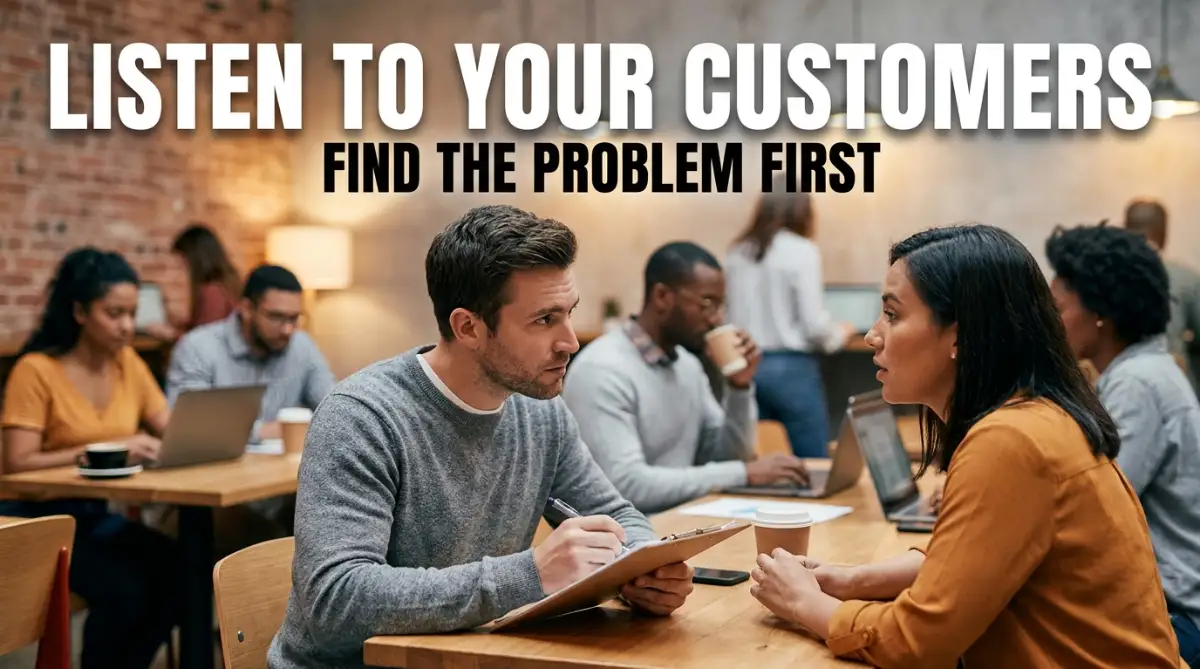
Your main goal in a customer interview is to act like a detective, not a slick salesperson. You want to uncover the daily struggles your target audience faces right now. You need to ask open-ended questions about their past behavior, not their future promises.
For example, imagine you want to build a fitness tracking app for busy parents. Do not ask, "Would you pay five dollars for my cool new fitness app?" Everyone will politely say yes just to make you feel good, but they will never actually pay you later.
Instead, ask them, "How did you try to stay fit last month, and what was the hardest part about it?" If they say they do not care about fitness at all right now, your app idea is completely dead. If they complain bitterly about not having time to track workouts, you just struck pure gold.
Pro Tip: I remember trying to validate my first marketing tool by explaining all the shiny buttons to my friends. They all smiled and nodded, but when I finally launched, none of them bought it. Now, I never pitch my idea; I only ask people to complain to me about their daily frustrations.
Strategy 3: The Manual Concierge Method
Sometimes the best way to prove a software idea is to do the entire process manually behind the scenes. This is known as the concierge method, and it is a brilliant way to test complex ideas with zero code. You act as the software yourself until you are too busy to keep up.
Let us say you want to build an automated recipe-matching app based on what people have in their fridge. Building that complex algorithm would take months of hard programming work. Instead, you can test this idea tomorrow using just a simple Google Form.
Ask ten people to text you a photo of the inside of their fridge every afternoon. You then manually search the internet, find a great recipe, and text it back to them. You are doing the heavy lifting yourself, but to the customer, the experience feels exactly like a magic service.
If people love your manual service and keep coming back for more, you know the demand is completely real. If they stop sending photos after two days, you know the problem is not painful enough to solve. You just validated a complex app idea using nothing but your smartphone and some free time.
Strategy 4: Running Small Traffic Experiments
Once you have a simple landing page set up, you need to see how total strangers react to your offer. Relying only on your friends and family for feedback will always give you false hope. Strangers on the internet are brutally honest, which is exactly what you need to succeed.
You do not need a massive marketing budget to run a successful traffic experiment. You can take just twenty dollars and run highly targeted ads on social media platforms. Your goal is not to become rich overnight; your goal is purely to buy data.
Create two or three simple ad images using a free design tool like Canva. Write different headlines testing different angles of the problem you are solving. Send all that traffic straight to your simple waitlist page.
Analyzing the Ad Data
Watch closely to see which specific headline gets the most clicks from your target audience. If people are scrolling right past your ads without clicking, your core message is entirely wrong. If they click the ad but immediately leave your website, your page is confusing or unappealing.
Getting a stranger to stop scrolling, click an ad, and type in their email address is a huge victory. It proves that your marketing message connects deeply with a real human being. That is the exact type of solid proof you need before you ever start writing code.
The Danger of Confirmation Bias in Business
As human beings, we naturally love to be right about our own ideas. This creates a massive psychological trap called confirmation bias. We actively seek out information that proves our idea is great, and we completely ignore any negative feedback.
If a founder talks to ten people and nine of them hate the idea, the founder will often ignore those nine people. They will focus all their energy on the one single person who said it was a cool concept. This is a very dangerous way to make big business decisions.
You have to train yourself to actively look for reasons why your idea might fail. When someone points out a major flaw in your plan, do not get defensive or angry. Thank them for their honesty, because they just pointed out a pothole you were about to drive into.
Strategy 5: Selling the Future (Pre-Sales Validation)
The ultimate, undisputed king of product validation is actually getting paid before you build the product. Nothing proves market demand better than a customer handing over their hard-earned cash. It instantly separates the polite people from the truly desperate buyers.
Many successful companies have started by selling a vision rather than a finished product. You can create a checkout page that clearly states the product is currently in early development. Offer a massive discount to anyone willing to buy it early and support your journey.
If you can sell twenty pre-orders for a product that does not exist yet, you have guaranteed validation. You now have a small group of highly motivated early adopters who will help you shape the final product. Even better, you now have actual cash to help fund the development process.
If nobody is willing to pull out their credit card, you must accept that the pain point is not strong enough. It is infinitely better to fail at selling a dream than to fail at selling a finished product that took a year to build.
Moving from Validation to Execution
Once you have successfully validated your idea using these methods, your mindset shifts completely. You are no longer guessing what the market wants; you have hard, undeniable evidence. This deep confidence changes exactly how you build and market your new business.
You will stop trying to add a hundred useless features to your initial launch. Because you talked directly to your customers, you know exactly which one feature matters the most to them. You can focus all your energy on building that single solution perfectly.
This completely lean approach removes almost all the financial risk from starting a new business. You are stepping onto a path that has already been cleared by real customer feedback. The days of locking yourself in a room and hoping for the best are officially over.
Beyond the Basics: Next-Level Idea Testing Secrets
Now that you understand the basic mechanics of testing your market, it is time to look at some advanced strategies. These are the exact methods experienced founders use to protect their time and money. When you master these techniques, you move from just guessing to actually predicting your future success.
Most beginners stop testing the moment someone says, "That sounds like a great idea!" However, experienced founders know that polite compliments do not pay the bills. You need to push past the polite smiles and find out if people are actually willing to open their wallets.
One of the smartest ways to do this is by focusing entirely on building an audience before you ever build a product. Instead of hiding in a room writing code, start writing about the specific problem on social media. Share your daily thoughts, your research, and the painful stories you hear from your target market.
When you consistently talk about a specific problem, the right people will naturally start following you. You are essentially building a highly engaged community of potential buyers from day one. Experts at the Y Combinator Startup Library constantly advise founders to build this audience early because it makes your official launch incredibly easy.
The "Willingness to Pay" Threshold
Finding out if someone likes your idea is easy, but discovering their actual willingness to pay is a completely different game. Many founders make the mistake of setting a random price based on what their competitors charge. This completely ignores the actual value you are providing to your specific customer.
To find the true willingness to pay, you have to ask uncomfortable questions during your early interviews. Ask them directly, "How much money did you spend trying to fix this exact problem last month?" If they say they spent nothing, your future product will be extremely hard to sell.
If they admit they spent hundreds of dollars on messy, broken solutions, you have found a highly profitable pain point. You can confidently price your future software based on the money you are saving them. This direct approach removes the scary guesswork from your future financial projections.
Mastering the B2B Mock Sale
If you are building a product for other businesses (B2B), the validation process requires a slightly different approach. Businesses do not usually care about flashy landing pages; they care strictly about return on investment. The best way to test a B2B idea is by sending a highly targeted cold email pitching your solution.
You can write a simple, text-only email to twenty local business owners explaining how you can save them ten hours a week. Ask them if they have fifteen minutes for a quick phone call to discuss a potential partnership. If nobody replies to your emails, the problem you are solving is likely not on their priority list.
If three business owners immediately reply and ask for a meeting, you have struck gold. You can get on the call, explain your future software, and even ask them to sign a non-binding letter of intent. This simple piece of paper proves that a real business is ready to buy your product once it is finished.
Shielding Your Personal Finances
One of the most powerful benefits of early market testing is how it protects your personal bank account. So many eager entrepreneurs skip this phase and end up draining their life savings on a useless app. When the savings run out, they often panic and make terrible financial decisions just to keep the lights on.
I have seen talented founders blindly apply for dangerous funding because they refused to validate their market first. It is incredibly sad to watch someone desperately search for how to get your business loan approved just to fund a product nobody is buying. When you have proven market demand first, banks and investors will actually chase you, not the other way around.
Validating your idea gives you the ultimate financial peace of mind. You never have to worry about learning how to protect your personal assets from business loan risks because you are not taking wild, uneducated gambles. You are simply following the clear data your customers gave you. Solid research from trusted institutions like the Stanford eCorner shows that startups who test early have significantly lower financial failure rates.
The Heartbreak Zone: Fatal Testing Mistakes You Must Avoid
Even with the best intentions, it is incredibly easy to fall into emotional traps while testing your new business concept. Human beings naturally want to feel successful, and sometimes we actively trick ourselves into believing fake positive signals. If you are not extremely careful, these common pitfalls can completely destroy your business before it even starts.
Let us walk through the most dangerous mistakes new founders make when trying to validate a new product. Recognizing these specific behaviors will save you from months of emotional heartbreak and massive financial losses.
The "Mom Test" Disaster
The absolute biggest mistake you can make is asking your close friends and family for business feedback. Your mother, your best friend, and your partner all love you unconditionally. Because they care about your feelings, they will almost always lie to you to protect your confidence.
If you ask your family, "Do you think my new software idea is good?", they will immediately say yes. They will tell you how smart you are and how rich you are going to be. This fake praise feels amazing in the moment, but it is completely toxic for your actual business strategy.
You end up spending six months building something based entirely on polite lies. When you finally ask your friends to pull out their credit cards and buy it, they will suddenly make a hundred different excuses. Always seek feedback from complete strangers who have absolutely no emotional connection to your personal feelings.
Confusing Vanity Metrics with Real Demand
In our modern social media environment, it is incredibly easy to confuse online popularity with actual paying customers. A founder might post a highly edited video of their new product idea and get ten thousand likes overnight. They wake up the next morning feeling like an absolute genius, ready to hire a massive team of developers.
Likes do not pay your server costs, and shares do not pay your rent.
A social media "like" takes half a second of effort and costs the user absolutely nothing. It is a terrible indicator of whether someone will actually spend fifty dollars on your software. I have seen massive email waitlists with thousands of subscribers generate exactly zero dollars on launch day.
You must force your audience to jump through a small hoop to prove their interest. Ask them to pay a one-dollar reservation fee or jump on a fifteen-minute discovery call with you. If they refuse to invest a tiny bit of friction, they were never going to be real customers anyway.
Rushing into Toxic Debt
When founders skip the validation phase and their product fails to sell, a deep sense of panic sets in. Instead of accepting the failure and pivoting the idea, they double down and try to force the market to care. They start pouring money into aggressive Facebook ads and expensive marketing agencies, hoping to buy their way to success.
This desperate behavior often leads entrepreneurs straight into the arms of extremely dangerous financial traps. I have watched brilliant creators completely ruin their lives because they did not know how to spot predatory payday loan contracts before signing. They take on high-interest debt simply to keep a dying, unvalidated product on life support.
When you ignore the early warning signs of a failed idea, you might end up needing a real guide to debt consolidation and recovery just to survive the year. You must learn to kill bad ideas quickly and without any mercy. Failing fast and cheap is the true secret weapon of every successful serial entrepreneur.
Ignoring the "Why" Behind the "No"
When a potential customer tells you they do not want your product, it hurts your ego deeply. The natural human reaction is to instantly get defensive, assume the customer is simply not smart enough, and walk away. This emotional reaction causes you to miss out on the most valuable data you could ever collect.
A rejection is actually a massive gift in disguise if you know exactly how to unwrap it. When someone says no, you must gently ask them to explain exactly why the solution does not fit their daily life. Their honest answer will often reveal a completely different, much bigger problem that they would gladly pay you to solve right now.
Sometimes, the market research data you need comes from simply listening to the complaints of angry consumers. The U.S. Small Business Administration highly recommends analyzing customer rejections to find hidden gaps in your local market. Never walk away from a "no" without asking "why" first.
Burning Questions About Testing Startup Ideas
How much time should I spend validating my new idea?
You should aim to spend anywhere from two weeks to one full month purely on testing the market. If you spend any more time than that, you are likely just procrastinating out of a deep fear of actually building the product. Get your answers quickly, make a firm decision, and move on to the next bold step.
What if someone steals my brilliant idea while I am testing it?
Execution always wins over a raw idea every single time. The people who are capable of building your idea are already extremely busy working on their own dream projects. Hiding your concept in a dark room guarantees failure, while sharing it openly gives you the valuable feedback you need to succeed.
Do I need to register a formal LLC before I start talking to people?
Absolutely not. You do not need to spend money on legal paperwork, expensive lawyers, or a fancy business bank account just to ask people questions. Your only job right now is to figure out if people actually want this thing. You can worry about formal business structures after you have guaranteed paying customers.
How many customer interviews do I actually need to do?
A great rule of thumb is to aim for at least twenty high-quality conversations with your specific target audience. Around the fifteenth interview, you will start noticing that people are repeating the exact same daily frustrations. Once you can easily predict what the next person is going to complain about, you have successfully found a clear market pattern.
Can I validate a physical product the same way as software?
Yes, the exact same psychological principles apply to physical products, clothing lines, and local services. You can easily create a beautiful 3D digital render of your physical item and put it on a simple waitlist page. If nobody signs up to buy the digital picture, they definitely will not buy the heavy, expensive physical version later.
Your Immediate Action Plan for Tomorrow
Starting a brand new business is easily one of the most exciting and terrifying journeys you will ever take in your life. The urge to immediately jump into the fun stuff, like designing a cool logo and writing clean code, is incredibly strong. However, true entrepreneurial success requires massive discipline and a willingness to do the boring, uncomfortable research first.
You now hold the exact blueprint to protect yourself from the devastating heartbreak of a completely silent product launch. By forcing yourself to test the market demand first, you are building a solid, unbreakable foundation for your future company. You are acting like a true professional founder instead of a hopeful gambler playing the lottery.
Everything changes the moment you realize that your primary job is to solve painful problems, not just invent cool features. Stay curious, be incredibly brave when talking to complete strangers, and never let your own ego block the raw truth.
My Personal Promise to You: I remember perfectly the heavy, nervous feeling in my stomach right before I launched my first landing page to the public. It feels incredibly scary to put your raw ideas out into the world for people to judge, but I promise you it is entirely worth it. Take a deep breath, launch your simple test page tomorrow morning, and watch how quickly the real data changes your entire perspective!
Disclaimer: The strategies, tips, and guidelines provided in this blog post are for educational and informational purposes only. I am not a certified financial advisor or legal expert. Starting a business involves inherent financial risks. Always perform your own thorough research and consult with a licensed professional before taking on business debt, making major financial investments, or signing legal contracts.