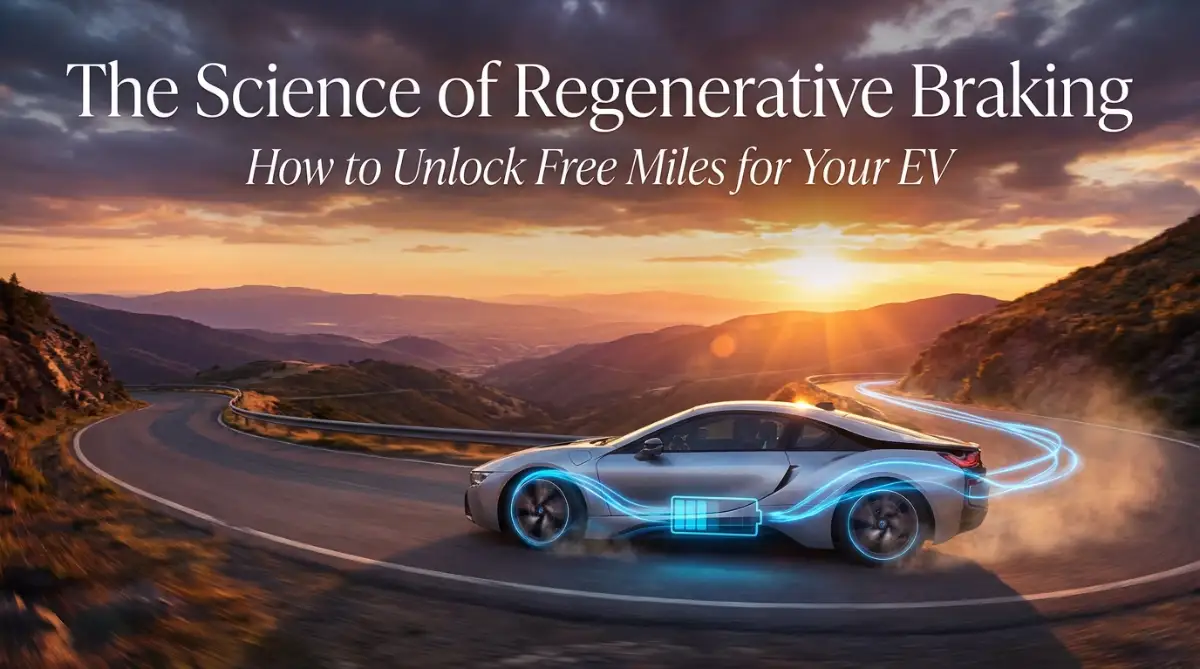
The Hidden Anxiety of Driving an Electric Car
Staring at a rapidly dropping battery gauge while you are miles away from the nearest charger is a nightmare every new electric car owner dreads. You grip the steering wheel, nervously calculating if you will actually make it home without calling a tow truck. But what if I told you your car has a built-in magic trick that creates free electricity out of thin air just by lifting your right foot? Let us look at how you can stop stressing and start unlocking extra free miles on your daily commute.
I saw the battery charge dropping much faster than I ever expected, and a cold, heavy knot formed instantly in my stomach. The nearest charging station was miles away, and sudden, gripping panic started to set in.
My hands gripped the steering wheel so tightly that my knuckles turned white, as I wondered if we would end up stranded on the side of a lonely, unfamiliar road. I was fully experiencing the terrifying reality of range anxiety.
Then, as we finally crested the tall hill and started the long, sweeping descent down the other side, something absolutely amazing happened.
My battery percentage actually started creeping back up, saving our family trip and blowing my mind completely. That was my very first real-life encounter with the incredible power of energy recovery.
For everyday people, switching to an electric vehicle brings a massive wave of excitement, but it also brings a completely new set of fears. Range anxiety is a very real, very heavy mental burden that ruins the driving experience for so many new owners.
You find yourself constantly staring at the battery gauge instead of enjoying the beautiful scenery around you. You hesitate to turn on the air conditioning on a hot day just because you are scared of losing a few precious miles of range.
This constant mental calculation destroys the peace of mind that driving is supposed to offer. Planning a simple weekend getaway suddenly feels like organizing a complex military operation.
Families end up fighting over where to stop, constantly worrying if the charger at the next resting point will even be working. It feels incredibly frustrating when a simple drive turns into a stressful math problem.
But what if I told you that your car has a built-in magic trick to fight off this exact problem? There is a brilliant scientific mechanism working silently under your feet every time you lift your foot off the accelerator.
Once you truly understand how this hidden system works, that terrifying range anxiety slowly starts to melt away. You will no longer view braking as just a way to stop, but as a powerful tool to generate free electricity.
Quick Action Guide: What You Will Learn Today
- How lifting your foot off the pedal turns your car's motor into an active power generator.
- Why heavy, stop-and-go city traffic actually adds free miles to your daily range.
- The exact reason why keeping your battery at 100% full disables your energy recovery.
- Simple driving habits to stop wasting electricity and start protecting your brake pads.
Turning Your Momentum Into Pure Electricity
To really appreciate how your electric car saves power, we need to look at the basic physics of moving objects. Do not worry, we are going to keep this completely free of boring textbook jargon.
When you drive a heavy car down the highway, your vehicle builds up a massive amount of moving energy. In the science world, they call this kinetic energy.
In a traditional gas-powered car, when you press the brake pedal, the brake pads clamp down hard on the metal rotors. This harsh physical friction creates a ton of heat, which literally burns away all that moving energy into thin air.
It is incredibly wasteful when you stop to think about it. You spend money on fuel to get the car moving, and then you just throw all that energy away as useless heat whenever you encounter a red light.
Electric cars completely rewrite this rulebook by turning the stopping process into an energy-gathering mission. Instead of relying only on friction, an electric vehicle uses its own driving motor to slow you down.
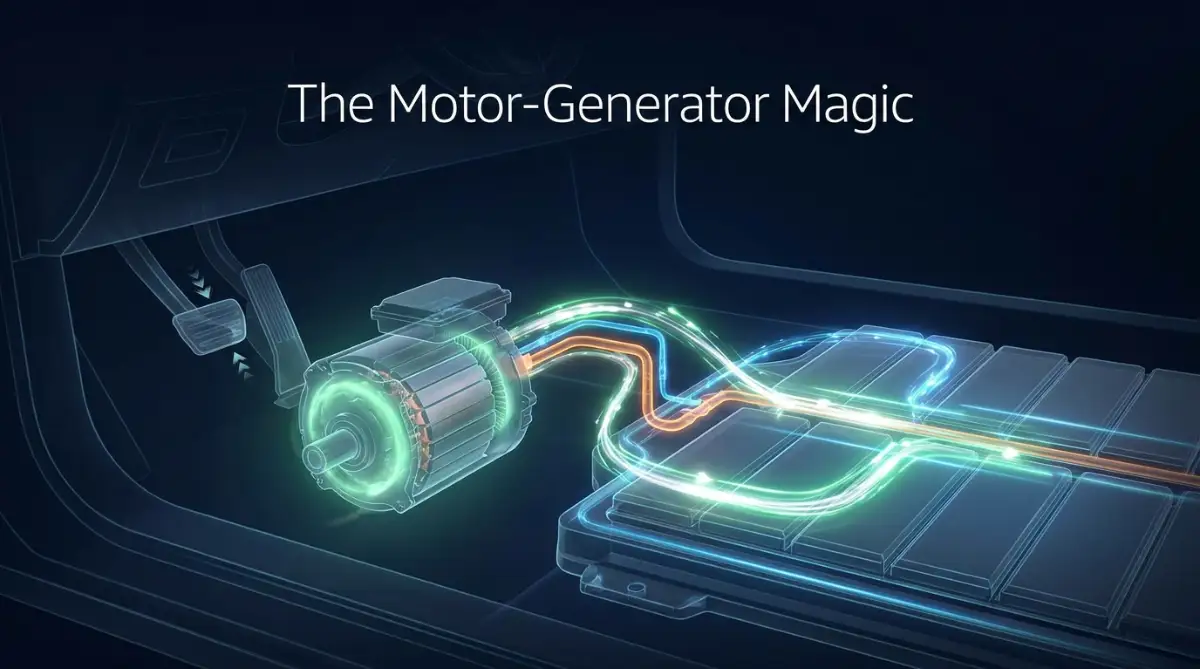
When you take your foot off the accelerator, the car instantly reverses the role of the electric motor. The machine that was just pushing you forward suddenly transforms into an active power generator.
As the wheels continue to spin from the momentum of the heavy car, they physically turn this generator. The generator creates strong electrical resistance, which smoothly and safely slows the vehicle down.
While the car is slowing down, the generator is rapidly pumping fresh electricity straight back into your battery pack. You are literally turning your car's physical momentum directly into extra driving range.
Think of it like riding a bicycle that has an old-school headlight powered by the wheel. When you engage the light, it gets harder to pedal because the dynamo is stealing your moving energy to create electricity.
Your car does the exact same thing, just on a much larger and more powerful scale. This brilliant process is exactly why an electric vehicle feels so different and so efficient when you drive it in heavy traffic.
Visualizing the Energy Flow (Real-World Examples)
Sometimes, understanding the science is a lot easier when we compare it to everyday things we already know. Let us look at a few simple scenarios that make this energy transfer incredibly easy to picture.
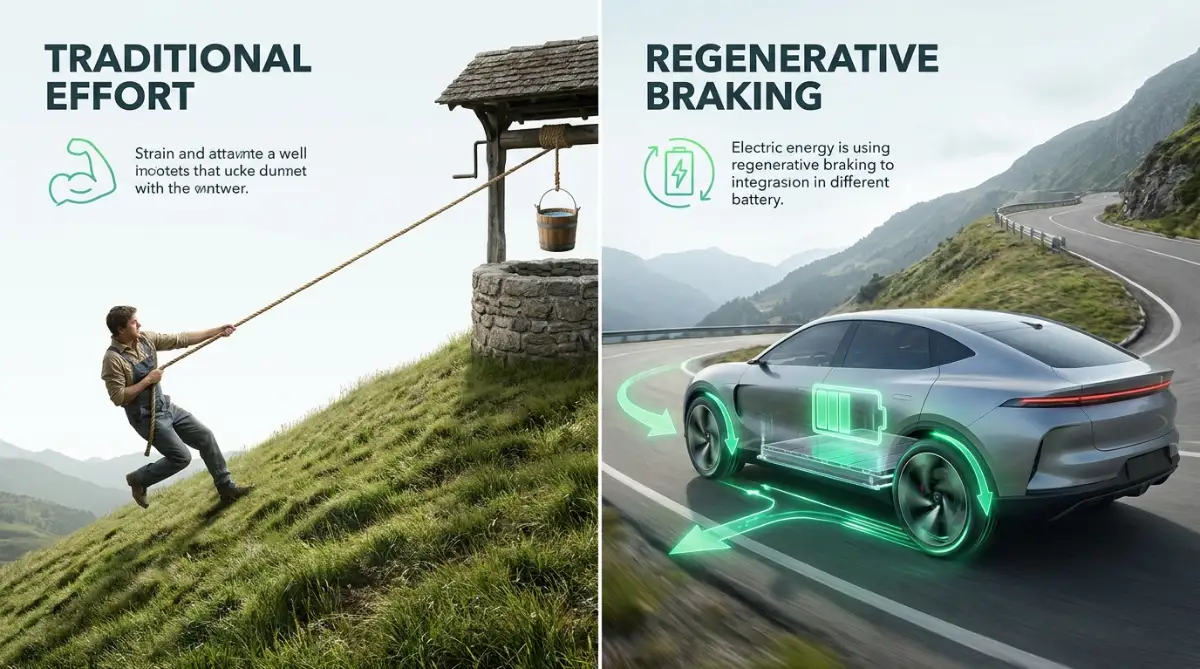
Imagine you are running as fast as you can down a steep grassy hill. Gravity and your own momentum are pushing you forward, making it hard to stop without falling over.
If you suddenly grab onto a sturdy rope attached to a heavy bucket of water in a well, your forward momentum will pull that bucket up. You will slow down safely, and you will have done useful work by lifting the water.
Regenerative braking does the exact same useful work. Instead of lifting water, your forward momentum is pushing chemical energy back into the battery cells.
Why Stop-and-Go Traffic is Actually Good
If you drive a regular gas car, sitting in bumper-to-bumper city traffic is an absolute nightmare for your fuel economy. You burn gas just to move ten feet, and then you burn your brake pads to stop again.
For an electric vehicle owner, heavy city traffic is basically a free charging session. Every time you creep forward and let off the pedal, the motor captures that tiny bit of movement and sends it to the battery.
Because of this constant stopping and starting, electric cars actually perform much better in the city than they do on the open highway. It is a completely opposite experience from what we are all used to with traditional cars.
Pro Tip: When I first got my EV, I kept turning off the regeneration feature because the sudden slowing down felt weird to me. It was a huge mistake; once I forced myself to get used to it for a week, my daily battery usage dropped significantly, and I never went back!
Below, you will find a highly recommended visual breakdown of how this energy flows through your car's internal system. This visual aid makes the entire scientific process click into place perfectly.
Watch this amazing breakdown to see exactly how your motor flips into a generator in real time:
The Ultimate Showdown: Old School vs New Tech
To fully grasp why this technology is so revolutionary, we need to put the two braking methods side by side. Seeing the direct differences helps you understand why the automotive industry is permanently shifting away from old habits.
When you use traditional friction brakes, you are actively wearing down expensive physical parts. You have to replace brake pads and rotors frequently, which costs you a lot of money at the mechanic's shop.
Because the electric motor does almost all of the heavy lifting, your physical brake pads are rarely ever used. Many electric vehicle owners go hundreds of thousands of miles on their original factory brake pads.
Here is a quick look at how the two systems compare in everyday driving scenarios:
This simple chart proves that the new way of stopping is not just a gimmick for tech lovers. It is a highly practical, money-saving feature that totally upgrades the way a car operates.
Simple Habits to Maximize Your Free Miles
Now that you understand the science, you probably want to know how to get the absolute most out of this system. It turns out that your daily driving habits play a massive role in how much energy you can recover.
The biggest secret to mastering this technology is anticipating the traffic far ahead of you. If you see a red light in the distance, do not keep your foot on the accelerator until the last second.
Instead, gently lift your foot off the pedal very early and let the car glide itself to a stop. This long, smooth deceleration period gives the generator maximum time to pump electricity back into your battery.
If you wait too long and have to slam on the brakes, the car will panic and use the traditional friction brake pads to stop you safely. Slamming the brakes completely bypasses the regeneration system, giving you zero energy back.
Mastering the Art of One-Pedal Driving
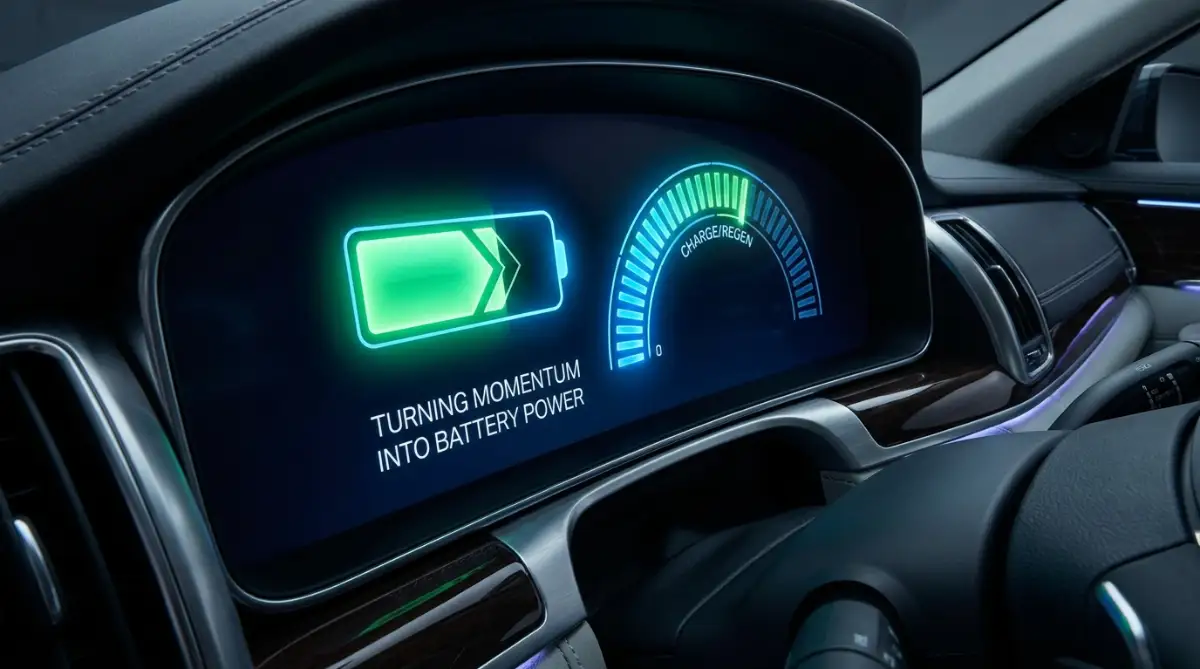
Almost all modern electric cars offer a feature commonly known as one-pedal driving. When you turn this setting on, the regeneration system becomes incredibly aggressive the second you lift your foot.
You can literally drive around town all day without ever touching the actual brake pedal. You push down to go faster, and you simply lift up to slow down and come to a complete stop.
It takes a little bit of muscle memory to learn how to feather the pedal smoothly. At first, you might make your passengers a little seasick with jerky movements.
However, once you learn to smoothly ease your foot off the pedal, it becomes the most relaxing way to drive a car. Your right leg will thank you after a long, tiring commute in heavy traffic.
Real-World Check: How much range do you actually get back?
You might be wondering if one-pedal driving actually makes a big difference. On average, heavy city stop-and-go traffic can recover up to 15% to 20% of the energy you spend. If you are driving down a massive mountain, you can sometimes recover enough energy to add 10 to 15 extra miles to your total range just from coasting!
The Hidden Impact of Cold Weather
There is one highly important scientific reality that many new owners completely miss during their first year. The temperature outside physically changes how well your battery can absorb recovered energy.
When a lithium-ion battery gets extremely cold, the internal chemical reactions slow down dramatically. A freezing cold battery simply cannot accept a massive, sudden rush of electrical power from the generator.
Because of this, your car's computer will intentionally limit your regenerative braking power on cold winter mornings. You might take your foot off the pedal and notice the car does not slow down nearly as fast as it usually does.
Always keep in mind that your car will feel slightly different during the winter months. As you drive and the battery warms up naturally, the full stopping power will slowly return to normal.
Busting the Biggest Battery Myths
Whenever a new technology enters the public eye, a lot of weird rumors and misunderstandings start to spread quickly. Let us clear up some of the most common myths regarding energy recovery systems.
Myth: Using maximum regeneration all the time will overcharge and destroy my battery pack.
Reality: Your car has a highly advanced battery management computer that constantly monitors cell health. If your battery is sitting at 100% full, the computer simply turns off the regeneration to protect the cells from overcharging.
Myth: I will get all my battery power back if I just drive down a big enough hill.
Reality: While you can definitely recover a lot of energy going downhill, the laws of physics prevent 100% efficiency. You will always use more energy climbing up the mountain than you will recover coasting down the other side.
Understanding these physical limits helps you set realistic expectations for your daily driving range. It stops you from relying on false hopes and keeps your travel plans stress-free and entirely accurate.
By simply paying attention to how your car moves, you transform from a passive driver into an active energy manager. You start to see every stop sign and downward slope as a fun opportunity to score free electricity for your journey.
Secrets to Maximizing Your Daily Driving Range
Once you get comfortable with the basic feeling of your new electric car, a whole new world of driving strategy opens up. You stop being just a passenger behind the wheel and start thinking like a smart energy manager.
I remember when I first figured out these hidden strategies during a long highway commute. I actually arrived at my destination with more driving range than the car originally predicted, which felt like an absolute superpower.
If you recently went through the stressful process of getting approved for your first auto loan to buy an electric vehicle, you definitely want to protect that big investment. Learning these advanced driving secrets will help you get the absolute most value out of your brand-new car.
The Art of Looking Three Cars Ahead
The absolute best way to generate free electricity is to completely change how you look at the road ahead of you. Most drivers only pay attention to the bumper of the car immediately in front of them.
This creates a terrible habit where you constantly react at the very last second. You end up pressing the accelerator, suddenly realizing traffic is stopped, and then mashing your foot heavily onto the brake pedal.
Instead, train your eyes to look at least three or four cars down the road. If you see brake lights lighting up in the distance, you can simply take your foot off the power pedal right then and there.
This gives your electric motor a long, smooth period to capture all your forward momentum. A gentle, extended slowdown captures significantly more power than a sudden, aggressive stop.
Mastering the High and Low Recovery Modes
Most modern electric vehicles give you the option to completely customize how aggressive the stopping power feels. You can usually find these specific options buried inside your main dashboard screen settings.
Setting the system to "High" or "Aggressive" means the car will pull backward sharply the second you lift your foot. This aggressive setting is absolutely amazing for heavy, stop-and-go city traffic where you rarely reach high speeds.
However, keeping it on the highest setting while driving on an open, empty highway is actually a bad idea. On a flat highway, you want the car to glide smoothly and coast as far as possible without slowing down aggressively.
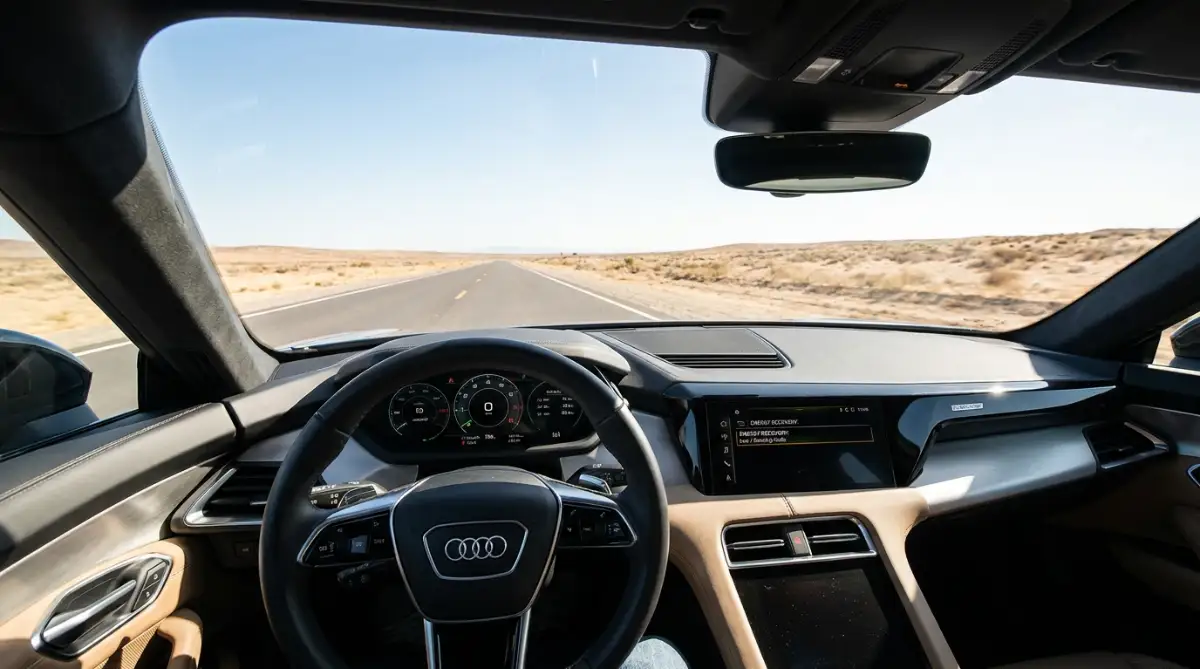
Many drivers switch to a "Low" or "Light" setting for long highway road trips. This allows the heavy vehicle to maintain its natural speed, acting more like a traditional car when you take your foot off the pedal.
According to a detailed engineering study published by the Society of Automotive Engineers (SAE), manually adjusting your recovery settings based on your driving environment can improve your overall battery efficiency by up to twenty percent.
Why Your Tire Pressure Changes Everything
Here is a strange scientific fact that most dealership salespeople completely forget to mention. The amount of air in your tires directly affects how much energy your car can successfully capture.
Think about riding a bicycle with a completely flat tire on a sandy beach. It takes a massive amount of leg power just to move forward, and the moment you stop pedaling, you lose all your momentum instantly.
When your car tires are slightly under-inflated, they create heavy rolling resistance against the asphalt. This extra friction silently eats up your forward momentum before the generator even has a chance to turn it into electricity.
Make it a solid weekly habit to check your tire pressure gauge on the dashboard. Keeping your tires properly filled ensures that your car glides smoothly, allowing the motor to capture the maximum amount of moving energy.
A Quick Mechanic's Secret: A drop of just 3 to 4 PSI in your tires can force your electric motor to work up to 10% harder just to move forward. I always keep a cheap digital pressure gauge in my glovebox. I make it a habit to check my tires every Sunday morning to make sure my energy recovery system is operating at absolute peak performance.
Understanding the 80% Battery Sweet Spot
You might think that starting your morning with a battery charged to 100% is the smartest move for a long trip. Surprisingly, having a completely full battery actually disables your car's ability to save power on the road.
Think of your battery pack like a giant bucket of water. If the bucket is already filled perfectly to the very top, you cannot pour even one more drop inside without it overflowing and causing a huge mess.
When your battery sits at a full 100%, the internal computer physically turns off the recovery system to prevent dangerous overcharging. If you live at the top of a large hill and start driving down with a full battery, you will get absolutely zero energy back.
This is exactly what actually causes electric vehicle battery degradation over long periods of time. For the best daily performance, set your home charger to stop at 80% or 90%, leaving just enough empty space for the car to store free energy on your morning commute.
If you are thinking about upgrading your home charging station to manage these daily limits better, you might consider unlocking some of your home's hidden equity to cover the electrical installation costs safely.
The Most Dangerous Habits Costing You Range
Transitioning from a traditional gas guzzler to a smart electric machine is a pretty massive learning curve. Many of us bring decades of old, deeply ingrained driving habits into our new cars without even realizing it.
Unfortunately, some of these old habits completely destroy the efficiency of an electric motor. These mistakes not only steal away your driving range, but they can actually cause unnecessary wear and tear on your expensive vehicle.
It is very similar to figuring out why your favorite smartwatch keeps dying rapidly just because you left a hidden background app running. If you do not actively change these bad driving behaviors, you will find yourself constantly hunting for public charging stations.
Let us break down the most common traps that new owners fall into. Recognizing these mistakes early will save you a ton of unnecessary stress and battery panic on the road.
The Myth of Shifting into Neutral
There is an incredibly old myth passed down from previous generations about saving gas on steep hills. The old advice claims that shifting your automatic transmission into "Neutral" while going downhill saves a ton of fuel.
While this was mildly true for ancient carburetors, doing this in an electric car is a complete disaster. The exact second you shift an EV into neutral, you completely disconnect the wheels from the electric generator.
You will speed down the hill uncontrollably, relying entirely on your physical brake pads to keep you safe from crashing. You literally throw away massive amounts of free electricity while simultaneously burning up your expensive physical brakes.
Always keep the car safely in "Drive" while going down any hill or mountain pass. The motor needs that physical connection to the spinning wheels to perform its energy-gathering magic safely.
Relying Too Heavily on the Brake Pedal
Old habits die hard, and the natural instinct to stomp on the left pedal is deeply wired into our brains. When we see a stop sign, our right foot automatically jumps over to the brake pedal out of pure muscle memory.
Every time you press that physical pedal hard enough, the car's computer assumes you are in an emergency situation. It instantly bypasses the smart electrical recovery system and squeezes the metal brake rotors tightly.
You lose all that beautiful kinetic energy to completely useless heat friction. You are essentially paying for electricity that you are just throwing away into the surrounding air.
According to advanced research from the National Renewable Energy Laboratory (NREL), aggressive late braking can reduce a vehicle's overall daily efficiency by an astounding thirty percent.
You have to actively train yourself to trust the automatic slowing process. Let the car do the heavy lifting by simply easing your foot off the power, and only use the physical pedal for complete stops or sudden emergencies.
Ignoring Cold Weather Warnings
Winter driving brings an entirely different set of challenges that catch many new owners completely off guard. Extreme cold physically thickens the internal chemicals inside a lithium-ion cell, making it sluggish and highly resistant to fast charging.
When you start your car on a freezing snowy morning, you will likely see a small snowflake icon or a warning message on your dashboard. This means the computer has severely limited your stopping power to protect the freezing battery from internal damage.
Many drivers ignore this warning, take their foot off the pedal, and get terrified when the car continues to roll forward at full speed. They end up slamming into the car in front of them because they expected the automatic system to slow them down.
Always pay close attention to your dashboard alerts during the winter months. Until the internal battery heater warms the cells up to a safe operating temperature, you must drive it exactly like a normal, old-school gas car.
If you use your car for important daily business tasks, getting into an unnecessary accident is the last thing you need. It is just like learning how to protect your personal assets; you have to understand the specific risks before they permanently damage your daily livelihood.
Your Action Plan for Smarter Driving
Getting the most out of your electric vehicle does not require an advanced degree in electrical engineering. It simply requires a slight shift in how you interact with the flow of daily traffic around you.
You now have a solid understanding of how your car magically turns physical motion directly into chemical battery power. You also know exactly which terrible old habits you need to leave behind in the rearview mirror.
Tomorrow morning, I want you to try a very simple driving experiment on your way to work. Turn your system setting to its highest aggressive mode, and see if you can make it all the way to your destination without ever touching the physical brake pedal.
Treat it like a fun video game where your high score is determined by how smoothly you can anticipate the red lights ahead. You will be absolutely amazed at how much extra battery life you have remaining when you finally pull into your parking spot.
My personal promise to you: I used to stare at my battery percentage in total fear during my early driving days. Once I finally trusted the science and changed my footwork, driving became an incredibly peaceful and rewarding experience, and I know it will do the exactly the same for you!
Common Questions About Energy Recovery Systems
Do electric cars actively charge themselves while I am driving?
Yes, they absolutely do! Every single time you take your foot off the accelerator or go down a steep hill, the motor reverses its function to send free electricity right back into your main battery pack.
Does this system ruin my physical brake pads faster?
It actually does the exact opposite. Because the electric motor does almost all the hard work to slow you down, your actual physical brake pads are rarely used and can easily last for years without needing replacement.
Why is my stopping power suddenly weak in the winter?
Lithium-ion batteries cannot safely accept a massive surge of electricity when the internal chemicals are freezing cold. Your car's computer intentionally weakens the recovery system on cold mornings to protect the battery from permanent physical damage.
Can I turn this feature completely off if I do not like it?
Most vehicle manufacturers allow you to turn the setting down to a very low level, but you usually cannot disable it completely. The system is deeply integrated into the car's efficiency software to ensure you actually meet the advertised driving range.
Does stopping aggressively give me more battery power?
No, aggressive stopping actually robs you of potential power. If you slam your foot on the pedal at the last second, the car uses the physical friction brakes to stop safely, which completely bypasses the electrical generation process.
Disclaimer: The driving strategies, safety tips, and technical explanations provided in this article are for general educational purposes only. Always refer directly to your vehicle's official manufacturing manual and local traffic laws before attempting new driving techniques.