The Silent Anxiety of the Blinking Cursor
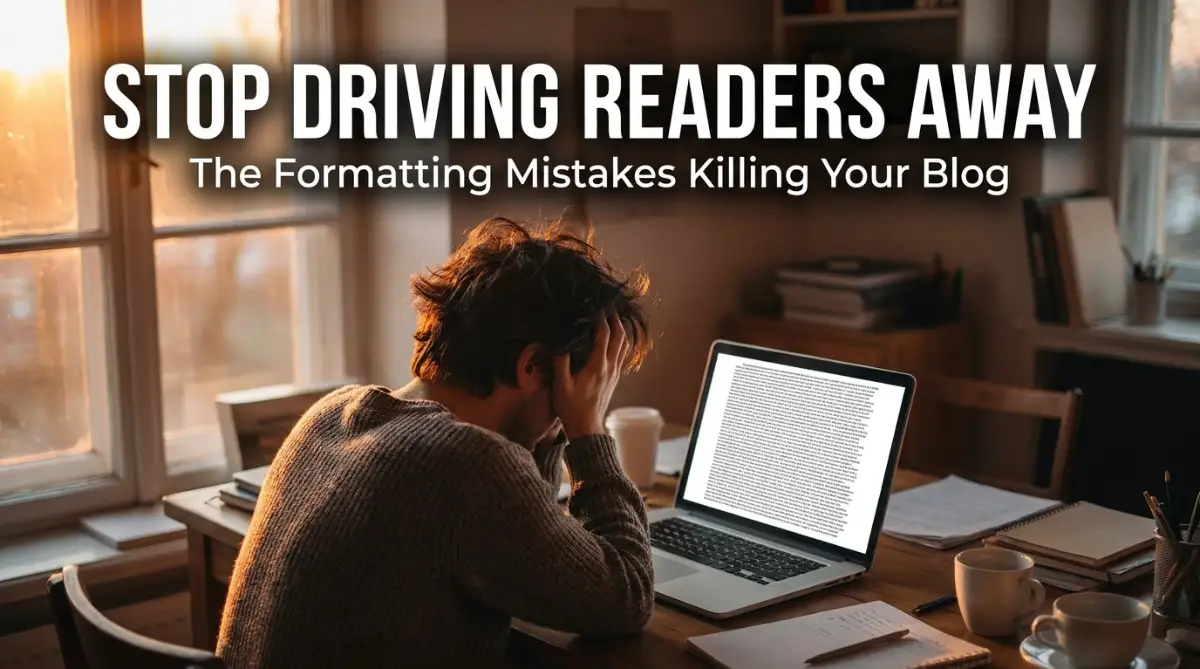
I still remember staring blankly at my laptop screen at 2:00 AM, my eyes burning from the harsh blue light. I had just finished writing what I thought was the perfect guide to indoor gardening. It answered the user's question perfectly, but the little word counter at the bottom of Google Docs mocked me with a stubborn "850 words."
Every so-called SEO guru on the internet had told me the exact same thing. They promised that if I wanted to reach the first page of Google, my article absolutely needed to be over 2,000 words. So, out of pure fear, I forced myself to write more.
I started adding the history of indoor plants, the exact scientific names of dirt, and meaningless filler paragraphs that nobody would ever want to read. I ruined my own masterpiece just to hit an imaginary number. My writing became robotic, and I felt completely exhausted.
This exact struggle is slowly destroying the mental peace of thousands of incredible writers and website owners everywhere. You sit down with genuine excitement to share your expertise, but that joy quickly turns into pure anxiety. Instead of focusing on helping your readers, you find yourself obsessing over reaching a specific length.
People are losing sleep trying to stretch a simple 500-word answer into a massive 3,000-word essay. This constant pressure leads to extreme burnout. Writers begin to feel like cheap content-producing machines rather than real humans sharing valuable knowledge.
The saddest part is how this obsession affects everyday life. Content creators skip meals, ignore their families, and spend their weekends typing out absolute nonsense just to satisfy a myth. We end up punishing ourselves, thinking we are not good enough, simply because our perfectly helpful article is "too short."
But what if I told you that all that extra typing is actually hurting your website? Today, we are going to break free from this exhausting cycle. It is time to look at the plain truth about content length and stop torturing ourselves over meaningless numbers.
Shattering the Grand Illusion of Content Length
For the longest time, the digital marketing industry operated on a very simple, yet highly flawed logic. People believed that if a long article ranked well, then length must equal quality. This simple misunderstanding created a massive wave of incredibly long, boring, and useless articles flooding the internet.
We need to clear the air right now. Search engines do not have a magical preference for long essays. They do not sit there counting your words and giving you bonus points for passing the 2,000-word mark. Their only goal is to provide the best possible answer to the person searching.
Think about your own habits when you use a search engine on your phone. You are usually in a hurry. You want quick, accurate, and easy-to-read information.
Why More Words Can Actually Harm Your Website
Imagine you are trying to find out the boiling temperature of an egg. You type the question into your phone while standing in the kitchen. The first result you click on is a massive 4,000-word article.
First, the author tells you about the history of chickens. Then, they explain the molecular structure of boiling water. You keep scrolling, getting more and more frustrated. Eventually, you leave the website without ever finding out how long to boil your egg.
This behavior sends a massive red flag to search engines. When users land on your beautifully written 4,000-word guide and immediately leave because they cannot find the answer, your "bounce rate" spikes. Search engines see this fast exit as a sign that your page is entirely unhelpful.
When you stuff your articles with unnecessary fluff, you bury the real value. Your readers become annoyed. They hit the back button and visit your competitor's site instead. This directly destroys your organic search visibility, no matter how perfectly optimized your keywords are.
Pro Tip from My Own Experience:
I used to write massive introductions summarizing everything the reader was about to read, thinking it added great value. I quickly realized this just irritated people who wanted immediate answers. Now, I always try to give away the main solution in the very first paragraph, and my reader retention has skyrocketed.
The True King: Understanding Search Intent
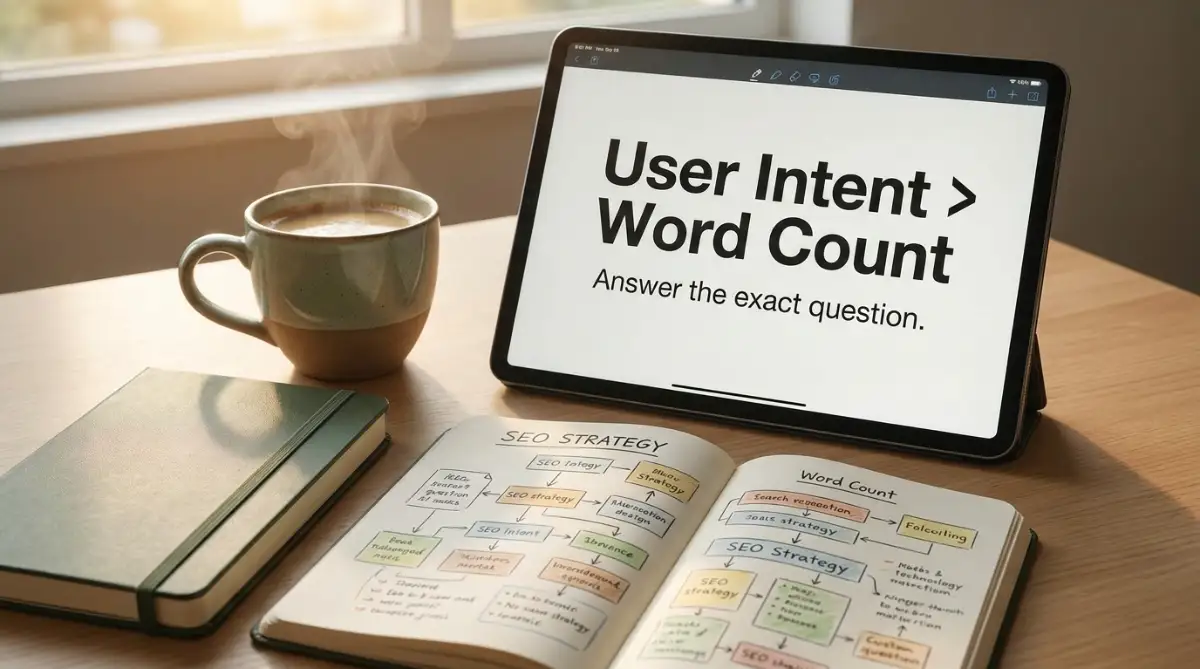
If word count is a complete myth, then what is the actual secret to ranking on the first page? The answer lies in something called "User Search Intent." This is simply a fancy way of asking: What exactly does the user want to achieve right now?
Search intent can generally be broken down into a few distinct categories. Some people want to buy something immediately. Others want to navigate to a specific website. However, the vast majority of people are looking for pure information.
Bold introduction for the video below: If you really want to stop wasting your time writing endless filler content, you need to deeply understand exactly what your audience is looking for. Watch this highly practical breakdown of how to perfectly match your writing with what searchers actually want.
If a user searches for "how to tie a tie," their intent is highly practical and action-oriented. They do not want a novel. They want simple, step-by-step instructions, ideally with pictures. A 300-word article with great images will easily outrank a 3,000-word essay on the cultural significance of neckties.
On the flip side, if a user searches for "the complete causes of World War II," their intent is entirely different. They are expecting a deep, detailed, and highly researched piece of content. In this specific scenario, a 300-word summary will never rank, because it simply cannot satisfy the searcher's deep curiosity.
Therefore, the ideal length of your article is entirely dictated by the topic itself. You need to write exactly as many words as it takes to fully satisfy the user. Not one word more, and not one word less.
Breaking Down the SERP Competitor Myth
A lot of SEO tools will scan the top ten results on Google and give you an "average word count." For example, the tool might tell you that the top-ranking pages have an average of 1,850 words. The tool then suggests that you must write 2,000 words to beat them.
This is incredibly misleading data. Correlation does not equal causation. Those top pages are not ranking simply because they have 1,850 words. They are ranking because they thoroughly answered the question. The word count is just a byproduct of that thorough explanation.
If you just look at the word count and try to match it, you are playing a losing game. You will end up writing repetitive nonsense just to hit that target. Instead, you need to look at what those competitors are actually saying.
- What questions did they fail to answer?
- Are their explanations overly complicated?
- Can you explain the exact same concept faster and clearer?
If you can take the core message of a 2,000-word competitor article and explain it perfectly in 900 words, you have a massive advantage. You have created a better user experience. You have saved the reader's time, and search engines heavily reward websites that respect the user's time.
Quality Metrics That Actually Move the Needle
Since we are throwing the word counter in the trash, we need new ways to measure success. How do we know if our article is actually good enough to rank? Search engines look at several hidden signals that happen after a user clicks on your link.
One of the most important signals is "Dwell Time." This is the amount of time a person spends on your page before going back to the search results. If someone stays on your page for four solid minutes reading a highly engaging 800-word post, that is a massive success.
Another major signal is "Scroll Depth." Are people actually scrolling down to the bottom of your article? If you have a 3,000-word post full of fluff, people will stop scrolling after the first two paragraphs. But if you have a tight, punchy, 1,000-word article packed with value, they will read every single line.
You also want to look at your "Click-Through Rate" to other pages on your site. If your article is genuinely helpful, the reader will trust you. They will naturally want to click on your internal links to learn even more from you.
When you write naturally, without forcing a specific length, all of these positive signals happen organically. Your writing flows better. Your personality shines through. You stop sounding like a textbook and start sounding like a trusted friend giving great advice.
The Semantic Richness Strategy
Instead of focusing on length, we should focus on depth. This is where the concept of semantic richness comes into play. Semantic richness means covering a topic completely by including related concepts naturally.
Let's say you are writing an article about "how to make perfect cold brew coffee." A thin article might just say "mix coffee grounds with water and put it in the fridge." That is technically true, but it lacks any real depth.
A semantically rich article will naturally discuss the grind size of the coffee beans. It will mention the best ratio of water to coffee. It might briefly touch upon the difference between cold brew and iced coffee.
Notice how we are adding more words, but we are not adding fluff. We are adding actual, usable value. We are predicting the next question the reader might have and answering it before they even have to ask.
When you write like this, your word count will naturally increase on its own. You won't have to force anything. The length of the article will simply reflect the depth of your knowledge.
Let Go of the Unnecessary Guilt
It is incredibly liberating when you finally give yourself permission to write short articles. You start to enjoy the process of writing again. You can publish content much faster because you are no longer agonizing over empty paragraphs.
You will notice that your overall site architecture improves. Instead of writing one massive, confusing super-guide, you can write five tightly focused, highly specific articles. These smaller articles interlink beautifully, creating an easy-to-navigate web of pure value for your readers.
I want you to make a promise to yourself today. The next time you sit down to write a blog post, completely ignore the word count tool. Hide it if you have to.
Focus entirely on the person sitting on the other side of the screen. Think about their exact problem. Give them the fastest, easiest, and most accurate solution possible.
If that takes 400 words, that is absolutely perfect. If it naturally takes 2,500 words because the topic is genuinely that complex, that is perfect too. Let the topic dictate the length, not some outdated industry rumor.
Search engines are getting smarter every single day. Their artificial intelligence is designed to read pages like a real human being. They know when you are padding your content with empty sentences.
By respecting your reader's time and delivering straight-to-the-point value, you are future-proofing your website. You won't have to worry about the next big algorithm update. Your helpful, naturally written content will always stand strong because it does exactly what it is supposed to do: it actually helps people.
Elevating Your Content Beyond Meaningless Word Counts
Now that we understand why stuffing articles with empty words destroys your website's performance, we need a better approach. You might be wondering how to actually compete with massive guides without writing thousands of words yourself. The secret lies in providing unique value that nobody else is offering.
When you stop treating your writing like a high school essay, your entire creative process changes. You stop asking, "How long should this be?" Instead, you start asking, "How can I make this the most helpful page on the internet?"
To truly dominate search results, you must master the art of information density. This means packing the maximum amount of helpful advice into the shortest amount of reading time. Let's look at some advanced strategies to make your writing absolutely irresistible to both readers and search engines.
Master the Concept of Information Gain
Search engines are incredibly smart at detecting duplicate ideas across different websites. If you just rewrite what the top five competitors are saying, you are not adding anything new to the internet. This lack of originality makes it nearly impossible to rank, even if you write ten thousand words.
You need to focus heavily on "Information Gain." This simply means providing a fresh perspective, a unique test result, or personal data that no one else has. For example, if everyone is listing the basic features of a camera, you should share a photo you actually took with that exact camera.
When you share your own experiences, your content naturally becomes richer and more engaging. You might find that sharing your unique perspective only takes 300 words, but those words are incredibly powerful. If you are struggling with crafting precise content prompts to outline your ideas, always start by listing your own personal experiences first.
Anticipate the User's Next Move
The best writers on the internet have a superpower: they know exactly what you are going to ask next. They do not just answer the main search query; they answer the natural follow-up questions. This strategy naturally expands the length of your article with pure, high-quality value.
Imagine someone searches for "how to fix a leaky faucet." The immediate answer might be a short five-step process. But a truly helpful writer knows the user will soon wonder, "What tools do I need?" or "How do I turn off the main water line?"
By anticipating these follow-up problems, you build deep trust with your reader. You save them from having to go back to Google to type in a second question. This keeps them on your website longer, which is a massive positive signal for your organic visibility.
Embrace Radical Formatting for Scanners
Most people do not read online articles word-for-word anymore. They aggressively scan the page looking for the exact sentence that solves their problem. According to a famous usability study on how people read online by Nielsen Norman Group, most users scan in an F-shaped pattern, looking for bold text and bullet points.
If your article consists of massive blocks of text, readers will feel overwhelmed and leave immediately. You need to break your ideas down into tiny, digestible chunks. Use highly descriptive subheadings, short paragraphs, and bolded keywords to guide the reader's eyes.
Sometimes, the best way to explain a complex topic is not with words at all. A simple comparison table or a custom graphic can replace 500 words of boring explanation. Treat your website like a visual roadmap, mapping out a complex content strategy that guides the user directly to the answer.
Speak Directly to Your Reader
One of the best ways to keep a reader glued to the screen is to write exactly how you speak. Forget the overly formal, robotic language you learned in college. Use conversational words like "you," "I," and "we" to create a direct connection.
When you use a conversational tone, complex ideas become much easier to understand. You start using natural analogies and real-life examples instead of dry, academic definitions. This friendly approach makes your writing feel like advice from a trusted mentor.
If you are stepping away from your regular 9-to-5 content habits, adjusting to this casual style might take a few days. Read your drafts out loud to yourself. If a sentence sounds like something a robot would say, delete it immediately and write it the way you would explain it to a friend over coffee.
The Hidden Traps Destroying Your Content Strategy
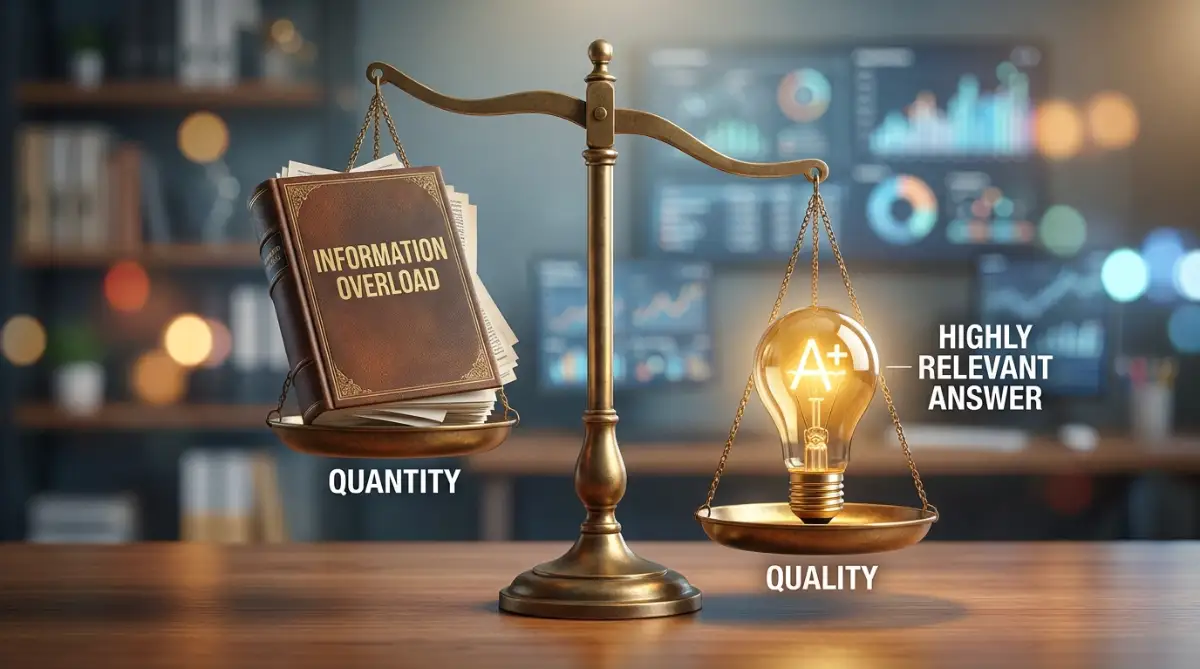
Even with the best intentions, it is incredibly easy to fall back into bad habits when you see a blank page. The pressure to hit an imaginary word limit can trick your brain into making terrible decisions. We need to identify these dangerous traps so you can actively avoid them.
Falling for these common pitfalls will not just hurt your search rankings; it will destroy your credibility. When readers feel like their time is being wasted, they remember your brand in a negative light. Let's break down the most toxic writing habits that are quietly killing your organic growth.
The Endless Backstory Trap
We have all experienced this frustration when trying to look up a simple cooking recipe online. You search for "how to make chocolate chip cookies," and you click the first link. Instead of a recipe, you are forced to read a 1,000-word emotional story about the author's childhood memories of baking with their grandmother.
This is the ultimate example of padding an article just to increase the word count. The author knows you only want the ingredients, but they force you to scroll through endless fluff. This behavior guarantees a terrible user experience.
Never hide your main solution at the very bottom of the page. Give the reader the most important information right at the top. If you want to share a personal story to build connection, do it after you have already solved the user's primary problem.
The Illusion of Keyword Stuffing
A few years ago, people believed that mentioning their main topic 50 times in a single post would magically boost their rankings. They would write bizarre sentences like, "If you want cheap shoes, buy these cheap shoes because cheap shoes are great." This robotic phrasing makes your website look incredibly spammy.
Today, search algorithms use natural language processing to understand the overall context of your writing. They do not need you to repeat the exact same phrase over and over again. Doing so will actually trigger spam filters and get your page pushed down in the results.
Focus entirely on writing naturally and completely ignore keyword density tools. By naturally discussing related subtopics, you will automatically include all the right terms. This approach ensures you are strictly understanding strict search engine guidelines without sounding like a broken machine.
Watering Down Your Expertise
When writers try to stretch a 500-word topic into a 2,000-word marathon, they usually end up writing in circles. They will state a simple fact, and then spend three paragraphs repeating that exact same fact using slightly different synonyms. This makes the writer look like they have no idea what they are talking about.
If a user notices that you are just repeating yourself, they will instantly lose trust in your expertise. They will assume you do not actually have a deep understanding of the subject. This loss of trust completely destroys any chance of them clicking on your affiliate links or subscribing to your newsletter.
If you have covered the topic completely, just stop writing. Do not try to force another section just because the page looks a little short. Quality and conciseness always win over repetitive, watered-down nonsense.
Ignoring the Mobile User Experience
When you are typing away on a large desktop monitor, a 300-word paragraph might not look too intimidating. But you must remember that the majority of your audience is reading your post on a tiny smartphone screen. On a mobile device, that single paragraph looks like an impenetrable, massive wall of text.
When mobile users encounter massive blocks of text, their eyes naturally glaze over. They feel exhausted before they even start reading, so they hit the back button. This massive bounce rate is one of the worst costly strategic blunders you can make in digital marketing today.
Always preview your content on a mobile device before you hit the publish button. Break your paragraphs down to a maximum of three sentences. Use plenty of white space, clear headings, and bullet points to give your mobile readers room to breathe. According to Google's official guidelines on creating helpful, people-first content, formatting for readability is a massive factor in user satisfaction.
Your Fresh Action Plan for Content Creation
We have completely dismantled the outdated myth that longer articles automatically perform better. You now have the permission to write exactly what needs to be written, without the heavy burden of hitting a useless word target. This shift in mindset will save you hundreds of hours of unnecessary typing.
Your new goal is to become the most direct, helpful, and trustworthy resource in your industry. When someone clicks on your website, they should feel a sense of massive relief. They should think, "Finally, someone just gave me the straight answer without wasting my time."
To achieve this, always start your drafting process by identifying the user's core problem. Write the exact solution in the very first paragraph. Then, use the rest of your article to prove your article concept works by providing deep context, answering follow-up questions, and sharing your personal experiences.
A Personal Note Before You Go:
I wasted so many years of my life typing out meaningless filler content because I was too scared to break the rules. The day I finally started writing purely to help my readers, regardless of the length, my traffic completely transformed. Trust your own voice, respect your reader's time, and the results will naturally follow.
Your Biggest Content Length Questions Answered
Does Google penalize websites for having short articles?
No, search engines do not hand out penalties just because a post is short. A 300-word article can easily rank in the top spot if it perfectly satisfies the user's intent. Penalties only happen when content is spammy, unhelpful, or completely copied from other websites.
How do I figure out the perfect length for my specific blog post?
Stop looking at word counting tools and start looking at the actual search results. Look at the top-ranking pages and see how much detail they provide to answer the question. Your goal is to provide a better, more accurate answer, whether that takes fewer words or more.
Should I go back and delete my old, short blog posts?
Absolutely not, unless the information is completely incorrect or useless. If an old, short post still answers a specific question accurately, it holds value. Instead of deleting it, you can update it by adding fresh insights, a better layout, or answering new follow-up questions.
Is it true that longer content gets more backlinks?
Often, highly detailed, well-researched guides do attract more links because they act as comprehensive resources. However, it is the depth of the research and the unique data that earns the link, not the sheer volume of words. A short post with an incredible, original infographic will earn far more links than a boring 4,000-word essay.
Can I rank high if I only write 500-word articles?
Yes, if your website focuses on highly specific, direct questions that require fast answers. Niche sites focused on definitions, quick tutorials, or simple facts thrive on short-form content. Just ensure that every single one of those 500 words is packed with high-quality, actionable value.
Disclaimer: The information provided in this blog post is for educational and informational purposes only. Search engine algorithms frequently update, and individual website results may vary. Always perform your own research and consult with a professional digital marketing expert before making major changes to your website strategy.