The Frustrating Battle of the Blank Screen
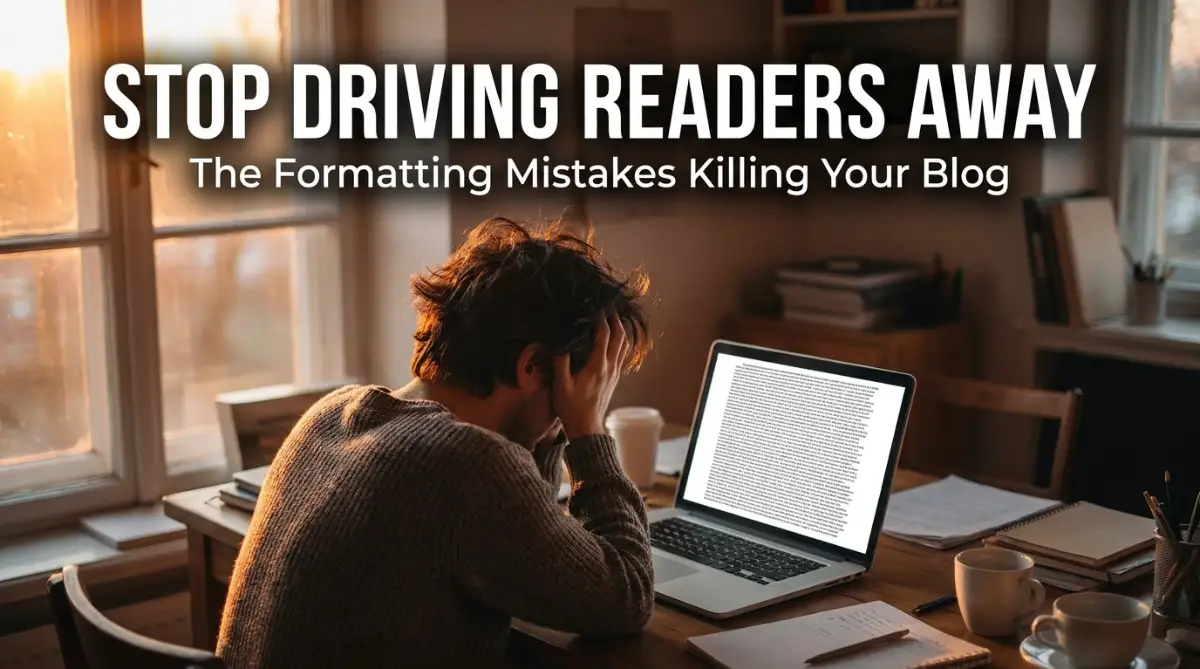
I still remember sitting at my desk late at night, staring at a completely blank screen for over an hour. My fingers were resting on the keyboard, but my mind was completely frozen. I knew exactly what I wanted to say in the main body of my article. I had all the research, all the facts, and all the best advice ready to go.
But I just could not figure out how to start. Every time I typed a first sentence, it sounded boring, robotic, or completely unnatural. I would write a line, delete it, sigh heavily, and try again.
This simple task of starting an article turned into a massive mountain of anxiety. I felt like I was standing on a stage with a microphone, and the entire audience was just waiting for me to say something interesting. Because I could not find the right opening words, I started doubting my own writing skills.
This is the exact same struggle that destroys the confidence of so many talented new writers today. You have amazing knowledge to share, but that blinking cursor makes you feel totally paralyzed. You spend hours agonizing over the first few lines, losing all your creative energy before you even get to the good part.
When you finally force yourself to write a generic opening, a new fear sets in. You start worrying that people will click on your link, read that boring first sentence, and immediately leave your website. This constant fear of high bounce rates ruins the fun of blogging and turns your passion into a stressful chore.
Ordinary people are spending their valuable weekends stressing over simple introductions instead of actually enjoying the writing process. They feel like they are missing some secret formula that all the big, successful bloggers use. The truth is, writing an opening does not have to be this emotionally draining.
Today, I want to show you exactly how to break free from this frustrating cycle. We are going to look at a simple, stress-free way to start any article perfectly, every single time.
Why the First 10 Seconds Determine Your Success
Before we look at exactly how to write your opening, we need to understand the psychology of an internet reader. When a person clicks on your blog post, they are not giving you their full trust yet. They are simply giving you a tiny window of opportunity to prove your worth.
Science and behavioral studies tell us that you have about eight to ten seconds to convince someone to stay on your page. If your opening does not grab them immediately, they will hit the back button without a second thought. They do not care how much time you spent researching the topic.
Think of your introduction as the front door to a restaurant. If the front door is dirty, confusing, and uninviting, nobody will walk inside. It does not matter if the chef is preparing a five-star meal in the kitchen.
If they do not step through the door, they will never taste the food. Your introduction is that front door. Its only job is to welcome the reader, make them feel comfortable, and convince them to read the very next sentence.
The Biggest Misconception About Starting an Article
A lot of beginners think that an introduction needs to summarize the entire history of the topic. They treat it like a college essay. They use big, heavy words and try to sound incredibly academic.
This is the fastest way to put your reader to sleep. People on the internet are looking for quick solutions to their problems. They are not looking for a textbook definition of something they already know.
If someone searches for "how to fix a leaky pipe," they do not want to read an introduction about the invention of modern plumbing. They have water ruining their floor right now. They want you to acknowledge their immediate problem and promise a fast solution.
The Anatomy of an Irresistible Opening
To make things incredibly easy, we can break a perfect opening down into three distinct parts. You do not need a degree in literature to master this. You just need to follow a logical flow of human conversation.
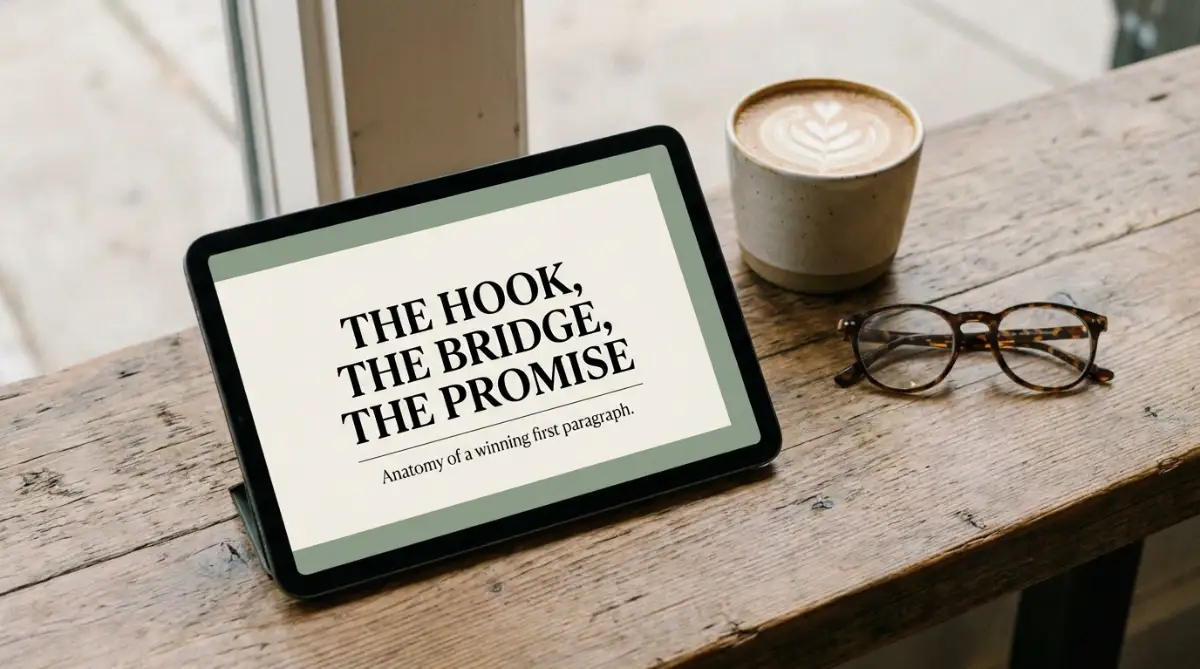
We will call these three parts the Hook, the Bridge, and the Promise. When you put these three pieces together, you create a slide that pulls the reader deep into your content. Let's explore exactly how each part works in real life.
Part 1: Dropping the Perfect Hook
The hook is your very first sentence. It is the absolute most important string of words on your entire page. Its singular purpose is to snap the reader out of their daydream and make them pay attention.
There are several highly effective ways to create a hook that feels totally natural. You do not want to use cheap clickbait. You want to use genuine human empathy.
The Empathetic Question:
One of the best ways to hook someone is to ask a question that they are already asking themselves. If you are writing an article about saving money, your hook could be: "Do you ever feel like your paycheck completely disappears by the second week of the month?"
When the reader sees that question, their brain automatically says, "Yes! That is exactly how I feel." You have instantly created a connection. You have proven that you understand their specific pain.
The Shocking Truth:
Another great way to start is by presenting a surprising fact that challenges what they normally believe. For example: "Most people think eating less is the secret to weight loss, but skipping meals is actually making you hold onto fat."
This creates an immediate sense of curiosity. The reader is thinking, "Wait, really? How does that work?" Because you have created a gap in their knowledge, they are forced to keep reading to find the answer.
Pro Tip From My Own Mistakes:
I used to waste so much time trying to write the perfect hook before I wrote the rest of my article. I realized that it is almost impossible to introduce something you haven't fully created yet. Now, I always write my introduction completely last, after the main body is finished, and it makes the process ten times easier.
Watch This Breakdown:
If you want to see a live demonstration of how the most successful writers capture attention within the first few seconds, you need to watch this incredible breakdown of hook psychology. This video perfectly explains how to use emotional triggers to keep readers glued to your screen.
Part 2: Building the Empathy Bridge
Once you have hooked the reader, you cannot just jump straight into a boring list of instructions. You need to transition smoothly. We call this section the Bridge.
The Bridge is where you validate the reader's problem. You want to make them feel understood and safe. You want them to know that they are not the only person struggling with this issue.
Let's look at an example. If your hook was about the disappearing paycheck, your bridge might look like this:
"It is incredibly frustrating to work hard all month, only to check your bank account and see nothing left. You try to create budgets, but unexpected expenses always seem to ruin your plans. This constant financial stress can keep you awake at night, wondering if you will ever get ahead."
Notice how conversational and friendly that sounds? You are not judging them. You are standing right beside them, putting a hand on their shoulder, and saying, "I get it."
When you show this level of empathy, the reader drops their guard. They stop viewing you as a random website and start viewing you as a helpful friend. Trust is the most valuable currency on the internet, and a strong bridge builds that trust instantly.
Part 3: Delivering a Crystal Clear Promise
Now that you have their attention and their trust, you need to tell them exactly where you are going. The reader needs to know what they will get in exchange for their time. This is where you deliver your Promise.
Your promise needs to be highly specific and completely free of vague statements. Do not say, "In this article, we will look at money." That is incredibly boring and tells the reader absolutely nothing.
Instead, you need to highlight the exact transformation they will experience. You want to paint a picture of the positive outcome.
A great promise looks like this: "In this guide, I am going to show you a simple, beginner-friendly budgeting system that takes just ten minutes a week. By the end of this post, you will know exactly how to stop money leaks and finally start growing your savings account."
Look at how clear that is. The reader knows exactly what to expect. They know it will be simple, they know it takes ten minutes, and they know the exact result they will get.
Comparing the Old Way vs. The New Way
To really understand how powerful this three-step structure is, we should look at a side-by-side comparison. Let's pretend we are writing an article for beginners about how to start running for exercise.
Here is what a typical, boring introduction looks like:
"Running is a very popular sport around the world. Many people like to run because it is good for the heart. In this article, I will give you some tips on how to run properly so you do not get hurt."
That is completely flat. It has no emotion, no connection, and no real promise. A reader scanning that will easily get bored and leave.
Now, let's rewrite it using our Hook, Bridge, and Promise structure:
"Have you ever tried to start a running routine, only to give up after two days because your lungs were burning? (Hook). It is incredibly discouraging when you see other people jogging effortlessly through the park while you struggle to make it down the street. Most beginners make the exact same mistake by pushing themselves way too hard on day one. (Bridge). Today, I am going to share a painless, walk-to-run method that will help you comfortably run your first full mile within exactly thirty days, without feeling miserable. (Promise)."
Do you see the massive difference? The second version actually speaks to a human being. It addresses a real pain point and offers an attractive, highly specific solution.
Keeping Your Paragraphs Highly Scannable
Even if your words are absolutely perfect, the physical look of your introduction matters deeply. If you write a brilliant opening but format it as one massive, heavy block of text, people will ignore it.
When a reader lands on your page, their eyes scan the text before they actually read the words. They are looking to see if the page looks easy to digest.
You should intentionally keep your introductory paragraphs extremely short. Sometimes, a paragraph should just be a single sentence.
Look at the way this current article is formatted. There is a massive amount of white space. The sentences are short, punchy, and easy to follow.
This type of formatting allows the reader's eyes to easily slide down the screen. They read one sentence, and before they know it, they have read three paragraphs. You are removing all visual friction from their reading experience.
Using Formatting Tools to Guide Attention
You can also use bold text to draw the reader's eye exactly where you want it. If someone is scanning quickly, bold text forces them to stop and pay attention to your most important point.
However, you must use bolding strategically. If you bold every other word, the effect is completely ruined. Only bold the specific words that carry the emotional weight of your promise.
By combining short paragraphs, empathetic language, and smart visual formatting, your introduction becomes a powerful magnet. You are no longer hoping people will read your article. You are designing an experience that makes it nearly impossible for them to stop reading.
Going Beyond the Basics: Pro-Level Opening Strategies
Once you master the simple hook, bridge, and promise formula, you can start experimenting with advanced psychological triggers. The goal is to make your reader feel like they simply cannot afford to leave your page. You want to build an intense feeling of anticipation right from the very first word.
When you learn how to control a reader's attention, your entire blogging career changes. You stop begging people to read your content and start magnetically pulling them in. Let's look at some highly effective secrets that professional copywriters use every single day.
The Power of the "Open Loop" Technique
Have you ever watched a television show that ended a completely thrilling episode right in the middle of a major action scene? Your brain instantly felt frustrated, but you also could not wait to watch the next episode. This psychological trick is called an "Open Loop," and it works perfectly in written content.
To create an open loop in your introduction, you simply mention a highly desirable secret or result, but you intentionally delay the explanation. For example, you might say, "Later in this guide, I will reveal the one simple word that doubled my email subscribers overnight." You do not tell them the word right away.
Because you opened a loop in their mind, they feel a strong subconscious need to close it. Their brain will not let them leave the page until they find out what that secret word actually is. This is a brilliant way to keep people engaged while you are still testing your initial ideas and formats.
Writing the Introduction Absolutely Last
This is perhaps the greatest productivity secret I have ever discovered in my own writing journey. Most beginners sit down, type the title, and immediately try to force a perfect opening paragraph. This almost always leads to severe writer's block and massive frustration.
It is incredibly difficult to introduce a topic when you have not even written the main points yet. Your brain is trying to summarize something that does not exist. Instead, skip the introduction completely and start writing the main body of your article first.
Once your entire guide is finished, you will know exactly what the core message is. You will understand the true value of what you just wrote. Writing the opening will then take you five minutes because you are simply inviting the reader into a house you have already built.
Aligning Instantly with User Intent
Search engines do not just look at your keywords anymore; they look at how quickly you satisfy the user's immediate desire. If a person searches for a quick answer, they do not want to read a long story. A famous usability study by the Nielsen Norman Group proves that internet users aggressively scan pages and will abandon a site immediately if they cannot find the answer fast.
If you are writing a tutorial, your opening should scream, "Here are the exact steps you need." If you are writing a product review, your opening should immediately tell them if the product is worth buying. Never hide the main point of your article at the very bottom of the page.
While some creators use automated software to generate ideas, your human empathy is your biggest advantage. Even if you rely on crafting precise writing prompts to outline your post, always inject your own personal experiences into the first few lines. A robot cannot share a genuine story about failing and trying again, but you certainly can.

The Hidden Introduction Traps Destroying Your Bounce Rate
Even when writers try their hardest, it is very easy to fall into old, toxic habits without realizing it. We often mimic the boring, overly formal essays we were forced to write in high school. These outdated methods are completely poisonous to your website's organic growth.
When a reader spots one of these terrible writing habits, they instantly lose respect for your brand. They assume your entire article will be a massive waste of their valuable time. Let's break down the most dangerous mistakes you need to avoid at all costs.
The "Dictionary Definition" Disaster
This is the most common mistake new bloggers make, and it completely destroys reader engagement. It happens when a writer starts an article by defining a word that everyone already knows. For example, starting an article on marketing with, "According to the dictionary, marketing is the action of promoting products."
The reader already knows what marketing is, which is exactly why they are searching for advanced tips. By defining basic words, you are secretly insulting their intelligence. You are also wasting precious screen space on completely useless information.
Instead of acting like a human dictionary, act like an experienced mentor. Jump straight into the actual problem they are facing. Always assume your reader is smart enough to understand the basic concepts of your niche.
The Endless, Unrelated Backstory
We all love a good story, but there is a time and a place for sharing your childhood memories. If someone clicks on your post to learn how to change a car tire, they are likely stuck on the side of the road. They are panicked, stressed, and looking for immediate help.
If your first three paragraphs talk about your grandfather's old truck and your favorite road trips, the reader will be furious. They will immediately exit your site and click on your competitor's link. This terrible user experience sends a massive red flag to search engines.
Google actually monitors how users interact with your page. Their official guidelines on creating helpful content clearly state that creators must provide a satisfying experience from the very first click. Give them the solution immediately, and save the emotional backstory for a completely different post.
The "Bait and Switch" Deception
Nothing ruins your reputation faster than making a massive promise in your opening and failing to deliver it. Writers often exaggerate their claims just to get people to keep reading. They might promise a "secret trick to get rich in 24 hours," only to share basic advice about saving pennies.
When a reader realizes you lied to them just to keep them on the page, they will never trust your website again. They will close the tab and actively avoid your links in the future. Honesty is the only sustainable way to build a loyal audience.
Always ensure your opening perfectly matches the actual value of your article. If you are sharing a small, helpful tip, just be honest about it. It is much better to under-promise and over-deliver than to trick someone into reading your work.
Writing Like a Soulless Machine
In an effort to sound highly professional, many people strip all the personality out of their writing. They use complicated jargon, passive voice, and stiff sentences. The result is an article that reads like an instruction manual for a microwave.
People connect with other people, not with robotic text walls. They want to hear your unique voice, your silly mistakes, and your personal opinions. Actively focus on keeping your creative human voice alive because that is the one thing a competitor can never steal from you.
When you write naturally, as if you are texting a close friend, your readers will feel a deep sense of comfort. They will bookmark your site because they genuinely enjoy your company. This authentic connection is exactly what you need when you are transitioning into full-time writing as a serious career.
Your Action Plan for Captivating Your Audience
We have completely torn down the old, terrifying myths about how to start an article. You now know that you do not need to sound like a university professor to command attention. You just need to be empathetic, direct, and incredibly respectful of your reader's time.
Writing an engaging opening is simply about understanding human psychology. You identify their exact pain, you let them know they are safe, and you clearly explain how you are going to help them today. When you follow this simple path, that scary blinking cursor loses all of its power over you.
Do not expect to write the perfect opening on your very first try. It takes a little bit of practice to reprogram your brain to write conversationally. The Harvard College Writing Center actually notes that even advanced writers constantly revise their openings because establishing the true stakes of an article is an evolving process.
Start looking at the introductions of the blogs you personally enjoy reading. You will easily spot the hook, the bridge, and the promise hiding in plain sight. You will suddenly understand exactly why their content is so incredibly addictive.
A Final Word From My Desk:
I remember how terrified I was to publish my first few articles because my introductions felt so incredibly clumsy. The day I stopped trying to sound smart and simply started trying to be helpful, my entire writing career changed. Take a deep breath, trust your own unique voice, and just start talking to your reader like the friend they actually are.
Common Questions About Nailing Your Blog Post Introduction
How long should my first paragraph actually be?
Your very first paragraph should ideally be just one or two short sentences. This creates a massive amount of white space right at the top of the page. It makes the article look incredibly easy to read, which encourages the user to keep scrolling down.
Is it a good idea to start my article with a funny joke?
Using humor can be highly effective, but only if it perfectly matches the tone of your topic. If you are writing a serious guide about avoiding massive beginner mistakes with finances, a joke will make you look insensitive. Always read the room and match your reader's current emotional state.
Can I write my introduction after I finish the entire post?
Yes, this is actually the most highly recommended strategy for modern bloggers. When you write the main content first, you fully understand the core value of your piece. This makes it incredibly easy to craft an opening that perfectly summarizes what the reader is about to experience.
What do I do if my topic is incredibly boring or technical?
There is no such thing as a boring topic if someone is actively searching for a solution. Find the emotional pain behind the technical problem. If you are writing about organizing complex structural plans, hook them by talking about the deep stress and anxiety they feel when things are disorganized.
Does the search engine really care about my first paragraph?
Search engines care deeply about how real humans interact with your page. If your opening paragraph is confusing, people will leave your site immediately. This high bounce rate tells search engines that your content is unhelpful, which will heavily damage your overall rankings.
Disclaimer: The information provided in this blog post is for educational and informational purposes only. Writing strategies and search engine algorithms frequently change. Always perform your own research and apply these techniques in a way that best serves your specific audience and website goals.