The Silent Fear: Waking Up to a Machine Taking My Job
Let's be totally honest—seeing a computer write a perfect 500-word essay or design a stunning logo in less than ten seconds is absolutely terrifying. If you are a writer, designer, or creator, you have probably spent at least one sleepless night wondering if a cold, shiny algorithm is about to steal your entire career. But before you panic and start looking for a new job, let me show you the hidden flaws of these machines that nobody is talking about on social media. Your human brain actually has a massive unfair advantage, and I am going to prove it to you right now.
This same heavy, suffocating feeling is keeping thousands of talented writers, designers, and artists awake at night. You spend countless hours perfecting your specific craft, learning the subtle details of color theory, marketing psychology, or sentence structure. Then, out of absolutely nowhere, a soulless machine promises to do your exact job much faster and significantly cheaper. It feels incredibly unfair and deeply discouraging. Everyday conversations with friends and family are suddenly filled with doom and gloom about programs taking over our livelihoods entirely.
Instead of actually enjoying the beautiful, messy process of making art or writing stories, you constantly feel like you are racing against a massive supercomputer. People entirely outside our industry just do not understand the heavy emotional toll this specific situation takes. They only see a shiny new toy that makes funny images, but we see a direct, terrifying threat to our basic ability to pay rent.
But before you angrily delete your entire digital portfolio and give up on your dreams entirely, I need to share something incredibly important with you right now. The panic you are feeling deep inside is actually built on a massive, fundamental misunderstanding of how these new systems really work.
Your 60-Second Creative Survival Guide:
- Machines Lack Empathy: A computer can guess the right word, but it cannot feel human heartbreak, joy, or local community pride. Your emotions are your biggest selling point.
- Context is Everything: Algorithms are completely tone-deaf to cultural jokes and specific client vibes. Your ability to "read the room" makes you irreplaceable.
- Legal Nightmares: Big corporate clients are terrified of using raw machine-generated content because they cannot legally copyright it. You provide legal safety.
- Become the Director: Stop acting like a basic typist. Use the machine as a free junior assistant to do the boring drafts, while you focus purely on high-level creative strategy.
A Quick Reality Check: Are We Overreacting?
Let us just pause for a brief second and take a really deep breath together. The intense fear of completely new technology is certainly not a fresh concept in human history at all. When the very first cameras were successfully invented, traditional portrait painters genuinely thought they would never find a single paying client again.
They honestly believed a simple black-and-white photograph would completely destroy the financial value of a hand-painted canvas forever. Did that nightmare scenario actually happen? Not at all.
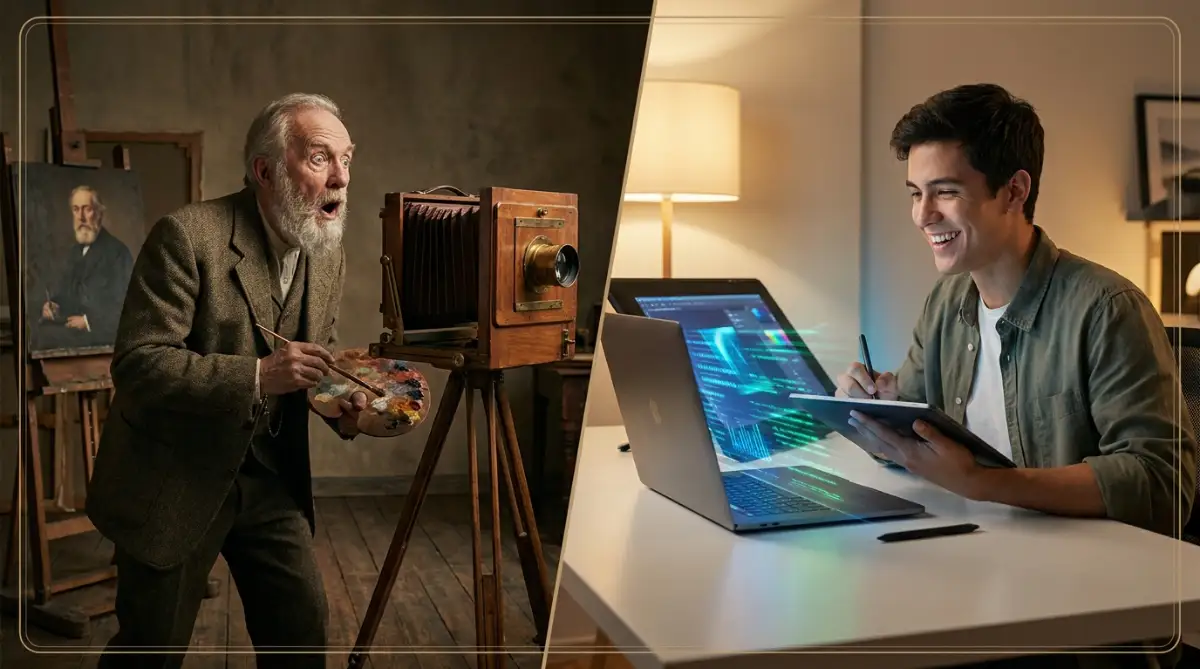
Instead, traditional painting rapidly evolved into beautiful different movements like impressionism, abstract art, and modern expressionism. The camera just became another standard tool for an entirely different type of artist. Right now, we are sitting directly inside the exact same historical transition phase, and the sky is definitely not falling.
Shattering the Illusion: Why Algorithms Cannot Replicate the Human Soul
It is time to look at the actual science behind these popular programs instead of the scary marketing hype. Once you understand the technical limits, your anxiety will completely disappear.
The Massive Empathy Gap in Machine Learning
Let us closely examine what these specific software programs actually do behind the scenes. They are basically just highly advanced, incredibly fast prediction machines. They rapidly scan millions of existing data points just to guess which specific word or pixel should mathematically come next.
But accurately guessing a pattern is definitely not the same thing as feeling an emotion. A machine absolutely does not know what it feels like to fall deeply in love, lose a best friend, or struggle through a financially hard time.
When you write a heartfelt brand story or design a highly emotional charity logo, you naturally pour your actual life experiences into it. This deep human empathy is exactly what silently connects with the human audience. Absolutely no amount of clever coding can ever successfully replicate the genuine warmth of real human emotion.
Myth vs Reality: The Illusion of the "Perfect" Output
People absolutely love to share their absolute best, most highly polished results on social media to look smart. They completely hide the messy, frustrating truth of how many failed attempts it took to finally get that one decent result.
Let us break down a very simple, realistic comparison between human effort and machine output.
Notice how the machine relies entirely on what has already been heavily published on the internet. It fundamentally cannot imagine a completely new future that does not exist yet. It only endlessly recycles the past.
Quick Q&A: Can a Machine Actually Invent Something New?
- Question: Does an AI actually create original art or thoughts?
- Answer: No. It is literally just a giant blender. It takes millions of human-made articles and pictures, chops them up, and spits them back out in a different order. If humans stop creating new things today, the machine will never learn a new trick again. You are the source; the machine is just the mirror.
Context is King, and Systems are Completely Tone-Deaf
One of the absolute biggest limitations of automated tools is their complete lack of real-world, situational context. Imagine for a moment you are working on a new marketing campaign for a small, beloved local bakery right in your hometown.
You specifically know the exact funny jokes the older locals tell, the unpredictable weather patterns, and the rich neighborhood history. You instantly use this specific knowledge to create a campaign that feels incredibly personal, warm, and highly inviting.
A software program sitting on a remote server has absolutely no idea about the wonderful smell of rain in your specific city. It will just confidently spit out incredibly generic marketing phrases that sound exactly like a corporate robot wrote them. Generic, boring content simply does not convert into high sales or build deep customer loyalty.
My personal journey with this taught me a massive lesson recently. When I first started playing around with these automated typing tools, I spent hours desperately trying to force the software to sound exactly like me. I eventually realized that my unique, slightly weird voice and my personal storytelling were the exact things keeping my premium clients around. Never try to blindly compete with a machine on raw speed; always compete heavily on personal flavor and personality.
The Endless Editing Nightmare: When "Quick" Becomes "Complicated"
There is a genuinely funny, unspoken secret floating around in the tech world right now. Sometimes, heavily relying on these tools actually takes much longer than just doing the raw work from scratch yourself.
You enthusiastically type in a detailed prompt, and the resulting image or text is almost right, but just a little bit weird. Maybe a drawn hand mysteriously has six long fingers, or a written sentence uses a really awkward, robotic word.
So, you quickly write another prompt to try and fix it. Then you write another one. Suddenly, you have wasted two entire hours aggressively acting like a highly frustrated manager trying to explain a very simple task to a deeply confused intern.
If you want to see exactly how top industry experts are beating this system and keeping their high-paying clients, you absolutely must watch this eye-opening breakdown.
Building an Unbeatable Personal Brand Above Technology
The absolute best, most proven way to highly protect your future career is to become completely undeniable as a person. Normal people do not just buy a colorful logo or a standard blog post; they buy the enjoyable experience of working directly with you.
Your clear communication skills, your daily reliability, and your friendly, positive attitude matter far more than ever before. A machine certainly cannot hop on a quick video call and make a stressed client laugh when they are having a terrible Monday morning.
Premium clients gladly pay incredibly high prices for total peace of mind. They desperately want an established expert to patiently hold their hand, deeply understand their messy vision, and take full responsibility for the final project. A cheap monthly software subscription simply cannot offer a reassuring smile or a firm handshake.
Insider Tip: The "Human Shield" Strategy
When a client threatens to use software instead of paying your rate, do not argue about the quality of the work. Argue about the liability. Ask them, "Who takes the legal blame if the machine accidentally copies a copyrighted image for your national ad campaign?" Watch how fast they decide to pay your premium rate for a guaranteed, human-made safe product.
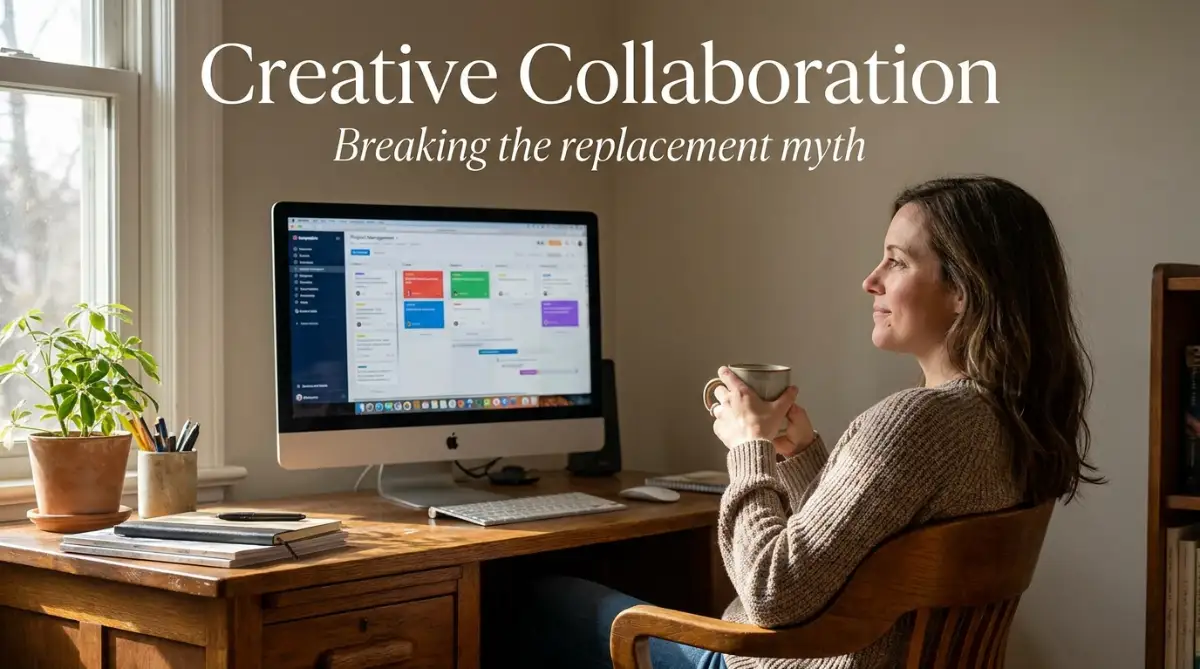
Treat the Tool as Your Junior Assistant, Not Your Boss
Instead of anxiously looking at these programs as the ultimate enemy, try actively shifting your personal perspective completely. Start confidently treating the software exactly like a highly energetic but slightly clueless junior assistant who works for you.
Let the system comfortably handle the boring, highly repetitive tasks that heavily drain your daily creative energy. Need a quick list of twenty basic ideas just to get started? Let the machine do it. Need to organize messy, disorganized data into a highly readable list? Pass it directly to the tool.
By strategically outsourcing the boring, robotic parts of your job to technology, you finally free up your human brain. You can now deeply focus on high-level, brilliant strategic thinking. You instantly become the powerful creative director of your own daily workflow.
The Massive Quality Problem Nobody Mentions
As the entire internet rapidly floods with cheap, machine-generated content, something incredibly interesting is quietly happening. Normal readers and regular consumers are getting deeply exhausted by average, highly robotic material.
We are currently seeing a massive, highly profitable demand for true authenticity in the market. Normal people are actively searching for real, messy stories written by actual humans. They desperately want raw, relatable, and authentic art that makes them feel alive.
Because it is so incredibly easy to generate average content now, average content suddenly has zero financial value. This is absolutely fantastic news for truly skilled, highly dedicated professionals. Your high-quality, beautifully handcrafted work is about to become exponentially more valuable than ever before.
Adapting Your Skillset for the New Future Market
You simply cannot stop a massive wave of completely new technology, but you can definitely learn exactly how to surf it safely. The most financially successful creatives right now are specifically those who learn how to smoothly blend their natural talent with these new options.
Think of an experienced carpenter suddenly getting a brand new, highly advanced electric power saw. They obviously still need to deeply know how to carefully measure, beautifully design, and safely build the house. The electric saw simply makes the repetitive cutting part much faster.
Spend just one simple hour a week quietly learning how these specific platforms actually operate. Deeply understand their massive weaknesses so you can confidently explain to your confused clients exactly why a human touch is still heavily required.
Education is Your Absolute Best Defense Strategy
General ignorance easily breeds unnecessary fear in our minds. The less you actually know about a new piece of software, the scarier it naturally seems from the outside. Once you finally open it up and actively see how often it makes really silly, dumb mistakes, your daily anxiety will drop significantly.
Take a completely free online course about basic prompt engineering. Read a simple article on how large language models actually predict basic text mathematically. When you finally demystify the scary technology, it permanently loses its dark power over your daily mental health.
The Irreplaceable Value of Deep Strategic Thinking
Literally anyone can quickly ask a machine to rapidly write an email or draw a funny picture. But absolutely not everyone knows why that specific email needs to be sent or how that exact picture perfectly fits into a much larger brand strategy.
Your brilliant, strategic human brain is easily your biggest financial asset right now. You deeply understand complex business goals, tricky target audiences, and shifting market trends. You safely know exactly how to quickly pivot a marketing campaign when things suddenly go completely wrong.
A piece of software completely only answers the specific prompt it is actively given. It absolutely cannot step back and brightly say, "Wait a minute, is this actually the right strategy for our main yearly goal?" Only a seasoned, caring human professional naturally does that.
Real Relationships Entirely Drive Creative Businesses
Just think deeply about the absolute best clients you have ever had the pleasure of working with. Did they really hire you just because you were the fastest person available? Probably not.
They happily hired you because they deeply trusted your personal taste and style. They really liked your positive energy during the initial discovery consultation. They highly appreciated exactly how you professionally handled tough feedback without getting defensive or angry.
Modern business is still fundamentally built entirely on genuine human relationships. Until a machine can actually grab a warm coffee with a local client and deeply understand their childhood dreams for their new company, your job is completely safe.
The Dangerous Copyright and Legal Gray Areas
There is another massive, completely practical reason why huge, high-paying companies are actively avoiding completely relying on automated systems. The legal risk is currently absolutely terrifying for big businesses.
Most of these popular tools were quietly trained on millions of copyrighted images, private articles, and protected human art without actual permission. If a massive brand completely uses raw, unedited generated content for a national campaign, they legally open themselves up to huge lawsuits.
Smart enterprise clients are actually terrified of these hidden copyright issues. They deeply need real human professionals to legally guarantee that the final work is completely original and safely owned by the company. When you sell your creative services, you are also heavily selling legal safety and clean ownership.
The "Good Enough" Trap for Extremely Cheap Clients
Yes, we must admit there will definitely be some bad clients who completely switch to using automated tools just to save a few dollars. But let us be brutally, entirely honest about those highly specific, annoying clients.
Were those specific people ever really paying you what you were truly worth in the first place? Usually, the clients who are overly thrilled by cheap, highly average robotic work are the exact same people who used to endlessly argue with you over a tiny five-dollar price difference.
Quietly losing these stressful, bargain-hunting clients is actually a massive blessing in disguise for your business. It beautifully clears out your busy schedule. Now, you finally have the precious time and mental energy to heavily attract premium clients who actively respect and pay for true human craftsmanship.
Taking Control: Expert Strategies to Outsmart Automated Software
Now that we have successfully cleared up the scary myths, it is time to talk about real, daily survival. You do not have to just sit around and nervously wait to see what happens to your industry.
You actually have complete power over your own freelance business and your daily creative process. The secret is completely changing how you interact with both the software and your paying clients.
Let us break down a few highly practical ways you can comfortably secure your position in the market today.
The Brilliant "Human Layer" Technique
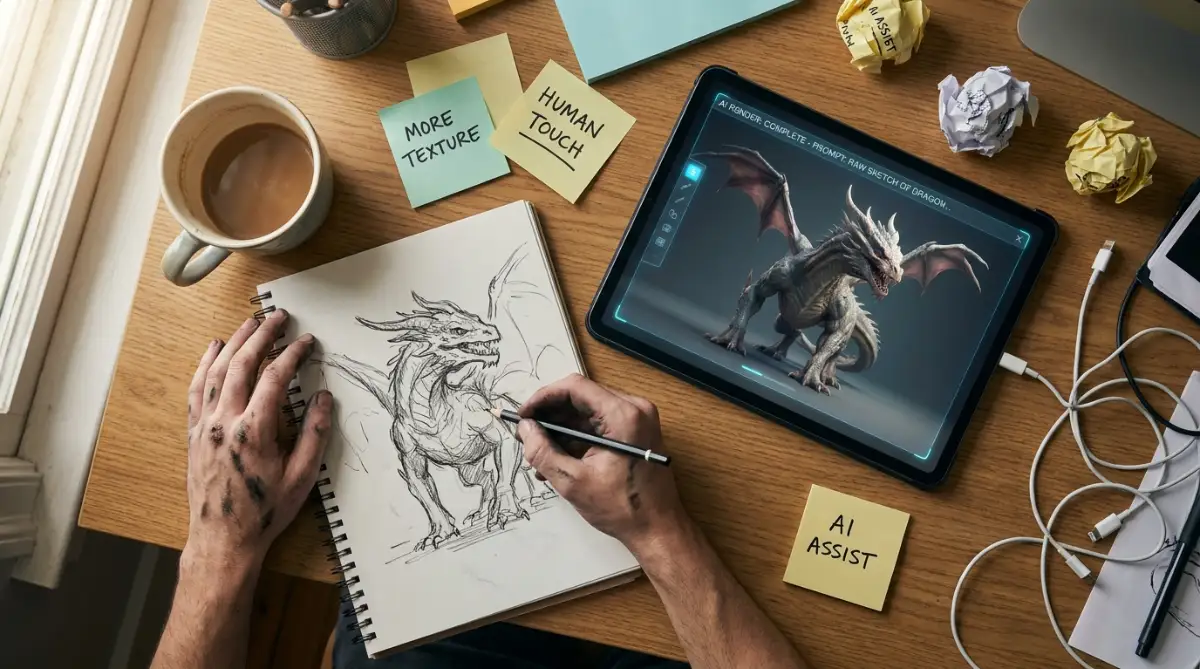
Think of automated software exactly like a massive block of raw, unshaped clay. The machine can very quickly drop this heavy block of clay right onto your desk in a matter of seconds.
But a block of clay is definitely not a beautiful sculpture. It completely lacks shape, deep meaning, and fine details. This is exactly where you boldly apply the "Human Layer" technique to your daily work.
Use the program to instantly generate rough drafts, basic outlines, or simple color palettes. Then, you step in and aggressively edit, tweak, and inject your own personal life experiences into the project. You are the master sculptor adding the final, beautiful polish that a machine simply cannot see.
According to deep psychological research from the Stanford Institute for Human-Centered Artificial Intelligence, automated programs completely lack true cognitive empathy. They literally cannot read a room or understand subtle human sadness. Only you can carefully add that deep emotional layer.
Niching Down Into Deep Human Emotion
When you try to be a highly generic creator who does a little bit of everything, you instantly become very easy to replace. A machine can write a perfectly boring corporate memo or design a highly standard business card.
However, a machine absolutely struggles to create something deeply personal. If you are a writer, start focusing heavily on personal memoirs, humorous opinion pieces, or brand stories that require a very specific, quirky voice.
If you are a designer, double down on hand-drawn elements, physical textures, or projects that deeply celebrate local community culture. The more wildly specific and aggressively human your niche is, the safer your daily income becomes.
Running a creative agency often requires a solid financial backup plan, especially when you are completely changing your niche. You might suddenly need a safe cash injection to survive a slow month. Learning exactly what lenders really want before approving your business loan is incredibly smart for your long-term agency protection.
Becoming a Master Creative Director
Stop thinking of yourself as just an average typist or a simple pixel pusher. You are now a high-level creative director.
Your main job is no longer just doing the raw manual labor. Your actual job is to have a brilliant, overarching vision for the entire client project. You confidently tell the software exactly what tiny pieces to create, and then you perfectly assemble those pieces into a masterpiece.
Think about a famous movie director. They do not personally sew the costumes, hold the heavy cameras, or build the wooden sets. But without their brilliant vision, the movie is just a totally messy pile of random video clips. Your creative vision is your true superpower.
Educating Your Clients on True Value
Your clients are probably seeing the exact same flashy, automated software ads that you are seeing on social media. They might secretly wonder why they are still paying your premium rates.
You must proactively educate them before they even have a chance to ask. Do not hide your creative process; show it off proudly! Send them short, friendly video updates explaining exactly why you chose a specific warm color or a highly emotional word.
When clients clearly see the intense psychological thought you put into their project, they instantly respect your high pricing. They will rapidly realize that a cheap machine could never give them that deep level of strategic care.
Sometimes, losing a few cheap clients can cause temporary financial stress at home. It is incredibly easy to make rushed money decisions when you are terrified. Take a moment to understand how certain bad financial choices might be silently ruining your credit score behind your back. Always protect your mental and financial peace.
Deadly Traps Creatives Fall Into When Adopting New Tech
As the industry aggressively shifts, I am watching incredibly talented people completely ruin their own careers by making some very silly, easily avoidable mistakes. Fear makes us do really weird things.
If you actively want to protect your creative business, you absolutely must avoid these massive pitfalls at all costs. Let us walk through the most dangerous traps people are falling into right now.
The Dangerous Speed Trap
The most common, terrifying mistake I see is a human trying to outrun a massive supercomputer. You will never, ever win a raw typing speed race against a machine.
When you frantically try to produce fifty blog posts a day just to compete with a software program, your quality completely drops to zero. You start making silly spelling errors, your ideas become completely boring, and your work loses its soul.
Never compete on speed; always compete purely on outstanding quality. A single, beautifully crafted article that actually makes someone cry is worth a thousand boring, automated posts.
If you let the stress of keeping up destroy your mental health, you might find yourself making truly desperate business moves. I have seen stressed creatives accidentally sign predatory payday loan contracts just to cover rent during a burnout phase. Protect your creative energy fiercely.
The Race to the Bottom with Pricing
When a client confidently says, "I can just use an app for twenty dollars a month," the worst possible response is dropping your freelance rates to match it.
The moment you aggressively slash your premium prices, you instantly tell the client that your work is actually cheap and highly replaceable. You are suddenly competing in a miserable race to the absolute bottom, and nobody ever wins that race.
If a client only deeply cares about finding the cheapest possible option, let them walk away with a polite smile. You cannot build a healthy, long-lasting business on clients who refuse to value human effort.
When you lower your prices, your entire freelance agency suffers financially. You must actively protect your personal assets from business loan risks if your creative company suddenly hits a massive financial wall. Stick to your premium pricing and find better clients.
Letting the Software Erase Your Unique Voice
There is a very sneaky thing that happens when you heavily rely on automated tools for too long. Slowly, without you even noticing, your unique personal voice completely vanishes.
You start accepting the extremely boring, highly robotic words the machine suggests because it is just easier. Suddenly, your beautifully quirky writing sounds exactly like a dry, corporate instruction manual.
Recent deep studies published by the Pew Research Center show that regular consumers are already losing total trust in generic, machine-generated content. People are aggressively craving highly authentic, messy, human voices again.
If you completely scrub your personality out of your creative work, you are actively destroying your biggest competitive advantage in the modern market.
Handing Over Legal Nightmares to Your Clients
This is a massive, incredibly dangerous trap that almost nobody is talking about openly right now. Passing off pure, unedited machine output as your own original work is a huge legal disaster waiting to happen.
According to the official U.S. Copyright Office guidelines, artwork and written content completely generated by a machine without significant human modification cannot be legally copyrighted at all.
Imagine handing a massive branding package to a huge corporate client, and they later find out they do not even legally own their own logo. They will aggressively sue your freelance business into absolute bankruptcy.
If you get hit with a massive client lawsuit, the financial strain is unimaginable. Many desperate freelancers try to unlock their home's equity during a crisis just to afford basic legal fees. Always be completely transparent with your clients about your exact workflow.
Your Next Move: Reclaiming Your Creative Confidence Today
We have covered a lot of heavy, deeply emotional ground today. It is completely normal if your head is spinning just a little bit.
But I want you to take a really deep breath and look at the actual bright side of this massive industry shift. The sudden rise of automated tools is not the dark end of your creative career at all.
It is actually a beautiful, massive cleansing of the industry. The lazy creators who only care about making quick, cheap money will completely disappear. The highly dedicated, passionate artists who deeply care about human connection are going to shine brighter than ever.
A Quick Action Plan for Tomorrow Morning
Do not let this motivation simply fade away when you close this browser tab. Here is exactly what you need to do when you wake up tomorrow:
- Audit Your Portfolio: Remove your most generic, boring pieces. Only proudly display the highly emotional, deeply personal work that a machine could never replicate.
- Update Your Client Pitch: Start heavily emphasizing your deep strategic thinking, your reliability, and your friendly human communication skills.
- Learn the Tool: Spend just thirty minutes playing with the newest software. See its silly mistakes for yourself to completely kill your hidden fear.
My biggest personal realization through this entire crazy journey is that my vulnerability is actually my greatest strength. I used to nervously hide my personal struggles and messy process from my paying clients. Now, I openly share my human journey with them, and it has built an unbreakable wall of total trust. Never forget that your wildly unique, beautifully imperfect human soul is the most valuable thing you will ever bring to the creative table.
The Most Burning Questions About Machines and Creative Jobs Answered
Will graphic designers completely lose their jobs to software?
Absolutely not. While machines can quickly generate basic, generic images, they completely lack the deep strategic thinking required for successful brand building. Talented graphic designers will simply shift into high-level creative director roles, actively managing the tools to speed up their personal workflow.
How can freelance writers survive against automated content?
The absolute best way to survive is by heavily inserting deep personal experiences, strong opinions, and real human emotion into your daily writing. Machines only endlessly recycle old data, but you can naturally share fresh, highly relatable stories that deeply connect with human readers.
Is machine-generated art legally protected for commercial use?
Currently, raw output generated entirely by automated systems cannot be fully copyrighted in most major countries. This specific legal gray area is exactly why smart businesses still heavily require real human professionals to create safe, original, and legally protected commercial work.
Should I lower my freelance rates because of these cheap tools?
You should never aggressively lower your premium rates just to compete with a cheap monthly software subscription. If you lower your prices, you instantly devalue your personal brand and attract highly difficult clients. Confidently stand your ground and actively sell your premium human strategy.
What is the absolute best way to use automated software as an artist?
Treat these advanced programs exactly like a highly eager but slightly clueless junior assistant. Let the machine safely handle the boring, repetitive tasks like organizing raw data, generating basic outlines, or brainstorming quick ideas. Then, use your brilliant human brain to execute the final emotional masterpiece.
Disclaimer: The detailed information provided in this article is strictly for educational and informational purposes only. It does not constitute professional career counseling, legal advice, or formal financial guidance. The creative industry is highly dynamic and constantly changing. Always consult directly with certified business advisors or legal professionals before making major decisions regarding your freelance pricing, copyright issues, or client contracts.