Lost, Confused, and Staring at a Plugs: My Electric Wake-Up Call
Ever stared at a massive electric car charger with three different plugs hanging off it and felt totally lost? Trust me, I have been there. Figuring out EV charging levels feels like learning a brand new language, but it really doesn't have to be complicated. Let's break down exactly how to power up your car without overpaying, frying your battery, or wasting hours at a station.
For most regular people, stepping into the world of electric cars feels like learning an entirely new language. You are suddenly bombarded with confusing terms like kilowatts, alternating current, and charging networks. It can be incredibly overwhelming for anyone who just wants to drive from point A to point B. The constant worry about running out of battery before reaching your destination is enough to make anyone anxious.
But it really does not have to be this hard. Once you strip away the heavy technical jargon, the whole system actually makes a lot of logical sense. You just need someone to break it down into plain, simple English.
The EV Charging Cheat Sheet (Key Takeaways):
- Level 1 chargers use normal wall outlets but take days to completely fill a dead battery.
- Level 2 chargers need a 240V dryer-style plug and are the perfect sweet spot for overnight home charging.
- Level 3 (DC Fast Chargers) are built strictly for road trips—use them to hit 80% and get back on the highway.
- Stop charging to 100% every day; it stresses your battery cells and permanently shortens their lifespan.
Demystifying the Charging Maze: What Actually Happens When You Plug In?
To truly enjoy your electric car, you need to understand how the "fueling" process works. Unlike traditional gas cars where every pump acts exactly the same, electric cars have different speeds and methods for getting power. Think of it like filling up a swimming pool with water. You can use a tiny garden hose, a standard home water pipe, or a massive fire hose.
The battery inside your electric car only stores Direct Current (DC) power. However, the electricity that comes out of the power grid and into your house is Alternating Current (AC). Your car has to convert this AC power into DC power before it can store it in the battery.
This built-in converter is often called an onboard charger. How fast this converter works will directly impact how quickly your battery fills up. Let's look at the different methods you can use to get that energy flowing smoothly into your car.
The Slow and Steady Turtle: Level 1 Charging
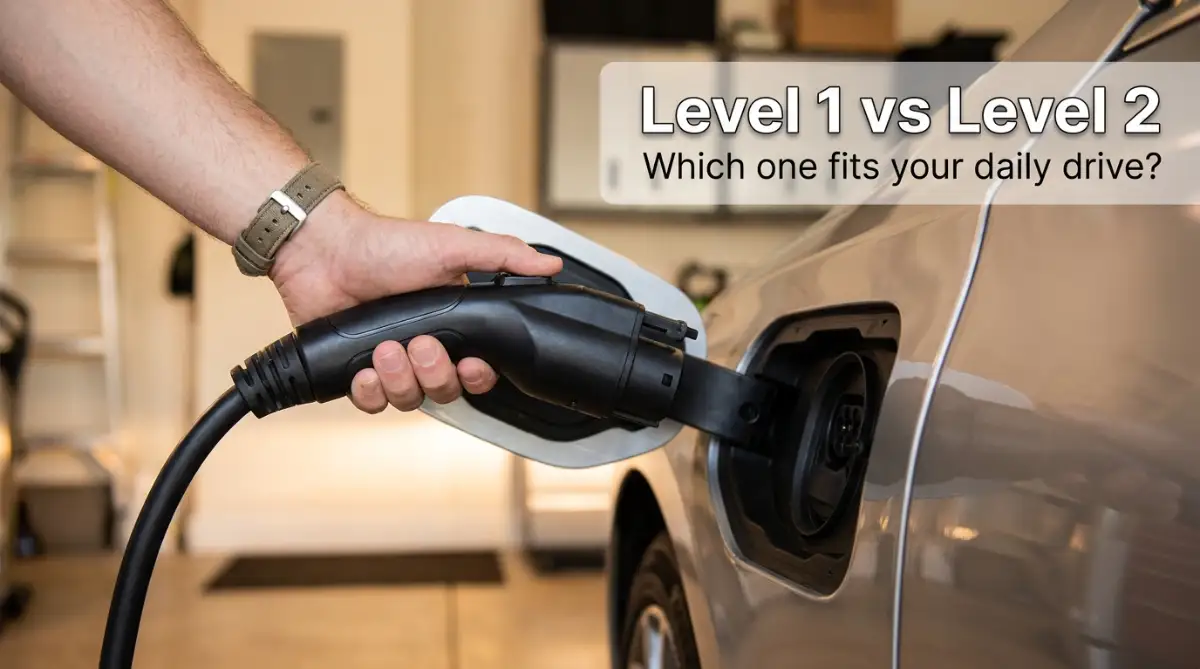
Level 1 is the most basic, entry-level way to power up your vehicle. This method uses the exact same standard three-prong outlet you use to plug in your television, microwave, or smartphone. Every single electric car on the market comes with a portable charging cable designed for these basic outlets.
Because it uses standard household current, the flow of energy is incredibly slow. It is the exact equivalent of trying to fill a massive swimming pool using a tiny garden hose. You will typically get about three to five miles of driving range for every single hour your car is plugged in.
If you drive a car with a massive battery, completely filling it from empty using Level 1 could take days. It sounds entirely impractical for long trips, and honestly, it is. However, for people who only drive ten or fifteen miles a day for simple errands, this method works perfectly fine. You simply plug the car in before bed, and you wake up with more than enough range for your daily commute.
The Sweet Spot for Daily Driving: Level 2 Charging
If Level 1 is a garden hose, Level 2 is a heavy-duty home water pipe. This is the most common and practical charging method for the vast majority of electric car owners. Level 2 uses a heavier 240-volt electrical circuit, which is the exact same type of plug used for large home appliances like electric clothes dryers and heavy-duty ovens.
Charging Speeds You Can Actually Feel
When you upgrade to this level, the charging speed increases dramatically. Instead of three miles an hour, you can easily get anywhere from twelve to thirty miles of range per hour of charging. This means you can comfortably plug in a nearly empty car after dinner and wake up to a completely full battery by sunrise.
Most public charging stations found at shopping malls, grocery stores, and office buildings are Level 2 chargers. They are designed for "destination charging," meaning you plug in while you are busy doing something else for a few hours.
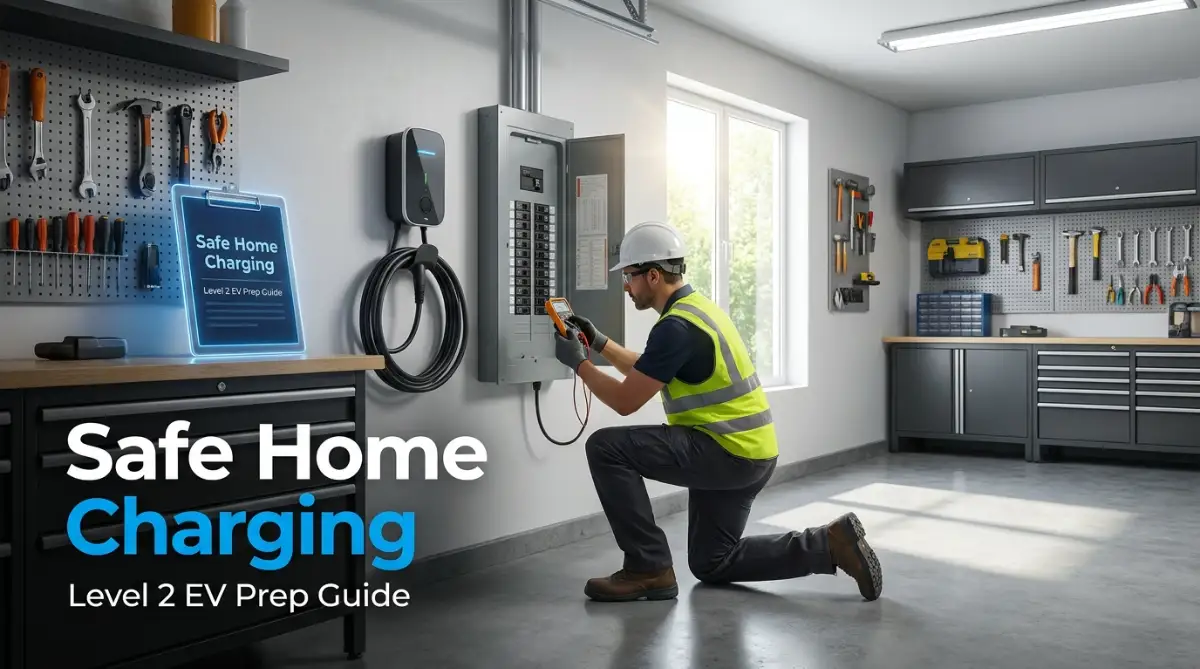
To set this up at home, you will usually need to hire a certified electrician to install a dedicated wall unit in your garage. While there is an upfront cost for the equipment and labor, the daily convenience it provides is absolutely life-changing.
I once made the massive mistake of trying to charge my rented electric car on a basic wall outlet right before a big morning meeting. My battery barely moved overnight, and I ended up missing the first half of my presentation. Always double-check your daily driving needs before relying on a standard plug.
Real-World Math: Level 1 vs. Level 2 Home Charging
| Charger Type | Time to gain 40 miles | Average Cost (At Home) |
| :--- | :--- | :--- |
| Level 1 (Standard Wall Plug) | 10 to 12 Hours | $1.50 - $2.00 |
| Level 2 (Upgraded Wallbox) | 1.5 to 2 Hours | $1.50 - $2.00 |
Quick Insight: The electricity costs exactly the same at home regardless of the charger, but upgrading to a Level 2 setup buys back your precious time!
The Road Trip Savior: DC Fast Charging (Level 3)
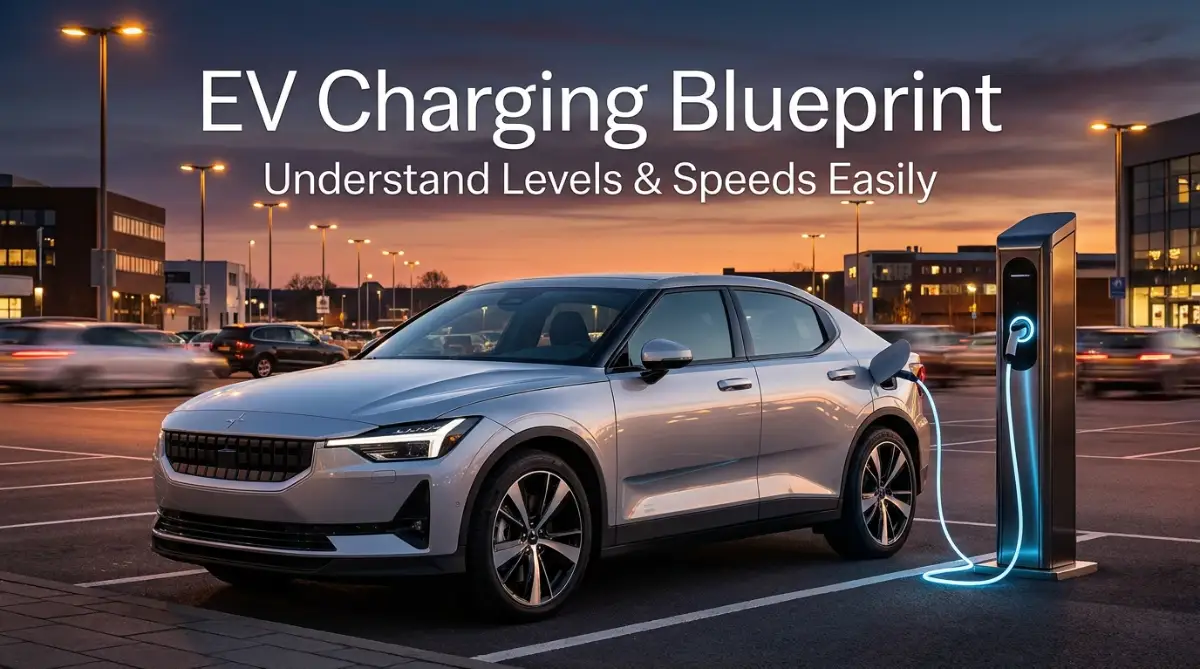
When you are traveling on the highway and need to cover long distances, waiting eight hours for a charge is simply not an option. This is exactly where DC Fast Charging comes in to save the day. This is the massive fire hose of the electric vehicle world.
Unlike the previous two methods, Level 3 stations completely bypass the car's slow internal converter. These massive, industrial-sized machines convert the AC power from the grid into DC power themselves. They then pump this direct current straight into your car's battery at incredibly high speeds.
How Fast Are We Talking?
Depending on your specific car model and the power of the station, you can often add 100 to 200 miles of range in just twenty to thirty minutes. You basically plug in, walk into the rest stop to use the bathroom, grab a quick coffee, and your car is ready to hit the road again.
Because these stations require massive amounts of industrial electricity and expensive cooling equipment, you cannot install them at a normal home. They are strictly found along major highways, large travel centers, and busy urban hubs.
Understanding the Famous "Charging Curve"
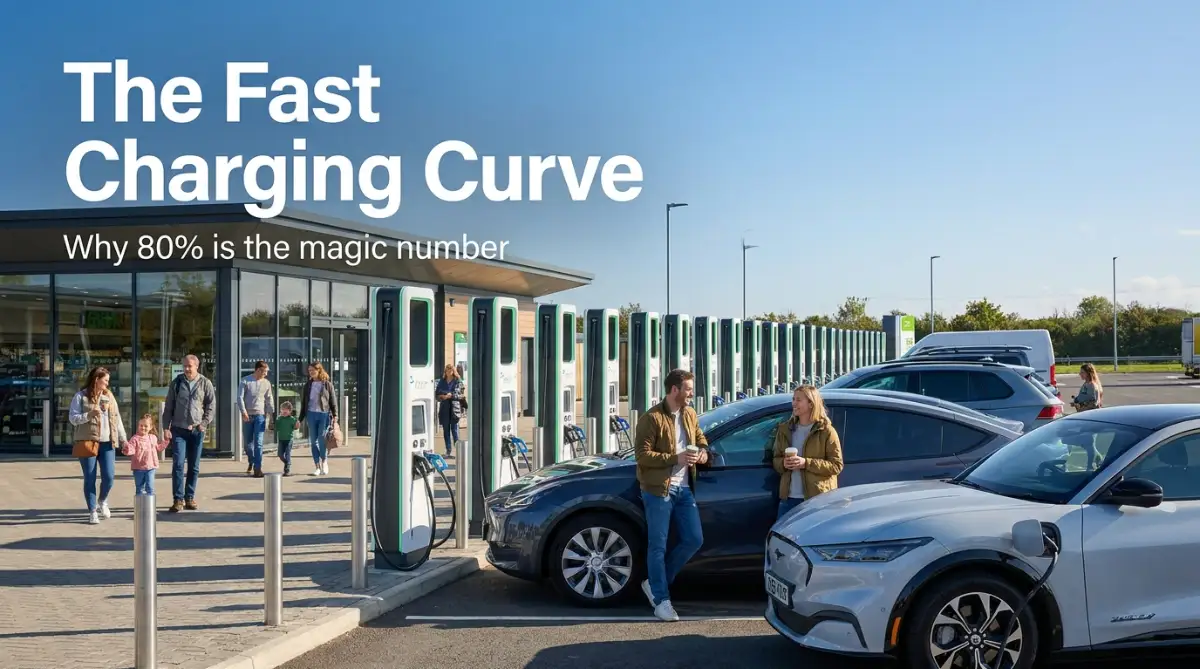
One of the biggest mysteries for new drivers is why their car charges so fast at the beginning, but slows down dramatically towards the end. If you have ever used a fast charger, you might notice that going from 10% to 80% takes only twenty minutes. But going from 80% to 100% takes another forty minutes.
This happens because of the built-in software protecting your battery's health. Think of it like packing a suitcase for a long trip. When the suitcase is empty, you can easily throw in large piles of clothes extremely fast. But as the suitcase gets full, you have to slow down, fold things carefully, and squeeze items into the remaining tight corners.
If the charger kept pumping massive amounts of energy into a nearly full battery, it would generate extreme heat and severely damage the chemical cells. To protect your investment, the car's computer intentionally slows down the flow of electricity as it reaches the top.
A Simple Visual Comparison
To make things incredibly easy to remember, here is a quick breakdown of how these three levels stack up against each other in everyday life:
Why 80% is the Magic Number for Road Trips
"Here is a brilliant explanation of why you should never wait for 100% at a public fast charger."
Because of that protective charging curve we just discussed, sitting at a public station to reach a full 100% is usually a massive waste of your time. It also creates long lines for other drivers waiting to use the machine. The smartest travel strategy is to charge up to 80%, hit the highway, and stop again when you drop down to 10%.
By bouncing between 10% and 80%, you keep the battery in its fastest possible charging zone. This simple habit will easily shave hours off your total road trip time.
Decoding the Connector Cables
Now that you understand how fast the power flows, you need to know how to actually connect the hose to your car. Just like Android phones used to have different chargers than Apple phones, electric cars have different plug types.
The standard plug for Level 1 and Level 2 in North America is called the J1772. Almost every single non-Tesla vehicle uses this exact plug for slow and medium charging. It is the universal standard for home and office chargers.
For fast charging, things get slightly more divided. Most modern electric cars use a heavy-duty plug called the CCS (Combined Charging System). It looks exactly like the standard J1772 plug, but it has two extra large pins at the bottom to handle the massive flow of direct current.
Tesla vehicles, on the other hand, use their own proprietary plug shape called the North American Charging Standard (NACS). It is smaller, lighter, and handles both slow home charging and super-fast highway charging in one elegant design. Many other car brands are actually starting to switch to this Tesla-style plug because of how easy it is to handle.
Myth vs Reality: Common Charging Fears
Myth: Leaving my car plugged in all night will overcharge and ruin the battery.
Reality: Modern electric cars have incredibly smart battery management systems. Once the battery reaches your preset limit, the car completely stops pulling power from the wall. You can confidently leave it plugged in for days without any risk of damage.
Myth: I cannot charge my car if it is raining or snowing outside.
Reality: The entire system is highly weatherproof and designed with multiple safety locks. Electricity will not even begin to flow through the cable until a completely secure, watertight connection is made with the car. You are totally safe charging in heavy rain, deep snow, or strong winds.
Understanding these basics completely removes the daily stress of driving an electric vehicle. You no longer have to stare blindly at a charging machine hoping for the best. You know exactly what your car needs, when it needs it, and how long it will take to get you back on the road safely.
Taking Control: Insider Secrets for Maximum Charging Efficiency
Once you figure out the basic differences between the charging plugs, you are already ahead of most new electric car drivers. But knowing the hardware is only half the battle. To truly master your electric driving experience, you need to understand how to optimize your daily habits.
There are plenty of hidden software settings and simple routines that can save you thousands of dollars over the lifespan of your vehicle. The way you treat your power cells today will directly impact how far your car can drive years down the road.
Let's walk through some incredibly effective strategies that experienced drivers use to keep their cars running flawlessly. These are simple tweaks you can apply to your routine starting tonight.
The Magic of Scheduled Off-Peak Power
Most beginners just plug their car in as soon as they get home from work. This seems like the logical thing to do, but it is actually a terribly expensive habit. Electricity rates fluctuate depending on the time of day and how many people are using the power grid.
When everyone comes home at 6:00 PM and turns on their ovens, televisions, and air conditioners, electricity becomes extremely expensive. If you charge your car during this busy window, you are paying the absolute highest possible price for that energy.
Instead, you want to take advantage of something called "Time-of-Use" rates offered by your local utility company. According to the Department of Energy's Alternative Fuels Data Center, scheduling your charging sessions during midnight hours can drastically lower your monthly utility bill.
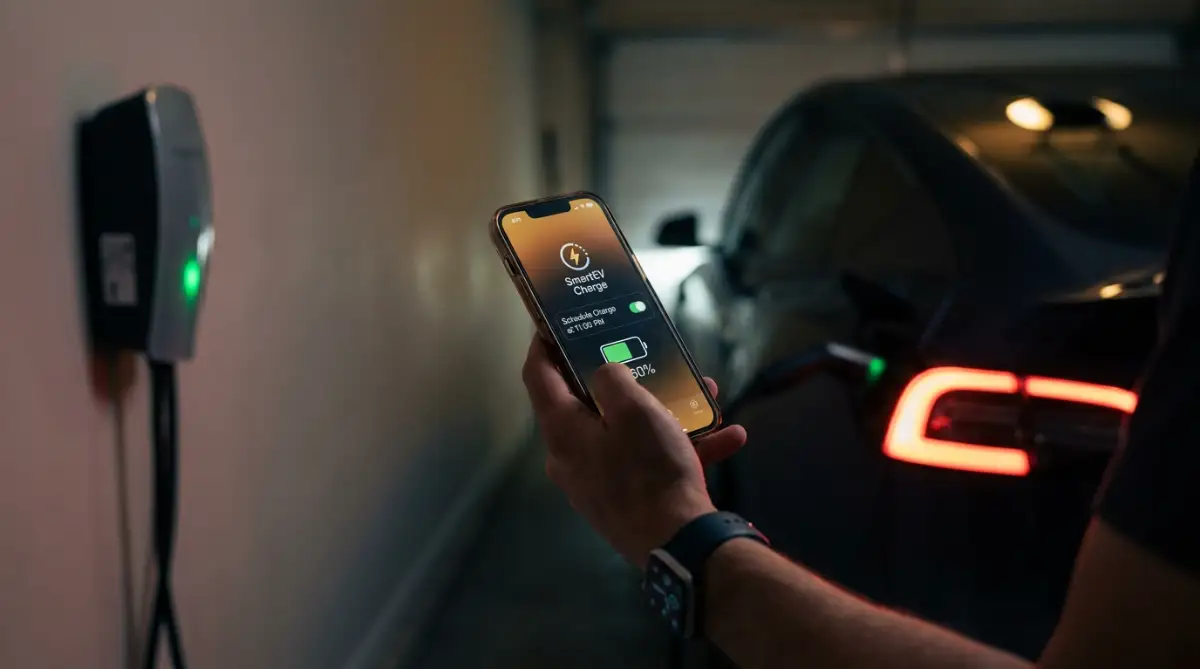
You do not even have to stay awake to do this. Almost every modern electric car has a built-in scheduling feature directly on the dashboard. You just tell the car to wait until 11:00 PM to start pulling power from the wall, and it handles the rest automatically.
Preconditioning: The Ultimate Cold Weather Hack
If you live somewhere that gets cold in the winter, you might notice your battery drains much faster than usual. Batteries are chemical boxes, and those chemicals get extremely sluggish when the temperature drops. A freezing cold battery will refuse to charge quickly and will give you noticeably less driving range.
The secret weapon against winter range anxiety is a feature called preconditioning. Think of this like a professional athlete stretching and warming up their muscles before a big race. You want your car's battery to be warm and ready before you ever pull out of the driveway.
While the car is still safely plugged into your home charger, you can use your smartphone app to turn on the climate control. The car will pull power directly from the house to warm up the battery and the cabin. By the time you sit in the driver's seat, the battery is at its perfect operating temperature without wasting a single drop of its stored energy.
Mastering the 80/20 Sweet Spot
We already talked about why you should only charge to 80% on a road trip to save time. However, this same rule applies to your everyday charging habits at home. Constantly filling your battery to an absolute 100% every single night puts unnecessary physical stress on the cells.
It is very similar to how you manage personal electronics. If you ever wondered why your smartwatch keeps dying, leaving it plugged in at 100% all the time is usually the main culprit. Electric cars work on the exact same basic chemistry.
For the healthiest long-term results, try to keep your daily charge limit set to 80%. You should only bump that limit up to 100% on the rare occasions when you are planning a massive cross-country trip. Understanding exactly what really causes electric vehicle battery degradation and how to stop it is the easiest way to protect your massive financial investment.
Beware of the "Phantom Drain"
Many new owners panic when they park their car at the airport with 50% battery, only to return a week later to find it sitting at 40%. This silent loss of power is known in the community as phantom drain. Your car is basically a giant rolling computer, and it constantly runs small background tasks even when turned off.
Things like security cameras, battery temperature management, and checking for software updates all slowly sip power. If you check your car's smartphone app ten times a day while on vacation, you are physically waking the car up and burning even more energy.
To stop this from happening, simply turn off features like "Cabin Overheat Protection" or "Sentry Mode" if your car is parked safely in a secure, climate-controlled garage. Let the car sleep, and you will save a surprising amount of juice.
Quick App Hack to Stop Phantom Drain:
If you are going out of town for a week, do not just close your EV app—log out entirely or turn off background refresh in your phone settings. Every time your phone pings the car app to check the battery level, the car literally "wakes up" from deep sleep, turns on its internal computers, and silently wastes your battery juice.
The Costly Blunders That Will Drain Your Wallet and Sanity
Learning a new technology always comes with a few bumps in the road. However, making the wrong moves with an electric vehicle can lead to massive repair bills and completely ruined weekend plans. I have watched countless new drivers make the exact same easily avoidable errors.
If you want to enjoy a smooth and completely stress-free driving experience, you need to know exactly what traps to avoid. Let's break down the most dangerous pitfalls that catch beginners completely off guard.
Relying Exclusively on Public Fast Chargers
There is a huge misconception that you need to treat an electric car exactly like a gas car. People assume they should wait until the battery is empty, and then drive to a public fast station to fill it completely up. This is easily the most expensive and damaging mistake you can make.
According to research from the National Renewable Energy Laboratory, frequent and exclusive use of high-voltage fast chargers can accelerate the wear and tear on your battery cells. Pumping that much intense heat into the system every single day degrades the chemical structure much faster than slow home charging.
On top of the physical damage, public fast chargers are incredibly expensive compared to home electricity. Companies charge a premium for the convenience of speed. If you only use public stations, you might end up paying almost as much per mile as you would for normal gasoline. Fast chargers are amazing for road trips, but they should never be your daily habit.
Using Cheap or Uncertified Extension Cords
This is a serious safety warning that you absolutely cannot ignore. Sometimes, your dedicated charging cable just barely misses reaching the wall outlet in your garage. The natural instinct is to run into the house, grab a cheap, thin orange extension cord, and plug the car in.
Doing this is basically asking for a dangerous electrical fire. Electric vehicles pull a massive amount of continuous, heavy power for hours at a time. A standard household extension cord is simply not built to handle that kind of intense, non-stop heat. The wires inside the cheap cord will literally melt, which can easily destroy your wall outlet or spark a massive fire.
If you absolutely must use an extension cord in an emergency, you need to purchase a highly rated, heavy-duty appliance cord specifically rated for the correct amperage. Never cut corners when dealing with high-voltage electricity. Just like how to protect your personal assets from business loan risks, you must take proactive steps to protect your physical property from preventable disasters.
Ignoring the Reality of Your Home Infrastructure
A lot of people get wildly excited, buy their dream electric car, and bring it home without ever checking their electrical panel. They just assume they can plug a heavy-duty Level 2 charger anywhere they want. Then, the electrician arrives and tells them their home's electrical box is too old to handle the extra load.
Upgrading a home electrical panel can suddenly add thousands of dollars to your overall budget. This is the exact same painful oversight people make when installing solar panels on an aging residential roof structure without doing a proper inspection first.
Before you ever sign the final paperwork at the dealership, have a certified electrician inspect your garage. Make sure you actually have the physical capacity to support a dedicated charging box. When you finally figure out how to get approved for your first auto loan, the last thing you want is a car you cannot properly power at home.
The "One Station" Road Trip Gamble
When planning a long drive, the navigation screen will usually plot out your exact stops along the highway. A massive mistake beginners make is blindly trusting this system without having a backup plan. They roll into a charging station with exactly 2% battery left, totally depending on that specific machine to work.
The sad reality is that public charging networks can sometimes be unreliable. Screens get broken, payment readers lose internet connection, or another driver might be parked there for hours. If you arrive totally empty and the machine is broken, you are instantly calling a tow truck.
The smartest travel habit is to always plan your stops with a small safety buffer. According to the Plug In America safety guidelines, you should aim to arrive at your planned charging stop with at least 15% to 20% battery remaining. If the station is completely dead, you still have enough juice to safely drive to the next available town.
Your Path Forward to a Greener, Smoother Ride
Transitioning to an electric vehicle initially feels like stepping onto an alien planet. There are strange new plugs, confusing numbers, and a totally different way of thinking about travel. But I promise you, this learning curve is incredibly short.
Once you get your home station set up and successfully complete your first road trip, it just clicks. You will start loving the incredible convenience of waking up every single morning with a totally full "tank." You will smile every time you drive straight past a crowded, expensive gas station without stopping.
The technology is actively getting faster, smarter, and much easier to use every single day. By understanding the simple differences between Level 1, 2, and 3 chargers, you have completely removed the fear of the unknown. You now have the exact knowledge you need to protect your battery, save money, and enjoy the incredibly smooth, quiet ride that electric cars offer.
I remember the exact moment my range anxiety finally disappeared, and I just started having pure fun driving my car again. Trust the process, follow these simple habits, and you will absolutely never want to go back to a traditional gas engine.
Common Questions About EV Power and Speeds
Can I really plug my electric car into a normal wall outlet?
Yes, you absolutely can use a standard household outlet for Level 1 charging. Every electric car comes with a basic adapter specifically designed for these normal plugs. However, the energy flow is extremely slow, giving you only a few miles of range for every hour it stays connected.
Should I plug my car in every single time I park at home?
It honestly depends on your daily driving habits, but generally, yes. Following the rule of keeping your car plugged in but setting the limit to 80% is great for the battery management system. It ensures your car is always ready for an unexpected trip while keeping the internal chemical cells perfectly balanced.
Does fast charging heavily damage my car's battery?
Using a massive DC fast charger occasionally for long road trips will not significantly harm your battery. The built-in computers carefully manage the heat and power flow to keep everything totally safe. The real damage only happens if you use fast chargers as your exclusive, everyday power source over several years.
Why does my car charge so much slower in the winter?
Cold weather severely slows down the physical chemical reactions happening inside the battery cells. The car's computer intentionally restricts the charging speed to prevent the cold cells from cracking or suffering permanent damage. Using the preconditioning feature to warm the battery before you plug in completely solves this annoying problem.
How much money does it actually cost to charge at home?
Charging at home is significantly cheaper than buying traditional gasoline or paying for public charging stations. If you charge during your utility company's off-peak overnight hours, filling a totally empty battery usually costs just a few dollars. Your monthly electric bill will go up slightly, but you will save hundreds by never buying gas again.
Disclaimer: The information provided in this article is for educational and informational purposes only. Automotive technology and electrical standards vary heavily by specific vehicle model and geographic location. Always consult your vehicle's official owner manual and hire a certified, licensed electrician for any home charging installations.