Why I Started Fearing My Own Solar Panels
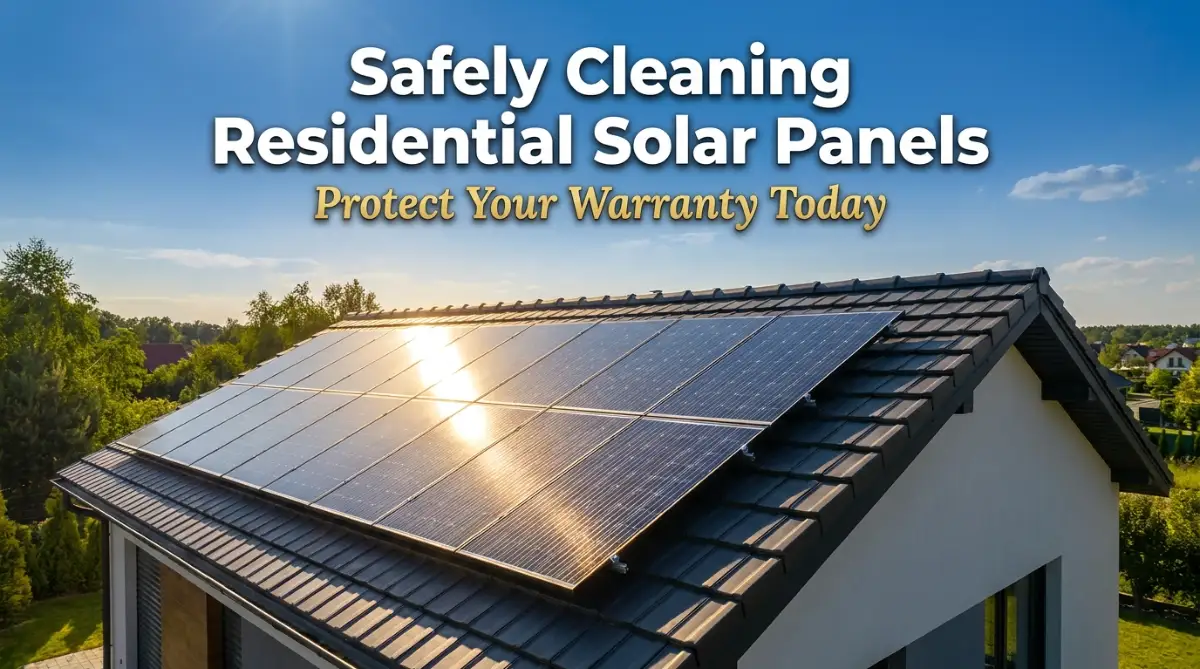
I still remember the exact moment my energy bill started creeping up for no obvious reason. I walked out to my backyard, looked up at my roof, and saw a thick, ugly layer of dust, pollen, and dried bird droppings covering my beautiful solar array. I immediately grabbed my heavy aluminum ladder, a stiff push broom from the garage, and my high-pressure garden hose, thinking it would be a quick and easy Saturday morning chore. Just as I was about to aggressively scrub the first panel, my neighbor walked by and casually asked if I had checked my warranty guide first. I stopped dead in my tracks, suddenly realizing I had absolutely no idea what chemicals, soaps, or brushes were actually allowed by the manufacturer.
My heart completely sank as I imagined scratching the delicate glass, breaking a thousand-dollar panel, and having the manufacturer instantly reject my replacement claim. That simple question from my neighbor sent me down a massive rabbit hole of reading fine print, calling solar installers, and testing safe cleaning methods. I found out that doing this simple chore the wrong way could instantly destroy thousands of dollars in long-term value.
So many ordinary homeowners are silently struggling with this exact same anxiety every single day. You invest a huge amount of hard-earned money into a renewable energy system to find peace of mind and lower your monthly bills. But then, nature takes its course, the panels get incredibly dirty, and your system's energy production drops significantly. You are suddenly stuck between a rock and a hard place.
If you leave the panels dirty, you lose out on expensive electricity production and your monthly bills go right back up. But if you clean them using the wrong tools, you risk voiding the very warranty that protects your massive home investment. It feels incredibly unfair that something designed to save you money can cause so much unexpected stress and worry.
Every time the wind blows a cloud of dust, or a flock of birds flies directly over the house, you feel like your energy savings are flying right out the window. Homeowners often lose sleep worrying about whether they should hire an expensive professional or risk doing it themselves to save some cash. The fear of making a costly mistake completely ruins the joy and satisfaction of owning a green energy home.
The Science of Solar Warranties: What You Need to Know
Before you even think about putting a single drop of water on your roof, you have to understand how solar companies actually write their rules. The fine print in most residential solar agreements is incredibly specific about physical damage and chemical exposure. Manufacturers design these panels to sit in extreme weather for decades, but they are surprisingly fragile when it comes to human interference.
The top layer of your solar panel is not just standard window glass that you can scrub with any random household cleaner. It features a highly specialized anti-reflective coating designed to pull in as much raw sunlight as possible. If you use a harsh chemical or a rough sponge, you will permanently scratch this invisible coating right off.
Once that coating is gone, sunlight bounces off the glass instead of absorbing into the solar cells beneath it. If a system failure happens later down the line, the manufacturer will send a technician to inspect the broken panel. If they see swirl marks, deep scratches, or chemical burns on the glass, they will blame you for the failure and tear up your warranty agreement.
Myth vs Reality: The "Self-Cleaning" Promise
Many aggressive solar salespeople will tell you that you never actually have to wash your system because the rain will do it for you. This is one of the most persistent myths in the entire home improvement industry, and it causes huge financial losses. Rainwater is almost never completely pure; it often carries its own atmospheric dust and pollutants.
Think about your car windshield after a light rainstorm during the dusty summer months. The glass does not look perfectly detailed and clean; it usually looks spotty, smeared, and even dirtier than before. The exact same thing happens to your expensive solar array up on the roof.
While a heavy, intense downpour can wash away loose surface dust, it does absolutely nothing to remove baked-on tree sap or acidic bird droppings. Relying only on the weather to maintain your energy system is a guaranteed way to lose a large chunk of your daily power production.
The Hidden Dangers of Hard Water
One of the biggest mistakes you can make is grabbing the nearest garden hose without knowing what is actually in your local water supply. Many cities and well-water systems contain high levels of calcium, magnesium, and other heavy minerals. We refer to this naturally occurring mixture as "hard water," and it is a silent killer of solar efficiency.
When you spray hard water onto hot solar glass, the liquid evaporates very quickly in the sun. However, all those heavy minerals get left behind, baking directly onto the surface and creating a cloudy, white film over the cells.
This white film acts exactly like a physical shade, physically blocking the sun's rays from hitting the internal power-generating components. Over time, these mineral deposits become incredibly difficult to remove safely without using the aggressive acids that manufacturers strictly forbid.
Choosing the Exact Right Time of Day to Wash
Timing is absolutely everything when it comes to washing delicate outdoor electronics without causing accidental destruction. Solar panels spend all day absorbing raw heat, meaning the glass can easily reach burning temperatures by early afternoon. If you spray cold or even room-temperature water onto boiling hot glass, you create a dangerous reaction called thermal shock.
Thermal shock happens when the surface of the glass cools down and shrinks much faster than the materials underneath it. This sudden, violent change in temperature can cause the tempered glass to instantly shatter or develop thousands of tiny micro-cracks.
I learned the hard way that washing panels at noon leaves massive soap streaks that are nearly impossible to remove. My best advice is to set your alarm for dawn, just as the sun comes up, so the glass is completely cool to the touch and safe to wash.
If you are not an early morning person, you can also wait until the late evening just before the sun completely sets. The goal is to ensure the panels match the temperature of the water coming out of your hose as closely as possible.
The Gentle Approach: Mastering the Soft Wash Technique
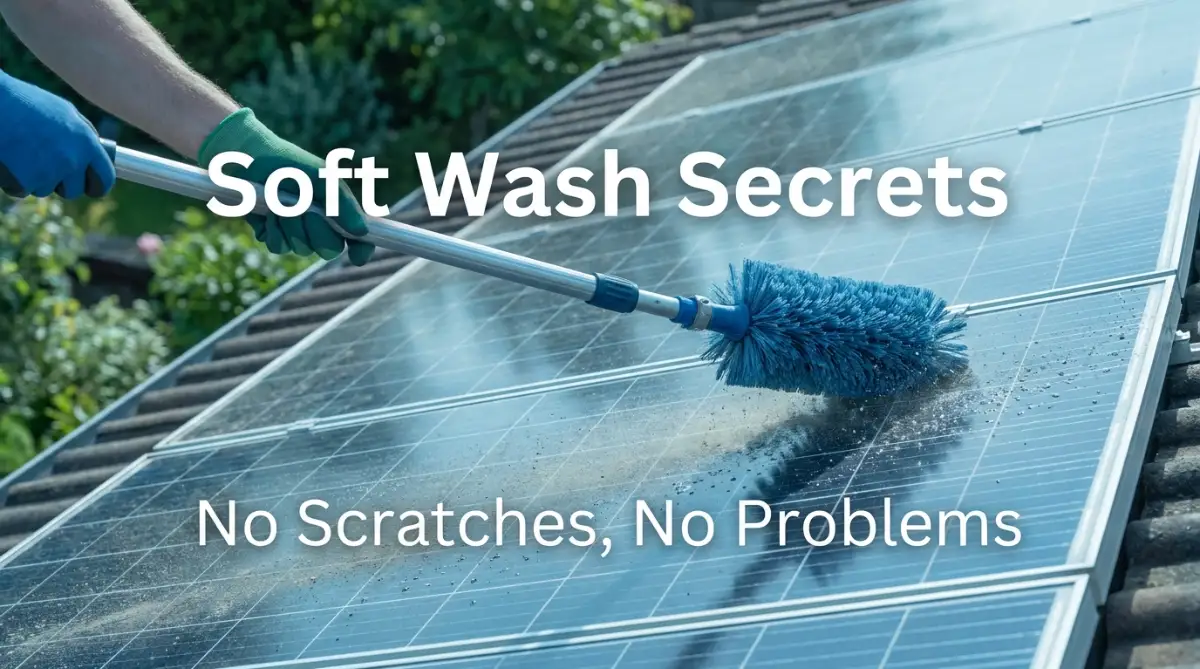
The secret to keeping your warranty completely safe is treating your solar panels like a highly expensive camera lens, not a dirty driveway. You must avoid any tool that has hard, stiff, or abrasive bristles, no matter how stubborn the dirt seems to be. Push brooms, kitchen scrubbing pads, and standard car wash brushes are entirely off-limits for this specific job.
Instead, you need to invest in a purpose-built, ultra-soft bristled brush attached to a long, telescoping extension pole. These specialized brushes are designed to glide smoothly over the anti-reflective coating without leaving a single microscopic scratch behind.
If you want to see exactly how to apply this gentle washing technique without leaving a single scratch on the glass, watch this quick demonstration.
When using the soft brush, you should let the tool do all the heavy lifting for you instead of pressing down hard. Gently sweep the soapy water across the surface in smooth, horizontal motions, just like you would mop a delicate hardwood floor.
Why Pressure Washers Are the Ultimate Enemy
It is incredibly tempting to drag out the gas-powered pressure washer to blast away a year's worth of grime in five minutes. However, using high-pressure water is the single fastest way to completely void your warranty and destroy your entire system. Solar manufacturers explicitly state in their manuals that pressure washers are strictly forbidden under all circumstances.
Your panels are built with delicate waterproof seals around the aluminum frame to keep rain from getting inside the electrical wiring. A pressure washer shoots water at such a high velocity that it can easily slice right through these protective rubber and silicone seals.
Once the seal is broken, morning dew and heavy rain will slowly seep directly into the internal electrical components. This moisture causes hidden corrosion, electrical shorts, and complete system failure, leaving you with a massive replacement bill.
Dealing with Stubborn Bird Droppings Safely
Bird droppings are incredibly acidic and can actually eat away at the protective glass coating if left sitting in the hot sun for too long. However, chipping away at a hardened dropping with your fingernail or a plastic scraper is a terrible idea that usually results in deep scratches. You have to use patience and science to remove these stubborn spots safely.
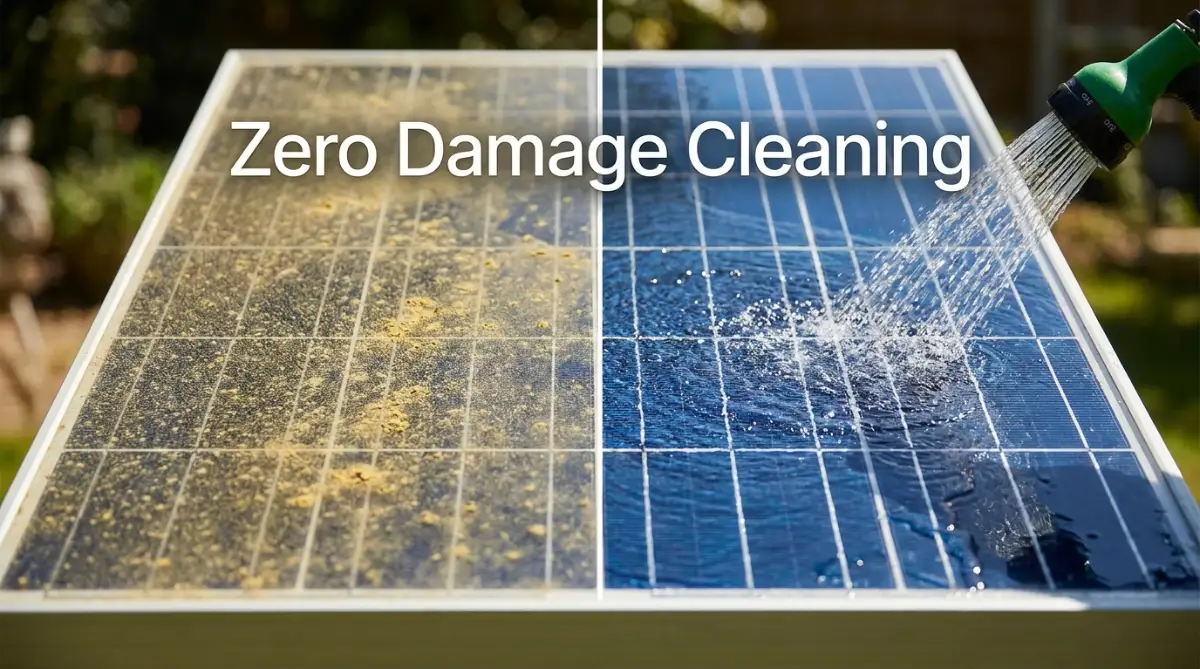
The best method is to heavily soak the affected area with plain water and let it sit for about ten to fifteen minutes. The water will slowly rehydrate and soften the dried dropping, breaking down its grip on the smooth glass surface.
Once it is completely soft, you can easily wipe it away with a gentle microfiber cloth or your soft-bristled extension brush. Never try to aggressively force a dry piece of debris off the panel, as it will drag across the glass and leave a permanent mark.
Selecting the Right Soap (And Knowing When to Avoid It)
Most of the time, plain, mineral-free water is completely enough to remove standard loose dust and pollen from your roof. However, if you live near a busy highway or an airport, you might have a sticky layer of exhaust smog coating your system. In these specific cases, water alone will simply push the greasy grime around without actually lifting it off the surface.
You might assume that regular dish soap is a safe bet, but many popular kitchen brands contain heavy degreasers and harsh chemical additives. These chemicals can slowly degrade the waterproof seals around the edges of the panel frame over several years of repeated washing.
If you absolutely must use a cleaning agent, look for a specialized, pH-neutral solar cleaning solution available at local hardware stores. If you cannot find that, a very tiny drop of mild, additive-free baby shampoo mixed into a large bucket of water is a safe alternative. Always thoroughly rinse every single bubble away to prevent any sticky residue from baking onto the glass later in the afternoon.
Keeping Yourself Grounded: The Safety Factor
Protecting your warranty is incredibly important, but protecting your own physical safety is the absolute top priority. Climbing onto a slanted, slippery roof with a bucket of soapy water is an extremely dangerous situation for an untrained homeowner. Slips and falls from residential roofs cause thousands of severe injuries every single year.
This is exactly why investing in a high-quality, lightweight telescoping pole is the smartest decision you can possibly make. A good extension pole allows you to stand safely on the solid ground while easily reaching the panels up above.
If your roof is simply too high or the angle is too steep to reach from the ground, you must use proper safety harnesses and tie-offs. Never balance dangerously on the top step of a ladder while trying to scrub a far-away panel with one hand. If the job feels too risky to do from the ground, it is entirely okay to protect your body and call a local professional.
Documenting Your Maintenance for Future Proofing
If your solar system suddenly stops generating power three years from now, the manufacturer will ask for proof that you maintained it correctly. They will want to know that you did not neglect the system or clean it with industrial acid. This is why keeping a simple, ongoing record of your cleaning routine is a highly smart habit to build.
Take a quick picture of your panels before you clean them, and another clear picture right after you finish rinsing them off. Keep the paper receipts for the soft-bristled brushes and pH-neutral soaps you purchased specifically for this chore.
Store these photos and receipts in a dedicated folder on your phone or in your home office desk drawer. If a warranty dispute ever happens, you will have undeniable visual proof that you treated the equipment perfectly according to their exact guidelines.
How Often Should You Really Be Cleaning Them?
There is no magical schedule that applies to every single house, because your local environment dictates how fast things get dirty. If you live in a dense forest area, you might battle sticky tree sap and heavy spring pollen on a weekly basis. If you live in a dry desert environment, blowing sand and loose agricultural dust will be your main daily enemies.
A general rule of thumb for average suburban neighborhoods is to lightly wash the system at least two times a year. However, you should also closely monitor your smartphone solar app to watch for unexplained drops in energy production.
If you notice a sudden five or ten percent dip in power on a perfectly sunny day, that is your primary warning sign. Take a walk outside and visually inspect the glass; chances are, a thick layer of seasonal grime is stealing your electricity. By staying highly observant and acting quickly with the right gentle tools, you will maximize your savings and keep your warranty completely secure.
Elevating Your Maintenance Game: Expert Strategies for Maximum Power
Now that you understand the basic rules of gentle washing, it is time to step up your maintenance routine to a professional level. You do not need to spend thousands of dollars on industrial equipment to get the same results as a highly paid technician. By adopting a few smart habits, you can keep your energy production incredibly high while extending the lifespan of your entire system.
One of the absolute best secrets I ever learned from a professional window washer is the magic of deionized water. When you filter regular tap water through a deionized resin bed, it completely removes all the heavy minerals that cause ugly white water spots. You can buy a simple inline water filter that attaches directly to your standard garden hose for a very reasonable price.
Using filtered water means you can simply spray the panels, gently brush away the loose dirt, and let the glass air dry naturally in the morning breeze. You completely eliminate the need to use a squeegee, which is fantastic because rubber blades can sometimes trap tiny grains of sand and drag them across the glass. This simple upgrade saves you a massive amount of physical effort and perfectly protects the sensitive anti-reflective coating.
The Hidden Connection Between Clean Panels and System Health
Most people only think about the glass on top, but the cleanliness of your array directly impacts the internal electronics sitting in your garage. When a thick layer of sticky pollen blocks the sun, your system struggles to generate a steady, consistent flow of electricity. Over time, these daily fluctuations can put unnecessary stress on your expensive home energy storage equipment.
If you are trying to avoid managing battery degradation in energy storage systems, keeping a consistent charge flowing from your roof is incredibly important. A clean array sends a smooth, uninterrupted current directly to your inverter, helping everything run at peak efficiency. It is all connected; taking care of the glass outside protects the expensive computers running inside your home.
Inspecting the Hardware While You Wash
Whenever you are standing near your roof with your extension pole, you have the perfect opportunity to perform a quick visual health check. You should constantly be looking for loose mounting brackets, exposed copper wires, or bird nests built underneath the aluminum frames. These small environmental hazards can quickly turn into major fire risks if you simply ignore them season after season.
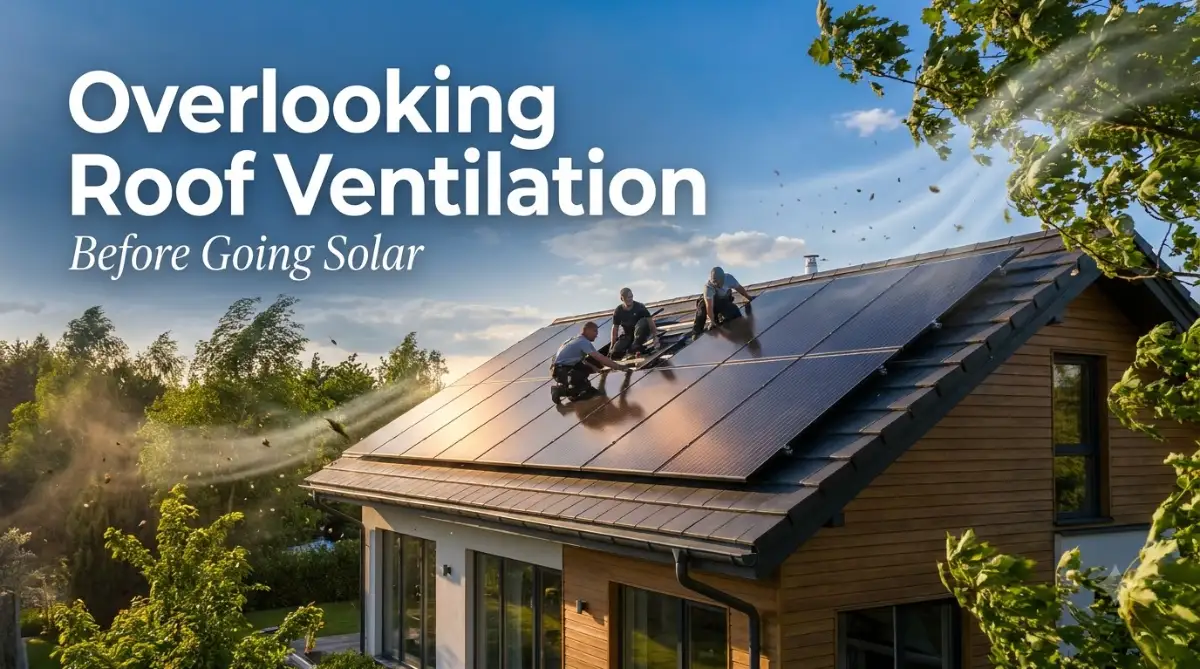
You also need to look closely at the actual shingles holding the heavy metal racking system in place. The extra weight of the hardware combined with trapped moisture can heavily stress the underlying wood over time. Understanding the severe risks of installing solar arrays on older residential roofs will help you catch small leaks before they destroy your ceiling.
If you see anything that looks even slightly bent, rusted, or out of place, document it immediately with your smartphone camera. You can then send those clear pictures to your original installation company to see if the repairs are completely covered under your current warranty agreement.
Why Shading is Worse Than Standard Dirt
You might spend hours perfectly detailing your solar array, only to realize your energy production is still surprisingly low. I once spent an entire morning meticulously washing my roof, only to discover a rapidly growing oak tree was casting a massive dark shadow directly across my setup. Even a tiny amount of hard shade falling on a single corner can dramatically reduce the output of the entire connected string.
This happens because the individual solar cells are normally wired together in a continuous series, acting almost like old-fashioned holiday lights. If one single section gets covered by a heavy tree branch or a thick pile of wet autumn leaves, the whole system drops its voltage output to match the weakest link.
According to data published by the National Renewable Energy Laboratory on array shading impacts, keeping nearby trees aggressively trimmed is just as important as washing the glass itself. Make it a regular habit to walk around your yard every few months and look at where the shadows actually fall during peak afternoon hours.
The Dangerous Pitfalls That Will Destroy Your Equipment
Even with the best intentions, it is incredibly easy to make a split-second decision that completely ruins your massive financial investment. I have heard horrifying stories from local homeowners who tried to save a little time and ended up with a completely denied warranty claim. You must treat this specialized equipment with extreme respect, or the financial consequences will be devastating.
When you damage a panel through gross negligence, the manufacturer will instantly walk away from any future obligations to help you. Suddenly, you are entirely on the hook for replacing broken parts out of your own pocket. If you are serious about protecting your valuable personal assets and keeping your household budget secure, you absolutely must avoid these common, destructive traps.
The Abrasive Sponge Nightmare
It happens to almost everyone: you spot a massive, dried patch of sticky tree sap on the glass that simply refuses to wash away. Out of sheer frustration, you run into the kitchen and grab a green scrubbing pad, thinking a little bit of elbow grease will solve the problem. This is a catastrophic mistake that will permanently destroy the light-absorbing capabilities of that specific area.
Those common kitchen sponges contain tiny abrasive fibers designed to rip baked-on grease off cast iron pans. When you drag them across tempered solar glass, they leave behind hundreds of microscopic, cloudy scratches that block incoming sunlight forever.
Once that specialized factory coating is physically scratched away, absolutely no amount of polishing or buffing can ever bring it back. You will be forced to look at that ugly, milky white spot on your roof every single day, knowing it is quietly stealing your daily electricity.
Falling for the Dish Soap Trap
Many helpful online forums will confidently tell you to squirt a generous amount of standard blue dish soap into your wash bucket. While dish soap is amazing at breaking down bacon grease, it is terribly designed for outdoor glass applications. Heavy commercial degreasers leave behind a very thin, invisible, and highly sticky chemical film on the surface of the panel.
This leftover chemical film acts like a giant dust magnet the second the wind starts blowing across your neighborhood. Within just a few days, your completely clean array will attract twice as much dirt and pollen as it did before you washed it.
You find yourself trapped in an endless cycle of constantly washing the roof just to fight the sticky residue you accidentally created. This is why investing in a true, pH-neutral outdoor cleaning solution is always the smartest route for long-term clarity.
Hiring Sketchy Door-to-Door Cleaning Crews
During the bright summer months, you will likely get a knock on your front door from someone offering extremely cheap roof cleaning services. They usually promise to blast your dirty system clean for a fraction of the price a licensed professional would normally charge. However, these unlicensed, unverified neighborhood crews are often completely uninsured and use highly destructive tools.
They frequently drag heavy, vibrating pressure washing hoses across your fragile roof tiles, breaking shingles and snapping delicate electrical wires. If they accidentally shatter a panel or fall off your roof, their lack of liability insurance means you could be sued for the medical damages.
Just like you must be highly vigilant about falling for deceptive online offers, you must heavily vet anyone you allow onto your property. Always demand to see their current business license, verify their bonding status, and ask exactly what kind of soft-bristle brushes they plan to use.
The Fatal Mistake of Walking on the Glass
This sounds like common sense, but you would be shocked at how many people actually try to stand directly on their solar arrays to reach a higher spot. They assume that because the glass is thick and designed to withstand heavy hail, it can easily support human body weight. This is a completely false and highly dangerous assumption that will instantly shatter the delicate silicon wafers inside.
While the top layer of tempered glass might simply flex under your boots, the brittle solar cells underneath will snap in half instantly. We call these invisible breaks "micro-fractures," and they completely sever the internal electrical connections that actually generate your power.
You might not even see the damage with your naked eye, but your mobile app will show a massive, permanent drop in electricity production. Always stay safely on the sturdy part of the roof and use a long extension pole to bridge the physical gap.
Ignoring Strict Residential Safety Protocols
No amount of monthly energy savings is ever worth a trip to the local emergency room in an ambulance. Climbing a tall ladder with a heavy bucket of water in one hand is a recipe for a completely life-altering disaster. Slanted, wet roofs are incredibly slippery, and a sudden gust of wind can easily throw you entirely off balance.
If your home is more than a single story tall, you absolutely must invest in proper personal protective equipment before attempting this chore. The Occupational Safety and Health Administration guidelines for residential fall protection strongly recommend using a secure roof harness tied to a permanent anchor point.
If you are terrified of heights or simply do not have the physical balance required for ladder work, there is zero shame in stepping away. Paying a heavily vetted, highly insured professional a few hundred dollars is always better than risking a permanent physical injury.
Your Roadmap to a Brighter, More Efficient Home
Taking complete ownership of your residential energy system does not have to be a stressful, anxiety-inducing nightmare. By completely ignoring the aggressive pressure washers and focusing on gentle, science-based cleaning methods, you instantly eliminate the risk of voiding your precious warranty. You are now armed with the exact same knowledge that high-end industry professionals use to maintain massive commercial solar farms.
Remember that patience and the correct soft-bristled tools are your absolute best friends when working up on the roof. Waiting for the cool morning hours, using purified water, and avoiding harsh chemical degreasers will keep your array perfectly transparent for decades. Every time you safely wash away a heavy layer of seasonal grime, you are instantly putting hard-earned money right back into your family checking account.
A well-maintained, high-producing energy system drastically increases the overall value of your entire property. If you ever find yourself looking into tapping into your property's overall equity for a major renovation, a perfectly working solar array is a massive financial asset. You have already done the hard work of buying the panels, so take the easy steps to protect them properly.
I always tell my friends that maintaining solar panels is just like detailing a classic sports car; you have to be gentle, take your time, and enjoy the satisfying process. Once you see your energy app hit peak production again, I promise you will feel incredibly proud of the easy work you just accomplished.
Common Questions About Solar Maintenance
Can I just use standard glass cleaner on my solar panels?
You should completely avoid using standard household glass cleaners on your solar array. These heavily scented products often contain ammonia and harsh drying agents that will permanently strip away the anti-reflective coating. Sticking to pure, mineral-free water and a soft brush is always the safest option for the glass.
Will a regular leaf blower scratch my solar glass?
Using an electric or battery-powered leaf blower is actually a fantastic, entirely touch-less way to remove dry autumn leaves and loose pollen. Because you are only blowing regular air across the surface, there is absolutely zero risk of scratching the delicate coating. Just ensure you do not accidentally bang the hard plastic nozzle of the blower against the aluminum frames.
How much efficiency is really lost when the panels get dirty?
Depending on your exact local climate and weather patterns, a thick layer of sticky dirt can drop your system's efficiency by a massive twenty to thirty percent. That means you are essentially throwing away almost a third of your potential daily energy savings. Keeping the glass transparent ensures you get every single drop of raw power you paid for.
Does a heavy rainstorm actually clean my solar array?
While a very intense, heavy downpour can definitely wash away light surface dust, it will not thoroughly clean your system. Rainwater usually leaves behind ugly spotted rings and does absolutely nothing to remove baked-on tree sap or stubborn bird droppings. You still need to manually wash the array a few times a year to maintain peak electrical output.
Is it safe to use a squeegee to dry the panels faster?
Many professionals highly recommend against using a rubber squeegee on residential panels, especially if you live in a very dusty, dry environment. The tight rubber blade can easily trap tiny, abrasive sand particles and severely drag them directly across the smooth glass. Letting the panels simply air dry in the warm morning sun is a much safer, stress-free method.
Disclaimer: The information provided in this article is for educational and informational purposes only and should not be construed as professional electrical or legal warranty advice. Always consult your specific manufacturer's warranty guide and hire licensed professionals for dangerous roof work. We are not responsible for any damage or injuries incurred while attempting to clean or maintain residential solar equipment.