The Icy Truth: When Your Dashboard Range Melts Away
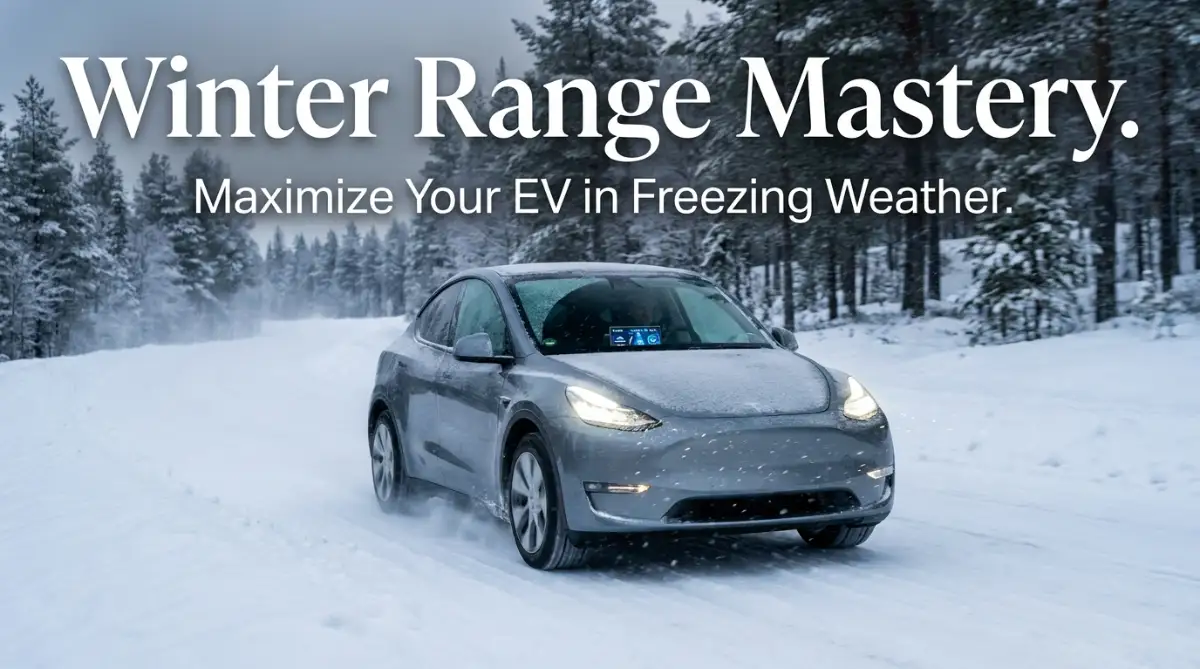
Watching your EV's battery range drop like a rock on a freezing winter morning is stressful. You leave the house thinking you have plenty of miles, but the cold weather magically steals them before you even hit the highway. But here is the good news: your car isn't broken. If you tweak a few simple charging and heating habits, you can easily stop the winter range drain and drive comfortably without shivering behind the wheel. Let's fix this right now.
My heart pounded so hard I could hear it over the radio playing softly in the background. Every single mile I drove seemed to eat up three miles of my estimated range. I barely rolled into my icy driveway with just three percent left, clutching the steering wheel and sweating despite the cold. That terrifying night, I vowed I would completely change my habits so I would never let the winter weather defeat me again.
If you drive an electric vehicle in a snowy or cold climate, you already know this awful, stomach-dropping feeling. The winter months turn normal, peaceful daily commutes into a highly stressful math equation. You find yourself constantly staring at the dashboard, doing mental gymnastics to figure out if you have enough juice to safely make it to the grocery store and back home.
Winter EV Survival Cheat Sheet:
- Never leave the house cold. Use your phone app to pre-warm the car while it is still plugged into the wall charger.
- Rely on your heated seats and steering wheel instead of blasting the main air cabin heater.
- Check your tire pressure every single week; cold air shrinks tires and ruins your driving efficiency.
- Turn on "Eco Mode" to stop your wheels from slipping on icy roads and to save raw battery power.
- Always navigate to fast chargers using the car's built-in map so the battery pre-heats itself on the highway.
Why Does Cold Weather Hate Your Battery?
Every time the temperature drops below freezing, it feels like the car is holding your daily peace of mind hostage. You desperately want to stay warm and comfortable, but turning on the heater feels like a massive punishment to your battery. Families often cancel weekend ski trips or holiday visits just because they are terrified of running out of power on a lonely, freezing highway.
But you really do not have to drive in misery. The secret to beating the cold does not require expensive upgrades or magical software fixes. By understanding exactly how your car reacts to the cold and shifting a few simple daily habits, you can reclaim your range and drive with total confidence all winter long.
The Honey Jar Effect: Understanding Your Power Cells
To fix the problem, we first need to understand why it actually happens. Your electric car battery is essentially a massive box of chemical reactions. Think about what happens when you put a jar of pure honey in the refrigerator. The cold temperature makes the honey thick, sluggish, and incredibly hard to pour.
The lithium-ion cells inside your car act in the exact same way. When the temperature drops below freezing, the internal resistance of the battery goes way up. The physical chemicals simply cannot move the energy around as quickly or efficiently as they do on a warm summer day.
Because the battery is stiff and cold, the car has to work much harder just to pull the normal amount of electricity needed to spin the tires. This extra effort burns through your stored energy at a shocking rate. Thankfully, there is a brilliant way to "warm up the honey" before you ever put the car in drive.
The Preconditioning Secret: Your Winter Superpower
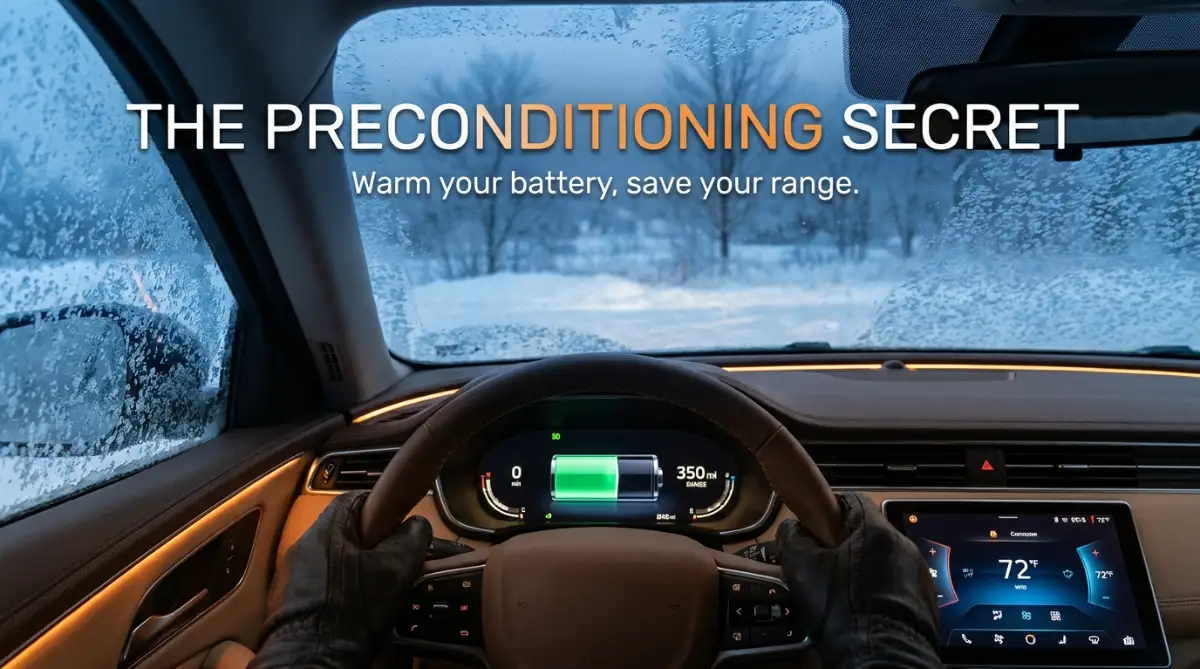
This is arguably the most powerful habit you can build as an electric vehicle owner. In a traditional gas car, you might let the engine idle in the driveway for ten minutes to warm up. In an electric car, this concept is called preconditioning, and it is an absolute game-changer for your winter range.
While your car is safely parked in the garage and plugged into the wall charger, you can use your smartphone app to wake the car up. You tell the car to start warming up the main battery pack and heating the cabin space about thirty minutes before you plan to leave for work.
Here is why this is so wildly effective. Because the car is still plugged in, it uses the electricity from your house to generate all that intense heat. It does not pull a single drop of energy from your actual car battery.
By the time you unplug and sit in the driver's seat, the battery cells are operating at their perfect, warm temperature. The cabin is toasty, the windows are completely defrosted, and you drive away with a true 100% battery ready to face the freezing roads.
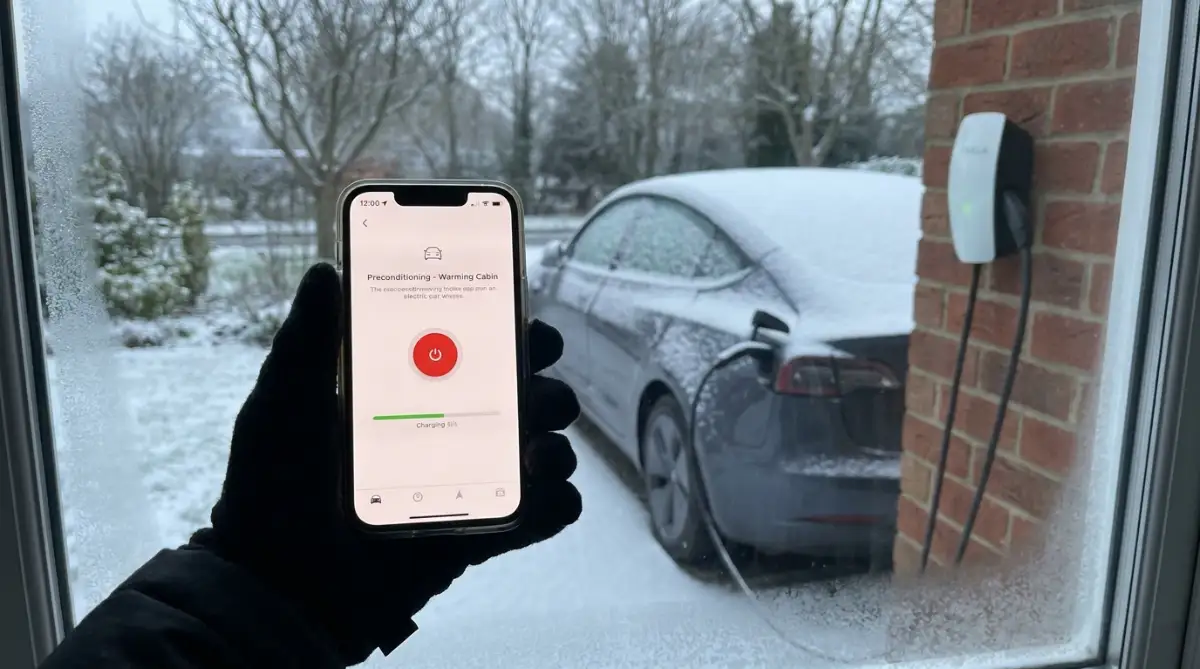
I used to just jump into my freezing car, unplug it, and blast the heater while driving down the highway. I honestly had no idea I was completely murdering my range by forcing a freezing cold battery to generate massive amounts of heat. Taking thirty seconds the night before to schedule my departure time on the app instantly gave me back twenty miles of daily range.
Rethinking How You Stay Warm on the Road
Once you are actually driving, your heating habits play the biggest role in how far you can travel. In a regular gas-powered car, the engine creates a massive amount of waste heat just by burning fuel. The car simply blows that free, leftover heat right into the cabin to keep you warm.
Electric cars are incredibly efficient, meaning they do not create that free waste heat. To warm up the air inside the cabin, an electric car has to use a dedicated electrical heater. Heating up the entire volume of cold air inside an SUV takes an absolutely massive amount of battery power.
The Seat Heater Strategy
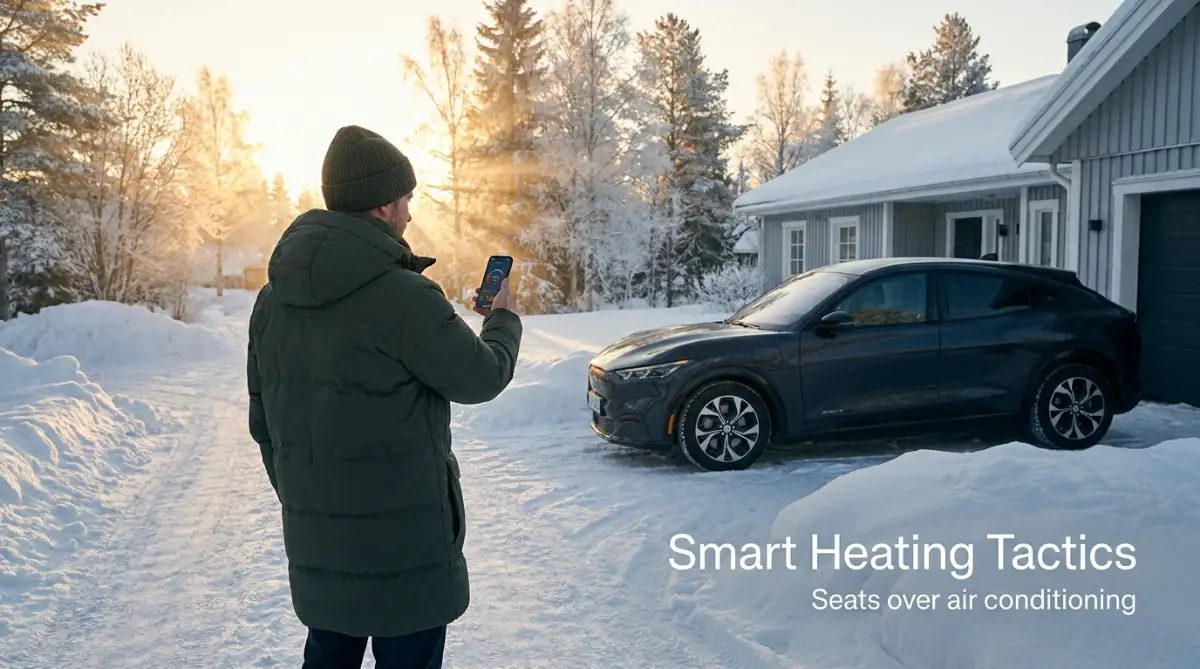
Instead of trying to heat all the empty air inside the car, you should focus on heating your physical body. It takes significantly less electricity to warm up the solid materials of your steering wheel and your seat.
"If you want to see exactly how much power your cabin heater drains compared to your seat warmers, you have to check out this brilliant demonstration."
If you keep the main cabin air temperature slightly lower—say around 65 degrees—and rely heavily on your heated seats and heated steering wheel, you will save a tremendous amount of range. You will still feel perfectly warm and cozy, but your battery will thank you for being smart about how you use its power.
The Heater Math: Cabin Air vs. Heated Seats
| Heating Method | Energy Drain | Battery Range Impact |
| :--- | :--- | :--- |
| Main Cabin Heater (HVAC) | Very High (up to 4-6 kW) | Can easily kill 15% to 30% of your total range |
| Heated Seats & Steering Wheel | Super Low (around 50-100 Watts) | Barely noticeable (under 2% range loss) |
Bottom Line: Turn the cabin air down to 65°F and crank up your seat heaters instead. You stay perfectly warm while saving a massive amount of battery life.
The Physics of Winter Roads
The cold weather does not just affect the battery; it physically changes the road you drive on. Snow, slush, and heavy freezing rain create massive resistance against your tires.
Imagine trying to ride a bicycle on a perfectly smooth, paved sidewalk. It is easy and takes very little effort. Now, imagine trying to ride that exact same bicycle through two inches of thick mud or wet sand. You have to pedal incredibly hard just to keep moving forward.
When your car has to push through layers of snow and slush on the highway, the electric motors have to work overtime to maintain your speed. This increased rolling resistance will naturally eat into your driving range.
If the roads are heavily covered in snow, you should safely lower your driving speed. Driving at 55 miles per hour instead of 75 miles per hour requires dramatically less energy. The faster you drive through resistance, the faster your battery drains. Taking your time on winter roads keeps you safe from black ice and heavily protects your battery life.
Modifying Your Regenerative Braking
One of the coolest features of an electric vehicle is regenerative braking. When you lift your foot off the accelerator pedal, the electric motor runs backward. This action slows the car down and actually captures that kinetic energy, sending it straight back into the battery to give you more range.
In the summer, this feature is fantastic. But in freezing weather, strong regenerative braking can actually become a bit tricky. If the road is covered in sleek ice or slippery snow, a sudden heavy braking force on the wheels can cause your tires to lose traction and slide.
Many smart drivers temporarily lower their regenerative braking setting during severe winter storms. Setting it to "low" or "standard" makes the car coast more smoothly, acting much like a regular gas car. While you might capture slightly less energy returning to the battery, you maintain much better control over the vehicle on icy patches.
The Invisible Enemy: Tire Pressure Drops
Here is a highly scientific fact that most drivers completely forget: cold air shrinks. When the freezing winter temperatures arrive, the air inside your car tires physically contracts. This sudden contraction causes your tire pressure to drop significantly overnight.
Why Low Tires Kill Your Range
Driving on slightly flat, under-inflated tires is terrible for your electric car. The tire becomes squishy and creates much more friction against the cold asphalt. This is called high rolling resistance.
To overcome this extra friction, your electric motors have to pull more energy from the battery pack. You could easily lose ten to fifteen miles of total range simply because your tires are missing a few pounds of air pressure.
Make it a strict habit to check your tire pressure monitor on the dashboard at least once a week during the winter. If the numbers look low, stop by a local gas station and fill them up to the exact pressure listed on the sticker inside your driver's side door frame. This tiny, five-minute task ensures your car rolls as easily and efficiently as possible.
Quick Winter Tire Hack:
Did you know that for every 10-degree drop in outside temperature, your tires lose about 1 to 2 PSI? If the temperature drops 30 degrees overnight, your tires are suddenly dragging. I keep a cheap portable air compressor in my trunk so I can pump my tires back up to the exact door-sticker PSI at home, without freezing my hands off at a gas station air pump.
Eco Mode: Your Winter Co-Pilot
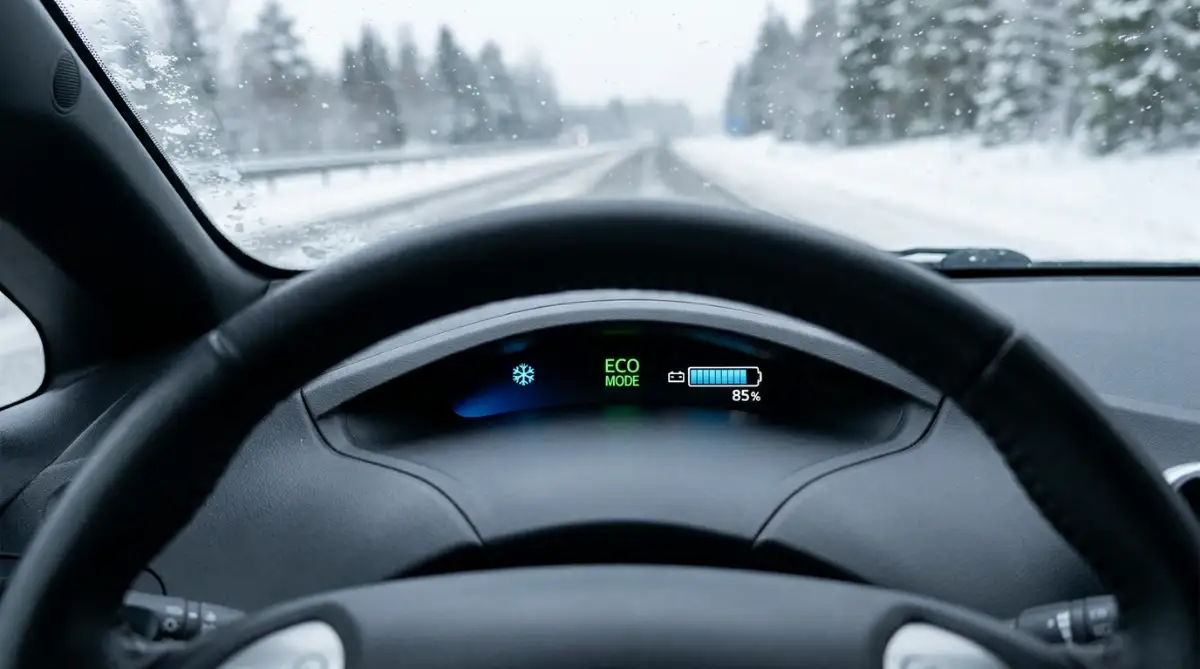
Almost every modern electric car has a button labeled "Eco Mode" or "Chill Mode." Many drivers totally ignore this button because they love the fast, sporty acceleration that electric cars are famous for. However, winter is the perfect time to let this smart software take over.
When you turn on Eco Mode, the car's computer intentionally dulls the response of the accelerator pedal. If you accidentally press the pedal too hard with heavy winter boots, the car will not suddenly jerk forward and spin the tires on the ice.
It slowly and smoothly applies power to the wheels. This smooth, steady acceleration not only prevents you from sliding into a snowbank, but it is also the absolute most efficient way to use battery power. Rapidly speeding up and slowing down destroys your range. Let Eco Mode force you into becoming a smoother, safer, and much more efficient winter driver.
Smart Parking Strategies
Where you leave your car during the day can completely change your driving experience for the trip home. If you park your car facing straight into a brutal, freezing winter wind, the battery casing gets incredibly cold incredibly fast.
Whenever possible, try to park your electric vehicle inside a garage. Even an unheated parking garage blocks the wind chill and keeps the ambient temperature slightly higher than the open street. If you absolutely have to park outside in an open lot, look for a spot that gets direct sunlight during the day.
That natural solar heat hitting the dark roof and windows of your car acts like a gentle, free blanket. It helps keep the cabin slightly warmer, meaning your heater will not have to work nearly as hard when you finally get in to drive home.
Myth vs Reality: Winter EV Performance
Myth: Electric cars are completely useless in the winter and cannot handle the snow.
Reality: Because electric cars have massive battery packs mounted flat along the floor, they actually have an incredibly low center of gravity. This makes them extremely heavy and stable. An electric car with proper winter tires will often handle snowy roads much better than a traditional, top-heavy gas SUV.
Myth: The battery will randomly die and leave me stranded if it gets too cold.
Reality: The battery will never suddenly shut off just because it is freezing outside. The car's computer constantly monitors the temperature. It will simply tell you that your total range is temporarily reduced until the battery warms back up. As long as you pay attention to your dashboard, you will never get caught off guard.
By taking a few extra seconds to prepare your car, monitoring your heating habits, and driving smoothly, winter no longer has to be a terrifying season. You can easily squeeze every possible drop of efficiency out of your battery and enjoy a warm, highly comfortable commute.
Next-Level Winter Habits for Long-Lasting Battery Health
Once you master the basic preconditioning tricks, you are already driving smarter than the vast majority of people on the road. However, to truly get the absolute most out of your electric car, you need to understand how your vehicle thinks. Your car has a built-in computer called the Battery Management System, and it is constantly working behind the scenes.
If you learn how to work with this computer instead of against it, you will unlock a completely new level of driving efficiency. These advanced strategies will not only save your daily range but will also heavily protect your expensive battery pack over the long run. Let's break down exactly how you can implement these pro-level secrets into your daily winter routine.
The "Always Be Charging" Rule
Experienced electric vehicle owners live by a very simple motto during the freezing months: ABC, which stands for Always Be Charging. When the temperature drops below freezing, a battery left sitting in the cold will slowly lose its stored energy simply trying to keep itself alive.
Think about what happens to your personal electronics when they get cold. If you have ever wondered why your smartwatch keeps dying after being left by a drafty winter window, your car suffers from the exact same chemical problem. The cold physically drains the cells even when the car is completely turned off.
By keeping your car plugged into a wall outlet whenever you are parked at home, you completely solve this issue. The car will pull a tiny, steady trickle of electricity straight from your house to keep the battery comfortably warm. When you finally wake up to drive, you will have a full battery that is ready to perform perfectly.
Mastering Smart Navigation Pre-Heating
This is a brilliant software feature that most beginners completely ignore because they do not understand how it works. If you are planning a long winter road trip, you will inevitably need to stop at a public fast-charging station. But as we discussed earlier, a freezing cold battery completely refuses to accept high-speed charging.
If you just pull up to a fast charger with a cold battery, you might sit there for an hour waiting for a simple top-up. The secret is to always use your car's built-in navigation screen to map your route to the charging station. When the car's computer knows exactly where you are going, it does something truly amazing behind the scenes.
About thirty miles before you arrive at the station, the car will automatically start pulling energy to heat up the battery pack. According to rigorous testing by the American Automobile Association (AAA), this on-route conditioning ensures your battery is at the exact perfect temperature the moment you plug in. You will get the maximum possible charging speed and shave hours off your total road trip.
Creating a Wind-Proof Charging Environment
You do not necessarily need a heated, fancy garage to protect your electric car during the winter. What you actually need is protection from the brutal, freezing wind chill. Wind strips heat away from the metal casing of your battery pack incredibly fast, forcing the car to waste energy warming it back up.
If you park in an open carport or driveway, try to park your car extremely close to the side of your house or behind a solid fence. This simple physical barrier blocks the direct wind and makes a shocking difference in how well your battery holds its temperature overnight.
It is very similar to preparing your home for major upgrades. Just as you should never ignore the unspoken risks of installing solar panels on an aging residential roof structure, you should not ignore your home parking setup. A little bit of environmental planning goes a very long way in preserving your car's efficiency.
The Daily Charging Limit Adjustment
During the warm summer months, keeping your daily charging limit set to eighty percent is the golden rule for battery health. But winter changes the rules of the game slightly. Because the cold weather naturally steals a percentage of your range, eighty percent might not confidently get you through a busy day of errands.
During extreme cold snaps, it is perfectly fine to increase your daily charging limit to ninety percent. This gives you a highly comfortable safety buffer in case you get stuck in a bad snowstorm or massive traffic jam.
The key is to use that extra energy immediately. You never want the car sitting in the driveway for days at a time at a high charge level. Understanding what really causes electric vehicle battery degradation and how to stop it means knowing how to balance your daily range needs with the long-term chemical health of your cells.
The Dangerous Winter Blunders That Destroy Your Range
Even with the best intentions, driving in the snow can easily trick you into making very costly mistakes. Many new drivers try to treat their electric vehicle exactly like the old gas-guzzling truck they used to own. This completely backward thinking usually leads to massive frustration and terrifying moments on the highway.
I have seen countless people get completely stranded on the side of the road simply because they ignored the basic laws of battery physics. If you want to safely navigate the freezing months, you absolutely must avoid these common, trip-ruining pitfalls. Let's look at the exact mistakes that will drain your battery and leave you out in the cold.
The "Cold Soak" Overnight Trap
The Scenario: You come home from work on a Friday evening with only ten percent battery remaining. It is heavily snowing, so you decide you will just plug the car in tomorrow morning when the weather clears up. You leave the car sitting completely dead in the freezing cold all night.
The Danger: This is known in the industry as a "cold soak," and it is incredibly dangerous for your battery pack. When a completely empty battery freezes, the internal voltage drops to highly unstable levels. The battery has no stored energy left to run its own internal heaters to protect itself.
By the next morning, your car might completely refuse to turn on, and it will definitely refuse to accept a charge until the weather heavily warms up. The Idaho National Laboratory has published extensive research showing how deep freezing a nearly empty lithium-ion battery can permanently damage the cellular structure. Never leave your car outside overnight with a low battery during the winter.
Blindly Trusting the "Guess-O-Meter"
The Scenario: You jump into your car, and the dashboard clearly says you have 150 miles of range. Your destination is exactly 120 miles away. You figure you have plenty of room to spare, so you hit the highway without planning a single charging stop along the way.
The Danger: The range estimator on your dashboard is just a computer making a highly optimistic guess based on how you drove yesterday. When you hit the highway and turn on the heavy cabin heater, that 150 miles of estimated range will vanish incredibly fast.
Just like falling for the silent warning signs of fake remote job offers, blindly trusting a number that looks too good to be true will leave you completely stranded. Always plan a safety charging stop on winter road trips, even if the dashboard insists you can make it the whole way.
The Defroster Dependency Habit
The Scenario: Your windshield is slightly foggy from the cold winter air. To fix it, you hit the "Max Defrost" button on the dashboard and leave it running at full blast for the entire one-hour drive to work. You figure it keeps the windows clear and the cabin super hot.
The Danger: The max defrost setting is the single biggest energy hog in your entire vehicle. To rapidly clear a foggy window, the car turns on the maximum electric heat and simultaneously runs the air conditioning compressor to pull moisture out of the air.
Running both of these massive systems at the exact same time will absolutely murder your driving range. According to efficiency data from the U.S. Department of Energy, aggressive use of the cabin heater and defroster can reduce your total EV range by over forty percent. Once your windshield is completely clear, manually turn the defroster off and switch back to your heated seats.
Ignoring the Underbody Snow Buildup
The Scenario: You are driving through heavy, wet slush for hours. When you finally park, you just walk right into the house without looking at the bottom of your car. Massive chunks of heavy ice freeze solid inside your wheel wells overnight.
The Danger: Electric cars are heavily engineered to be completely aerodynamic. They rely on smooth airflow to glide down the highway efficiently. When giant blocks of heavy ice freeze to the bottom of the car, it completely destroys that aerodynamic shape.
Even worse, that ice adds hundreds of pounds of useless, heavy weight to the vehicle. Your electric motors have to pull significantly more energy from the battery just to drag that heavy ice down the road. Always take a quick moment to kick the heavy slush out from behind your tires before you park for the night.
Your Action Plan for Confident Winter Driving
Winter does not have to be a stressful season for electric vehicle owners. You now have a complete, highly practical blueprint to completely protect your battery and maximize your driving distance. It all comes down to being slightly more intentional with your daily routine and understanding how your car reacts to the cold.
When you first figured out how to get approved for your first auto loan, you made a massive financial commitment. Protecting your battery's health is the absolute best way to protect that investment. It requires the exact same level of careful planning as figuring out how to protect your personal assets from business loan risks.
Just remember to pre-warm your battery while it is still plugged in, rely heavily on your seat heaters, and always keep your tires properly inflated. If you follow these highly effective habits, you will completely conquer range anxiety. You can finally sit back, relax, and enjoy the beautiful, quiet ride through the snowy winter roads.
Common Questions About Winter EV Driving
Does parking in the snow ruin my electric car battery?
No, simply parking in the snow will not physically ruin or destroy your battery pack. The metal casing is highly insulated and heavily waterproofed to protect the internal cells from moisture. However, the extreme cold will temporarily reduce the amount of power the battery can deliver until it warms back up.
Why does my fast charging speed drop so much in the winter?
Fast charging relies on pushing massive amounts of electrical current into the battery very quickly. If the chemical cells are frozen solid, they physically cannot accept that heavy flow of energy safely. The car's computer intentionally slows down the charging speed to completely prevent the internal cells from shattering or overheating.
Should I leave my car plugged in during a heavy blizzard?
Yes, it is highly recommended to keep your electric car plugged into your home charger during a winter storm. The car will pull a very small amount of electricity from the grid to keep the battery warm and perfectly balanced. The charging connections are highly weather-resistant and completely safe to use in heavy snow.
Will I get stranded if I get stuck in winter highway traffic?
Actually, electric cars are incredibly efficient when sitting completely still in heavy traffic. Because there is no gas engine constantly idling and burning fuel, the only energy you use is for the cabin heater. If you keep the temperature moderate and use your heated seats, you can comfortably sit in freezing traffic for hours without draining the battery.
Is it better to use eco mode on icy winter roads?
Yes, using eco mode is a brilliant strategy for driving safely on slippery winter roads. It intentionally softens the response of the accelerator pedal, making your acceleration much smoother and slower. This prevents the heavy electric motors from instantly spinning the tires and causing you to slide out of control on black ice.
Disclaimer: The driving strategies and battery management tips provided in this article are for informational and educational purposes only. Electric vehicle features, software behaviors, and battery chemistries vary greatly between different manufacturers. Always prioritize safe driving habits in severe weather and consult your specific vehicle's owner manual for official winter operation guidelines.