The Freezing Morning I Thought My Solar Investment Was a Huge Mistake
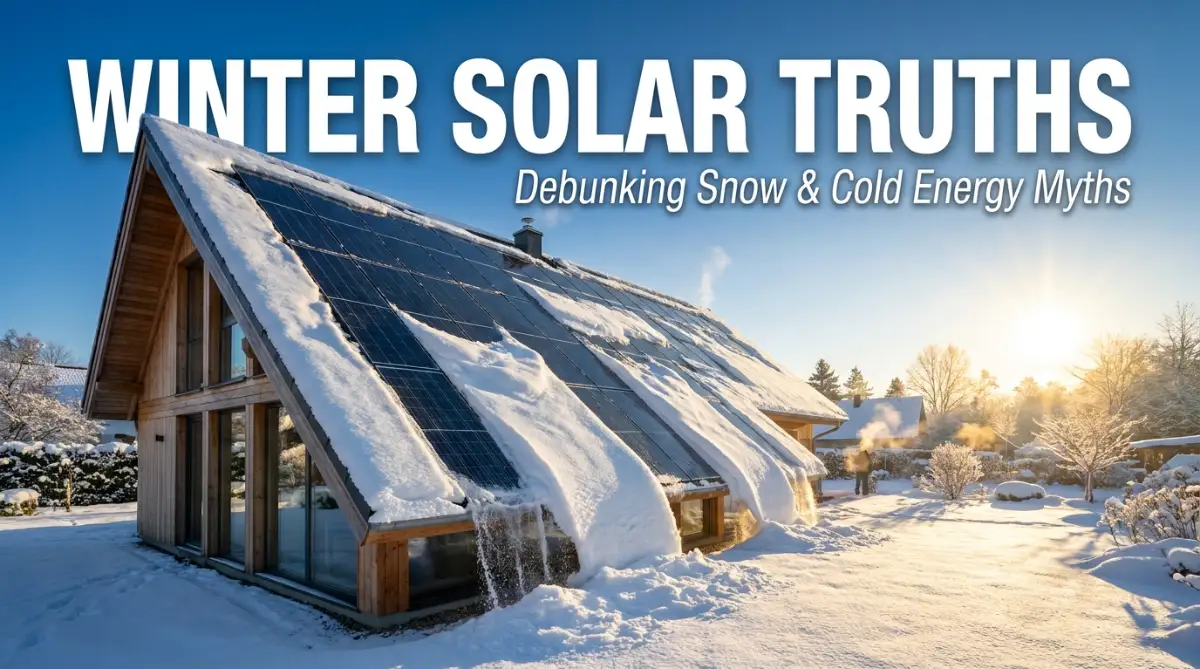
I will never forget the morning I woke up to my first massive snowstorm after installing rooftop solar. I rushed to the living room window, looked up at my roof, and my heart completely sank. A thick, heavy blanket of bright white snow completely buried my brand-new expensive panels.
At that exact moment, panic set in. I honestly thought I had made the worst financial decision of my life. My mind started racing with terrible thoughts.
How was I going to generate any electricity today? Would my utility bill suddenly skyrocket right in the middle of winter? I even worried that the sheer weight of all that frozen ice and heavy powder would crack the glass or cause my roof to cave in.
I seriously debated dragging a heavy, dangerous ladder out of the garage to climb up there and sweep them off myself. The fear of losing power and wasting money was incredibly stressful.
If you are reading this right now, I know exactly what you are feeling. You probably looked out your window on a freezing, snowy morning and felt that exact same knot in your stomach.
Homeowners everywhere deal with this intense anxiety when the temperature drops and the clouds roll in. We spend so much money trying to do the right thing for our homes and our wallets, only to feel helpless against Mother Nature.
Why Everything You Think About Cold Weather and Solar is Probably Wrong
Most of us assume that a lot of sunshine and a lot of heat naturally go together. Because of this, it is super easy to think that solar energy depends on hot, sweltering summer days to work properly.
However, this is actually the biggest misunderstanding in the entire renewable energy world. To truly understand what happens on your roof during the colder months, we have to look at the basic science behind how these systems operate.
Photovoltaic technology runs strictly on light, not heat. The cells inside your panels are designed to capture the tiny energy particles from sunlight and convert them directly into electricity.
The outdoor temperature has absolutely nothing to do with the actual creation of that power. In fact, extreme heat is actually the natural enemy of electronic devices.
Think about your smartphone or a laptop computer for a second. If you leave your phone sitting in the hot sun on a beach, what happens? It overheats, gets super slow, and eventually shuts itself down to prevent internal damage.
Solar panels are essentially just massive electronic boards sitting on top of your house. When they get too hot in the middle of a blazing summer afternoon, they actually lose a bit of their maximum efficiency.
On the flip side, when the temperature drops below freezing, these electronics perform wonderfully. Cold air improves the conductivity of the materials inside the cells, allowing electrons to move much faster and with less resistance.
So, a clear, incredibly cold winter day is technically the absolute best-case scenario for optimal power output. Your system is happily generating electricity without suffering from any heat exhaustion.
The Hidden Magic of The Albedo Effect
Now, you might be wondering about the days when the ground is completely covered in a thick layer of fresh, white powder. This is where nature gives us an amazing free bonus that most installers never even talk about.
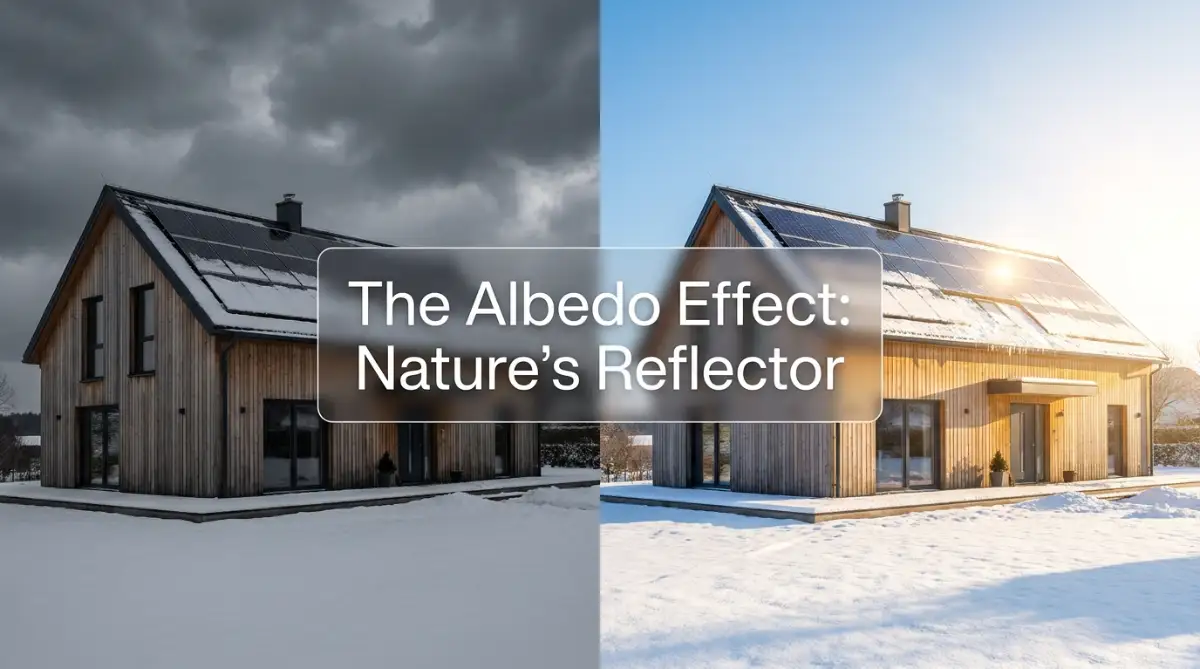
Scientists call it the Albedo effect, and it completely changes the game for winter power generation. Fresh white snow acts like a gigantic, natural mirror spread across your entire yard and neighborhood.
When the sun comes out after a big storm, the light travels down, hits that white snowy surface, and bounces right back up into the atmosphere. Because your panels are naturally tilted on a roof, they catch a massive amount of this secondary, reflected sunlight.
This means your system is capturing direct light from the sky and indirect light bouncing off the ground at the very same time. Many homeowners actually see unexpected spikes in their energy production on perfectly clear days right after a heavy snowfall!
Watch this incredible time-lapse showing exactly how snow interacts with panels throughout a winter day, proving why you never need to panic.
The Automatic Self-Cleaning Process of Your Roof
Okay, but what about the actual snow blocking the glass? If the panels are buried, no light can get in, right?
This is an incredibly valid concern, and it is exactly what caused my own panic attacks during my first year. But engineers have spent decades designing these modules specifically to handle heavy accumulation without you ever needing to lift a finger.
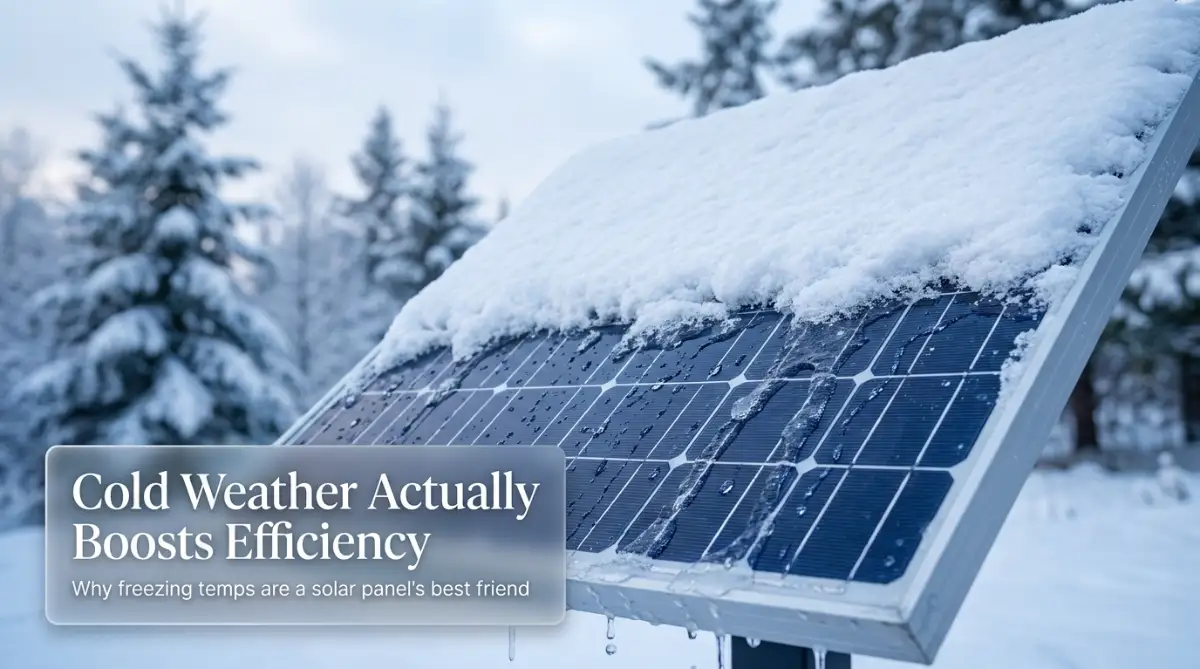
First, solar panels are entirely black or dark blue. Just like wearing a dark black shirt on a sunny day, they are designed to naturally absorb and hold onto warmth from the sun.
Even if they are covered by two or three inches of snow, a tiny bit of sunlight still manages to penetrate right through that white layer. The dark surface beneath absorbs that small amount of light, and the panel slowly begins to warm up.
Once the surface temperature rises just barely above freezing, a microscopic layer of water forms right between the glass and the bottom of the snow pile.
Because the glass is incredibly smooth and the panels are installed at a steep angle, all friction completely vanishes. The heavy blanket of snow suddenly loses its grip and silently whooshes off the roof in a matter of seconds.
I learned about this the hard way, and it changed how I handle my winters entirely.
My personal Pro Tip: During my first winter, I actually attached a soft car brush to a huge extension pole and spent an hour awkwardly trying to scrape off the snow from the ground. I ended up slipping on the icy driveway, almost hurt my back, and left ugly smudge marks on the glass. The very next day, the sun came out for twenty minutes, and the remaining snow just melted and slid off perfectly on its own! I realized right then that patience is much smarter and safer than trying to force the issue.
Let's Look at the Data: Myth vs Reality
When you start talking to your neighbors about alternative energy, you will hear a lot of wild rumors. People love to share scary stories about broken roofs and dark houses without knowing the facts.
Let's clear the air and break down exactly what is true and what is entirely fiction.
As you can see, the fears we hold onto are rarely based on actual engineering. We just assume the worst because the technology feels magical and a bit intimidating.
Why You Should Never Try to Speed Up the Melting Process
One of the biggest mistakes new homeowners make is trying to aggressively fight the weather. We see our beautiful investment hidden under a pile of ice, and our instinct is to protect it.
You might be tempted to spray the roof with a garden hose connected to hot water. Please, absolutely never try to do this under any circumstances.
Pouring hot or warm water onto freezing cold glass creates an extreme temperature shock. This rapid change in temperature can instantly shatter the tempered glass right in front of your eyes.
Others think about tossing rock salt or chemical ice melts onto the roof to clear the path. These harsh chemicals will severely corrode the delicate aluminum frames and strip the anti-reflective coating right off the surface.
Your best tool during a heavy storm is simply a hot cup of coffee and a little bit of patience. The system is entirely built to survive the absolute worst blizzards on the planet.
How Net Metering Acts as Your Winter Shield
Let's talk about the financial side of things, because that is what truly keeps us awake at night. You might still be thinking, "Sure, they work in the cold, but I am still making less total power in December than I did in June."
You are absolutely right about that specific point. The sun sits much lower in the winter sky, and the total daylight hours drop significantly during the freezing months.
Your raw monthly production numbers will definitely be lower in the dead of winter than they were during the peak of summer. But this does not mean your energy bill is going to suddenly bankrupt your family.
This is exactly where the beauty of your utility agreement comes directly into play. Almost every major modern installation operates under a system called net metering.
Think of net metering like a massive energy savings account managed by your local power company. During those incredibly long, bright summer days, your home produces way more electricity than you can possibly use.
All of that extra, unused juice is pushed backward into the neighborhood power grid. The utility company takes that extra power, gives it to your neighbors, and puts energy credits into your digital account.
You basically build up a massive bank of extra credits from May straight through September. Then, when the dark, snowy months arrive, your system automatically starts using those saved-up credits.
Even if your panels are completely buried under a foot of snow for three straight days, your house stays warm and bright. You are simply withdrawing the extra electricity you generously gave to the grid four months ago.
This financial balancing act completely erases the negative impact of short winter days and heavy snowstorms. You are effectively paying for your winter heating using the sunshine you captured during your summer barbecues.
Understanding Angles and Seasonal Tilt
Another brilliant engineering feature that protects your investment during cold weather is the physical angle of the installation. Roofs are naturally built with a slope to shed rain, and your hardware follows this exact same geometry.
In northern climates where heavy blizzards are incredibly common, installers specifically calculate the perfect pitch. A steeper angle does two amazing things for your home during these harsh months.
First, it creates a much steeper slide for the snow to fall off once that micro-layer of water forms. Gravity does all the heavy lifting, pulling the chunks of ice safely down into your yard.
Second, a steeper angle perfectly matches the low position of the winter sun. Because the sun does not rise very high in December, a tilted panel looks it right in the eye, catching every single possible ray of light.
Some ground-mounted systems even allow you to manually adjust the tilt a few times a year. You can physically point them higher up during the summer and lay them further back to face the horizon when the snow starts falling.
However, standard rooftop systems are fixed in place using complex math to find the perfect year-round average. They are strategically positioned to give you the absolute best return on investment without you ever needing to touch a wrench.
You literally just get to sit inside your warm house, watch the snow fall, and let the incredible science of photovoltaics do its job quietly and safely.
Smart Homeowner Secrets for Maximizing Winter Sun
Once you understand that your panels are perfectly safe under a blanket of snow, you can actually start optimizing your home for the colder months. You do not have to just sit around and wait for the spring thaw.
There are several highly effective habits you can adopt right now to squeeze every single drop of electricity out of those short winter days. I like to think of this as playing a fun strategy game with my house.
The biggest secret to managing your winter energy is learning how to perfectly time your heavy appliance usage. During the summer, you might run your dishwasher or electric dryer at night without thinking twice.
In the winter, however, you want to shift those massive energy-draining chores to the absolute middle of the day. Around noon, the winter sun is at its highest possible point, and your panels are likely producing peak power.
By running your heavy appliances while the sun is shining brightly, you are using the electricity directly as it is generated. This prevents you from having to pull expensive power from the grid later that evening when the sun goes down.
Another incredible strategy is to carefully analyze the trees surrounding your property when the leaves fall off. You might assume that bare branches cannot block out the sun, but this is a massive misconception.
Because the sun sits much lower on the horizon during December and January, it casts incredibly long shadows across your yard. A thick cluster of bare branches can actually cast a dense, complicated shadow pattern directly onto your roof.
Taking an afternoon to carefully prune back dead branches can instantly increase your daily power generation. It allows that crisp, cold winter sunlight an unobstructed path right to your dark glass panels.
You should also take a hard look at your home's physical insulation and overall structural health before the deep freeze arrives. Heavy snow sitting on top of your panels adds weight, and you must be confident your house can support it.
If you are living in an older house, it is incredibly smart to understand the unspoken risks of installing solar panels on an aging residential roof structure before the storms hit. Ensuring your attic is properly supported and insulated keeps the warm air inside your living space, reducing your overall heating needs.
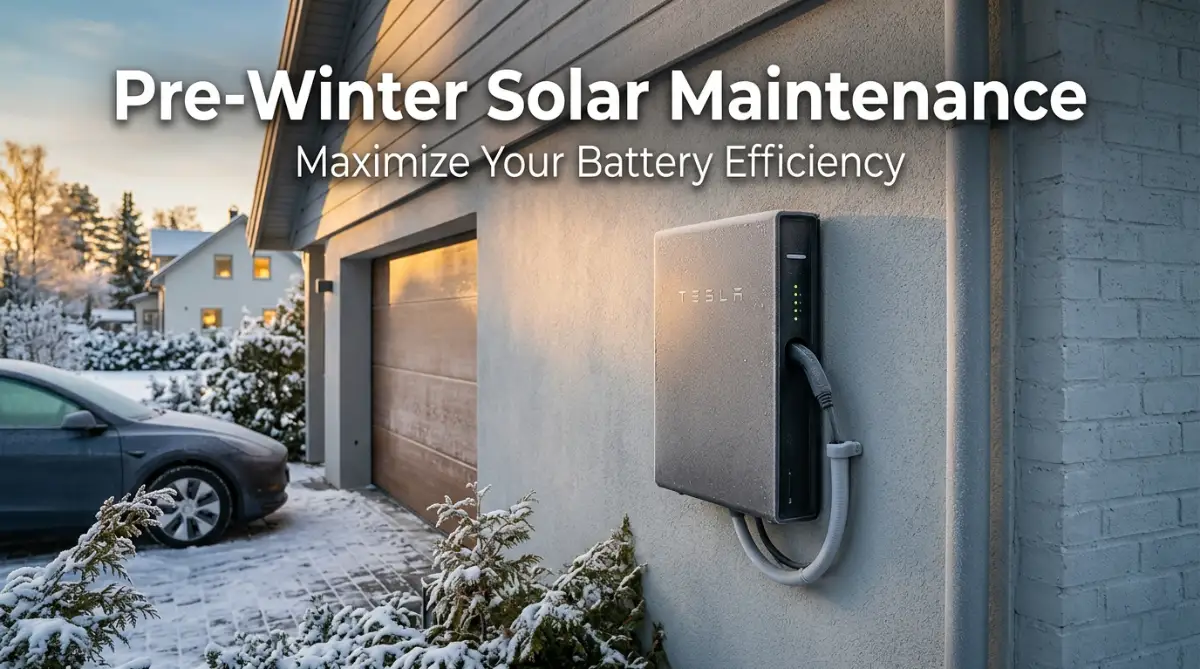
If you utilize a home battery backup system, you need to treat it slightly differently during extreme cold snaps. Batteries are chemically sensitive to freezing temperatures, much like the battery inside your car.
If you also drive an electric car, you already know what really causes electric vehicle battery degradation and how to stop it, and your home solar battery follows the exact same logic. Keeping your battery storage unit in a highly insulated garage or a temperature-controlled basement ensures it holds a maximum charge all winter long.
I also highly recommend turning on the specific "winter mode" or "storm watch" feature inside your solar monitoring app. This brilliant software setting tells your system to keep the home battery completely full just in case a blizzard knocks out the neighborhood power lines.
According to research from the National Renewable Energy Laboratory (NREL), properly managed home energy systems actually perform with exceptional stability even in sub-zero climates. It just takes a tiny bit of proactive planning on your part to keep everything running smoothly.
Dangerous Habits That Could Ruin Your Investment
While doing nothing is often the best strategy for snowy panels, human nature usually pushes us to try and "help" the situation. Unfortunately, this urge to speed things up leads to the absolute worst mistakes you can make as a homeowner.
The single most dangerous habit I see is people grabbing their standard plastic or metal snow shovels and climbing up a wet, icy ladder. Please, I am begging you, never let a hard shovel touch the surface of your expensive equipment.
The tempered glass is tough against weather, but dragging a sharp plastic or metal edge across it will instantly cause permanent scratches. These deep scratches permanently block sunlight and will absolutely void your 25-year manufacturer warranty.
Another terrifying mistake is attempting to melt the ice quickly using common household chemicals or salt. People sometimes toss handfuls of driveway de-icer up onto their roof, hoping it will clear the panels faster.
Those harsh, corrosive chemicals will aggressively eat away at the aluminum frames holding your entire system together. They will also permanently strip away the highly sensitive anti-reflective coating that helps the glass capture sunlight.
If you damage your system using improper cleaning methods, fixing it will cost a small fortune. Many families end up having to figure out how to unlock your home's equity even if your finances are struggling just to pay for completely avoidable replacement parts.
Even if your credit score has taken a hit recently, you might wonder, "can you get a home equity loan with bad credit what actually works" when emergency repairs pop up. But you can entirely avoid this stressful financial nightmare by simply leaving the winter weather alone.
Some homeowners also obsessively check their smartphone monitoring apps every single hour during a snowstorm. They watch their daily production drop to zero for three days and immediately start experiencing extreme buyer's remorse.
This daily obsession is terrible for your mental health and shows a deep misunderstanding of how the billing works. You need to remember that solar is a long-term, year-round investment, not a daily contest.
Data published by the Solar Energy Industries Association (SEIA) constantly proves that annual net metering completely balances out these short, zero-production snowy days. You have to zoom out and look at your yearly savings, rather than stressing over a single cloudy Tuesday in January.
Finally, never turn off your inverter or physically disconnect your system just because it is covered in heavy snow. I have spoken to people who think turning the system off will "protect" it from electrical shorts during a wet blizzard.
Modern solar hardware is incredibly advanced, hermetically sealed, and designed specifically to sit in the freezing rain without any issues. If you manually turn the system off, it cannot automatically wake up and start generating free electricity when the sun finally breaks through the clouds.
The Unseen Financial Protection of Going Solar
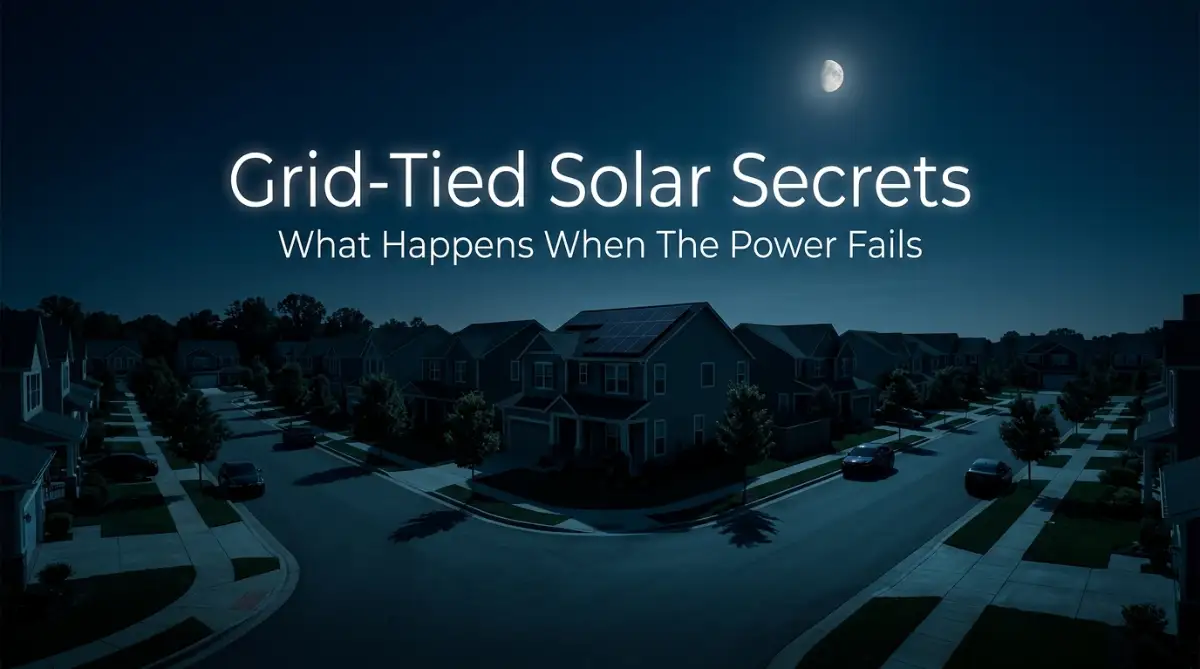
When we talk about winter storms, we also have to talk about the reality of neighborhood power grid failures. Heavy ice buildup frequently snaps wooden utility poles, leaving entire streets sitting in the freezing dark.
Having a robust solar setup, especially if paired with a small battery backup, turns your home into a personal fortress. While your neighbors are huddled under blankets waiting for the utility trucks, your lights stay on.
This level of independence is incredibly comforting, especially if you run a small business out of your home office. In today's economy, protecting your daily income is just as important as knowing how to protect your personal assets from business loan risks.
Every single hour your power is out, you are potentially losing money, food in the refrigerator, and your family's comfort. Your panels act as a silent, invisible insurance policy that pays you back every time the grid goes down.
Furthermore, homes equipped with modern renewable energy systems hold their real estate value much better in cold climates. Buyers love the idea of purchasing a house that naturally fights back against insane winter heating bills.
According to guidelines from the U.S. Department of Energy (DOE), homes with properly installed solar panels sell faster and often for higher asking prices. You are literally bolting long-term financial equity directly onto your roof.
Your Easy Winter Energy Action Plan
At the end of the day, dealing with winter weather as a solar owner is wonderfully boring. You do not need a fancy toolkit, you do not need to climb on your roof, and you certainly do not need to panic.
The greatest thing you can do is trust the brilliant science and engineering that went into building your system. These panels are specifically tested in extreme freezing conditions to guarantee they will survive your neighborhood's worst blizzards.
Embrace the amazing albedo effect, let the fresh white snow act as your personal sunlight reflector, and watch your cold-weather efficiency rise. When the heavy accumulation finally happens, just pour yourself a warm cup of coffee and wait for the sun to naturally slide it all away.
Shift your heavy laundry loads to high noon, keep your surrounding trees nicely trimmed, and totally ignore your daily production app during a storm. If you follow these incredibly simple steps, you will sail through the coldest months feeling extremely confident and financially secure.
I remember the exact moment I finally stopped worrying and just let my panels do their job in the snow. My personal advice to you is to delete the monitoring app from your home screen during the winter months, so you stop obsessing over the daily numbers. It gave me total peace of mind, and my electric bills still stayed incredibly low all season long!
Real Questions Homeowners Ask About Snowy Solar
Do I need special winter solar panels for my house?
No, you do not need to buy specific panels just for the cold months. Standard high-quality residential panels are already engineered to withstand freezing temperatures and heavy snow loads perfectly.
Will a power outage in winter stop my solar from working?
If you have a standard grid-tied system without a battery, your panels will automatically shut off during a blackout for safety reasons. However, if you add a home battery backup, your system will easily keep your house running while the grid is down.
Can freezing rain damage the glass on my roof?
Freezing rain and thick sleet will not damage the tempered glass covering your panels. They are pressure-tested to survive extreme hail and heavy ice impacts, making them much stronger than normal window glass.
Should I hire a professional to clear the snow off my roof?
You generally do not need to hire anyone because the panels naturally heat up and shed the snow automatically. Paying for professional removal is usually a waste of money unless you have an entirely flat roof with zero natural tilt.
Does cold weather drain my home battery faster?
Yes, extreme cold can slightly reduce the efficiency and capacity of any chemical battery system. To prevent this, professional installers usually place your battery unit inside a garage or a basement where the temperature stays relatively stable.
Disclaimer: The information provided in this article is for educational and informational purposes only. It does not constitute professional roofing, electrical, or financial advice. Always consult with a certified solar installation professional or licensed electrician before making any changes, physical interactions, or structural updates to your home energy system.