The Freezing Fear: Watching My Investment Disappear Under the Frost
I remember standing in my freezing driveway, staring up at my brand-new roof covered in a thick layer of white snow. My heart sank as I imagined my electricity bill skyrocketing because my panels looked completely useless under the frost. I honestly felt like I made a massive financial mistake and got tricked into buying a summer-only product. I spent the entire weekend stressing out, checking my phone app every five minutes just hoping to see a tiny bit of power generation. This is a terrifying feeling that thousands of new solar owners experience every single time the temperature drops. You watch the days get shorter and the skies turn gray, feeling a heavy knot of anxiety form in your stomach.
Suddenly, the financial peace of mind you thought you bought entirely disappears. Families sit in their living rooms, turning off extra lights and lowering the thermostat, completely terrified of getting a massive surprise bill. It creates a heavy cloud of stress right when you are supposed to be enjoying the cozy indoor season with your loved ones. You might even have friends or neighbors making jokes about how your expensive green energy setup is just a giant roof decoration during December.
That constant, nagging fear of losing power and money completely ruins the joy of being independent from the power company. People literally lose sleep wondering if the heavy ice will permanently break their system or if they will sit in the dark during a blizzard. But I quickly learned that this intense panic comes from listening to old rumors instead of looking at the actual science. The way these systems handle the cold is actually entirely different from what most regular people assume.
Once you understand the basic physics happening on your roof, that heavy winter anxiety completely fades away. You stop looking at the snow as a terrible enemy and start seeing it as just another normal part of the process. Let me break down exactly what happens up there when the freezing weather hits, so you can finally relax and enjoy your warm house.
The Cold Weather Reality Check: Why Freezing Temperatures Are Actually a Secret Weapon
There is a massive misunderstanding about how solar energy actually works. Most people naturally assume that because the sun is hot in the summer, the panels must need that intense heat to make electricity. This sounds incredibly logical, but it is entirely backward. Solar panels do not absorb heat at all; they only absorb light.
In fact, high heat is actually the biggest enemy of electronic equipment. Think about your personal laptop or smartphone. When you leave your phone sitting in the hot summer sun, it overheats, gets incredibly sluggish, and eventually shuts down to protect itself.
However, if you take that same phone into a cool, air-conditioned room, it runs perfectly fast and smooth. Your roof panels act in the exact same way. They are simply large pieces of electronic equipment that prefer a cold environment.
When the temperature drops below freezing, the internal components of the panels become much more conductive. The electrons inside the silicon cells do not bounce around as wildly, which means the energy flows much faster and smoother. Because of this, a crisp, freezing sunny day in January can actually force your panels to operate at a higher efficiency rate than a boiling hot day in July.
The Great Snow Cover Illusion: What Happens Under the White Blanket
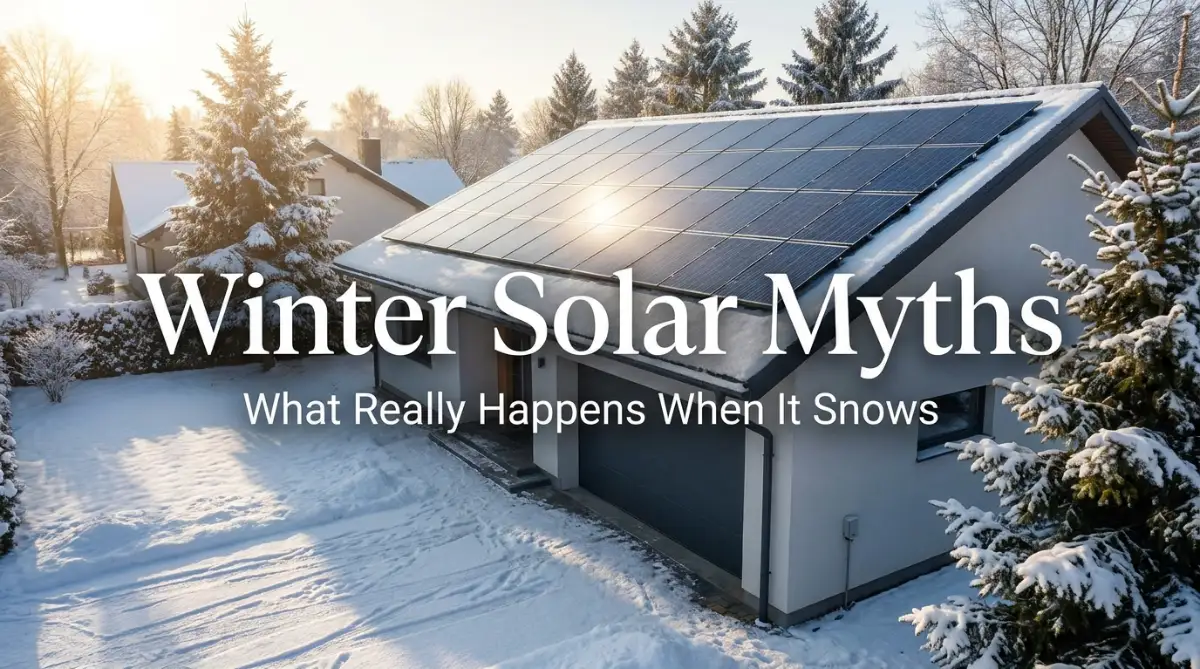
The most common fear I hear from homeowners is what happens when a massive snowstorm completely covers the roof. It is incredibly easy to panic when you look outside and see three inches of thick white powder burying your expensive equipment. You instantly assume your power production has completely flatlined.
While it is entirely true that a heavy, dark blanket of snow blocks the sun, the story does not end there. The dark glass surface of the panels is designed to absorb any available sunlight, even on incredibly cloudy days. Because they are dark, they naturally hold onto a tiny bit of warmth.
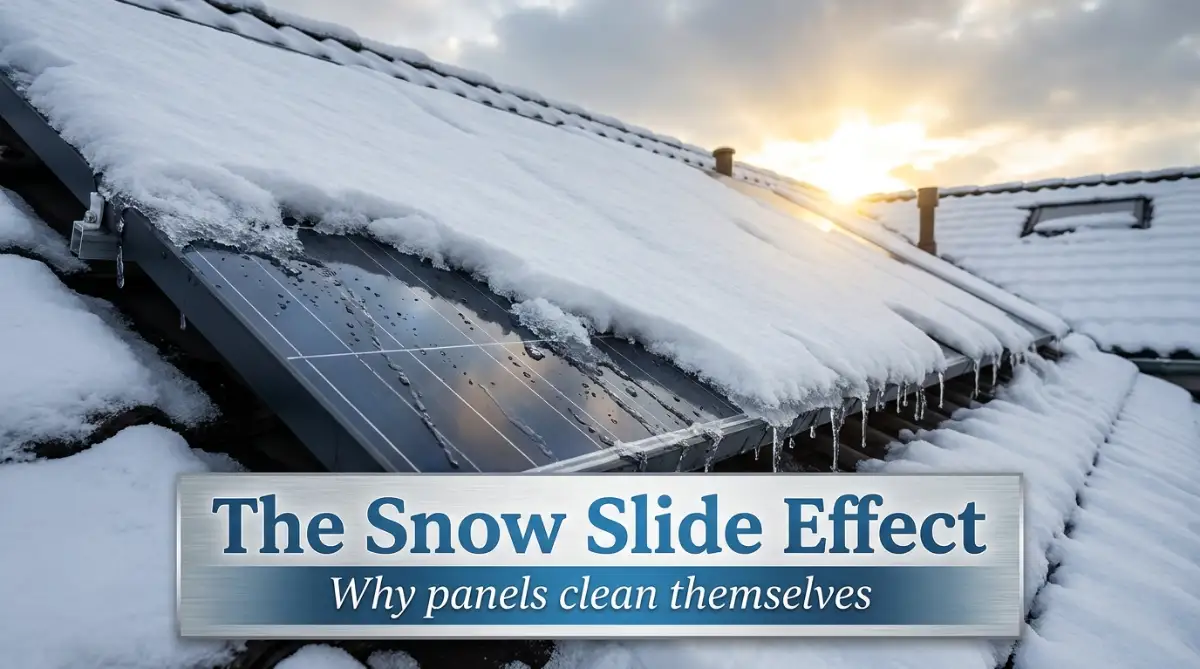
As soon as the morning sun hits the snow on your roof, the sunlight actually penetrates through the thin top layer of the white powder. It reaches the dark glass underneath, slightly warming up the surface. This creates a microscopic layer of water right between the hard glass and the heavy snow.
Because the panels are installed at a downward angle, that tiny layer of water acts like a natural slip-and-slide. The heavy snow loses its grip on the frictionless glass and just slides right off the roof in large chunks. Your panels literally clean themselves without you ever having to lift a finger.
My biggest mistake during my first winter was trying to be a hero. I bought a long roof rake and spent two hours freezing in the wind, trying to manually scrape the snow off my panels to save my energy production. I ended up scratching a small part of the metal frame and almost slipping on the icy driveway. The very next morning, the sun came out and the remaining snow melted off entirely on its own in less than twenty minutes. I quickly realized that doing absolutely nothing is the smartest winter strategy you can have.
"If you want to see a brilliant demonstration of how quickly and easily snow slides off these glass surfaces, watch this quick time-lapse."
Even if the snow takes a day or two to fully clear off, the total energy you miss out on is incredibly small. Most solar tracking software shows that winter snow cover only accounts for a tiny single-digit drop in your total annual production.
The Albedo Effect: How Winter Creates Free Bonus Energy
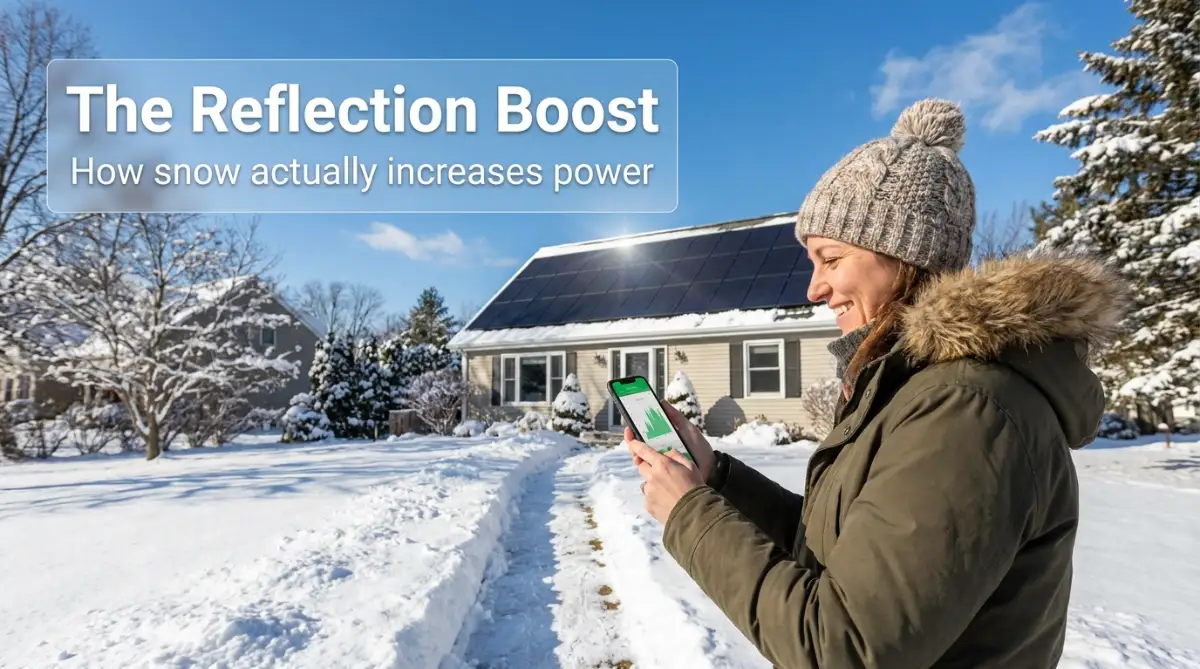
Once the snow slides off your roof, something truly magical happens. You might think the winter sun is too weak to generate serious power, but nature provides a hidden boost. When your front yard and the surrounding neighborhood are covered in a fresh layer of white snow, the entire ground turns into a massive, natural mirror.
This scientific phenomenon is called the Albedo effect. The bright white snow highly reflects the incoming sunlight directly back up into the air. This means your panels are not just catching the direct light falling from the sky; they are also catching the intense reflected light bouncing off the snowy ground.
This double dose of sunlight can cause massive spikes in your daily energy production. On a perfectly clear winter afternoon, you might actually see your system generating more power in a single hour than it does during a hazy, humid afternoon in the middle of August.
The winter air is also incredibly crisp and clear. During the summer, thick humidity, dust, and heavy pollen block a lot of the sun's rays before they ever reach your house. The freezing winter air holds almost no moisture, giving the light a perfectly clear path straight to your energy system.
Surviving the Short, Dark Days Without Losing Power
The next biggest worry people have is the lack of daylight. It is a simple fact that the sun sets much earlier in December than it does in June. You might only get nine hours of daylight instead of fifteen. This makes people panic that their house will completely run out of power the second the sun goes down.
To understand why this is a completely false fear, you have to understand how a grid-tied system protects you. Unless you live completely off the grid in a remote cabin, your house is still connected to the main town power lines. Your utility company acts exactly like a giant, invisible battery.
Think of your energy system like a bank account. During the long, sunny days of summer, your panels generate way more electricity than your house can possibly use. All of that extra, unused power gets pushed backward into the town grid. The power company tracks this and puts "energy credits" into your account.
When the dark winter days arrive and the sun sets at five o'clock, your panels stop producing. But instead of sitting in the dark or paying huge fees, your house simply starts pulling those saved credits back from the grid. You are literally powering your winter nights using the extra sunshine you banked in July.
This simple system completely erases the stress of short winter days. You do not need to constantly monitor the clock or yell at your kids to turn off the television when it gets dark outside. Your system was heavily calculated and designed to balance itself out over an entire twelve-month cycle, not just day by day.
The Durability Myth: Will Ice Break My Equipment?
Another massive misconception is that these systems are fragile and delicate. Homeowners often stare out the window during a brutal ice storm, terrified that the heavy freezing rain will crack the glass or rip the mounts right off the roof. They treat their panels like delicate window glass.
In reality, modern panels are built like heavy-duty military equipment. Before they are ever allowed to be sold, they go through intense physical torture tests in manufacturing labs. They are designed to easily survive massive hail the size of golf balls smashing into them at high speeds.
A few inches of solid ice or a heavy layer of snow is absolutely nothing compared to what they are engineered to handle. The heavy metal racking systems that bolt them to your roof are specifically calculated by structural engineers to support massive amounts of dead weight.
You never have to worry about a winter storm crushing your investment. They are built to sit outside in the most extreme weather conditions on the planet for over twenty-five years. You can sleep peacefully knowing the roof above your head is entirely secure.
The Real Truth About Cloudy Winter Weather
Finally, let us address the gloomy, overcast days that seem to drag on forever in January. People assume that if they cannot physically see the sun, the panels are completely dead. If the sky is totally gray, they figure they are pulling 100% of their power from the grid.
While heavy clouds definitely reduce your output, they do not stop it completely. Photons from the sun are incredibly powerful and easily push right through thick cloud cover. Have you ever gotten a nasty sunburn at the beach on a totally cloudy day? That exact same invisible UV light is still hitting your roof.
Even on a miserable, gray winter afternoon, your system is still slowly sipping away at the available light and feeding a steady trickle of free power into your home. It might not run your entire heavy-duty electric heater, but it is still actively helping to lower your daily bill.
Understanding these physical facts completely changes how you view the winter season. You no longer have to dread the cold or stare nervously at the falling snow. Your system is incredibly smart, highly durable, and specifically designed to conquer the freezing months without you having to stress over it.
Expert Strategies to Maximize Your Cold Weather Energy Generation
Now that we know the snow will naturally melt and the cold air actually boosts your system, it is time to take complete control. You do not have to just sit back and hope for the best. There are several highly effective habits you can adopt right now to squeeze every single drop of free power out of the winter sun.
Most beginners completely ignore these smart daily routines. They just leave their system on autopilot and hope their utility bill stays low. But if you want to truly master your home energy setup, you need to understand how to work with the changing seasons.
These are the exact same strategies that experienced off-grid homeowners use to keep their houses warm without spending a dime. You can easily adapt these smart habits for your own suburban home starting today. Let us walk through a few simple lifestyle tweaks that will dramatically improve your winter results.
The Mid-Day Appliance Shift
During the summer, you can run your heavy appliances almost any time of the day. The sun is usually shining brightly from early morning until late in the evening. But in December and January, your window of peak sunlight is much shorter and highly concentrated around the middle of the day.
If you want to use the pure, direct power coming from your roof, you should shift your heaviest energy tasks to the noon hour. Try to run your electric dryer, your dishwasher, and your heavy washing machine between eleven in the morning and two in the afternoon.
By running these massive energy hogs while the sun is highest in the sky, you use the solar electricity instantly. You completely avoid pulling expensive power from the town grid later that evening. It is a very simple change in your daily routine that yields massive financial savings over the long winter months.
Protecting Your Battery Storage Health
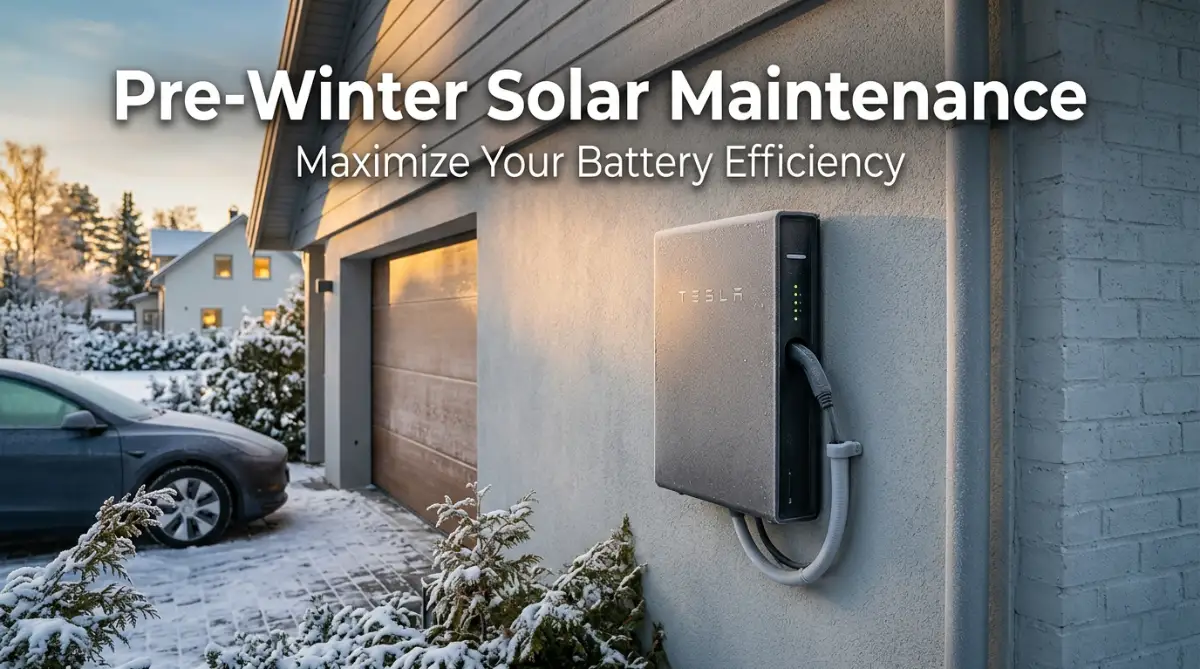
If you have a home battery backup system mounted in your garage, you need to pay special attention to it during freezing weather. These large home batteries use the exact same chemical technology as modern electric cars and mobile phones.
Just like you might wonder exactly why your smartwatch battery drains faster after being left in a freezing car, your home storage system reacts poorly to extreme cold. Freezing temperatures slow down the chemical reactions inside the lithium cells, reducing how much backup power they can hold.
If your battery system is installed on an outside wall or in a drafty, unheated shed, consider wrapping it in an approved thermal blanket. Understanding what actually degrades energy storage cells is the smartest way to protect your expensive equipment. Keeping the battery slightly insulated ensures it is always ready to power your home during a nasty winter blackout.
The Pre-Winter Structural Audit
Before the first massive blizzard of the season hits, you should always do a quick visual inspection of your property. Heavy wet snow and thick ice add hundreds of pounds of dead weight to your roof structure.
While the solar panels themselves are built to easily handle this weight, the wooden beams holding up your actual ceiling might be getting old. Taking a proactive approach and checking the structural health of an aging roof can save you from an absolute disaster.
You should also check the nearby trees surrounding your house. Heavy ice storms can easily snap large, dead tree branches. If a massive frozen branch falls directly onto your roof, it can severely damage the glass or rip the wiring harnesses right out of the wall. Trimming those branches in the fall is a completely free way to protect your system.
Mastering the Net Metering Cycle
As we discussed earlier, your town utility company acts like a giant bank for your extra energy. This system is called net metering, and it is your absolute best friend during the dark winter season. However, you need to understand exactly how your specific utility company tracks this billing cycle.
Some electric companies reset your banked energy credits at the very end of the calendar year. This means if you have leftover credits in December, they might just disappear. Other companies let your credits roll over indefinitely.
You should call your utility provider and ask them exactly how their true-up billing cycle works. Treating this energy bank with the same respect as securing your long-term financial assets will stop you from getting a surprise bill. When you know the rules of the game, you can easily plan your winter heating usage without any fear.
The Dangerous Winter Habits That Sabotage Your System
Even with the best intentions, I see homeowners making terrible mistakes every single winter. They let their anxiety take over, and they try to forcefully intervene when their system just needs to be left alone. These panic-driven actions almost always result in permanently damaged equipment or heavily voided warranties.
Your solar panels are a massive financial investment. You likely spent a lot of time figuring out how to leverage the value of your home just to afford this amazing technology. The last thing you want to do is completely ruin that investment because you listened to bad advice from a neighbor.
Let us walk through the most dangerous pitfalls that new solar owners fall into during the winter. If you can simply avoid these common mistakes, your system will easily last for several decades without a single issue.
The Broom and Rake Disaster
This is easily the most common and expensive mistake people make. After a heavy snowstorm, a homeowner will look out the window and see their panels totally covered. Panic sets in, and they grab a hard plastic snow rake, a stiff broom, or even a metal shovel from the garage.
They stand on the slippery deck or climb up a dangerous ladder and aggressively scrape the heavy snow off the dark glass. Doing this is an absolute nightmare for your system. The hard plastic or metal tools create thousands of tiny, invisible micro-scratches right across the anti-reflective coating of the panels.
According to guidelines published by the Department of Energy, scratching that highly specialized glass completely ruins the panel's ability to absorb indirect sunlight. You might get the snow off today, but you will permanently reduce the power output for the next twenty years. Never use hard tools to aggressively scrape your roof.
The Chemical Ice Melt Catastrophe
When the snow freezes into a solid sheet of hard ice, some people get totally desperate. They grab a large bucket of chemical ice melt, harsh rock salt, or liquid de-icer and throw it directly onto their roof. They think this will instantly melt the ice and get the power flowing again.
This is a guaranteed way to destroy your equipment. Those harsh melting chemicals are designed for thick concrete driveways, not highly sensitive electronic glass and delicate aluminum frames. The heavy salt will instantly begin corroding the metal mounting brackets that hold the heavy panels to your roof.
Research from the National Renewable Energy Laboratory clearly shows that chemical corrosion can eat right through the waterproof seals on the edges of the panels. Once water gets inside the actual electronic cells, the entire panel shorts out and dies. You will have to replace the whole unit out of your own pocket, completely ruining your financial savings.
The Daily App Obsession
This mistake will not physically damage your roof, but it will absolutely destroy your mental health. Every modern solar system comes with a highly detailed smartphone app that shows your exact power production minute by minute.
During a week of heavy, dark snowstorms, that app might show a big, scary zero for three days in a row. Many people obsessively check this app every single hour, feeling a deep sense of dread and failure. Just like falling for deceptive online claims, staring at short-term bad data completely distorts your view of reality.
You have to remember that your system is designed for annual performance, not daily perfection. A bad week in January is already factored into the math by the engineers who designed your system. Close the app, enjoy your warm house, and check your overall numbers at the end of the month instead.
Attempting Dangerous Roof Access
I cannot stress this enough: there is absolutely no reason for you to ever climb onto a slippery, icy roof in the middle of winter. Every single year, thousands of people end up in the emergency room with broken legs or severe concussions because they tried to play hero.
They slip on a hidden patch of black ice near the gutter and slide right off the edge of the house. No amount of generated electricity is worth risking your physical life. The snow will eventually melt on its own when the sun comes out.
If you live in an area that gets extreme, mountain-level blizzards and the snow physically threatens to collapse your roof, you must hire certified professionals. They have heavy-duty safety harnesses, specialized soft-foam snow rakes, and the correct insurance to handle the job safely. Keep your feet firmly planted on the ground.
Common Questions About Freezing Weather and Solar Power
Will a heavy snowstorm completely break my solar panels?
No, modern solar panels are incredibly tough and heavily tested. They are specifically engineered to hold massive amounts of heavy, wet snow without cracking or bending. The thick aluminum frames and tempered glass can easily survive the worst winter blizzards you can imagine.
Should I hire a professional to remove the snow from my roof?
In almost every single case, it is completely unnecessary. The dark glass absorbs heat from the sun and creates a slippery surface, causing the snow to naturally slide off on its own. You should only hire a professional if the snow accumulation is dangerously heavy and threatens the structural integrity of your physical roof.
Do solar panels still work when it is heavily snowing outside?
While the thick clouds and falling snow will significantly reduce your power output, they do not completely stop it. A small amount of indirect sunlight still pushes through the clouds and hits your panels. However, if the glass is totally buried under thick snow, production will temporarily pause until the snow clears.
Why does my solar app show zero production on a sunny winter day?
If the sun is shining brightly but your app shows zero power, your panels are likely still covered by a thin layer of morning frost or frozen snow. Be patient and wait a few hours. Once the sun slightly warms the dark glass, that frost will melt away, and your normal power production will instantly return.
Can cold weather actually increase my panel output?
Yes, this is one of the best scientific benefits of the winter season. Solar panels are electronic devices, and they operate much more efficiently in freezing cold temperatures. A crisp, freezing sunny day in January will often produce a higher rate of electricity than a boiling hot, humid day in the middle of summer.
Your Action Plan for a Stress-Free Winter Season
Transitioning your home to renewable energy is one of the absolute best things you can do for your family's future. It protects you from the constantly rising costs of the utility grid and gives you true independence. But adapting to this new technology definitely requires a small shift in how you think about the changing seasons.
You no longer need to fear the winter forecast. You understand the brilliant physics behind the cold-weather efficiency boost and the natural sliding effect of the dark glass. You know exactly why you should keep your heavy brooms away from the roof and let nature do the hard work for you.
The winter months will always bring shorter days and occasional snowstorms, but your system was specifically built to handle every single bit of it. By shifting your heavy appliance usage to the mid-day sun and relying on your banked utility credits at night, you will glide through the freezing months completely stress-free.
I clearly remember the massive wave of relief I felt when my first winter power bill arrived, and it was still practically zero despite the heavy December snow. Stop staring nervously at your roof, trust the incredible technology you invested in, and enjoy the beautiful winter season with total peace of mind.
Disclaimer: The information provided in this article is for educational and informational purposes only. Solar energy systems, utility net metering policies, and roof structures vary greatly depending on your specific manufacturer and geographic location. Always consult your official installation manual and contact your local certified solar installer for professional guidance regarding your specific home setup.